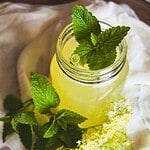
Homemade Elderflower Šabesa (Elderflower Champagne)
Jump to VideoThis is one of those drinks you make when elderflowers are in season and you want something simple sitting on your counter doing its own thing. You just combine the flowers, lemon, sugar, and water, then let time do the rest. After a couple of days, it starts to bubble on its own and turns into a lightly sparkling drink. I usually chill it well before serving because that’s when the flavor feels the most clean and refreshing.
PIN THIS RECIPE!
Ingredients
- 15 elderflower heads, large
- 4 liters water
- 300 g sugar
- 1 lemon organic
- 40 ml apple cider vinegar or white wine vinegar
- 20 g vinegar If using alcoholic/spirit vinegar, use a little less since the flavor is sharper, closer to 20g.
Instructions
- Bring about 1 liter of the water to a simmer, around 80–90°C, and dissolve the sugar in it. Pour it into a large container or bucket (I just use my largest pot!), then add the remaining cold water to cool everything down. You want the mixture to cool to roughly room temperature, below 30°C, before adding the flowers.
- Shake the elderflowers to remove any insects, but don’t wash them. The natural yeast on the flowers helps the fermentation process. Remove thick stems from the elderflowers. I find that they can have a bit of a bitter taste. Wash the lemon and slice it into thin rounds.
- Add the elderflowers, lemon slices, and vinegar to the cooled sugar water. Stir everything well. Cover the container with a clean kitchen towel, cheesecloth, or thin cloth to keep insects out while still allowing airflow.
- Leave the šabesa at room temperature for about 2–4 days. The ideal fermentation temperature is around 18–22°C. If your kitchen is warmer than 24–25°C, fermentation may happen much faster and the flavor can become too yeasty or alcoholic, so be sure to end the fermentation earlier! Stir once or twice a day. The flowers will become brown after about a day of fermentation, which is normal. After a day or two, you should start noticing tiny bubbles, the mixture should get foamy when you stir it, and it will start to develop a fresh floral smell. That means the fermentation is working! Important: some lemons have a lot of white skin, which will bring some tartness to the final drink. If you don’t want to risk that, remove the lemons after only one day, and ferment the elderflowers only for the remainder of the fermentation time!
- Once the drink tastes fizzy and tangy (that may be after just two days or after four days), strain it through a fine mesh sieve or cheesecloth. Pour into very clean bottles or my preferred way: mason jars with fermentation lids. Do not seal the bottles completely airtight at first! Fermentation may continue for a bit, and pressure can build up quickly. If you want to leave bottled šabesa at room temperature for extra fizz, keep it below about 20–22°C and check the pressure regularly (you don’t want it to explode). I don’t recommend doing that generally, because it will get very tangy and a bit alcoholic.
- Once the šabesa reaches the level of fizz you like, transfer it to the refrigerator, ideally around 4°C, to slow the fermentation. Serve very cold, with some lemon balm or peppermint leaves and lemons for show!
Video
Notes
Notes
- You can adjust the sugar: use anywhere from 100g-300g. I think 200g is the sweet spot!
- The flavor depends heavily on the elderflowers. Pick fully opened flowers full of pollen on a dry sunny day for the best result.
- A small handful of lemon balm is a great addition if you have it growing in the garden.
- Don’t leave the drink fermenting too long at room temperature, or it can start tasting more alcoholic and yeasty instead of fresh and floral.
Tried this recipe?Please consider Leaving a Review!
Nutrition
Serving: 1g | Calories: 300kcal | Carbohydrates: 77g | Protein: 0.3g | Fat: 0.3g | Saturated Fat: 0.01g | Polyunsaturated Fat: 0.03g | Monounsaturated Fat: 0.003g | Sodium: 52mg | Potassium: 46mg | Fiber: 1g | Sugar: 76g | Vitamin A: 6IU | Vitamin C: 14mg | Calcium: 39mg | Iron: 0.2mg
