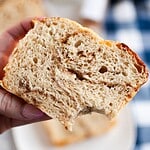
Sourdough Cinnamon Sugar Bread
Jump to VideoIf you enjoy the classic cinnamon swirl bread, you're in for a treat with this sourdough cinnamon sugar bread. This version is a game changer—no need for exact swirls, yet it packs more flavor in every slice. It's the perfect twist on a favorite, making it even better and easier to love.
PIN THIS RECIPE!
Equipment
- 1 Loaf pan
- 1 Mixing bowl
- 1 kitchen scale or measuring cups and spoons
- 1 Dough scraper
Ingredients
For the Dough:
- 220 grams water
- 175 grams bread flour
- 175 grams all-purpose flour plus extra for shaping, about 12 grams or 2 tbsp
- 110 grams sourdough starter active
- 20 grams sugar
- 10 grams oil neutral tasting oils work best
- 7 grams salt
For the Cinnamon Brown Sugar Filling:
- 12 grams ground cinnamon
- 65 grams light brown sugar
- a splash heavy cream milk or water work too
Instructions
- Start by combining your dough ingredients in a large mixing bowl. Use a spoon or your hands to mix until all the flour is hydrated and no dry spots remain. The dough will be shaggy and sticky at this stage—that’s perfectly fine. Cover the bowl with a damp towel and let it rest for 30 minutes to allow the flour to absorb the water and start developing gluten.
- After the rest, perform 2-3 sets of stretch and folds, about every 30 minutes. To do this, grab a section of the dough, stretch it upward, and fold it over itself. Rotate the bowl and repeat on all four sides. The dough will start to feel smoother and stronger as you go.
- Once you’ve completed the stretch and folds cover the bowl with a lid, plastic wrap, or a plastic bag to prevent drying. Let it bulk ferment at room temperature until it has almost doubled in size and looks puffy—this entire process, from mixing to the end of bulk fermentation, should take about 6 hours, depending on the warmth of your kitchen.
- After the bulk ferment, cool the dough in the fridge for at least 2 hours, or overnight. This step helps develop flavor and makes the dough easier to work with.
- Prepare the cinnamon sugar filling by mixing ground cinnamon and light brown sugar in a small bowl. Shape your dough on a lightly floured surface into a rectangle. Lightly brush the dough with heavy cream (or milk/water). Sprinkle ⅔ of your filling on top, leaving a small border around the edges. Now, fold the dough: bring the short sides towards the middle, overlapping them slightly.Sprinkle the rest of your cinnamon sugar over this folded dough. Next, start at one short end and roll it up tightly, like you're making a dough log.
- Place this log seam-side down in your parchment paper lined loaf pan for its second rise. This final proof gives the bread its final shape and size, taking about 2-4 hours at room temperature.You can optionally also do a cold overnight proof as the second rise, but the dough will be a bit tangier if you do that. If you don't mind, that's ok!
- Preheat your oven to 400°F (200°C) to heat up. While that's happening, grab a cast iron pan or another oven-safe dish and fill it with some water. This is going to sit on the bottom of your oven and create steam while your bread bakes, which helps give the crust a nice texture. Now, take the dough that's been rising in the loaf pan and make a shallow cut down the center with a sharp knife or a razor blade. This isn't just for looks; it helps the bread expand evenly while it cooks. Brush the top of the dough with a little more cream, milk, or water—this helps the top get a nice color without burning.Score the loaf, brush it with the remaining cream/milk/water.Then, loosely cover the loaf pan with aluminum foil to keep the moisture in. Carefully place your loaf pan in the oven, and don't forget to add the pan with water for steam. Bake it at the set temperature of 400°F (200°C) for about 50 minutes.Remove the foil 10 minutes before the bread is done for a golden brown crust.
- Cool the baked bread on a wire rack. Patience here is key; wait until the bread cools before slicing it to enjoy the full flavor and texture!
Video
Notes
-
- Dough texture: If your dough is too wet, sprinkle in a little more flour; if it's too dry, add a splash of water. It's all about finding that perfect balance for a dough that's still manageable to work with and retains some of the hydration. Feel free to tweak the amounts slightly!
-
- Using a dough scraper: A dough scraper is not just for cutting; use it to fold your dough neatly and to transfer it into your loaf pan without a mess. It helps keep the shape intact and makes handling the dough much simpler.
-
- Adding the filling: When adding your cinnamon sugar mixture, aim for an even spread. This ensures every slice is packed with flavor. Also, remember not to overdo it; too much filling can lead to leaks and make rolling tougher.
Tried this recipe?Please consider Leaving a Review!
Nutrition
Serving: 1slice | Calories: 181kcal | Carbohydrates: 37g | Protein: 4g | Fat: 2g | Saturated Fat: 0.1g | Polyunsaturated Fat: 0.5g | Monounsaturated Fat: 1g | Trans Fat: 0.004g | Sodium: 275mg | Potassium: 50mg | Fiber: 2g | Sugar: 8g | Vitamin A: 4IU | Vitamin C: 0.05mg | Calcium: 24mg | Iron: 1mg
