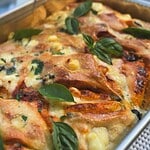
Sourdough Tomato Pesto Olive Focaccia
Jump to VideoIf you're looking for a focaccia that's a little different, this sourdough tomato pesto olive focaccia is one of my favorite ways to dress up a classic loaf. The roasted tomato pesto adds rich flavor, the olives bring a salty bite, and the pockets of melted cheese make every piece even better. I especially love serving it when friends or family come over because it looks impressive, but it's surprisingly simple to make. It's delicious on its own, paired with a bowl of soup, or served alongside a fresh salad for an easy meal.
PIN THIS RECIPE!
Ingredients
Dough
- 500 g bread flour
- 360 g water
- 100 g active sourdough starter
- 10 g salt
- 25 g olive oil
- 1 teaspoon garlic powder optional
Mix-ins, filling, and other
- ¾ cup olives sliced, I prefer black or kalamata for contrast
- ¾ cup tomato pesto thick roasted
- 3 tablespoon olive oil for greasing the pan
- 200 g cheese cut into small cubes (mozzarella, cheddar, provolone, gouda, etc.)
Instructions
- Combine the flour, water, sourdough starter, salt, olive oil, and garlic powder (if using). Mix until no dry flour remains. Cover and let the dough rest for 30 minutes.
- Perform your first set of stretch and folds, adding the sliced olives as you fold the dough. Complete another 2–3 sets of stretch and folds over the next 2 hours, spacing them about 30 minutes apart.
- Continue bulk fermentation until the dough has increased by about 75% and looks light and airy. For me, that usually takes about 8 hours.
- Generously oil a 9×13-inch baking pan. I like to put a parchment paper in so the serving of this focaccia is easy (I can just take it out and place on a board after it’s baked). Transfer the dough to the pan and gently press it into a rough rectangle.
- Spread the tomato pesto over the dough, leaving about a 1-inch border around the edges.
- Fold the top third of the dough toward the center. Fold the bottom third over the top, just like folding a letter. Rotate it so it fits the pan better.
- Stretch and press the folded dough back toward the edges of the pan until it fills most of the pan again. If you'd like to make this focaccia pull-apart style, cut diagonal lines across the dough with a bench scraper or a sharp knife in one direction, then repeat in the opposite direction to create a diamond pattern. Don’t be afraid to cut the dough all the way down, as it will stick together again during the second rise!
- Cover and let the dough proof until very puffy and bubbly, usually 1–3 hours, depending on the temperature of your kitchen.
- After the second rise, go ahead and tuck a cube of cheese into the cut sections, pressing it down slightly into the dough (that way, you’ll get the cheesy pulls when you pull the dough apart).
- Bake at 450°F (230°C) for 25–30 minutes, or until the top is deeply golden and the edges are crisp. Optional if you want to impress guests: stir together some melted butter, parsley, and oregano, then brush it over the warm focaccia as soon as it comes out of the oven. Decorate with some fresh basil leaves.
- Let the focaccia cool for at least 15 minutes before slicing.
Video
Notes
- If you want to use fresh milled flour: I’d recommend using about 150g fresh milled hard white wheat and 350g bread flour, and increasing water for about 10-15g (so using 370-375g water). I wouldn’t go beyond using 150g freshly milled flour, as more will definitely make the focaccia denser and just not as fluffy.
- Homemade roasted tomato pesto works great because it's much thicker than most store-bought versions (at least mine is).
- Pat the olives dry before adding them to the dough to avoid introducing extra moisture. I prefer my olives in brine, not in oil, if I’m adding it to any kind of bread dough.
- Leaving a small border around the pesto helps keep it from leaking out while the focaccia bakes.
- Low-moisture mozzarella, cheddar, provolone, Monterey Jack, gouda, or similar semi-firm cheeses all work well. Avoid very wet fresh mozzarella, which can release too much moisture.
- This focaccia is delicious on its own, but it's also wonderful served with burrata, fresh mozzarella, or alongside soups and salads.
Tried this recipe?Please consider Leaving a Review!
Nutrition
Serving: 1g | Calories: 235kcal | Carbohydrates: 26g | Protein: 7g | Fat: 11g | Saturated Fat: 3g | Polyunsaturated Fat: 1g | Monounsaturated Fat: 5g | Cholesterol: 13mg | Sodium: 532mg | Potassium: 46mg | Fiber: 1g | Sugar: 1g | Vitamin A: 226IU | Vitamin C: 0.4mg | Calcium: 109mg | Iron: 1mg
