Sourdough Tomato Pesto Olive Focaccia

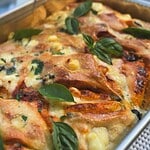
If you love savory sourdough, this sourdough tomato pesto olive focaccia is worth making. It has an open crumb, crispy edges, and plenty of flavor from roasted tomato pesto, olives, tomatoes, and pockets of melty cheese. It's easy enough for a family dinner but looks impressive enough to bring to a gathering.
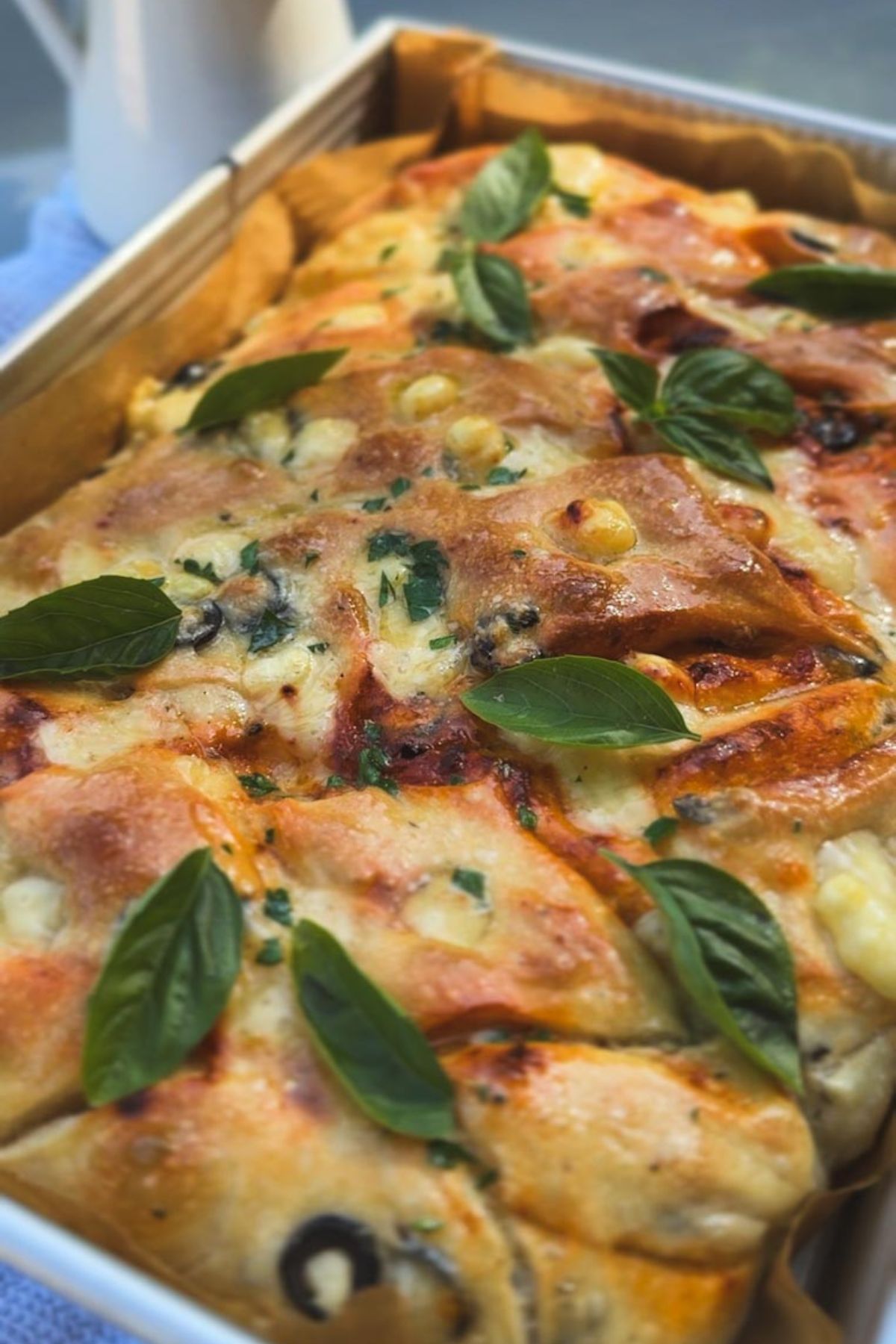
This is a great focaccia to make in the summer when tomatoes and basil are everywhere, but it works just as well year-round with a good jar of roasted tomato pesto. I like serving it with soup, pasta, or as part of an appetizer spread.
If you're a reader of my blog, you know about my love for all the sourdough focaccia flavors. If you need more ideas and like your focaccias loaded with flavor too, check out my sourdough rosemary and fig focaccia, or my sourdough focaccia with roasted onions!
Summarize & Adapt This Recipe On:
Quick Look
- Prep Time: 35 minutes
- Bulk Fermentation: About 8 hours
- Final Proof: 1-3 hours
- Cook Time: 30 minutes
- Total Time: About 10-12 hours
- Servings: 12-16 pieces
- Difficulty: Intermediate
- Baking Method: Oven
- Best For: Family dinners, entertaining, appetizers, and sharing
Jump to:
- Summarize & Adapt This Recipe On:
- Quick Look
- Important Ingredients
- Substitutions & Variations
- How to Make Sourdough Tomato Pesto Olive Focaccia
- Baking Schedule
- 💭Crucial Success Tips
- Recipe FAQs
- How To Store Sourdough Tomato Pesto Olive Focaccia
- Other Delicious Sourdough Recipes
- Sourdough Tomato Pesto Olive Focaccia
- Need Help Tweaking This Recipe?
- Other Sourdough Recipes You'll Love
- Sourdough Scarpaccia (Tuscan Zucchini Tart)
- Sourdough Double Chocolate Zucchini Muffins
- Sourdough Discard Pancake Bowls
Important Ingredients
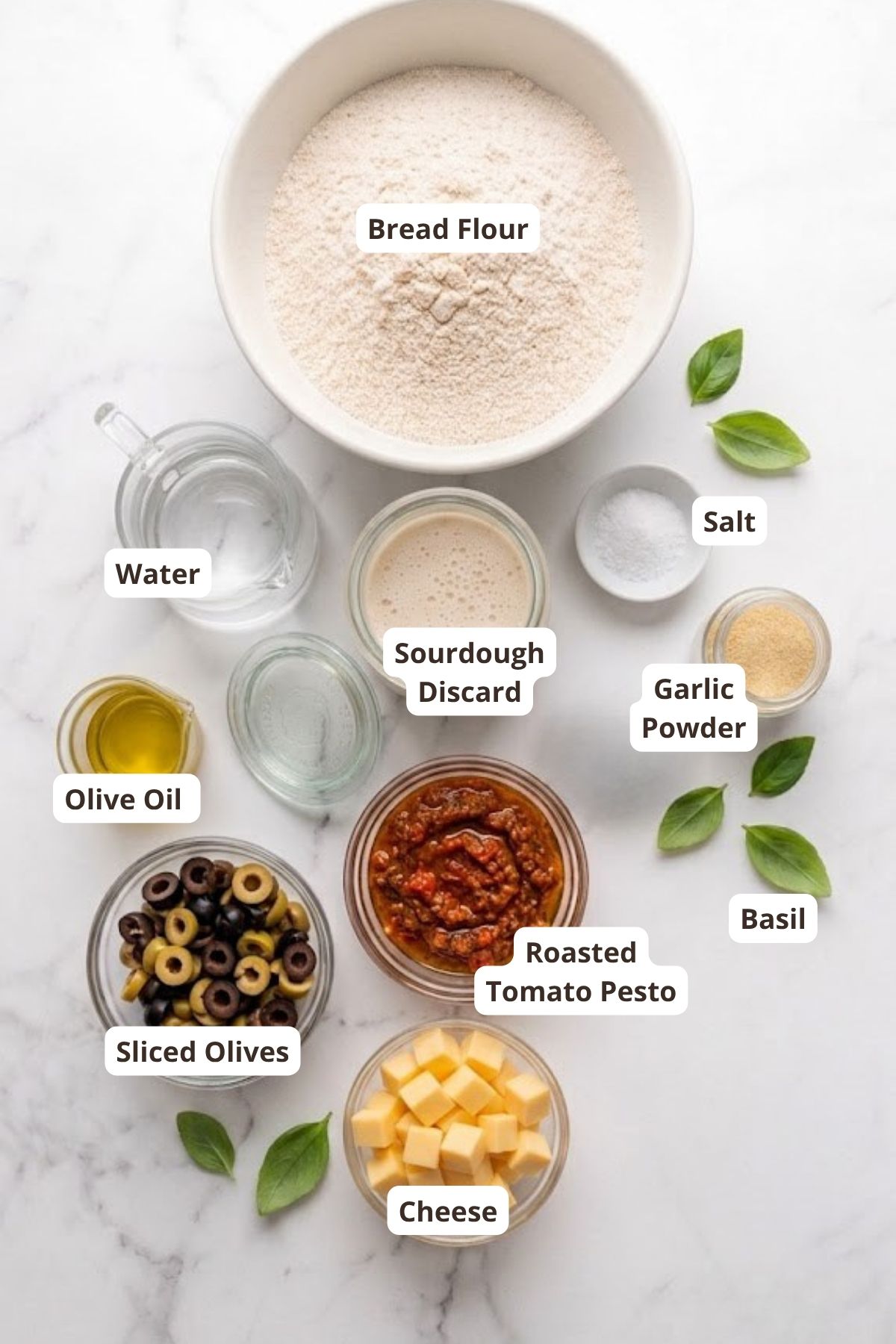
- Bread flour gives the focaccia its texture and makes handling it easier.
- Active sourdough starter helps the dough rise and adds sourdough flavor.
- Roasted tomato pesto adds rich tomato flavor without making the dough soggy.
- Olives I like black or Kalamata olives for their flavor and color contrast they create.
- Cheese cubes of mozzarella, cheddar, gouda, provolone, or another semi-firm cheese create delicious cheesy pockets throughout the bread.
See recipe card for quantities.
Substitutions & Variations
- Use green olives instead of black or Kalamata.
- Add chopped fresh rosemary or oregano to the dough.
- Swap the tomato pesto for basil pesto or olive tapenade.
- Try different cheeses like Monterey Jack, Havarti, or smoked gouda.
- Leave out the olives if you're serving someone who doesn't enjoy them.
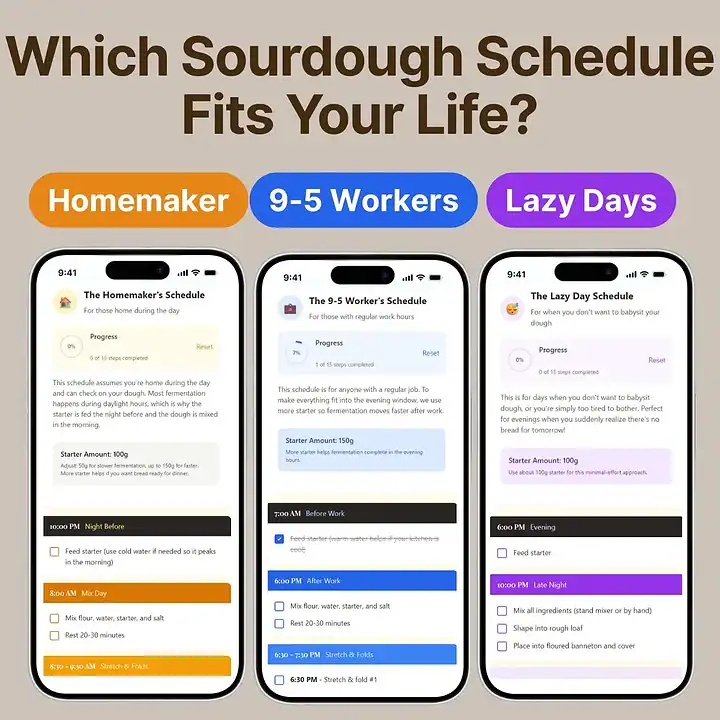
free resource
Get All 3 Sourdough Bake Schedules
Bake beautiful bread that fits Your life - not the other way around
How to Make Sourdough Tomato Pesto Olive Focaccia
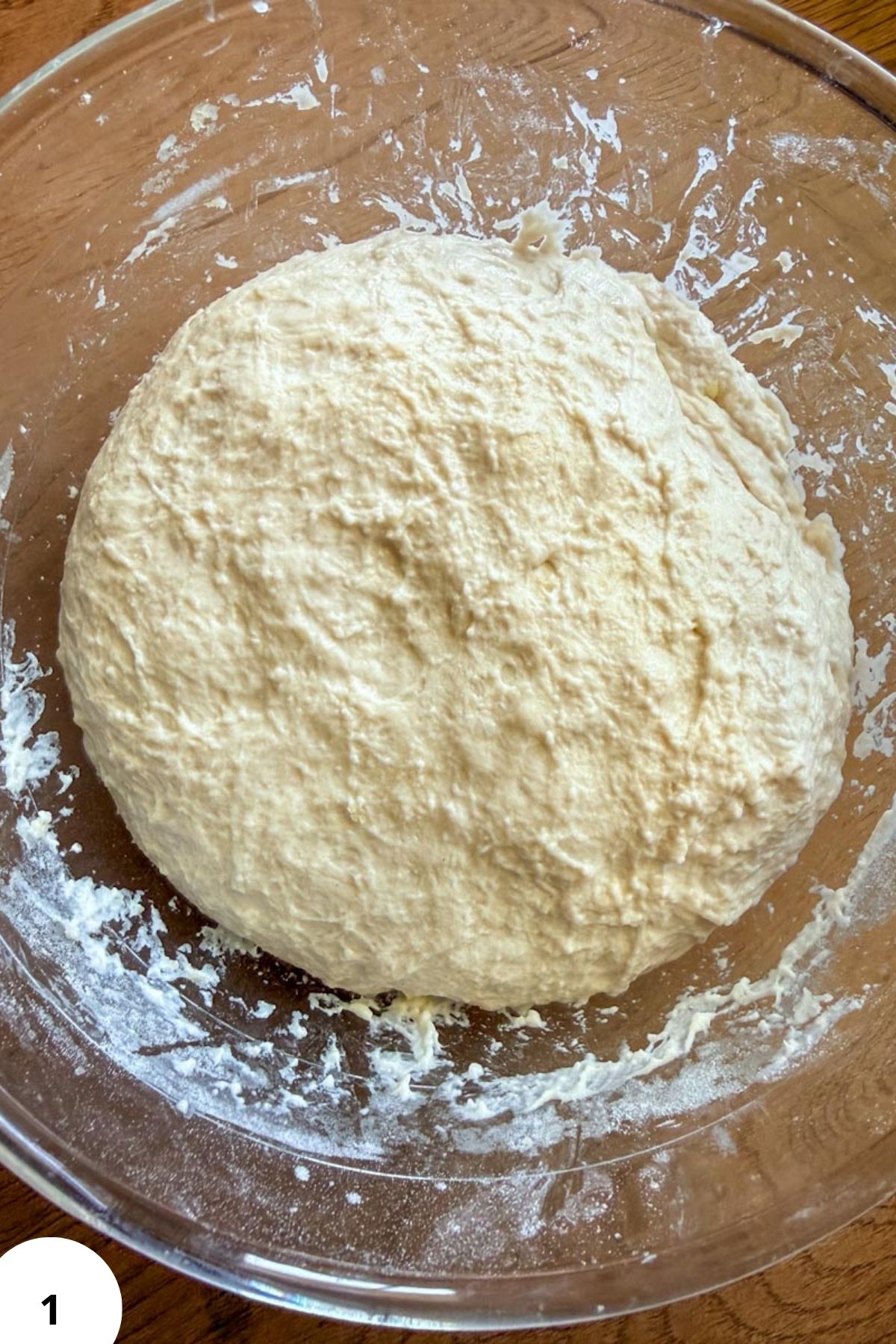
Step 1: Combine the flour, water, sourdough starter, salt, olive oil, and garlic powder (if using). Mix until no dry flour remains. Cover and let the dough rest for 30 minutes (Image 1).
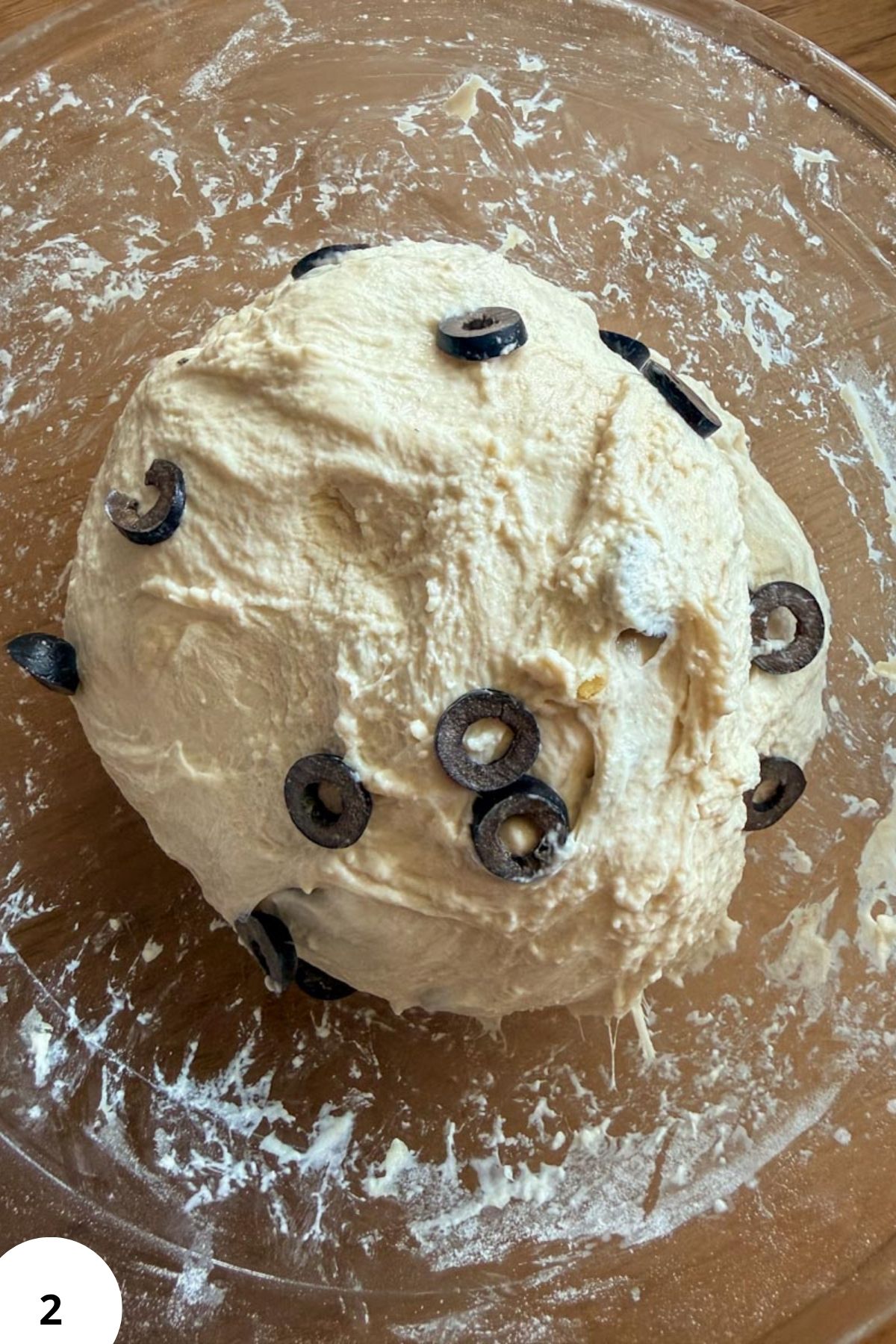
Step 2: Perform your first set of stretch and folds, adding the sliced olives as you fold the dough (Image 2). Complete another 2-3 sets of stretch and folds over the next 2 hours, spacing them about 30 minutes apart.
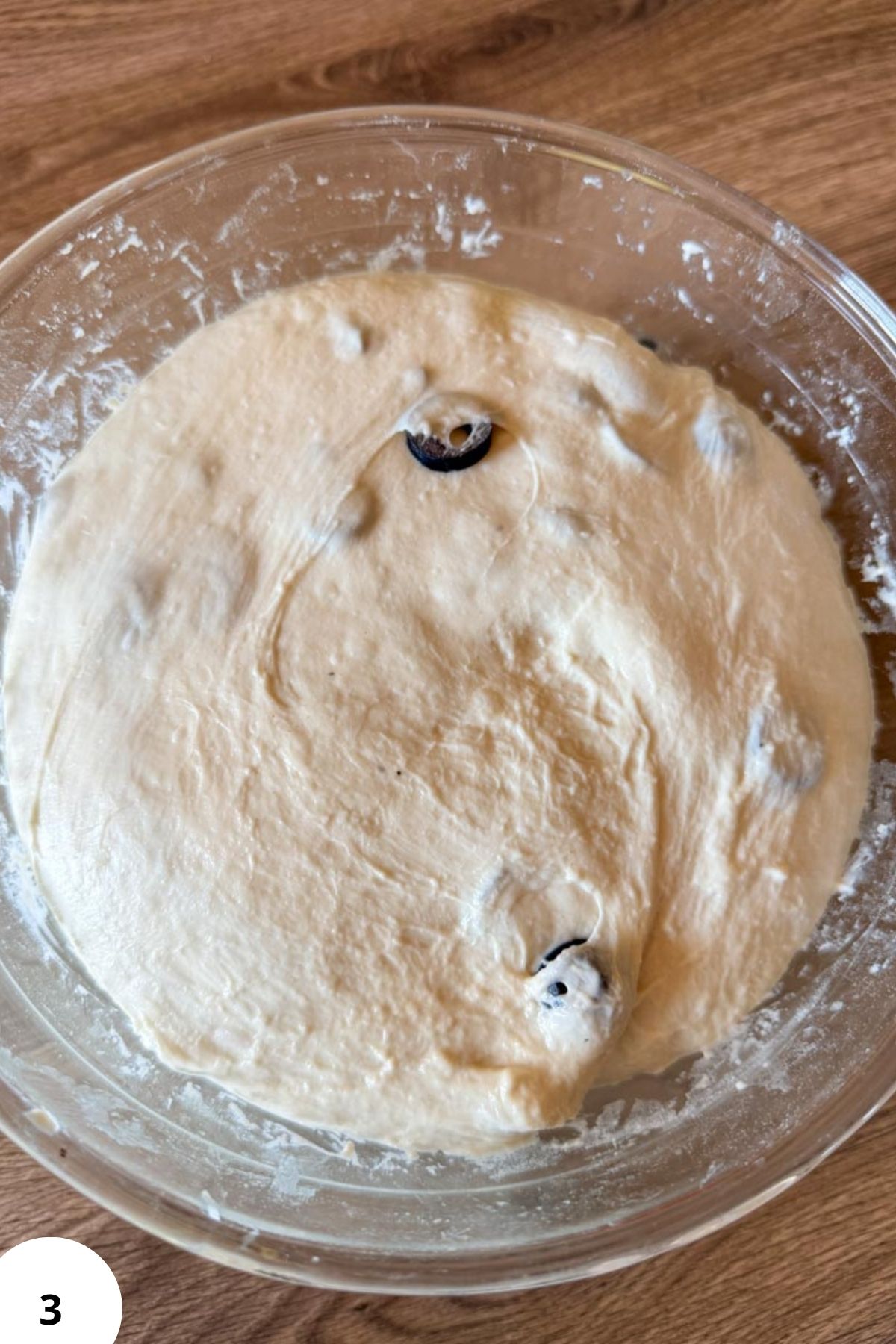
Step 3: Continue bulk fermentation until the dough has increased by about 75% and looks light and airy (Image 3). For me, that usually takes about 8 hours.
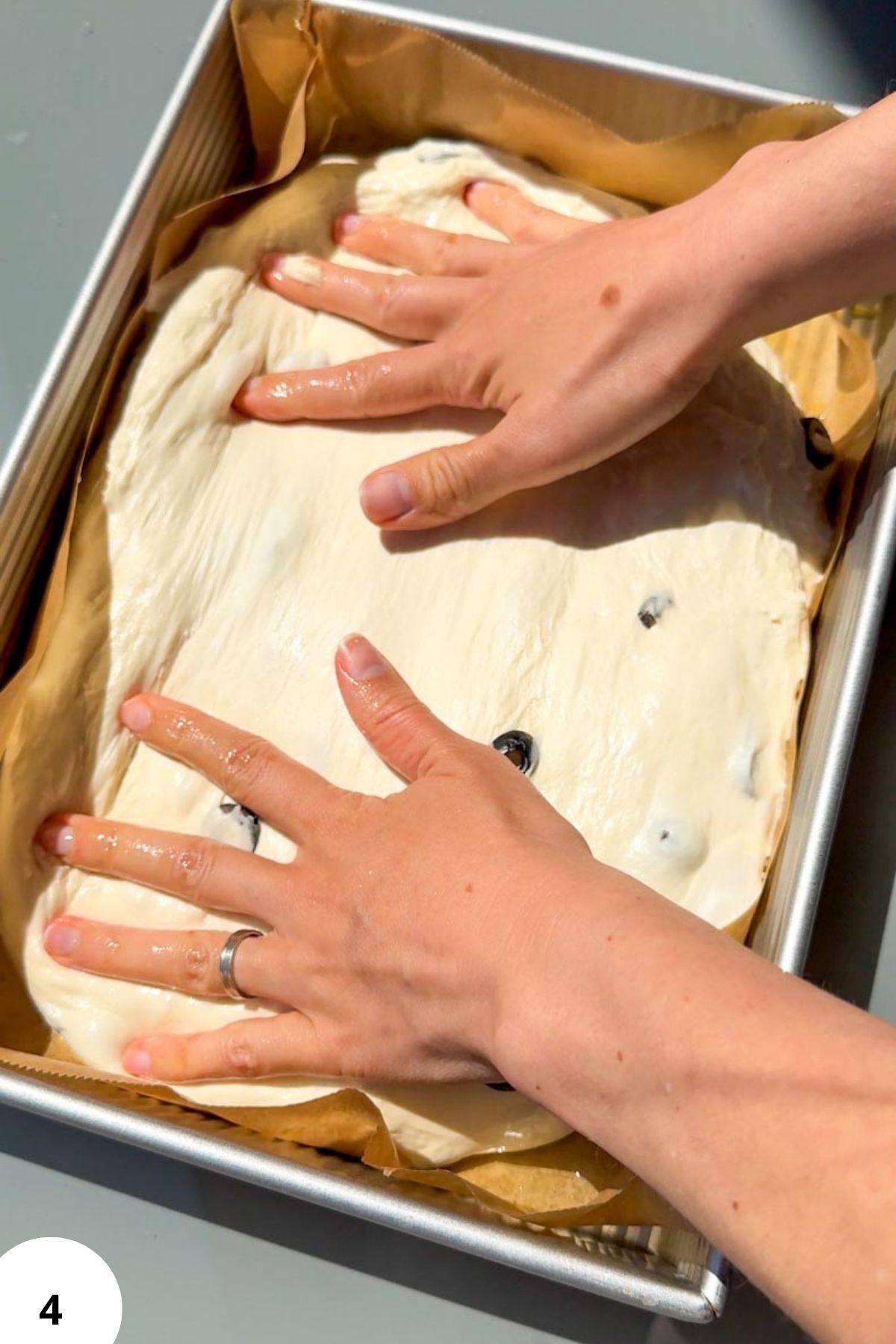
Step 4: Generously oil a 9×13-inch baking pan. I like to put a parchment paper in so the serving of this focaccia is easy (I can just take it out and place on a board after it's baked). Transfer the dough to the pan and gently press it into a rough rectangle (Image 4).
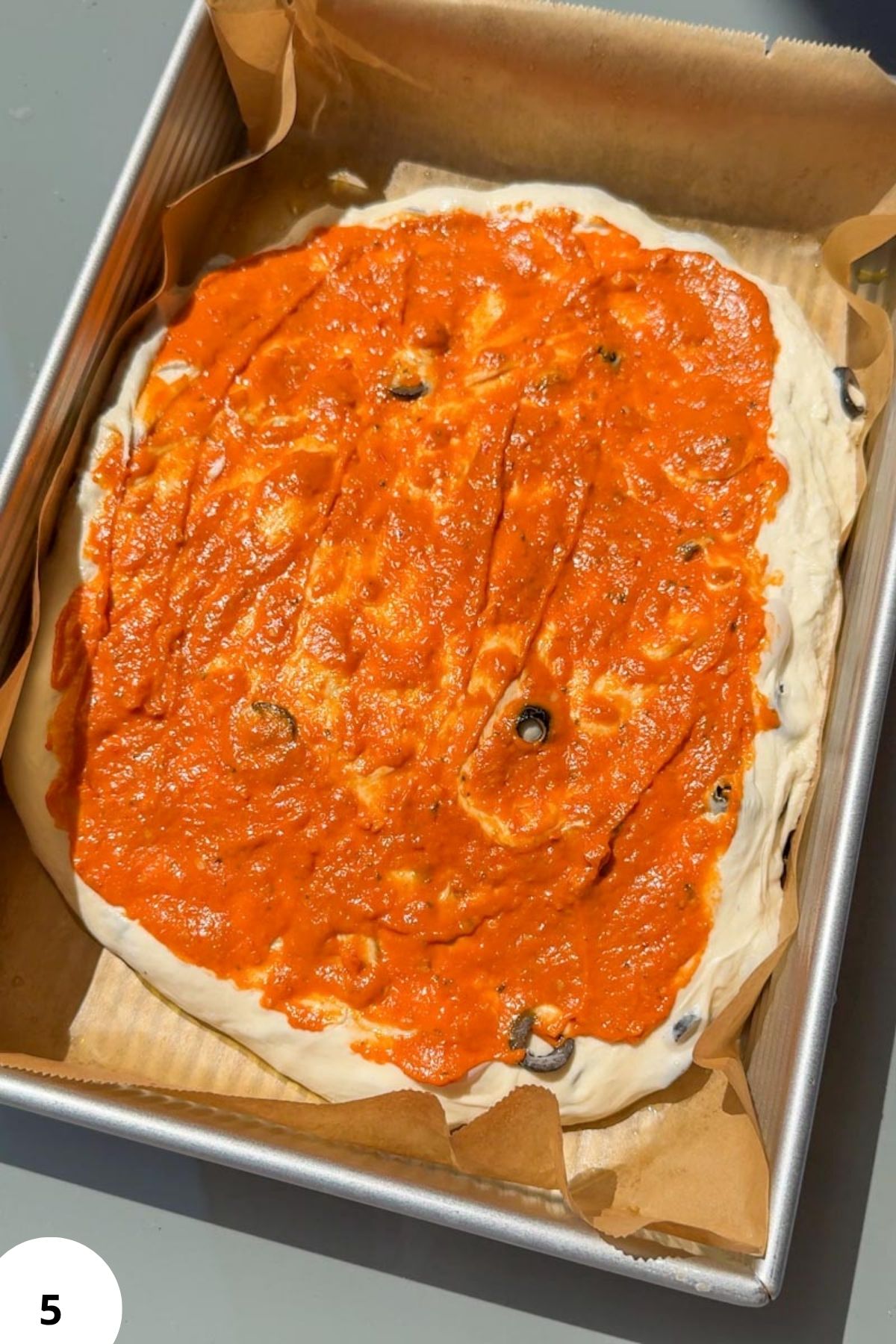
Step 5: Spread the tomato pesto over the dough, leaving about a 1-inch border around the edges (Image 5).
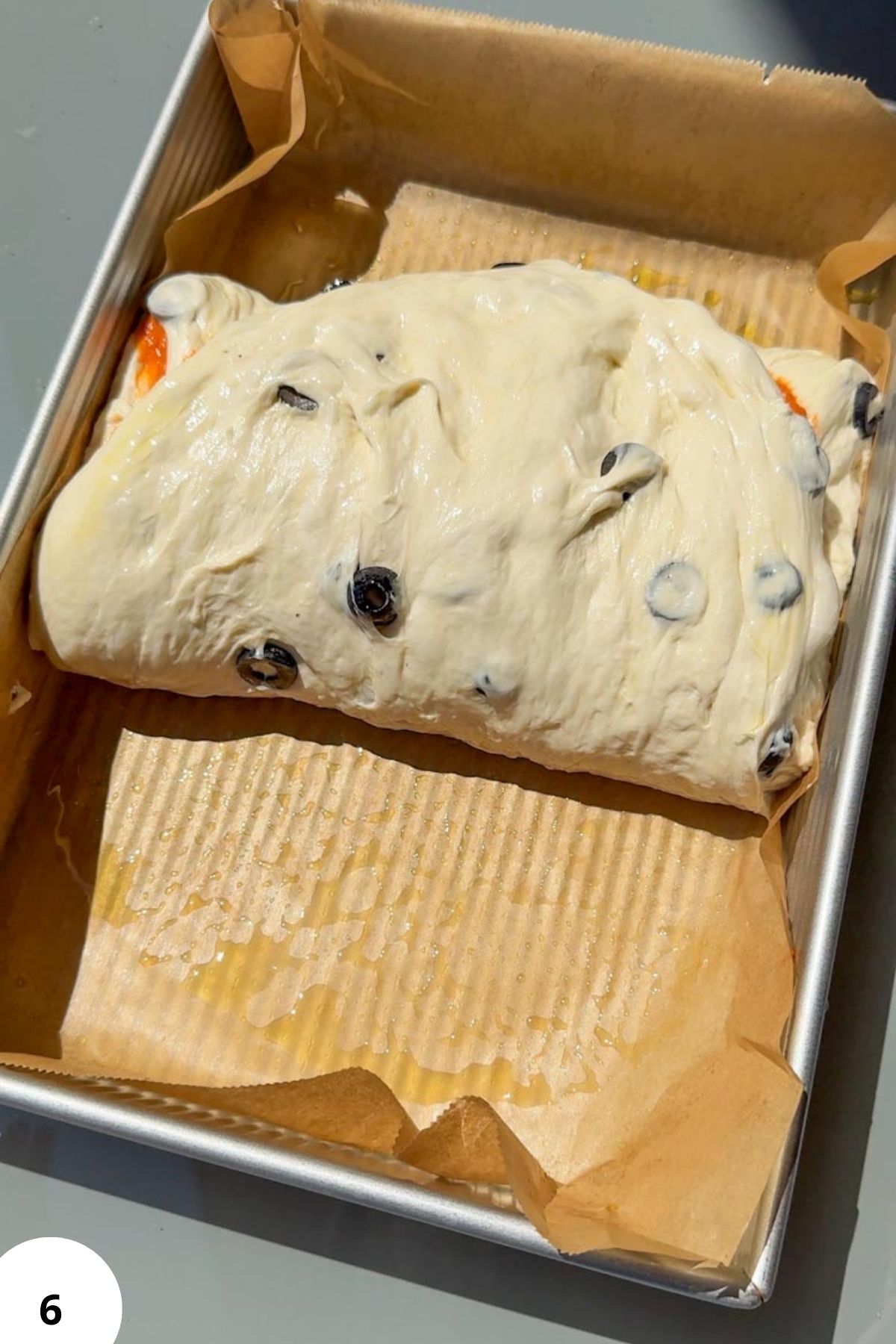
Step 6: Fold the top third of the dough toward the center. Fold the bottom third over the top, just like folding a letter (Image 6). Rotate it so it fits the pan better.
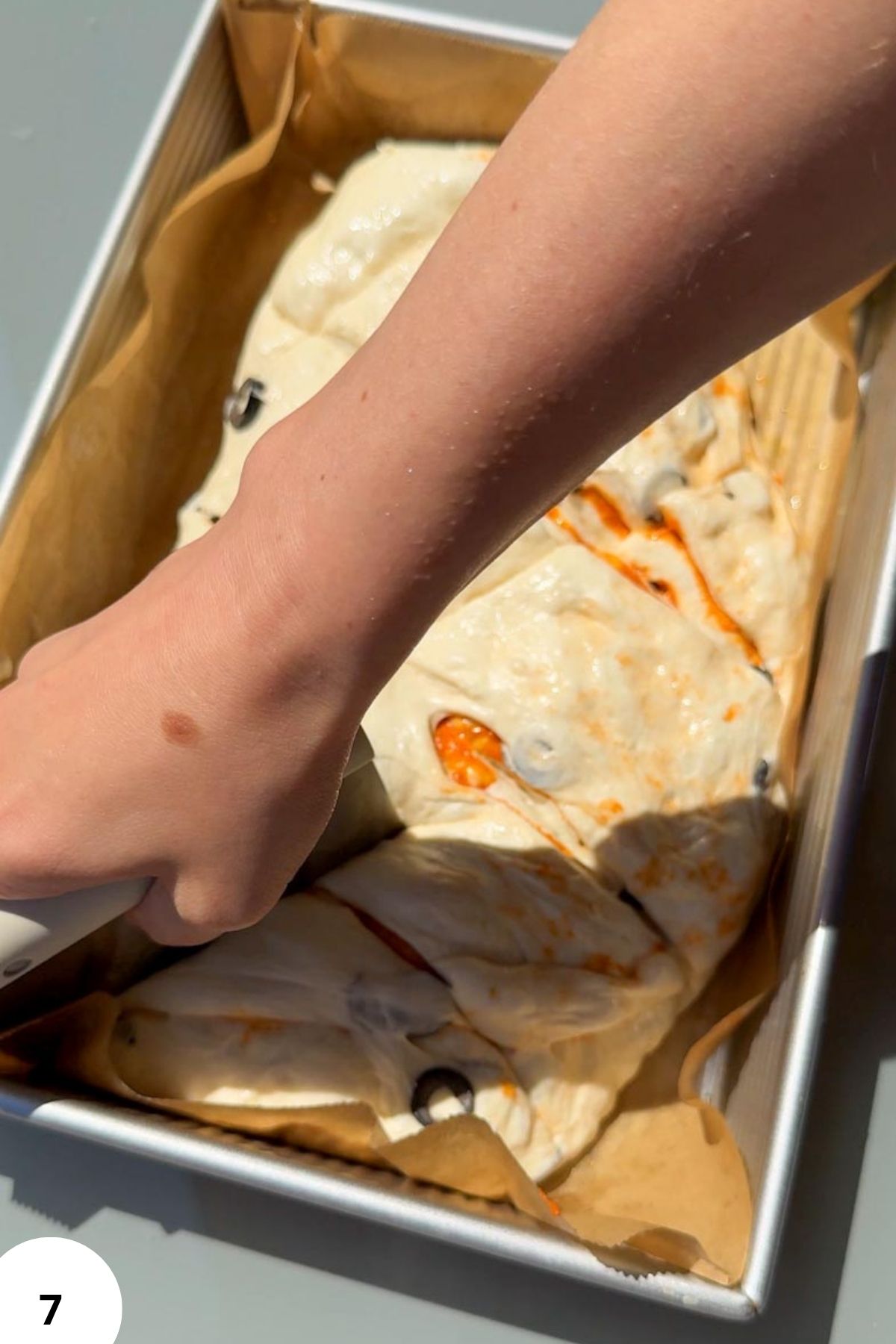
Step 7: Stretch and press the folded dough back toward the edges of the pan until it fills most of the pan again. If you'd like to make this focaccia pull-apart style, cut diagonal lines across the dough with a bench scraper or a sharp knife in one direction, then repeat in the opposite direction to create a diamond pattern (Image 7). Don't be afraid to cut the dough all the way down, as it will stick together again during the second rise!
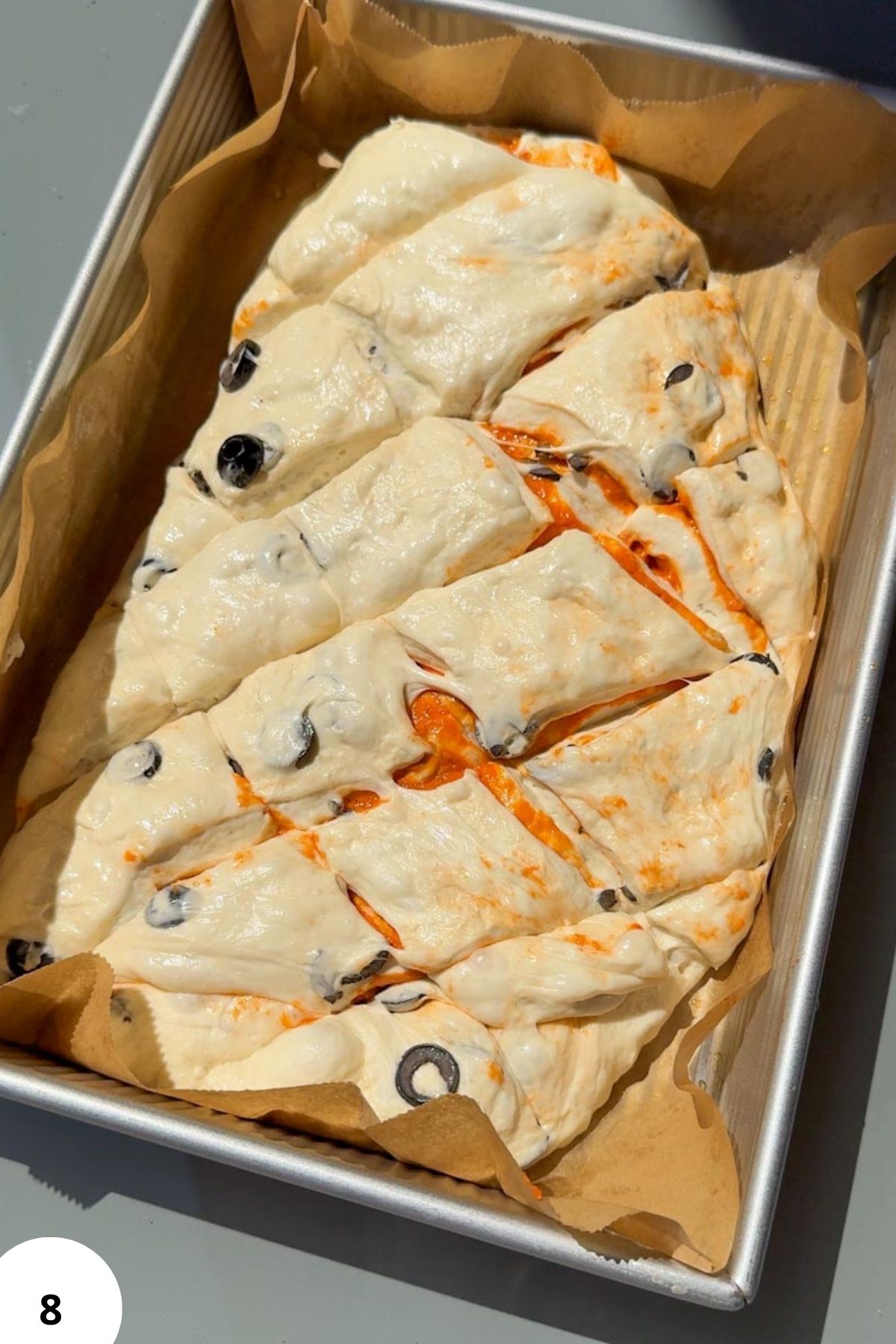
Step 8: Cover and let the dough proof until very puffy and bubbly (Image 8), usually 1-3 hours, depending on the temperature of your kitchen.
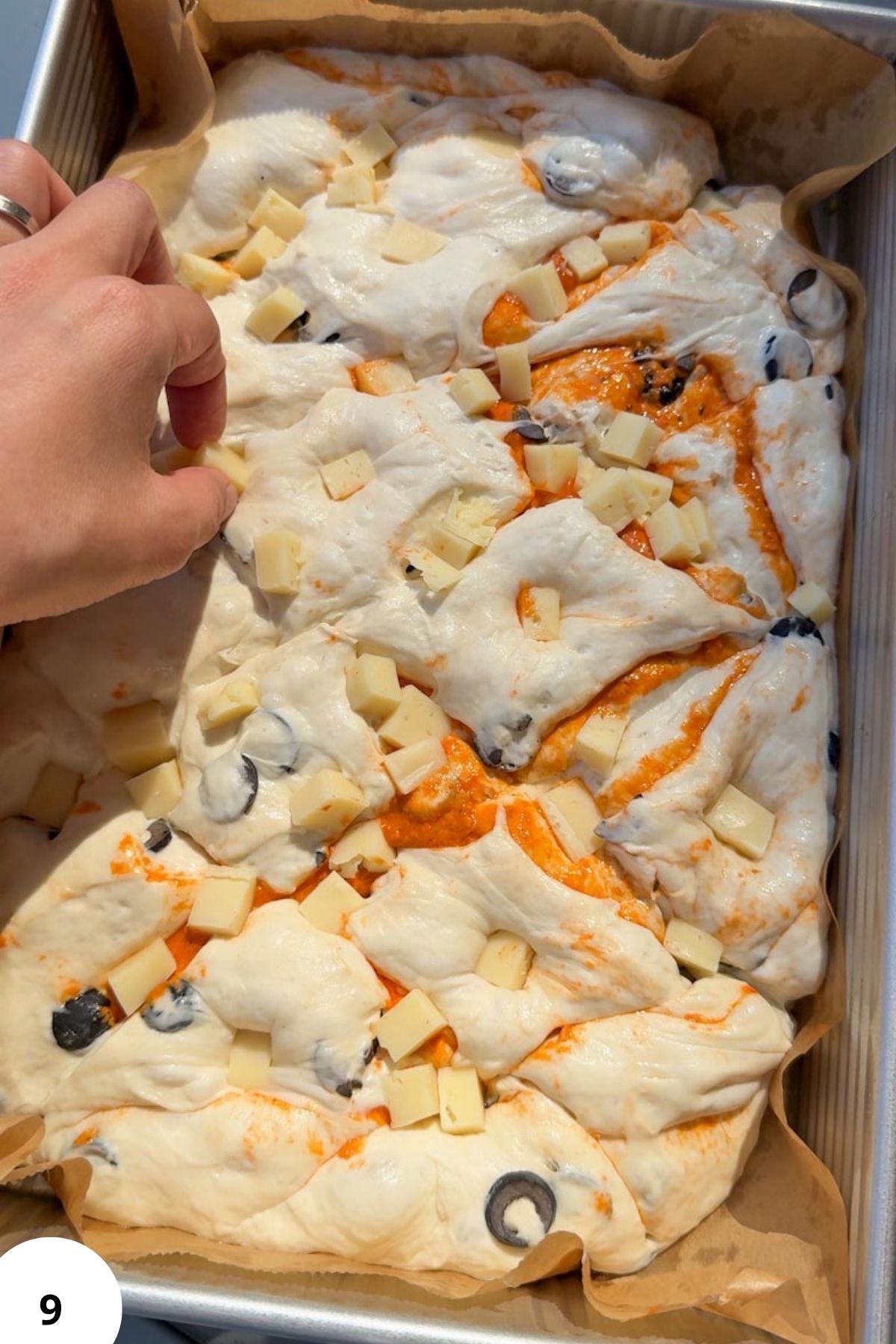
Step 9: After the second rise, go ahead and tuck a cube of cheese into the cut sections (Image 9), pressing it down slightly into the dough (that way, you'll get the cheesy pulls when you pull the dough apart).
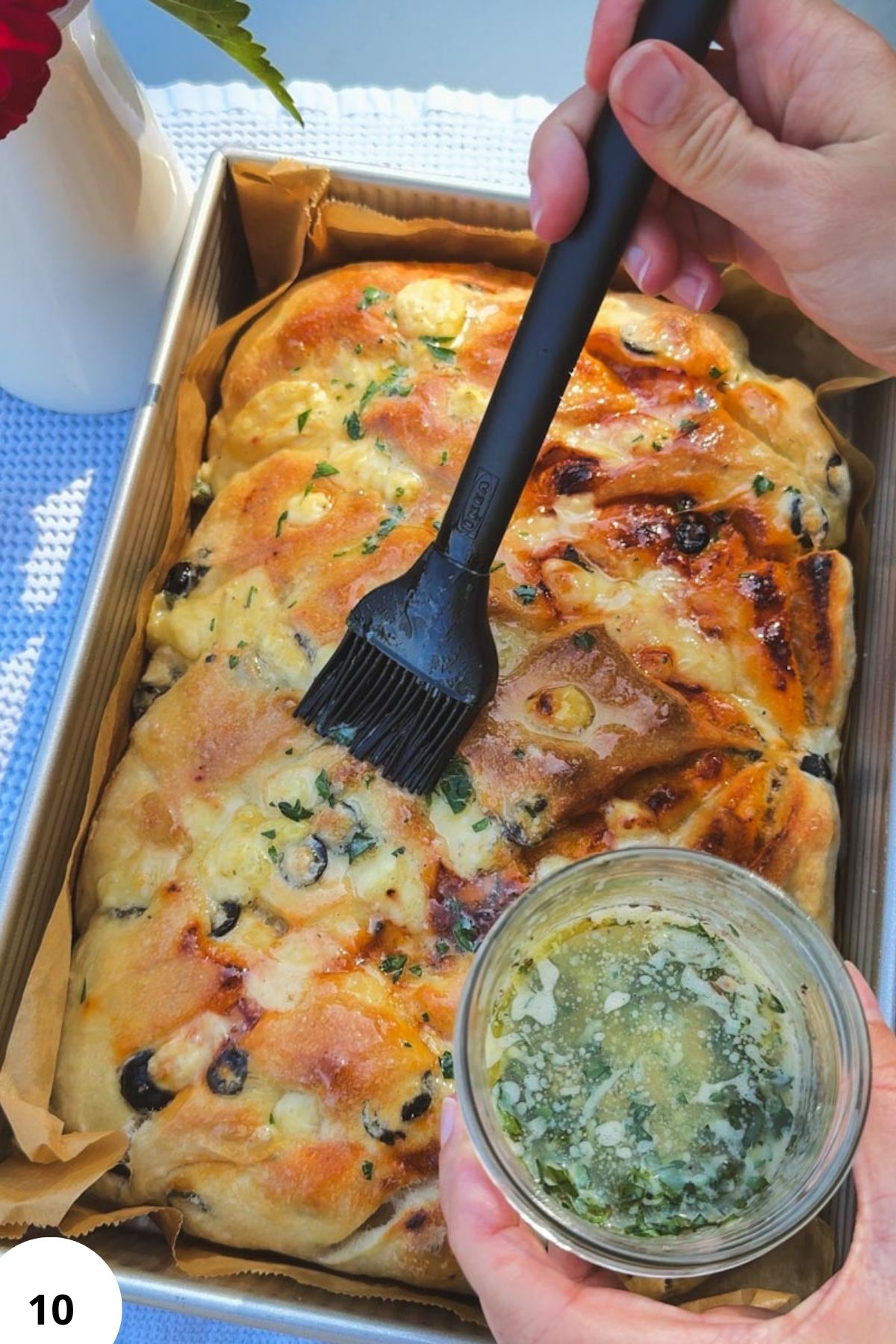
Step 10: Bake at 450°F (230°C) for 25-30 minutes, or until the top is deeply golden and the edges are crisp. Optional if you want to impress guests: stir together some melted butter, parsley, and oregano, then brush it over the warm focaccia as soon as it comes out of the oven (Image 10). Decorate with some fresh basil leaves.
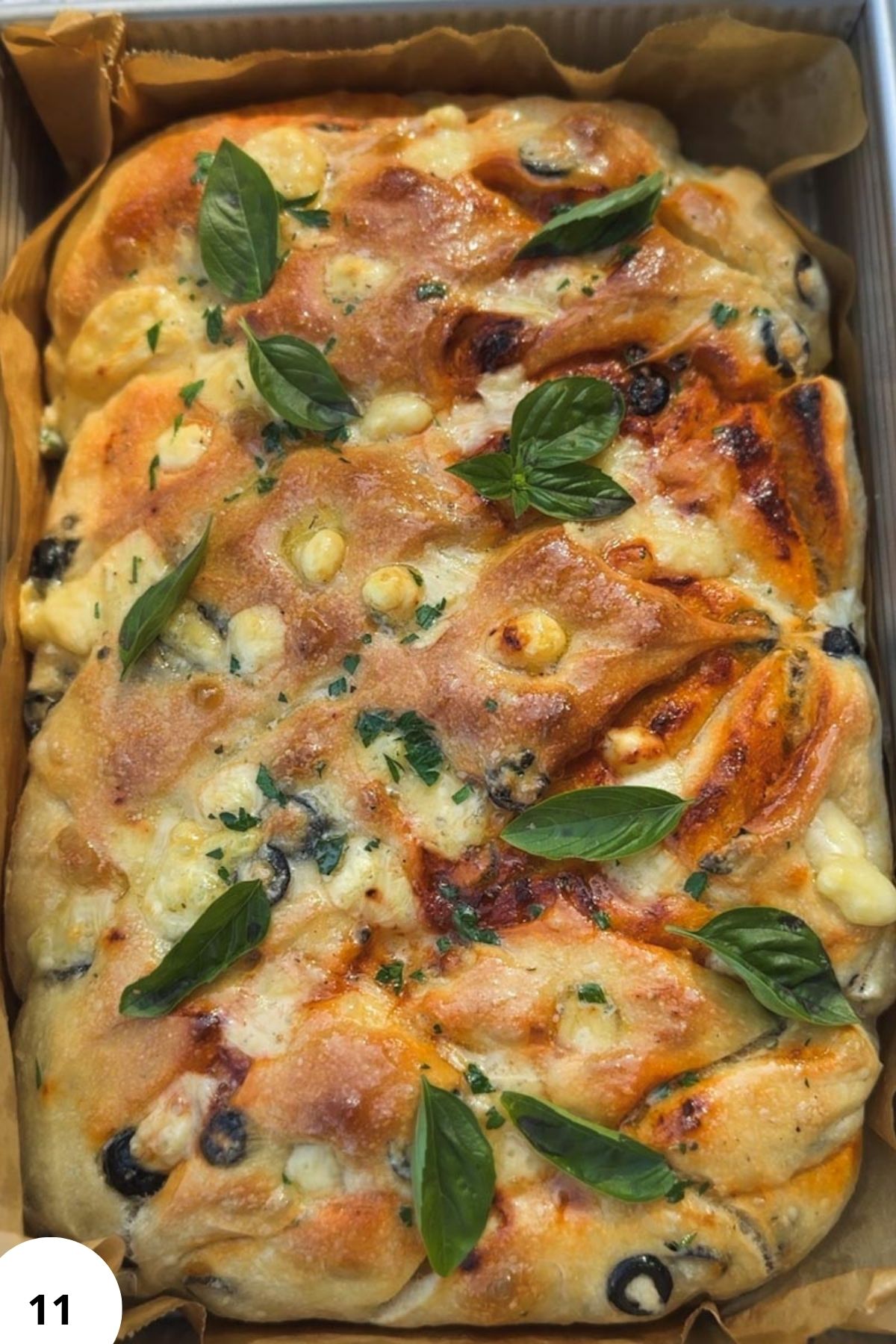
Step 11: Let the focaccia cool for at least 15 minutes before slicing (Image 11).
Hint: don't bake the focaccia until it looks really puffy. A good final proof is what gives you those light air pockets and soft crumb..
Baking Schedule
- 8:00 AM - Mix the dough
- 8:30 AM - First stretch and fold
- 9:00 AM - Second stretch and fold
- 9:30 AM - Third stretch and fold
- 4:00 PM - Shape and fill the focaccia
- 4:15 PM - Final proof
- 5:30 PM - Add cheese and bake
- 6:00 PM - Cool slightly and serve
💭Crucial Success Tips
When you spread on the tomato pesto, leave a border around the edges before folding the dough. It keeps the filling where you want it and makes shaping much easier.
Recipe FAQs
Yes. After bulk fermentation, refrigerate the dough overnight. The next day, transfer it to the pan, let it finish proofing until puffy, then add the cheese and bake.
Dense focaccia is usually caused by under-fermentation. Make sure your starter is active and wait until the dough has increased by about 75% before shaping.
Yes. Homemade roasted tomato pesto works great. Just make sure it isn't too thin, or it can make the dough harder to handle.
How To Store Sourdough Tomato Pesto Olive Focaccia
Store leftover focaccia in an airtight container at room temperature for up to 2 days, or refrigerate it for up to 5 days.
To reheat, warm slices in a 350°F oven for about 5-10 minutes to bring back the crisp edges and soft center.
You can also freeze the baked focaccia for up to 3 months. Wrap individual pieces well and thaw at room temperature before reheating.
Other Delicious Sourdough Recipes
- Fresh Milled Buckwheat Sourdough Rolls

- Einkorn Sourdough Bread for Beginners (50% Fresh Milled)
- The Easiest Fresh Milled Einkorn Sourdough Bread (Loaf Pan Method)
- Fresh Milled Sourdough English Muffins (Same Day or Overnight)
If you tried this sourdough tomato pesto olive focaccia or any other recipe on my blog please leave a 🌟 star rating and let me know how it went in the 📝 comments below! Happy Baking!
Sourdough Tomato Pesto Olive Focaccia
Jump to VideoIngredients
Dough
- 500 g bread flour
- 360 g water
- 100 g active sourdough starter
- 10 g salt
- 25 g olive oil
- 1 teaspoon garlic powder optional
Mix-ins, filling, and other
- ¾ cup olives sliced, I prefer black or kalamata for contrast
- ¾ cup tomato pesto thick roasted
- 3 tablespoon olive oil for greasing the pan
- 200 g cheese cut into small cubes (mozzarella, cheddar, provolone, gouda, etc.)
Instructions
- Combine the flour, water, sourdough starter, salt, olive oil, and garlic powder (if using). Mix until no dry flour remains. Cover and let the dough rest for 30 minutes.
- Perform your first set of stretch and folds, adding the sliced olives as you fold the dough. Complete another 2-3 sets of stretch and folds over the next 2 hours, spacing them about 30 minutes apart.
- Continue bulk fermentation until the dough has increased by about 75% and looks light and airy. For me, that usually takes about 8 hours.
- Generously oil a 9×13-inch baking pan. I like to put a parchment paper in so the serving of this focaccia is easy (I can just take it out and place on a board after it's baked). Transfer the dough to the pan and gently press it into a rough rectangle.
- Spread the tomato pesto over the dough, leaving about a 1-inch border around the edges.
- Fold the top third of the dough toward the center. Fold the bottom third over the top, just like folding a letter. Rotate it so it fits the pan better.
- Stretch and press the folded dough back toward the edges of the pan until it fills most of the pan again. If you'd like to make this focaccia pull-apart style, cut diagonal lines across the dough with a bench scraper or a sharp knife in one direction, then repeat in the opposite direction to create a diamond pattern. Don't be afraid to cut the dough all the way down, as it will stick together again during the second rise!
- Cover and let the dough proof until very puffy and bubbly, usually 1-3 hours, depending on the temperature of your kitchen.
- After the second rise, go ahead and tuck a cube of cheese into the cut sections, pressing it down slightly into the dough (that way, you'll get the cheesy pulls when you pull the dough apart).
- Bake at 450°F (230°C) for 25-30 minutes, or until the top is deeply golden and the edges are crisp. Optional if you want to impress guests: stir together some melted butter, parsley, and oregano, then brush it over the warm focaccia as soon as it comes out of the oven. Decorate with some fresh basil leaves.
- Let the focaccia cool for at least 15 minutes before slicing.
Video
Notes
- If you want to use fresh milled flour: I'd recommend using about 150g fresh milled hard white wheat and 350g bread flour, and increasing water for about 10-15g (so using 370-375g water). I wouldn't go beyond using 150g freshly milled flour, as more will definitely make the focaccia denser and just not as fluffy.
- Homemade roasted tomato pesto works great because it's much thicker than most store-bought versions (at least mine is).
- Pat the olives dry before adding them to the dough to avoid introducing extra moisture. I prefer my olives in brine, not in oil, if I'm adding it to any kind of bread dough.
- Leaving a small border around the pesto helps keep it from leaking out while the focaccia bakes.
- Low-moisture mozzarella, cheddar, provolone, Monterey Jack, gouda, or similar semi-firm cheeses all work well. Avoid very wet fresh mozzarella, which can release too much moisture.
- This focaccia is delicious on its own, but it's also wonderful served with burrata, fresh mozzarella, or alongside soups and salads.