Mixed German Rye Bread (Mischbrot)

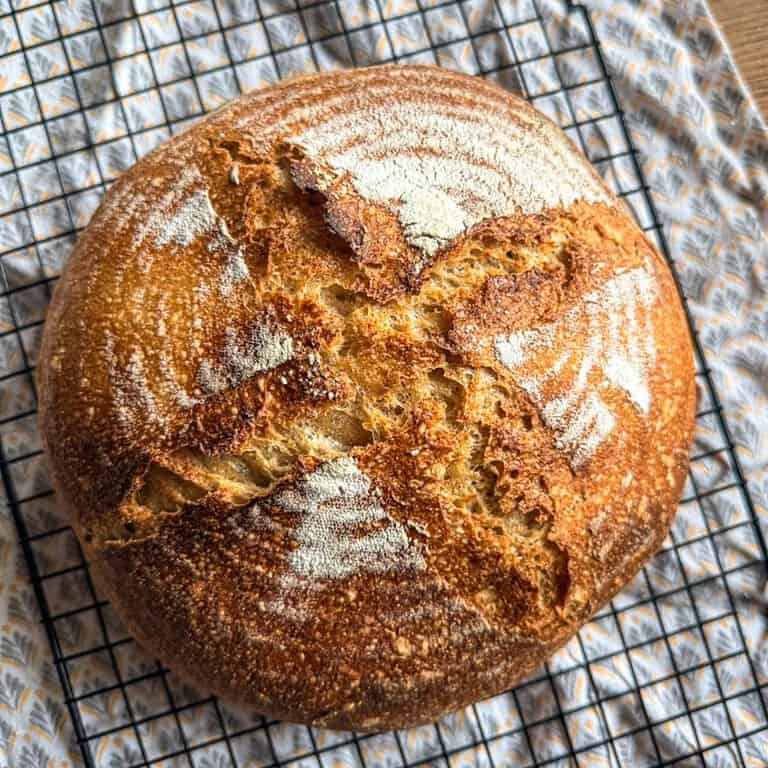
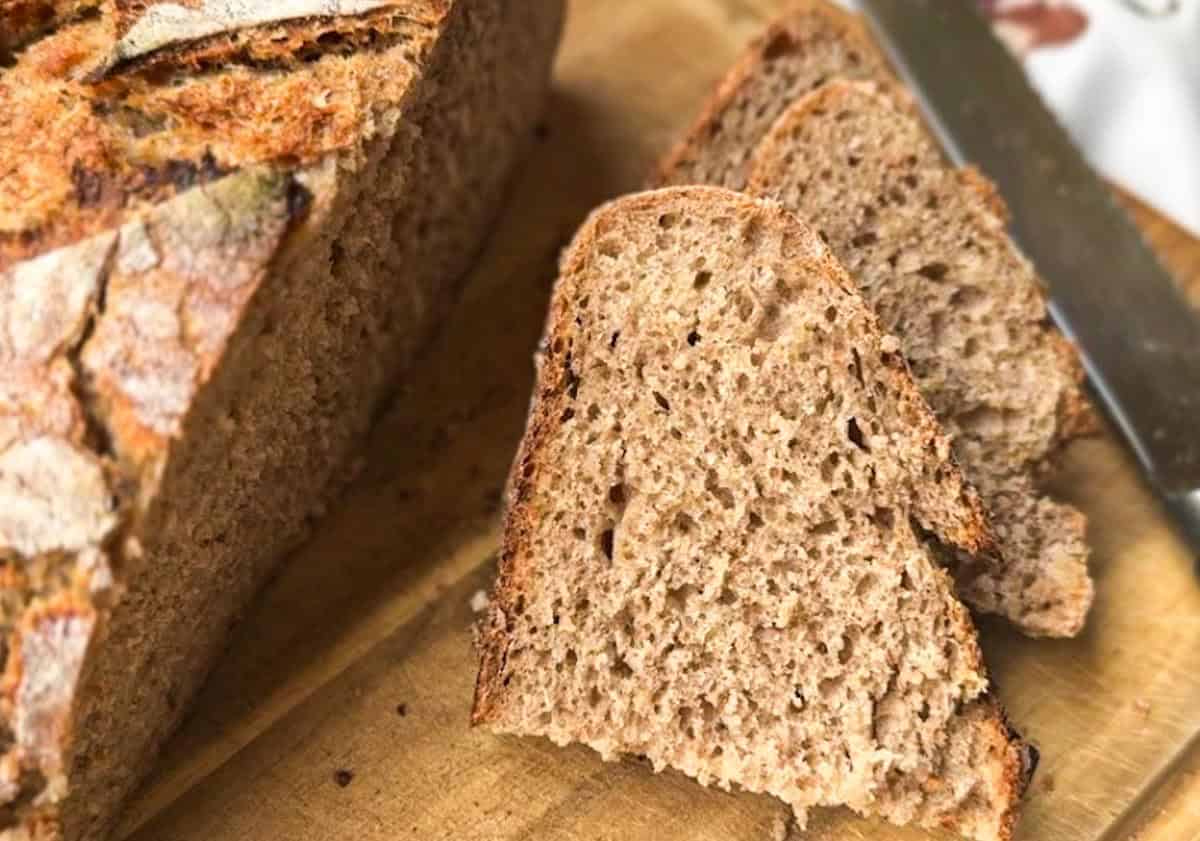
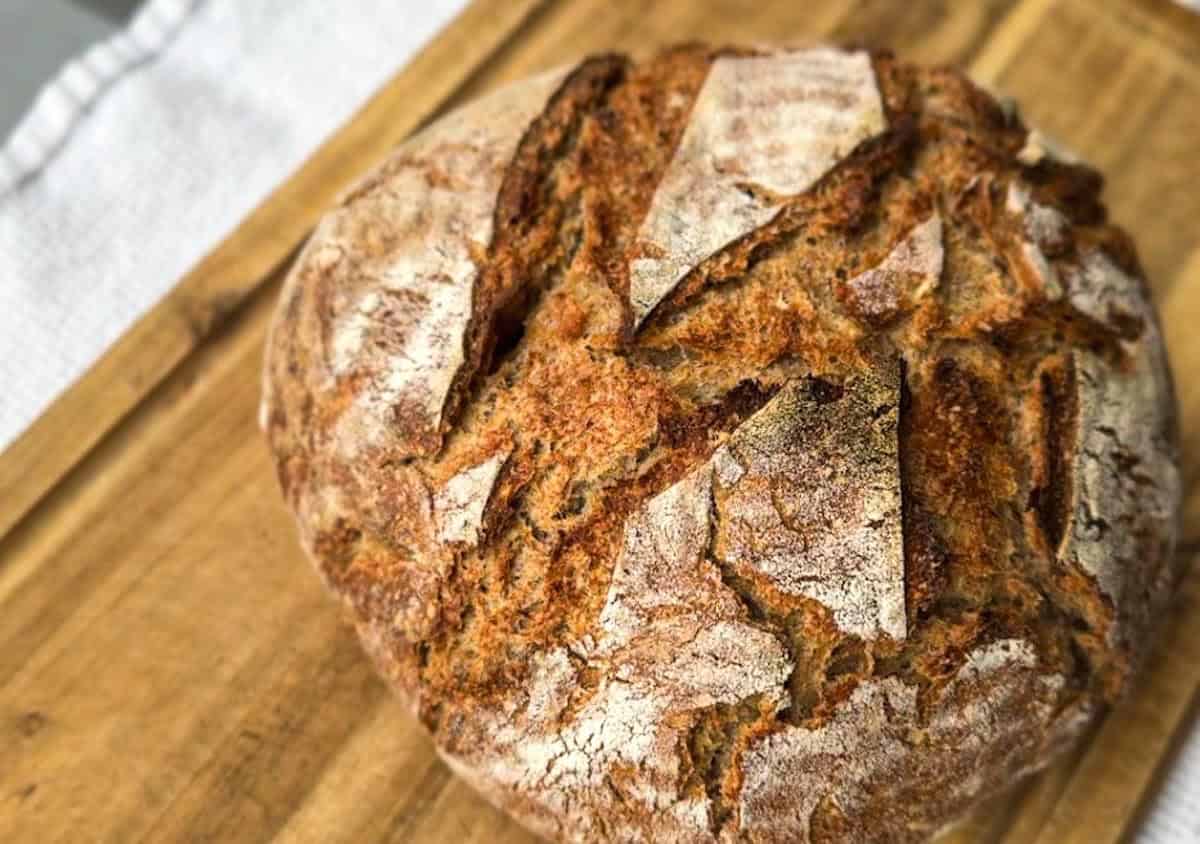
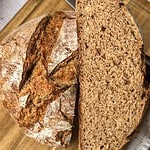
Mixed German rye bread is one of those everyday breads you'll find in bakeries all over Germany, Austria, and here in Slovenia too. It's called Mischbrot, which simply means mixed bread, since it's made with both wheat and rye flour. My version uses 40% freshly milled rye and 60% all-purpose flour, so it's hearty and flavorful without being too dense!
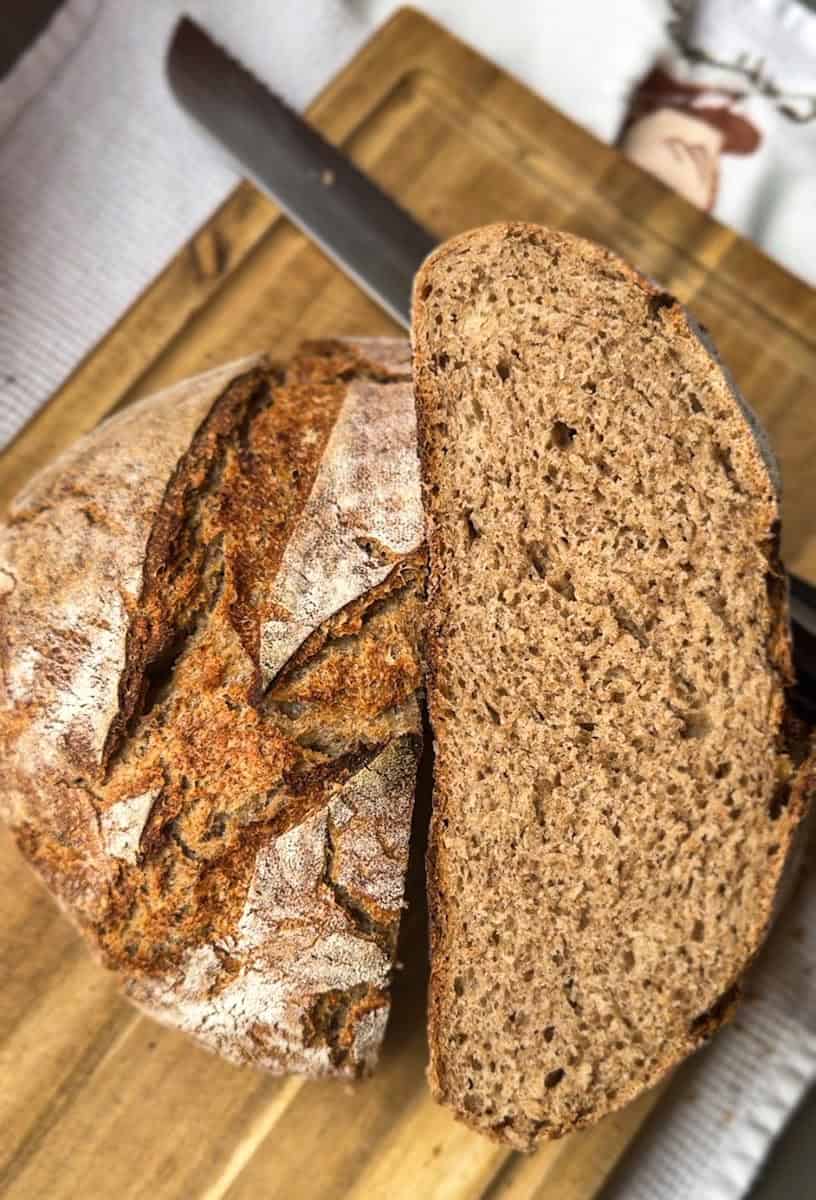
The word Mischbrot simply means mixed bread because it's made with both wheat and rye flour.
There are two main types: Weizenmischbrot, which contains more wheat flour than rye, and Roggenmischbrot, which contains more rye than wheat (simple, yes?).
This recipe is a Weizenmischbrot because it uses 60% wheat flour and 40% rye flour. The combination gives you a loaf that's hearty and flavorful but still lighter than bread made mostly with rye. Traditionally, this kind of bread is enjoyed with cheese, cold cuts, butter, or a bowl of warm soup.
If you love rye flour, you might also like trying my no-knead sourdough rye bread, which is a great option when you want a homemade rye loaf without spending too much time handling the dough. Another recipe to try is my rustic rye sourdough bread with seeds, a hearty loaf with sunflower seeds and a nutty flavor.
Quick Look
- The loaf: Rustic German mixed rye sourdough bread (Mischbrot) made with 40% freshly milled rye flour and 60% all-purpose flour.
- Starter: 20 g active sourdough starter (used to prepare the overnight rye sour).
- Method: Overnight rye sour, mix the main dough, bulk ferment, shape, proof, and bake in a Dutch oven.
- Hands-on time: Approximately 25-30 minutes.
- Plan ahead: Prepare the rye sour 12-14 hours before mixing the main dough.
- Baking: 15 minutes covered at 475°F (245°C), then 30-35 minutes uncovered at 410°F (210°C).
- Yield: 1 rustic round loaf.
- How I serve it: Sliced with butter, cheese, or savory spreads. It's also great alongside warm soups, stews, and goulash.
Summarize & Adapt This Recipe On:
Jump to:
- Quick Look
- Summarize & Adapt This Recipe On:
- Important Ingredients
- Substitutions & Variations
- How to Make Mixed German Rye Bread (Mischbrot)
- Recipe Timeline
- 💭Crucial Success Tips
- Can I Add Yeast?
- Which Grains Can I Use?
- Recipe FAQs
- How To Store Mixed German Rye Bread (Mischbrot)
- Other Delicious Sourdough Bread Recipes
- Mixed German Rye Bread (Mischbrot)
- Other Fresh Milled Sourdough Recipes You'll Love
- Fresh Milled Buckwheat Sourdough Rolls
- Fresh Milled Pumpkin Sourdough Rolls with Poppy Seed Filling
- Einkorn Sourdough Bread for Beginners (50% Fresh Milled)

fresh-milled sourdough course
Want to master fresh-milled sourdough?
15 step-by-step video lessons, 4 sourdough recipes, and lifetime access
Important Ingredients
- freshly milled rye flour gives the bread its hearty texture, earthy flavor, and traditional rye taste.
- all-purpose flour makes up 60% of the flour blend and helps create a lighter crumb than a rye-dominant loaf.
- active sourdough starter used to prepare the overnight rye sour, helping the bread develop its natural tangy flavor.
- warm water hydrates the rye flour and starter to create the rye sour.
- whey or water adds moisture to the dough.
- salt brings out the flavor of the rye and wheat flour while balancing the sourdough taste.
See recipe card for quantities.
Substitutions & Variations
- Freshly milled rye gives this bread its hearty flavor. If you don't have a grain mill, you can use store-bought whole rye flour. The texture and water absorption may be a little different.
- You can use bread flour instead of all-purpose flour. It may give the loaf a slightly stronger structure.
- Leftover whey from homemade yogurt can add a little extra acidity and flavor. If you don't have any, regular water works just fine.
- Start with 70 g of additional water, then add more if the dough looks too dry. Different rye flours absorb water differently, so you may not need the full 90 g.
- The Caraway seed are common in German and Austrian rye breads, but they're optional. Leave them out if you prefer a milder flavor or want to taste the rye on its own.
- You can use your regular wheat sourdough starter to prepare the rye sour. There's no need to maintain a separate rye starter.
- For a different texture, you can add sunflower seeds or pumpkin seeds to the dough. Start with a small amount so they don't make the loaf too heavy.

free resource
Get All 3 Sourdough Bake Schedules
Bake beautiful bread that fits Your life - not the other way around
How to Make Mixed German Rye Bread (Mischbrot)
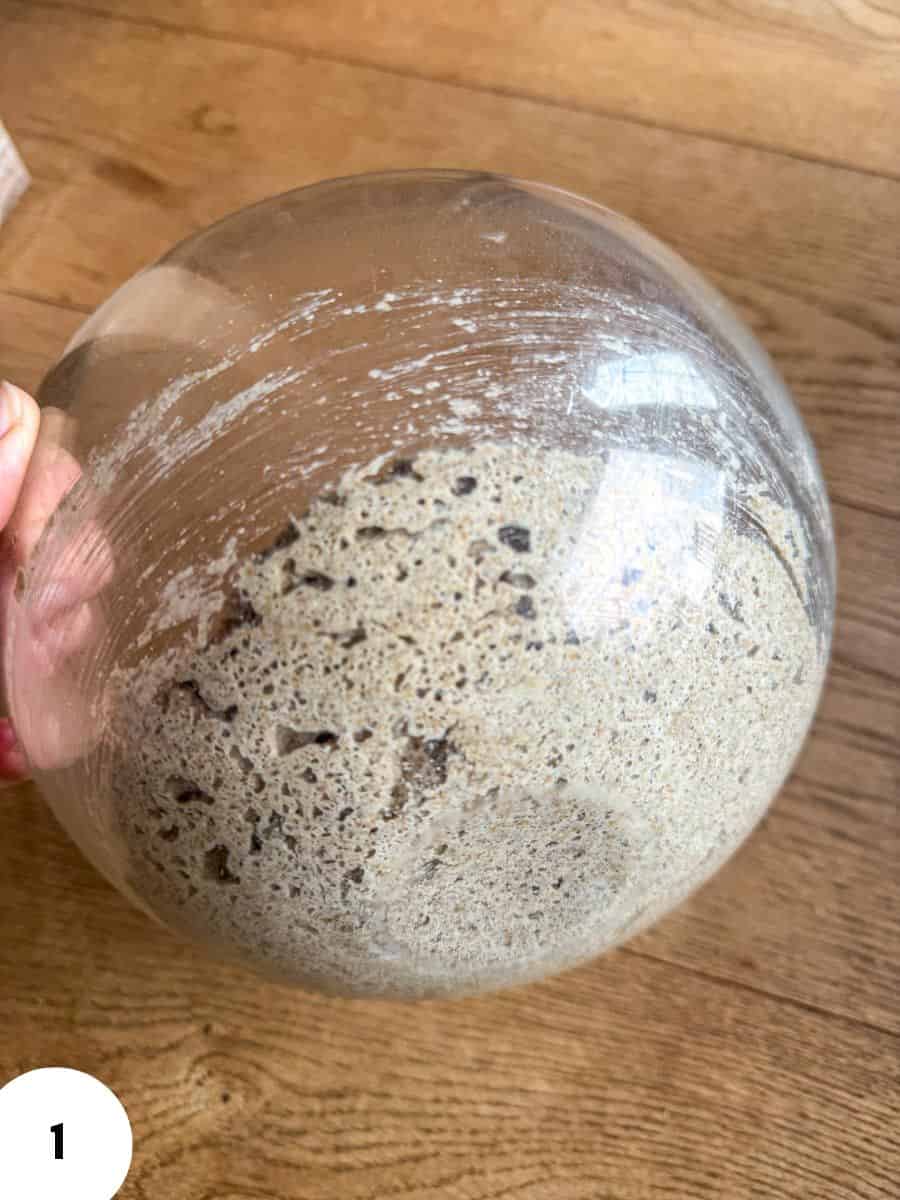
Step 1: Prepare the rye sour. The night before baking, mix the rye flour, warm water, and sourdough starter - you should get a paste-like consistency, and that's normal! Cover and leave at room temperature for 12-14 hours, until bubbly, active, and relatively sour (Image 1).
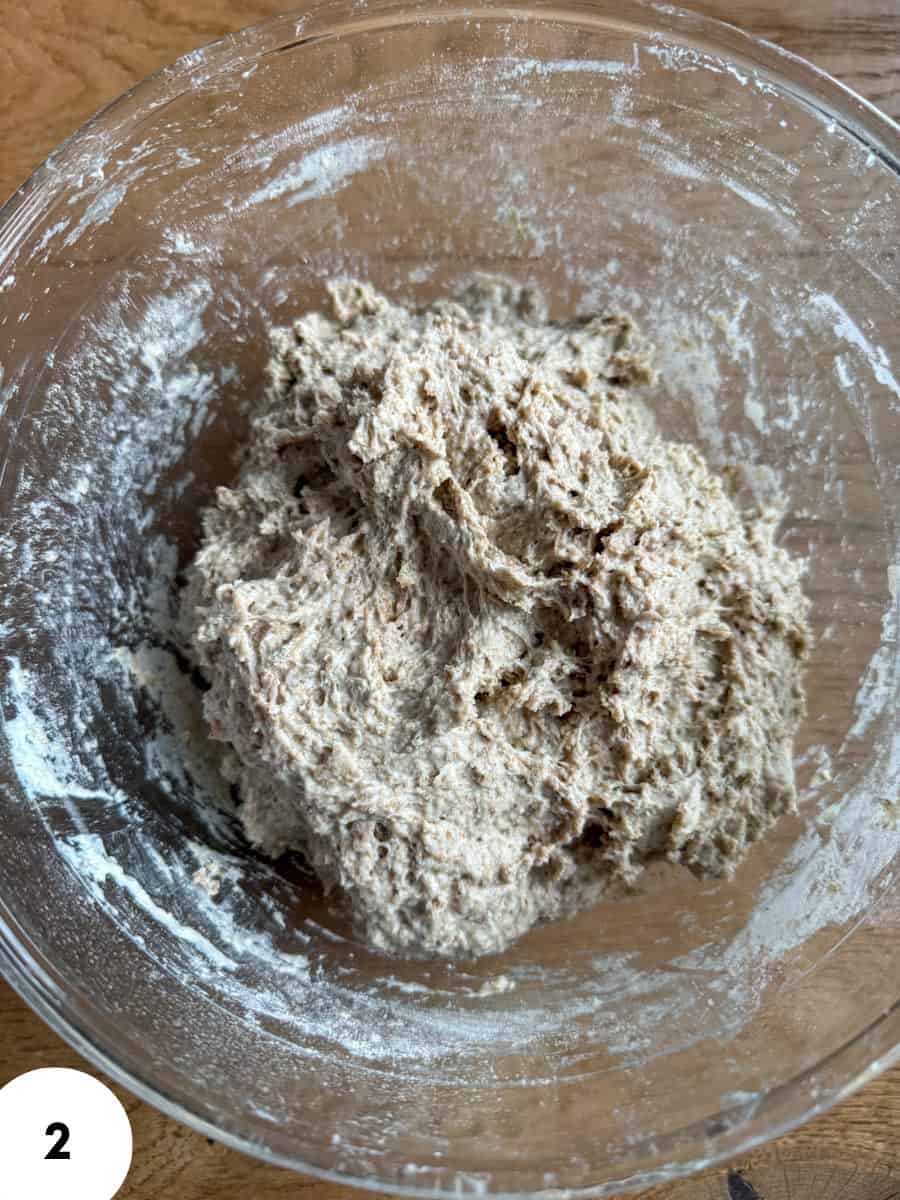
Step 2: Mix the dough. Combine the rye sour with the remaining ingredients, starting with 70 g of water. Mix for about 5 minutes, and aim to have no dry flour left - that's the standard we're going for. If you see the dough is too dry for all the flour to be hydrated, add more water. This dough is supposed to be paste-like, almost like a sticky play dough (Image 2).
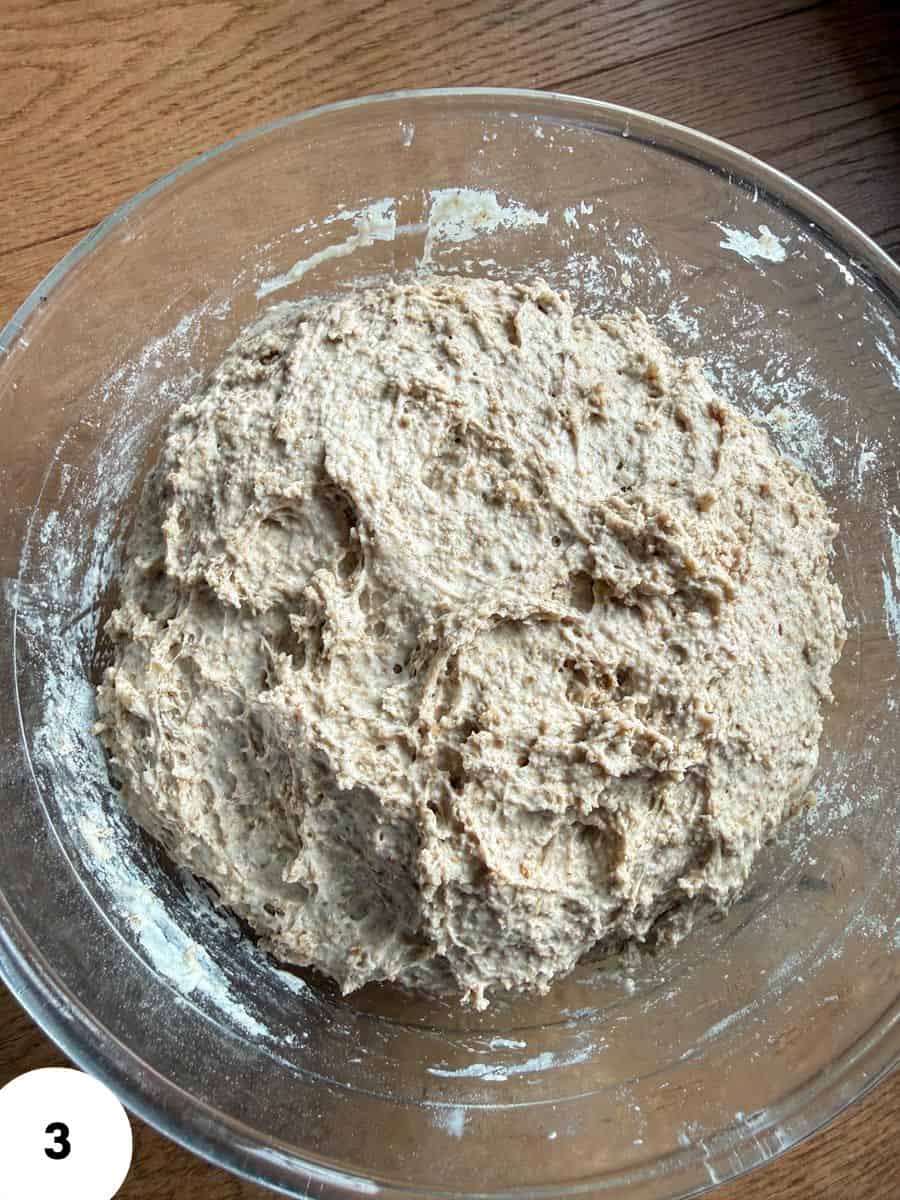
Step 3: First rise (bulk ferment). Cover and let the dough rise in a warm spot for about 2-3 hours, until puffy and roughly 30-40% bigger (Image 3). It doesn't need to double like regular wheat sourdough, but it should have a lot of small bubbles - using a glass bowl makes it really easy to see this.
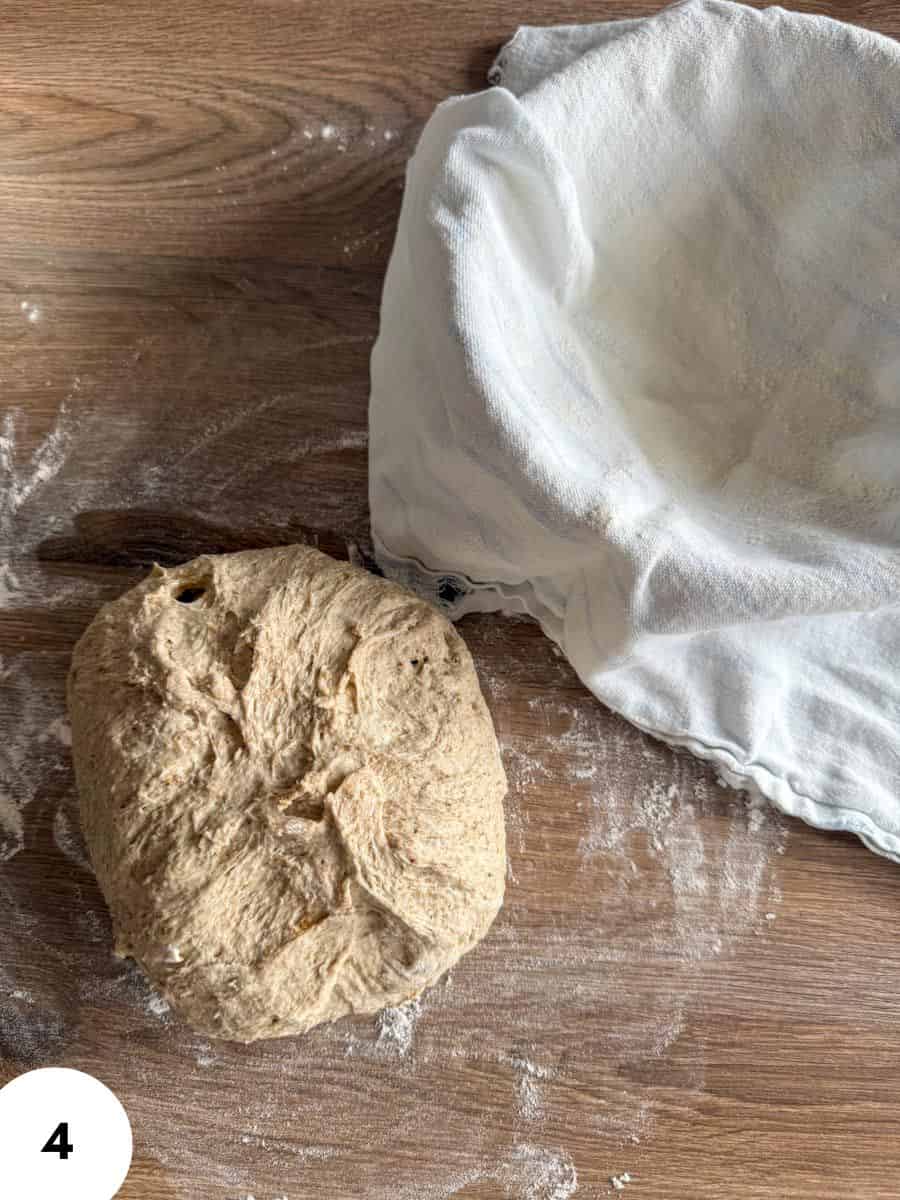
Step 4: Shape. Turn the dough onto a generously floured counter and shape it into a round loaf (Image 4). Use rye flour to help with the stickiness, and bring the edges together to create a ball of dough. Don't handle it too much, since it's normal for the dough to still be sticky. Just get it in a ball as best as you can and place the loaf into a well-floured (!!!) proofing basket.
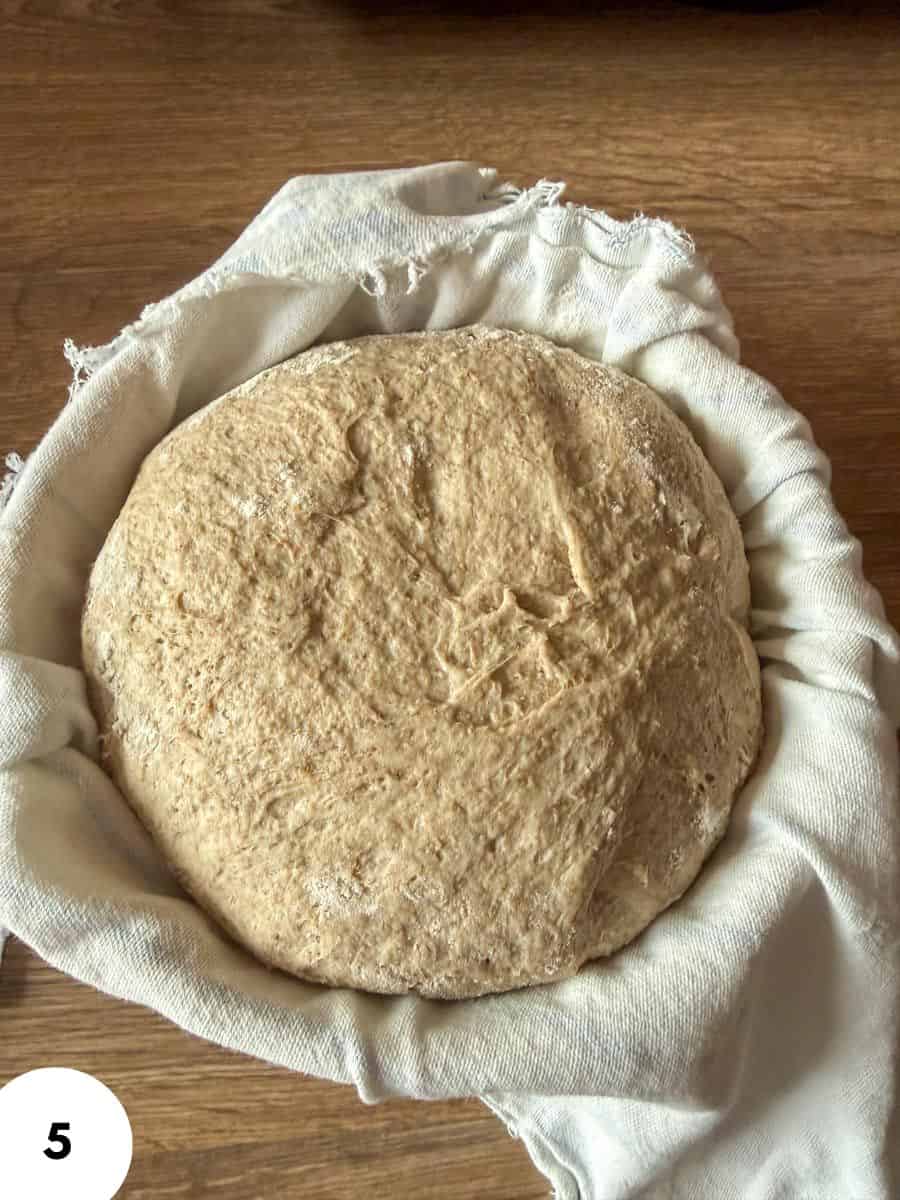
Step 5: Second rise. Cover and let it rise for another 45-75 minutes, until slightly puffy (Image 5). Meanwhile, preheat your Dutch oven to 475°F (245°C). Don't let the dough overproof, since we want some oven spring to help open the crust.
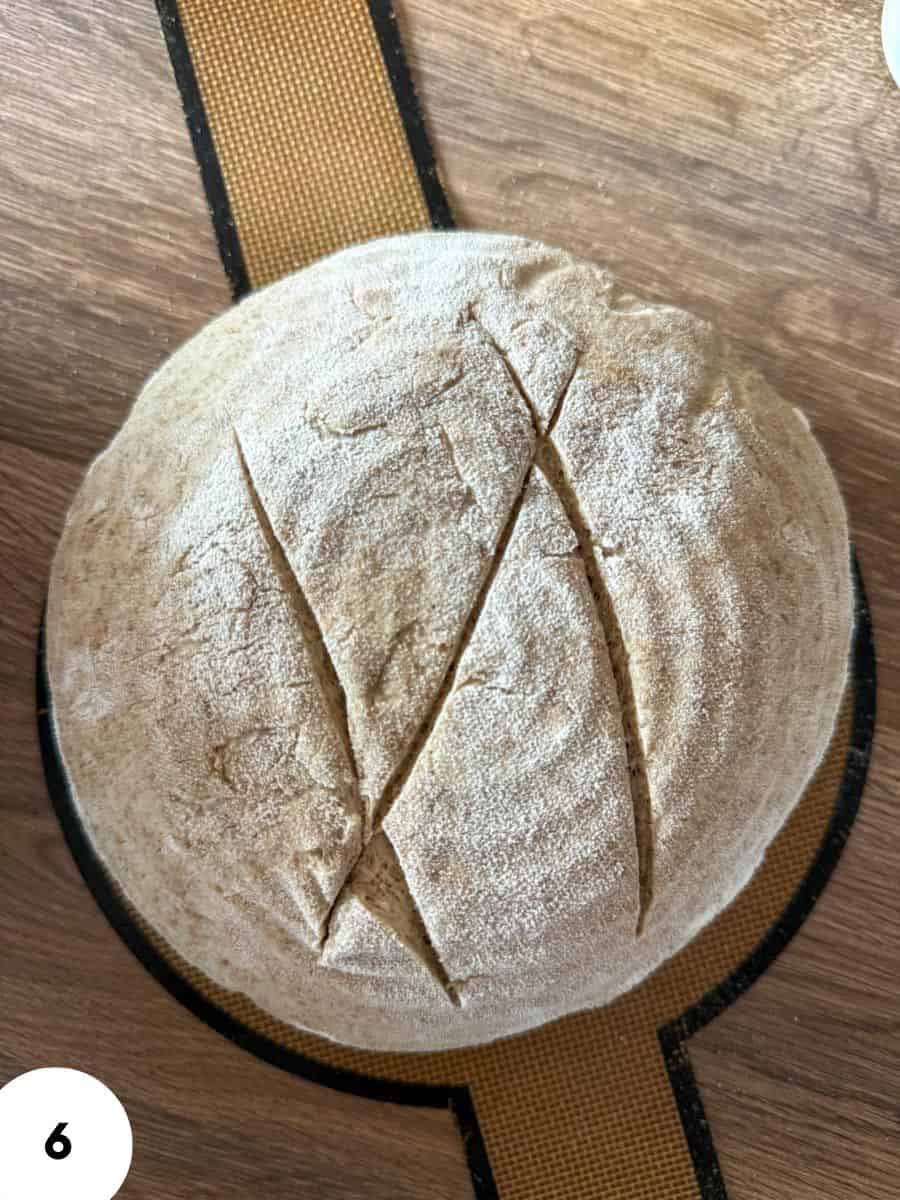
Step 6: Bake. Carefully flip the loaf onto parchment paper so the seam faces up. Do a score of your choice, but be prepared for this loaf to crack a bit uncontrollably too (Image 6)! Transfer it to the hot Dutch oven and bake covered for 15 minutes. Lower the temperature to 410°F (210°C), remove the lid, and bake for another 30-35 minutes, until deep brown and about 205-208°F (96-98°C) inside.
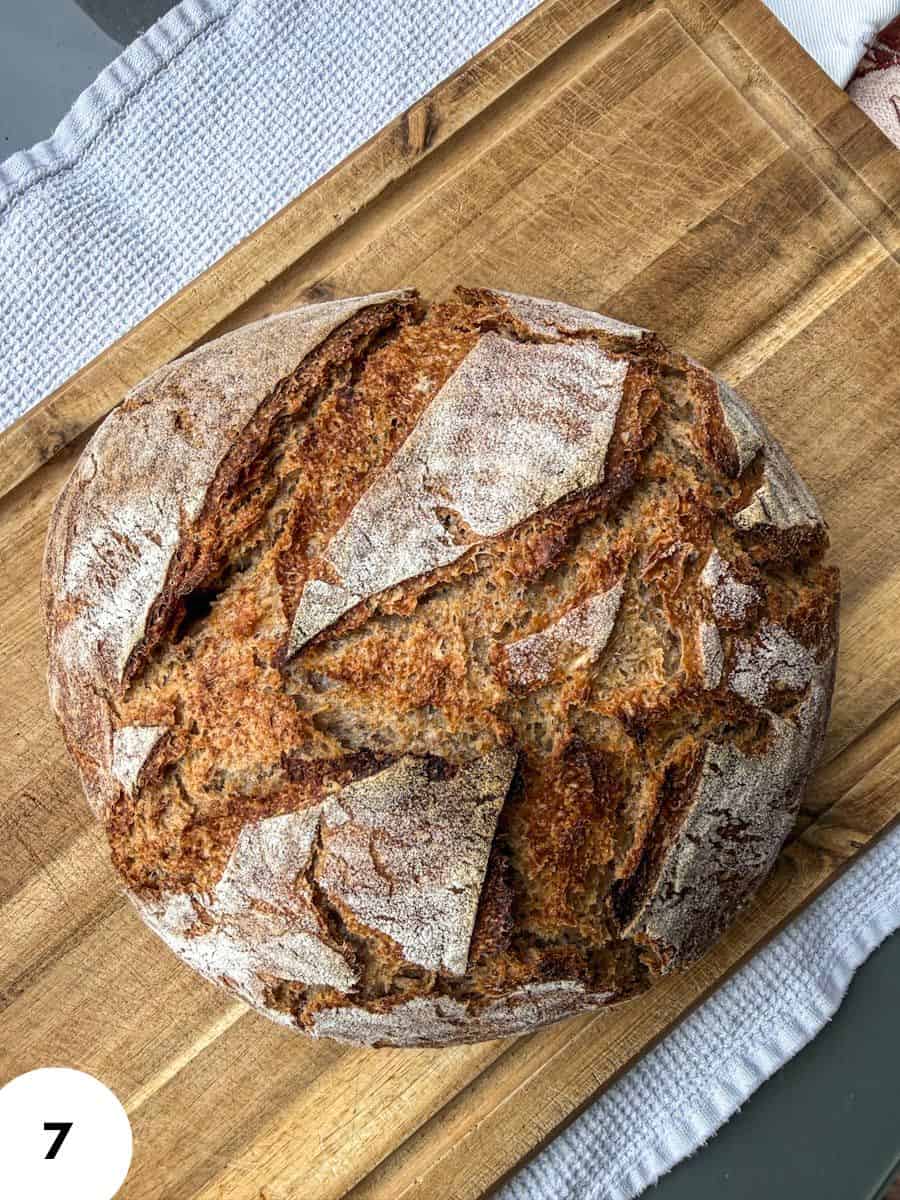
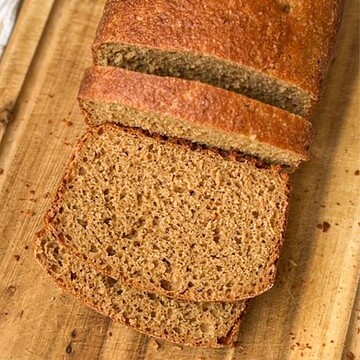
Step 7: Cool. Let the loaf cool completely, preferably a few hours, before slicing (Image 7). Rye bread needs more time for the crumb to set properly, and cutting it too early can make it gummy.
Hint: Use a glass bowl for both the rye sour and the main dough fermentation. Rye dough doesn't always show noticeable bubbles on the surface, so a glass bowl makes it easier to see what's happening along the sides and bottom. This helps you tell when the dough is active and ready for the next step.
Recipe Timeline
OPTION 1: Same-Day Variation
- 7:00 a.m.: Prepare the rye sour by mixing the freshly milled rye flour, warm water, and active sourdough starter. Cover and leave at room temperature for 12-14 hours.
- 7:00 p.m.: Mix the rye sour with the remaining dough ingredients.
- 7:05-7:10 p.m.: Let the dough bulk ferment for 2-3 hours.
- 9:30-10:00 p.m.: Shape the dough and place it in a generously floured proofing basket.
- 10:00-11:15 p.m.: Let the dough rise for 45-75 minutes.
- 11:15 p.m.: Bake in a preheated Dutch oven.
- 12:00 a.m.: Remove the bread and let it cool completely before slicing.
OPTION 2: Overnight Variation - Chill Before Shaping
- Evening (7:00 p.m.): Prepare the rye sour and leave it to ferment overnight for 12-14 hours.
- Next Morning (7:00-7:15 a.m.): Mix the rye sour with the remaining ingredients to make the main dough.
- 7:15-10:00 a.m.: Let the dough bulk ferment for 2-3 hours, until puffy and about 30-40% larger.
- 10:00 a.m.: Cover the dough and refrigerate for a short chill before shaping. Keep an eye on the dough so it doesn't overproof.
- Later: Shape the chilled dough, place it in a generously floured proofing basket, and let it rise until slightly puffy.
- Bake: Preheat your Dutch oven and bake as directed.
Another overnight option: You can prepare the rye sour the night before, mix and bulk ferment the main dough the following morning, then shape and refrigerate the loaf overnight if your proofing basket and refrigerator space allow. However, because this recipe is rye-heavy and the dough is already quite sticky, watch the fermentation closely. Don't automatically leave it in the refrigerator overnight if it is already close to fully proofed.
💭Crucial Success Tips
- Prepare the rye sour the night before. Give it 12-14 hours to ferment at room temperature. It should look bubbly and smell pleasantly sour before mixing the main dough.
- Use finely milled rye flour. A finer flour helps create a more even crumb. If you're milling your own rye, try to get the flour as fine as possible.
- Adjust the water slowly. Start with 70 g of additional water and add more only if needed. Your dough should be sticky and paste-like, similar to soft play dough.
- Don't expect the dough to double. Rye dough behaves differently from regular wheat sourdough. During bulk fermentation, look for a 30-40% increase in size and plenty of small bubbles.
- Flour your proofing basket generously. Rye dough is sticky, so use enough rye flour to prevent it from sticking to the basket, especially around the seams.
- Avoid overproofing. The second rise should take around 45-75 minutes. The loaf should look slightly puffy but still have enough strength to rise in the oven.
- Preheat your Dutch oven properly. A hot Dutch oven helps the bread develop a nice crust and those natural cracks that are common in rustic rye loaves.
- Let the bread cool completely. Rye bread needs time for the crumb to set. I recommend waiting a few hours before slicing to avoid a gummy texture.
Can I Add Yeast?
Yes, you can add a small amount of instant yeast to help the dough rise more quickly. Keep in mind that rye dough behaves differently from regular wheat dough, so adding yeast won't make it as elastic or easy to handle.
Option A: Just a Pinch (Long Fermentation)
Add 1 g (about ¼ teaspoon) instant yeast to the main dough along with the flour. Keep the original 20 g active sourdough starter and all other ingredients the same.
Follow the usual mixing, bulk fermentation, shaping, and proofing steps. Check the dough earlier than usual because the added yeast may speed up fermentation.
Rough timeline: Prepare the rye sour overnight, mix the main dough the next morning, and allow it to bulk ferment for about 2-3 hours or until puffy and 30-40% larger. Shape, proof for 45-75 minutes, and bake as directed.
Option B: Faster Version
Add 3 g (about 1 teaspoon) instant yeast to the main dough along with the flour. Keep the original 20 g active sourdough starter and all other ingredients the same.
The commercial yeast will help the dough rise faster, but I still recommend preparing the rye sour overnight. This step is important because the acidity helps control the starch-breaking enzymes in rye flour.
Rough timeline: Prepare the rye sour overnight, mix the main dough in the morning, and allow approximately 1-2 hours for bulk fermentation, checking for a 30-40% increase in size. Shape the loaf, proof for about 30-60 minutes until slightly puffy, and bake as directed.
Important note: These yeast variations are suggested adjustments, not tested versions of the original recipe. Avoid relying on a fixed fermentation time, especially with rye dough. Watch the dough's appearance and rise rather than waiting for it to double.
Which Grains Can I Use?
This Mixed German Rye Bread uses a combination of 60% all-purpose flour and 40% freshly milled rye flour. This balance gives the loaf a hearty rye flavor while keeping it lighter and easier to handle than a rye-dominant bread.
- Freshly milled rye flour and all-purpose flour: This is the original combination I recommend. The rye adds flavor and a hearty texture, while the all-purpose flour provides structure.
- Bread flour: You can replace the all-purpose flour with bread flour. It may give the loaf a little more structure, but the dough will still be naturally sticky because of the rye.
- Store-bought whole rye flour: If you don't have a grain mill, regular whole rye flour can work. Different brands and milling textures absorb water differently, so adjust the additional water as needed.
- Freshly milled wheat flour: You can experiment with freshly milled hard white wheat instead of all-purpose flour. Keep in mind that whole wheat flour may absorb more water and give the loaf a slightly denser texture.
- Different rye varieties: You can experiment with different rye grains, but the flavor, texture, and water absorption may change depending on the variety and how finely you mill it.
Baking with freshly milled flour? The grain and how finely it's milled can change how the dough handles. My fresh-milled flour guide explains what to watch for. A full fresh-milled swap, including spelt or einkorn, needs its own adjustments.
A little tip: I wouldn't recommend replacing all the wheat flour with rye flour in this recipe without making other adjustments. Rye has different baking properties and doesn't develop gluten like wheat flour. Keeping the original 60% wheat and 40% rye combination gives you a more manageable dough and a lighter Mischbrot loaf.
Recipe FAQs
No! You can use your regular wheat sourdough starter to prepare the rye sour. Just mix a small amount of your active starter with rye flour and water the night before baking. It will develop the acidity and flavor needed for this bread.
Rye flour behaves differently from wheat flour because it contains less gluten-forming proteins and absorbs water differently. This recipe also has a relatively high hydration, so the dough will feel sticky and paste-like. That's normal, and you don't need to add a lot of extra flour to make it feel like regular bread dough.
After about 2-3 hours of bulk fermentation, the dough should look puffier and increase in size by around 30-40%. Look for small bubbles along the sides and bottom of the glass bowl. It doesn't need to double in size like regular wheat sourdough.
How To Store Mixed German Rye Bread (Mischbrot)
Let the bread cool completely before storing. Keep it cut-side down on a wooden board or place it in a bread bag or bread box. It should stay fresh for around 3-4 days.
You can freeze the whole loaf or slice it first. Wrap it tightly in plastic wrap or a freezer-safe bag and freeze for up to 3 months.
Other Delicious Sourdough Bread Recipes
- Mixed German Rye Bread (Mischbrot)

- Sourdough Kaiser Rolls (Austrian Kaisersemmeln)
- Fresh Milled Buckwheat Sourdough Rolls
- Einkorn Sourdough Bread for Beginners (50% Fresh Milled)


If you tried this mixed german rye bread (mischbrot) or any other recipe on my blog please leave a 🌟 star rating and let me know how it went in the 📝 comments below! Happy Baking!
Mixed German Rye Bread (Mischbrot)
Ingredients
For the rye sour (the night before)
- 110 g freshly milled rye flour
- 110 g warm water
- 20 g active sourdough starter your regular wheat starter works!
For the main dough
- 320 g all-purpose flour
- 110 g freshly milled rye flour
- 200 g whey or water don't stress if you use water, I usually do! Whey is a nice addition when I have it from making yogurt, but not necessary at all!
- 70-90 g water
- 11 g salt
- 4 g caraway seeds optional
Instructions
- Prepare the rye sour. The night before baking, mix the rye flour, warm water, and sourdough starter - you should get a paste-like consistency, and that's normal! Cover and leave at room temperature for 12-14 hours, until bubbly, active, and relatively sour.
- Mix the dough. Combine the rye sour with the remaining ingredients, starting with 70 g of water. Mix for about 5 minutes, and aim to have no dry flour left - that's the standard we're going for. If you see the dough is too dry for all the flour to be hydrated, add more water. This dough is supposed to be paste-like, almost like a sticky play dough..
- First rise (bulk ferment). Cover and let the dough rise in a warm spot for about 2-3 hours, until puffy and roughly 30-40% bigger. It doesn't need to double like regular wheat sourdough, but it should have a lot of small bubbles - using a glass bowl makes it really easy to see this.
- Shape. Turn the dough onto a generously floured counter and shape it into a round loaf. Use rye flour to help with the stickiness, and bring the edges together to create a ball of dough. Don't handle it too much, since it's normal for the dough to still be sticky. Just get it in a ball as best as you can and place the loaf into a well-floured (!!!) proofing basket.
- Second rise. Cover and let it rise for another 45-75 minutes, until slightly puffy. Meanwhile, preheat your Dutch oven to 475°F (245°C). Don't let the dough overproof, since we want some oven spring to help open the crust.
- Bake. Carefully flip the loaf onto parchment paper so the seam faces up. Do a score of your choice, but be prepared for this loaf to crack a bit uncontrollably too! Transfer it to the hot Dutch oven and bake covered for 15 minutes. Lower the temperature to 410°F (210°C), remove the lid, and bake for another 30-35 minutes, until deep brown and about 205-208°F (96-98°C) inside.
- Cool. Let the loaf cool completely, preferably a few hours, before slicing. Rye bread needs more time for the crumb to set properly, and cutting it too early can make it gummy.