Sourdough Schedule: How to Make the Timing Fit Your Day
If you're struggling to fit sourdough into your week, you probably don't need a new recipe. You need a sourdough schedule you can bend. When I started baking with sourdough about six years ago, I was always calculating hours in my head. When do I feed the starter? When do I mix? Will I have to get up in the middle of the night to shape?
Here's what changed things for me: some steps in the sourdough process are very flexible, and some aren't. Once you know which is which, you can look at almost any recipe, whether it's bread, cinnamon rolls or scones, and see where you can stretch the timing or shorten it.
Quick Look
- Starter: it doesn't have to be used right at its peak. Once it has peaked, you have hours of leeway.
- Bulk fermentation: this is the step to plan around. Change the amount of starter in the dough to make it longer or shorter.
- Second rise: the most flexible step. A couple of hours on the counter, or into the fridge to bake later.
Prefer to watch? In this video, I go through each step and how much leeway you really have.
How to Adjust Your Sourdough Schedule at a Glance
If you only read one part of this post, make it this table. Each row is one thing you might need from your day, and the change that usually gets you there.
| If you need… | Try adjusting… |
|---|---|
| Your starter to peak later | Feed a small amount of starter with more flour and water, or make it a little thicker. |
| Your starter to peak sooner | Feed more starter with less flour and water, or make it a little runnier. |
| A longer bulk fermentation (overnight or a long workday) | Use a bit less starter in the dough, or keep it somewhere cooler. |
| A shorter bulk fermentation (bread for dinner) | Use a bit more starter in the dough, or keep it somewhere warmer. |
| To bake later, even the next day or the day after | Shape the dough and put it in the fridge. |
| To bake the same day | Do the second rise at room temperature for about 2 hours, then bake. |
The Sourdough Timeline, Step by Step
Every recipe has its own instructions, but the sourdough timeline is pretty much the same for everything that uses an active starter:
- Feed the starter and let it peak.
- Mix the dough and let it bulk ferment (the first rise).
- Shape, which only takes a few minutes.
- Second rise, on the counter or in the fridge.
- Bake.
Mixing and shaping are short, hands-on jobs. The waiting in between is where your schedule lives, so that's what we'll look at.

Do You Have to Use Sourdough Starter at Its Peak?
No. Most people don't know this, but a starter is still active a few hours after its peak, even when it has started to go down and is becoming a bit more acidic and less bubbly. It works in recipes that call for an active starter.
What matters is that it did reach its peak. Don't use it before, because it simply won't be strong enough for some bakes.
How long after feeding sourdough starter can I use it?
Wait until it has peaked, then you have a wide window. In my own baking, I usually use my starter for at least 12 hours after it peaks, and I get the same results as when I use it right at the top. That's my experience with my starter and my kitchen, so watch yours the first few times. A warm kitchen or a very runny starter can move faster.
So yes, you can use sourdough starter after it falls, as long as it peaked first. For the signs to look for, see my post on when your sourdough starter is ready to use.
When to feed your starter for a morning, after-work or evening mix
Pick when you want to mix the dough, then work backward:
- Mixing in the morning: feed your starter the evening before. It might peak around 2 or 3 a.m., and it's still fine to use at 7 a.m.
- Mixing after work: feed your starter in the morning.
- Mixing in the evening: feed it mid-morning, or closer to noon if you'll be mixing late.
If you keep your starter in the fridge between bakes, my no-waste starter feeding routine shows how I fit those feeds around my bake days.
How to Make Your Starter Peak Earlier or Later
If you want your starter to peak at a particular time, say in the morning after a night feed, three things affect how fast it rises. Temperature is the first, but it's the hardest one to change at home. So I adjust the other two.
Change the feeding ratio
If you feed a small amount of starter with a lot of flour and water, it takes longer to rise. That little bit of starter has a lot of work to do. If you feed a bigger amount of starter with about as much flour and water as there is starter, it rises faster.
Change the consistency
A runnier starter, with more water in it, rises faster. A thicker one rises more slowly. Bread dough works the same way, because dough and starter are basically the same thing. If you want to dig into thick versus runny starters, I explain it in what a 100% hydration starter is.
Bulk Fermentation: The Step to Plan Around
This is where most people get stuck. You mix the dough, and then you have to be around when the first rise is done. A lot of recipes say about 8 hours of bulk fermentation. That's hard if you're at work longer than that, and for many people a whole night is too long, so the dough can over-ferment.
My fix is simple: adjust the amount of starter in the dough. A recipe's bulk time is based on how much starter it has compared to the rest of the dough. Change that amount, and you change the sourdough fermentation time.
Use less starter for a longer bulk
Less starter means that small amount has a lot of dough to ferment, so it takes longer. It's the same idea as feeding ratios for your starter.
Here's an example. The numbers are made up just to show the idea, not a formula. Say a recipe has 100 g of starter, 500 g of flour and 400 g of water, and it says bulk takes 8 hours. If you use 60 to 70 g of starter instead, that dough might take more like 10 to 12 hours. That can be enough to try an overnight bulk fermentation, even if the recipe says it won't work overnight.
Use more starter when you need bread for dinner
Maybe it's morning, your starter is ready, and you want bread for dinner but can't wait a full 8 hours. Use more starter, for example 140 g instead of 100 g in that same made-up recipe, and the dough might ferment in about 5 to 6 hours.
In general, less starter gives you a longer bulk and more starter gives you a shorter one. How big the change is depends on your starter, the dough temperature, the flour and the hydration. Temperature matters too: somewhere warm speeds the dough up and somewhere cold slows it down.
Will changing the starter amount change the dough?
In my experience, not really. You're changing a small amount compared to all the flour, water and everything else in the dough. If you notice the dough feels a little slack with more starter, or a bit stiff with less, adjust the water next time. That's how you end up with your own recipe that fits your life.
Watch the dough, not the clock
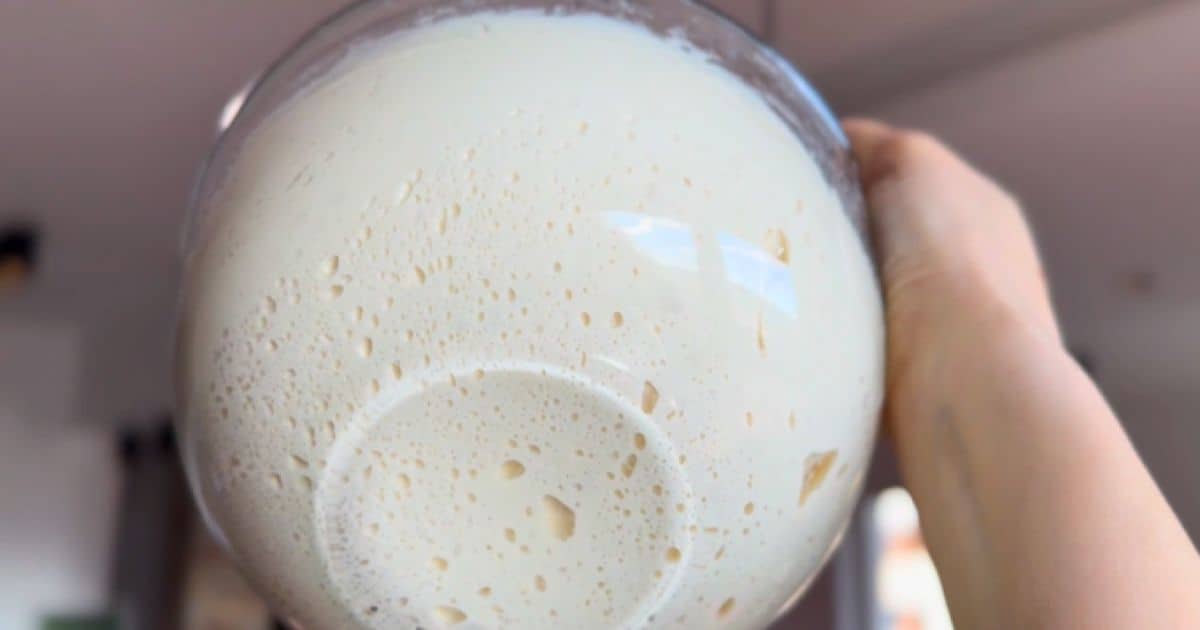
Any new sourdough bulk fermentation time is a guess until you've tried it in your kitchen. Look for a dough that's grown, feels airy and has bubbles on the surface and sides. My sourdough bulk fermentation tips go through the signs one by one.
A weekday example (not a rule)
- Morning: feed your starter before work.
- After work: mix the dough with a little less starter than the recipe says.
- Overnight: bulk ferment.
- Next morning: shape and put it straight in the fridge.
- That evening or the next day: bake straight from the fridge.

My sourdough course
Not sure when your dough is ready?
In Everyday Sourdough, I show you the signs to look for and how to bake around your own schedule. 22 video lessons, with a 14-day money-back guarantee.
Just starting out? Try the $7 crash course
Why the Second Rise Is the Most Flexible Step
Recipes confuse people here. Some say to do the second rise in the fridge overnight, or for about 8 to 12 hours. Others say 2 to 3 hours at room temperature. For most recipes, those are actually interchangeable.
By the time you shape, the dough has already fermented. It helps to let it puff up a little after shaping, but most of the rise happens in the oven. I don't think it's great to wait for shaped dough to get really big, because you risk over-fermenting it and it can deflate when it goes in.
Room temperature or fridge: what I recommend
After you shape anything, either let it rise at room temperature for about 2 to 4 hours, or put it in the fridge for at least 3 to 4 hours. For more on the room-temperature option and its sourdough proofing time, see how long to proof sourdough at room temperature.
Why 4 hours and 12 hours in the fridge end up so similar
When the dough goes into the fridge, it takes a few hours to cool down to fridge temperature, depending on its size. During that time, it keeps fermenting and rising, just more and more slowly. That's why the minimum is 3 to 4 hours.
Once the dough is fully chilled, fermentation slows right down. It doesn't stop completely, but it's slow enough that I think of it as almost a pause button. So whether you bake 12 hours after it went in or 24, the timing is very forgiving.
Can you bake sourdough straight from the fridge?
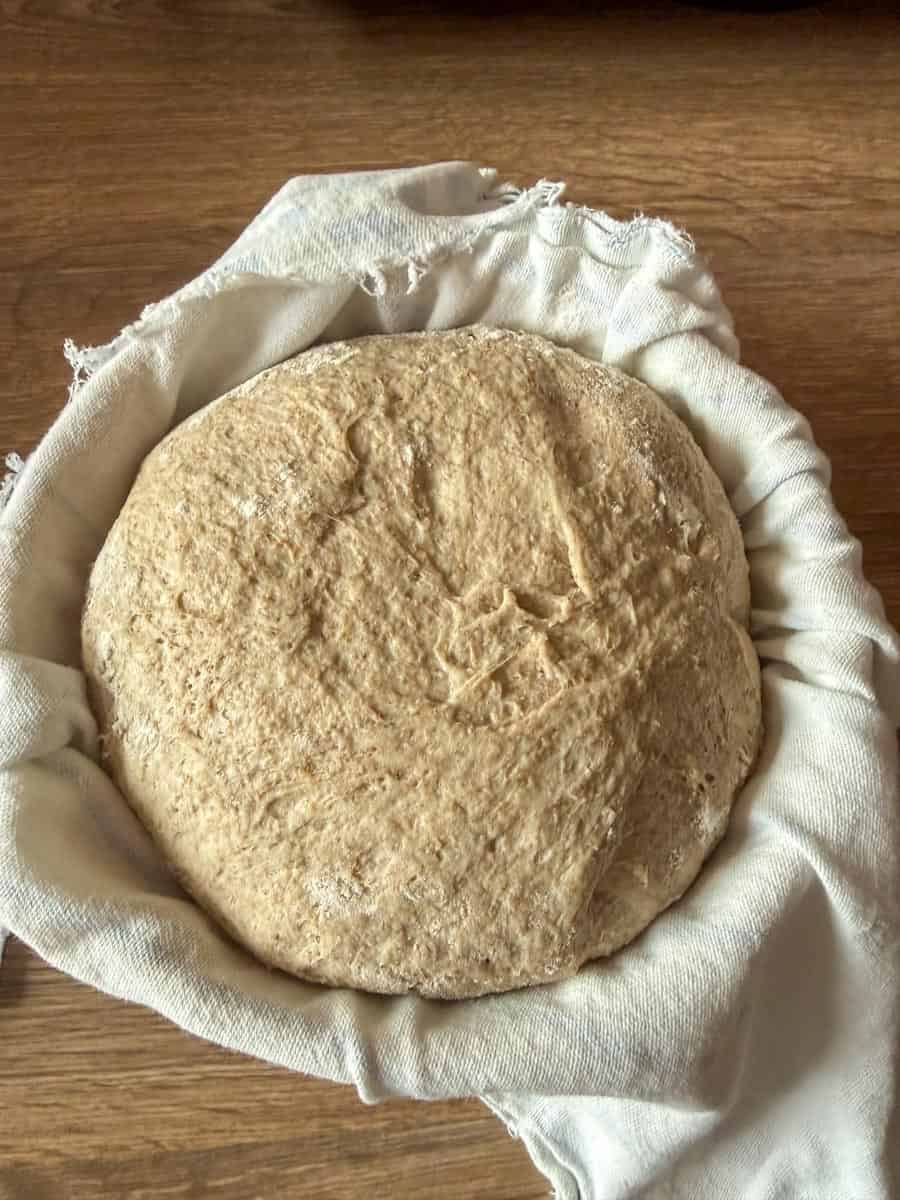
Yes, and that's how I usually do it. It works for bread, cinnamon rolls or any other bake. Cold dough is a lot easier to score, at least with bread. And it's just the easiest way, because you don't have to work out when to take it out and how long to leave it at room temperature first.
My two-loaf trick
Because this step is so flexible, I sometimes make two loaves from one batch. One does its second rise at room temperature for about 2 hours and gets baked, so we have fresh bread that day. The other goes into the fridge, and I bake it the next day or even the day after. If you like that idea, I go further with it in how to batch bake sourdough bread.
Want someone to lay the hours out for you? I made three simple schedules you can follow and tick off.
free sourdough schedules
Want a plan that fits your day?
Three real-life ways to bake sourdough, with check-off timelines laid out by the hour: The Homemaker's, The 9-5 Worker's, and The Lazy Day. Join my newsletter and I'll send them straight to your inbox.
We respect your privacy. Unsubscribe at any time.
If your dough isn't on schedule
- Bulk is running ahead and you're not ready? Shape it as soon as it looks ready and put it in the fridge. Next time, use a little less starter.
- Bulk is running behind? Give it more time, or move it somewhere a bit warmer. Next time, use a little more starter.
- Plans changed after shaping? Put the dough in the fridge and bake later.
Build a Sourdough Baking Schedule That Fits You
You don't have to plan your whole day around sourdough. Once your starter has peaked, you have hours to use it. Bulk fermentation is the step to plan for, and the amount of starter is your easiest way to move it. The second rise is the most forgiving step, and the fridge gives you a whole extra day if you need it.
Start with one recipe you already like and change one thing at a time. If you want bakes that fit a single day, browse my same-day sourdough recipes. If you like the slow route, try my overnight sourdough bread recipes.
If anything here sounds confusing, ask me in the comments. I'm happy to explain, and I'd love to hear what real-life sourdough problems you want me to cover next.