100% Fresh-Milled Einkorn Sourdough Bread

Fresh milled einkorn flour can be tricky to bake with, because it demands a bit of a different approach. Especially if you desire a bread made with only einkorn, water, sourdough starter, and salt (my favorite!). It doesn't behave quite like the modern wheat flour you may be used to, and there's a bit of a learning curve with einkorn, but this recipe account for all the differences and simplifies the process. It's written in a way that should make your first loaf successful, but once you get familiar with how your particular einkorn flour behaves, this bread becomes even easier to make!
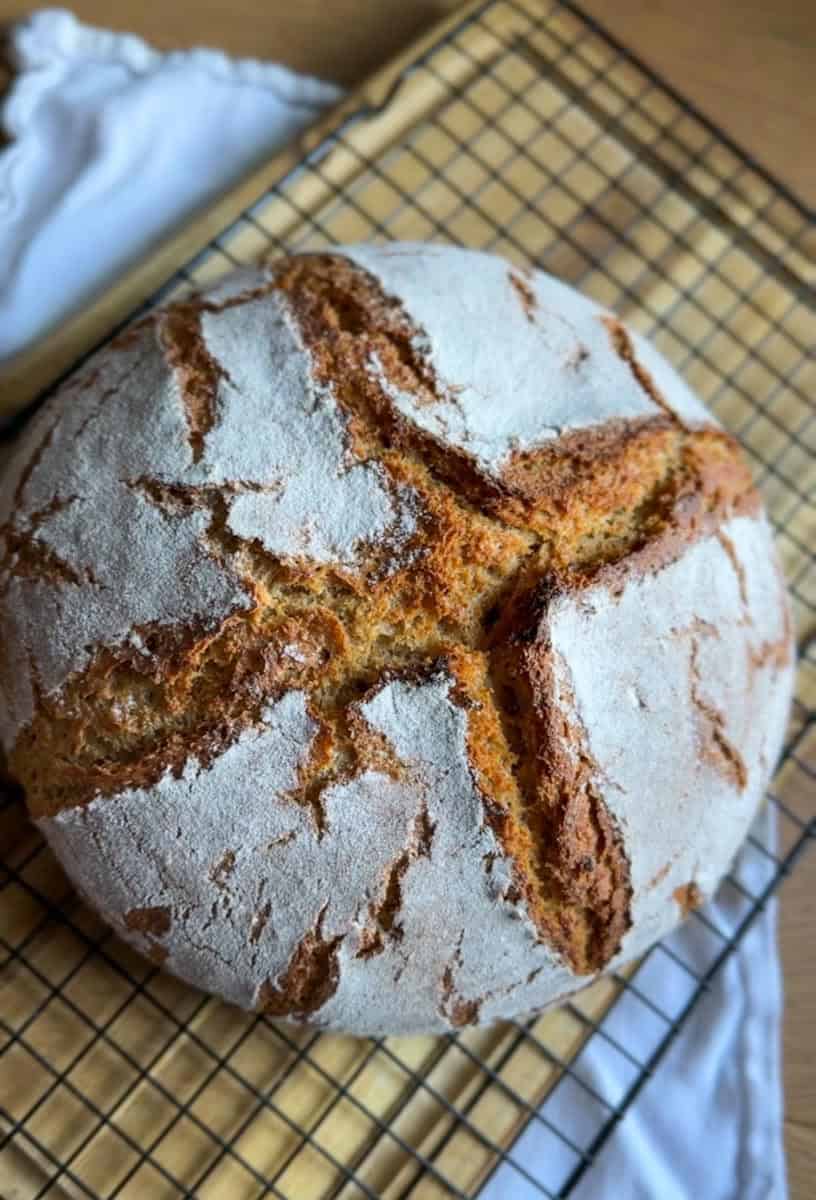
This 100% fresh-milled einkorn sourdough bread takes a gentler approach to mixing, folding, and fermentation. We usually enjoy it for breakfast with a little butter and jam, but you can serve them for snack or dinner alongside soups, stews, roasted vegetables and hearty salad.
If you are not ready to bake with einkorn yet, you can always start with this fresh milled sourdough in a loaf pan or with this basic fresh milled sourdough bread!
Summarize & Adapt This Recipe On:
Quick Look
- Prep Time: 30 minutes
- Bulk Fermentation: 2-4 hours
- Final Proof: 1-2 hours
- Cook Time: 45-50 minutes
- Total Time: 5-7 hours
- Servings: 10-12 slices
- Difficulty: Intermediate
- Baking Method: Dutch Oven
- Best For: Breakfast, sandwiches, toast & serving with soups and stews
Jump to:
- Summarize & Adapt This Recipe On:
- Quick Look
- Important Ingredients
- Substitutions & Variations
- How to Make 100% Fresh-Milled Einkorn Sourdough Bread
- Baking Schedule
- 💭Crucial Success Tips
- Recipe FAQs
- How To Store Fresh-Milled Einkorn Sourdough Bread
- Other Delicious Fresh Milled Sourdough Recipes
- 100% Fresh Milled Einkorn Sourdough Bread
- Need Help Tweaking This Recipe?
- Other Fresh Milled Bread Recipes You'll Love
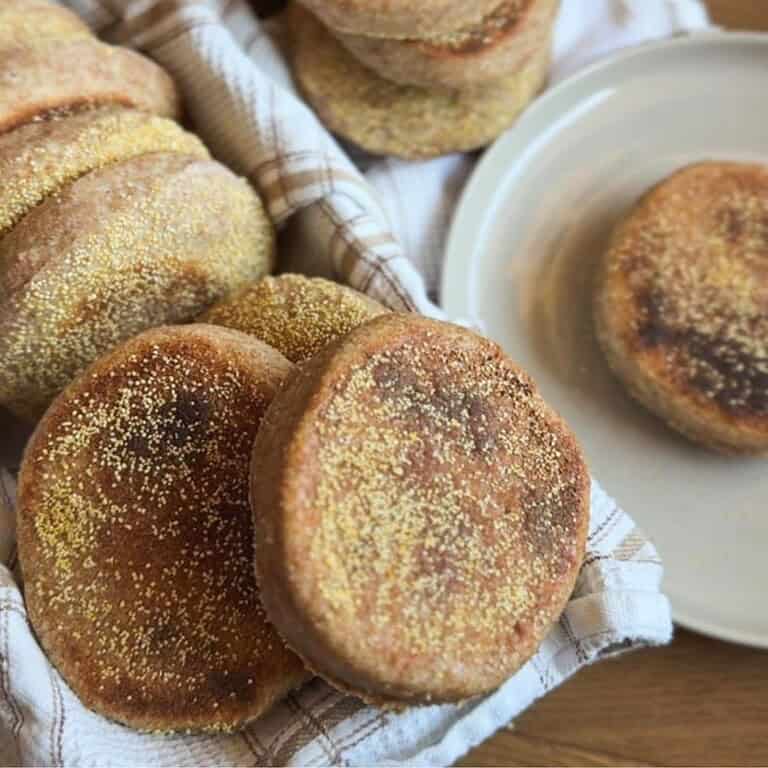
- Fresh Milled Sourdough English Muffins (Same Day or Overnight)
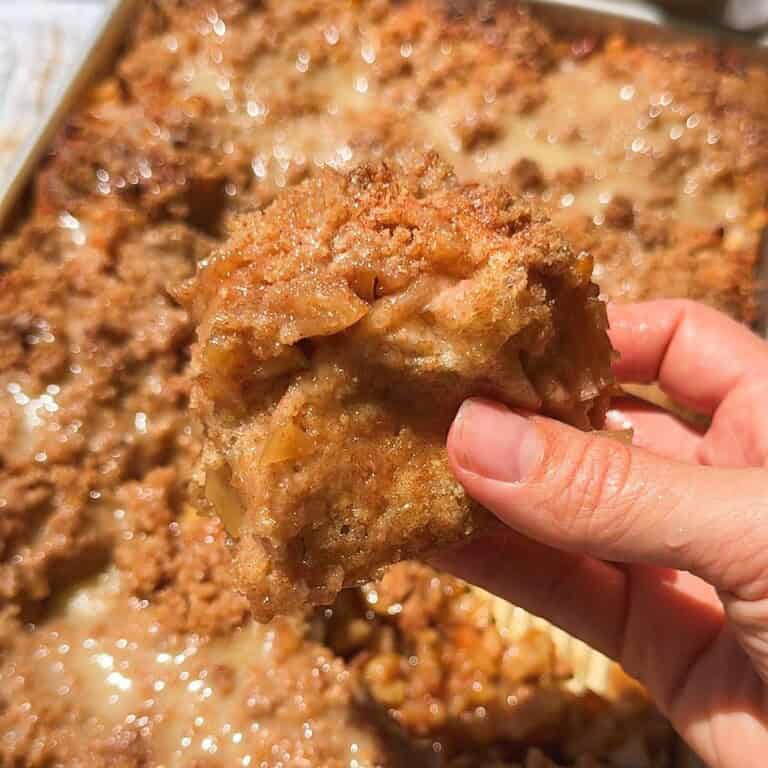
- Fresh Milled Apple Cinnamon Crumble Pull-Apart Sourdough Focaccia
- Fresh-Milled Sourdough Hot Dog Buns
Important Ingredients
- fresh-milled einkorn flour gives this sourdough its naturally nutty flavor and tender, hearty texture. Mill it as finely as possible for better dough structure.
- active sourdough starter provides the natural fermentation needed to help the bread rise. Make sure your starter is active and bubbly before using.
- water start with 410g and add more only if needed.
- salt adds flavor and helps support the dough during fermentation.
- rice flour used for generously dusting the banneton. It helps prevent the sticky einkorn dough from sticking when you turn it out for baking. You can use all purpose, but I prefer rice flour for making a visual contrast in the end
- extra einkorn flour used during shaping to help manage the sticky dough and create a smooth, workable boule.
See recipe card for quantities.
Substitutions & Variations
- For this recipe, stick with 100% einkorn flour if you want to make the loaf as written. You can use freshly milled einkorn or freshly milled einkorn that has been stored properly.
- Start with 410g water and only add more if the flour needs it. You may end up using anywhere from 410-430g depending on your einkorn, how finely it was milled, and how it absorbs water.
- Use an active, bubbly 100% hydration sourdough starter. A sluggish starter can make fermentation much harder to judge with einkorn.
- If you don't have rice flour, you can use einkorn flour or all purpose flour, but be generous with it.
- You can bake the loaf after its room-temperature second rise, or place the shaped dough in the refrigerator for up to about 12 hours. A cold proof can give the bread a stronger sourdough flavor, while also softening the dough's structure a bit.

Free resource
Get all 3 when you subscribe
Bake beautiful bread that fits Your life - not the other way around
How to Make 100% Fresh-Milled Einkorn Sourdough Bread
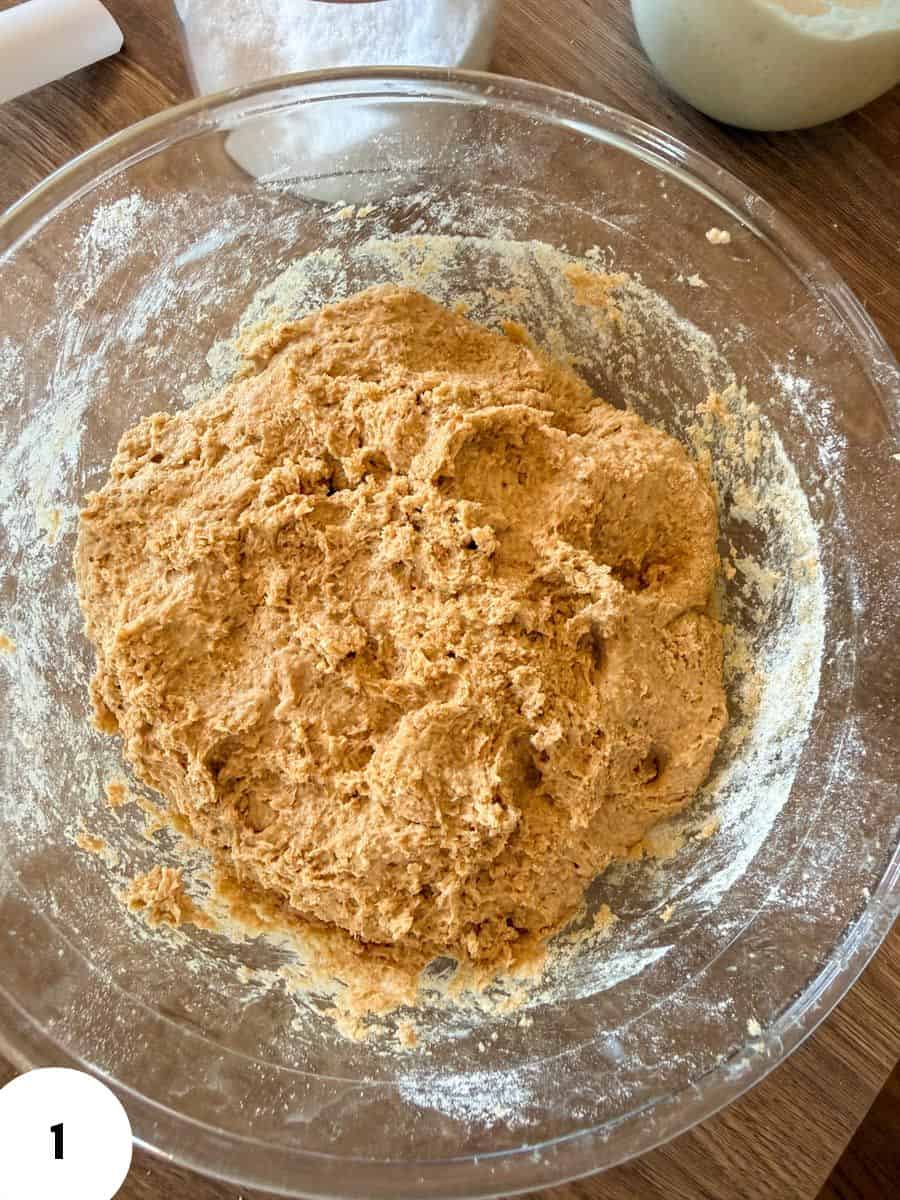
Step 1: Add the fresh-milled einkorn flour and 410g water to a large bowl. Mix until there are no dry patches of flour (Image 1). If you need more water for the dough to come together, slowly start adding, bit by bit, the remaining 20g water (add only as much as you need!). The goal is to get a stiff dough, but you should be able to incorporate all the dry flour in. It'll be similar in texture to a grainy play dough.
Cover and let the mixture rest for 20-30 minutes.
Fresh-milled flour needs some time to absorb the water, so don't decide that your dough is too dry immediately after mixing.
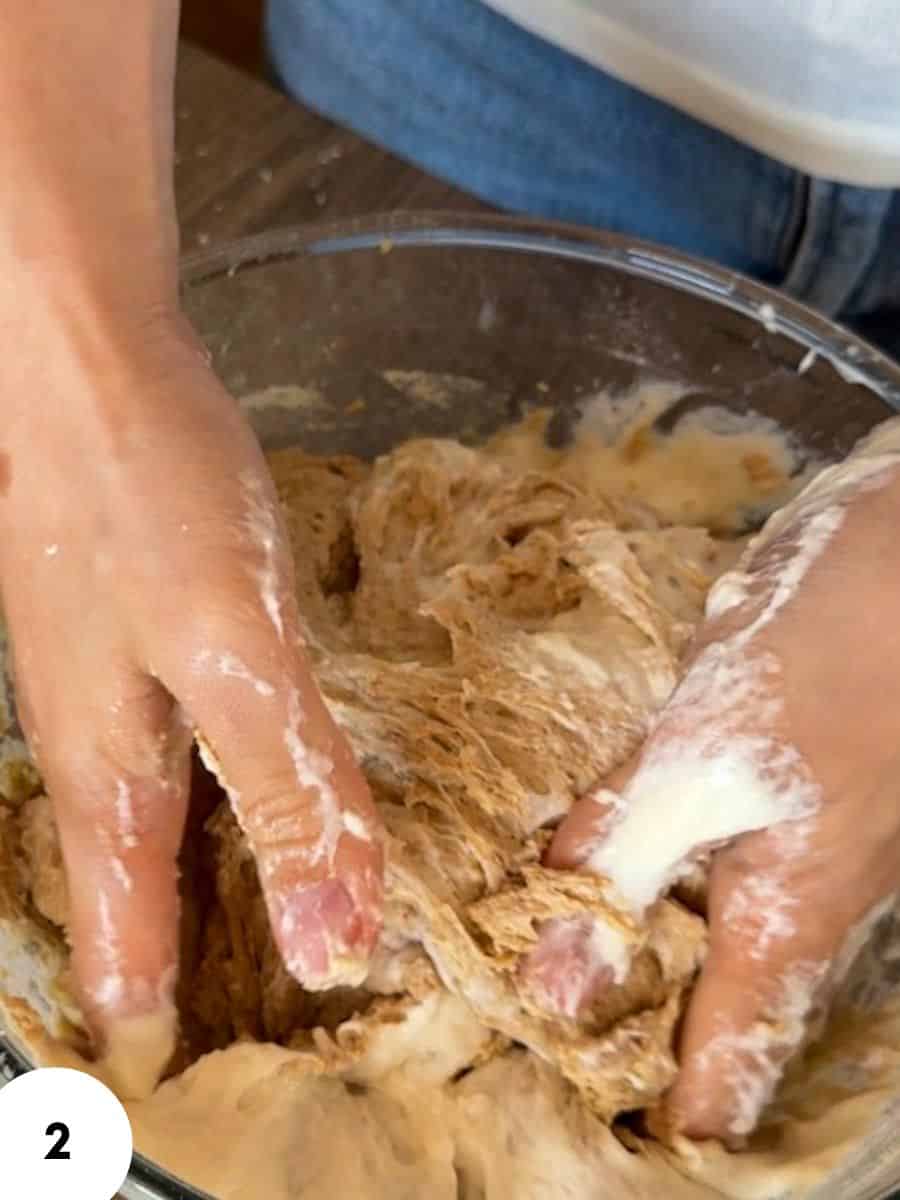
Step 2: Add the active sourdough starter and salt.
Mix until everything is evenly incorporated (you'll most likely need your hands for this!). (Image 2)
The dough should be tacky and sticky, like play dough. Don't try to make einkorn dough feel like regular bread-flour sourdough. It won't become as elastic or strong!
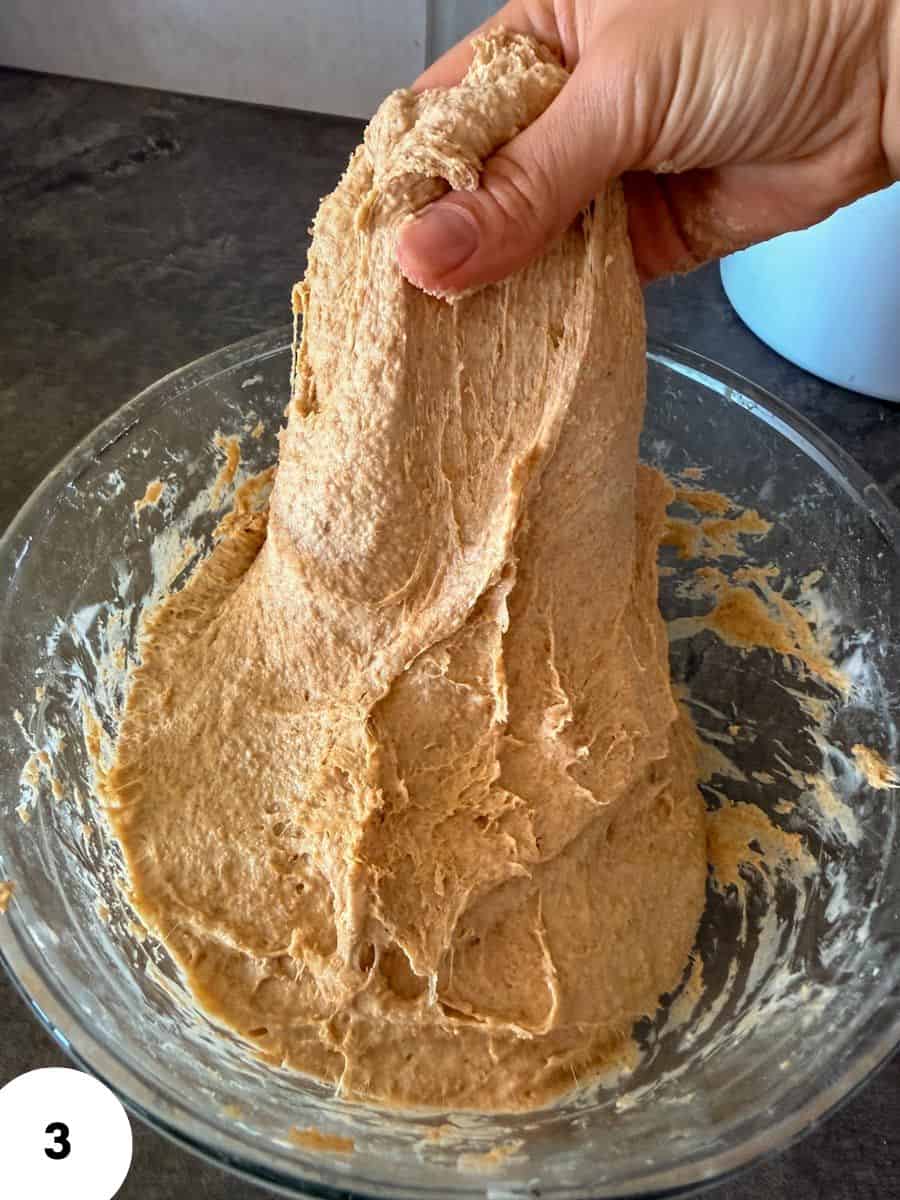
Step 3: Cover and rest for 30 minutes.
Perform one and only set of "stretch and folds" (Image 3). Those won't be your typical stretch and folds you're used to with a regular sourdough dough, but it will be rather more like rearranging sticky dough a bit. Don't pull the dough aggressively, but since the dough will be stiff, you'll need to pull with some force.
Rest another 30 minutes.
TIP: More stretch and folds aren't necessarily better with einkorn. Einkorn has a much more fragile gluten structure than modern wheat, and excessive handling can actually weaken the dough.
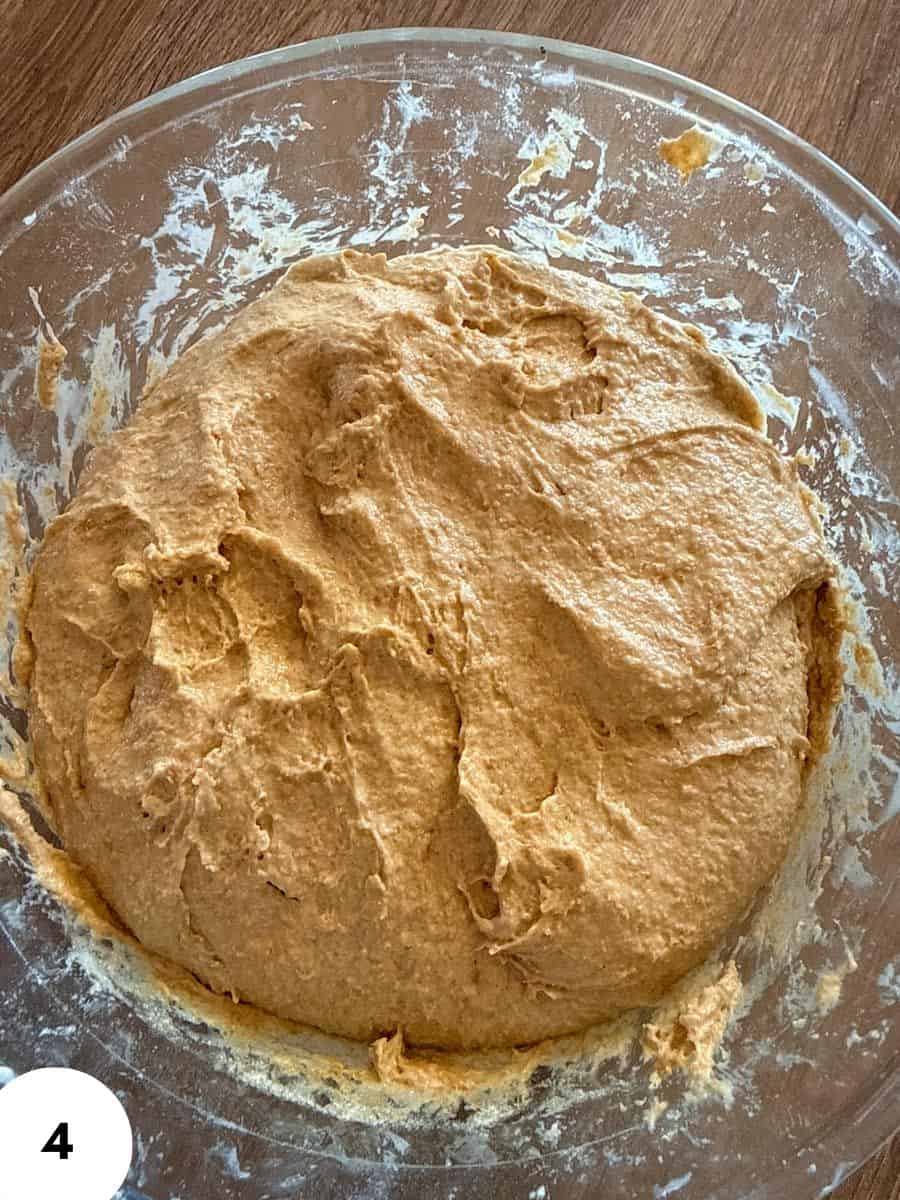
Step 4: Cover the dough and leave it to bulk ferment at room temperature.
Instead of following the clock, watch the dough. You're looking for approximately 20% growth in volume, some visible bubbles (using a glass bowl really helps to see them!), and a dough that looks slightly aerated and feels lighter. For me, that usually means 2-4 hours, usually closer to 4. Keep in mind that the time for bulk fermentation starts when you add in your starter - so in this case, you're going to count stretch and folds in this time as well.
Do not wait for the dough to double or anything like that! Einkorn can go from nicely fermented to overfermented much faster than a strong bread-flour dough. Once overfermented, it can become very difficult to shape into a boule. If you want to stay on the safe side, you can even underferment it a little and then leave it to ferment some extra time during the second rise. (Image 4)
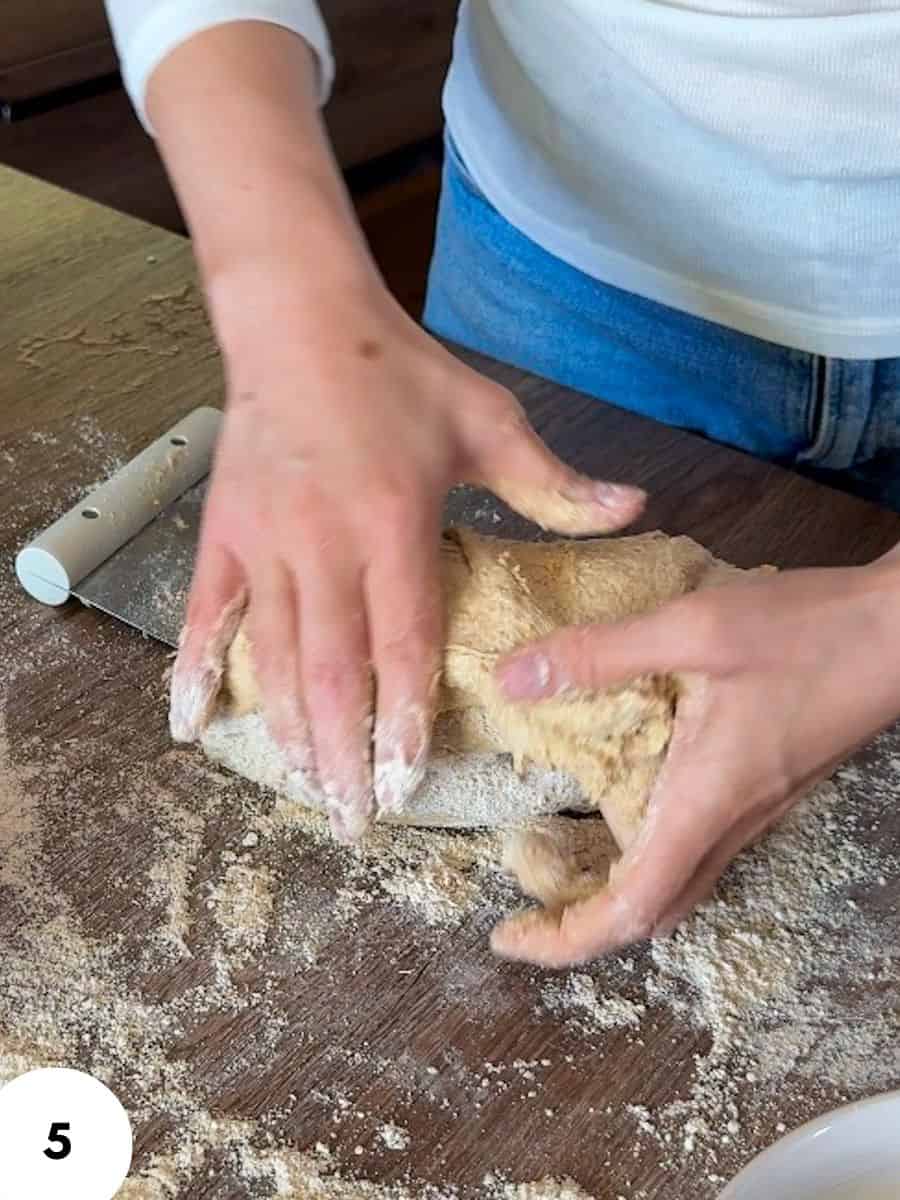
Step 5: Heavily flour your work surface with the extra einkorn flour you milled at the beginning, and gently turn out the dough. Now we're going to shape this loaf, and for einkorn bread, I find that this is the time to handle it aggressively. (Image 5)
That means that you'll be using quite a bit of that extra flour you milled, you're going to be adding in until you'll be able to get a ball of dough that barely sticks to the counter. I like to help myself with a bench scraper here and spend about 5 minutes just shaping the dough from a sticky mess to an almost smooth ball.
Then I like to correct the shape a bit and create some surface tension by rotating the ball a bit and pulling it towards myself on the counter.
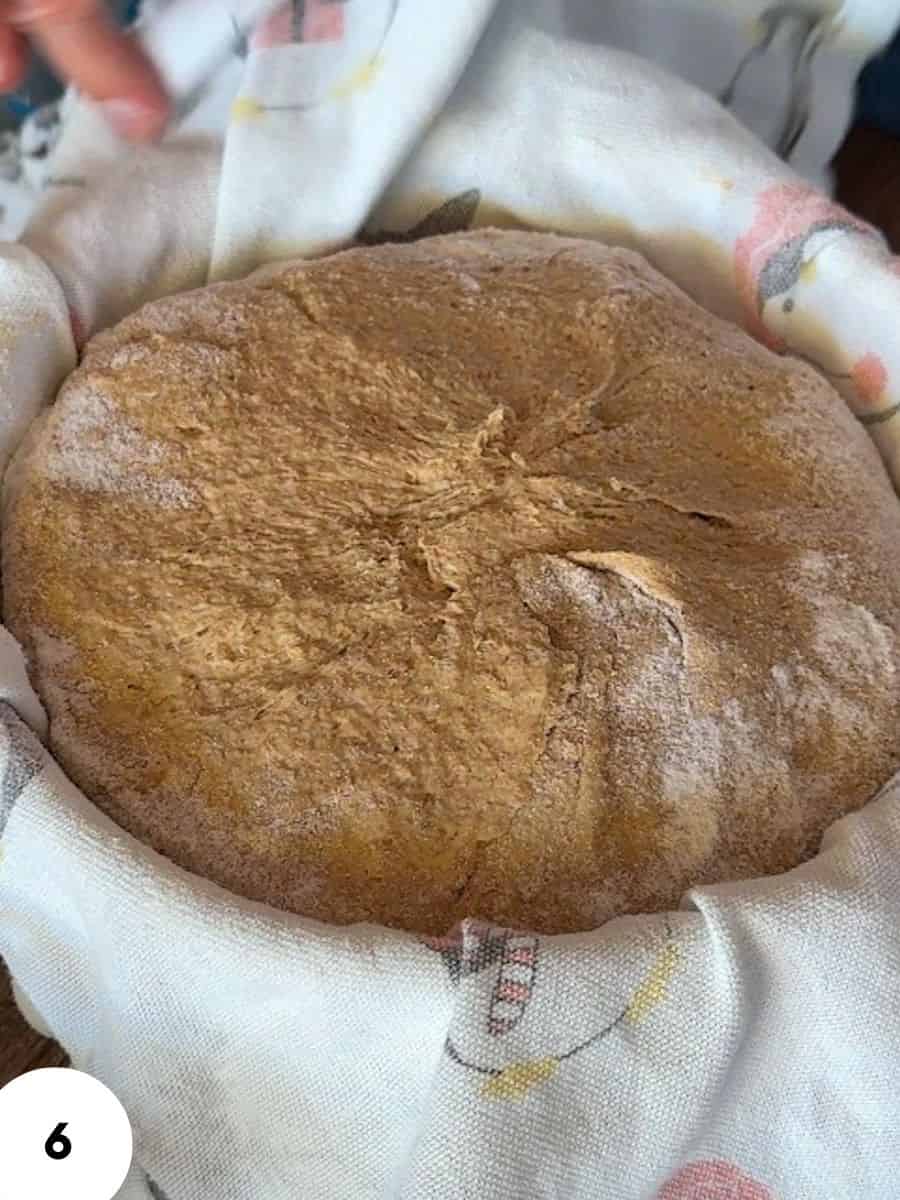
Step 6: Generously flour a banneton (I like using rice four for that), and I mean generously. Einkorn dough will be sticky and there's only a few things worse than the dough sticking to your banneton cover when you want to get it out.
Place the boule into the banneton seam-side up (Image 6), cover, and leave it to puff up some more for about 1-2 hours. Optionally, you can put it into the fridge to cold ferment for up to 12 hours (you can do more, but the dough will start losing structure with time).
NOTE: cold proof is going to degrade the structure a little bit and bake the sourdough flavor a bit stronger. Some people like that, some don't, there's only one option for you to find out what you like. Try both!
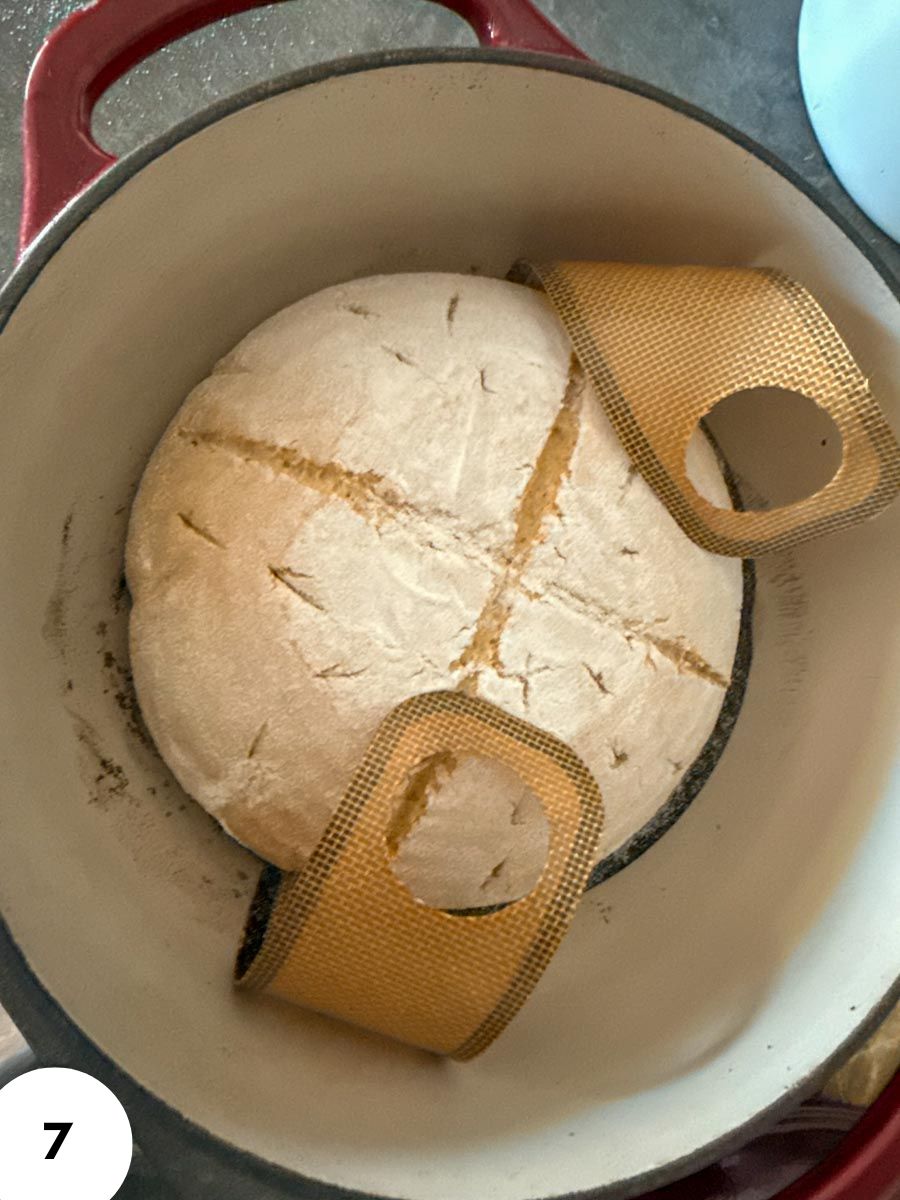
Step 7: When you're ready to bake the bread, preheat your Dutch oven and oven to 450°F (230°C) for at least 30-45 minutes.
Keep the dough refrigerated while the oven preheats.
Turn the cold dough onto a piece of parchment paper.
Score the top with a criss cross slash, but do not make it excessively deep (that could hurt the structure of the loaf). I like to do some shallow cuts too, to help control how the bread opens up in the oven.
Transfer it to the hot Dutch oven. (Image 7)
Bake for 40 minutes covered at 450°F (230°C). Remove the lid and bake for another 5-10 minutes (depending on how cruncy you want your crust to be).
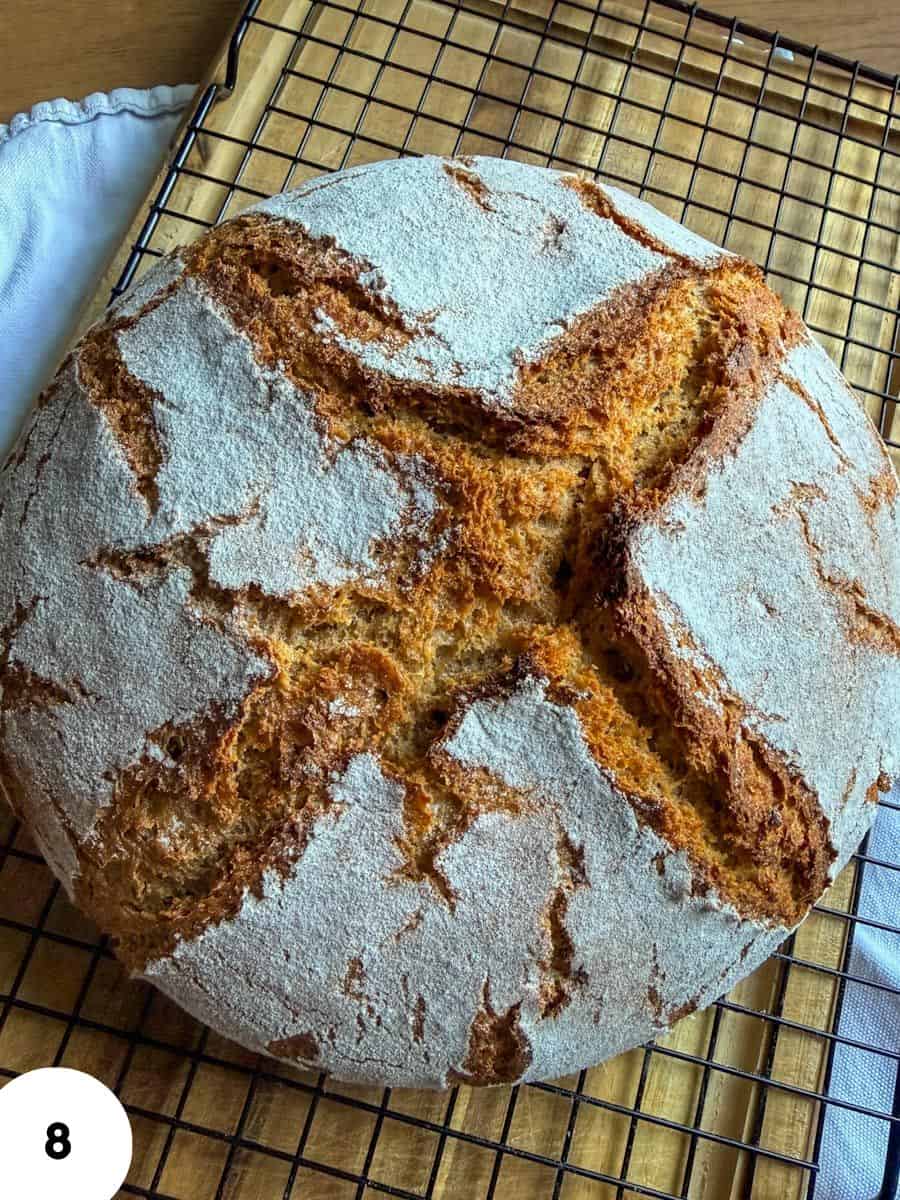
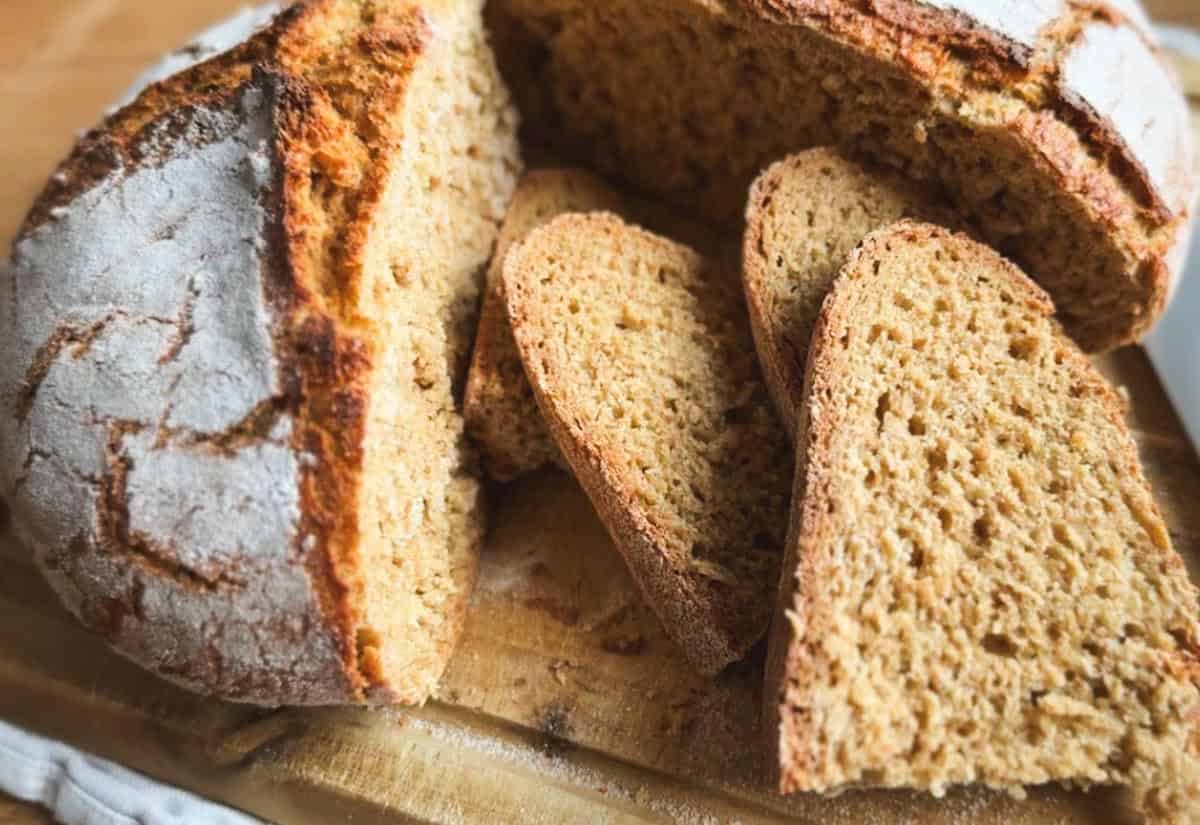
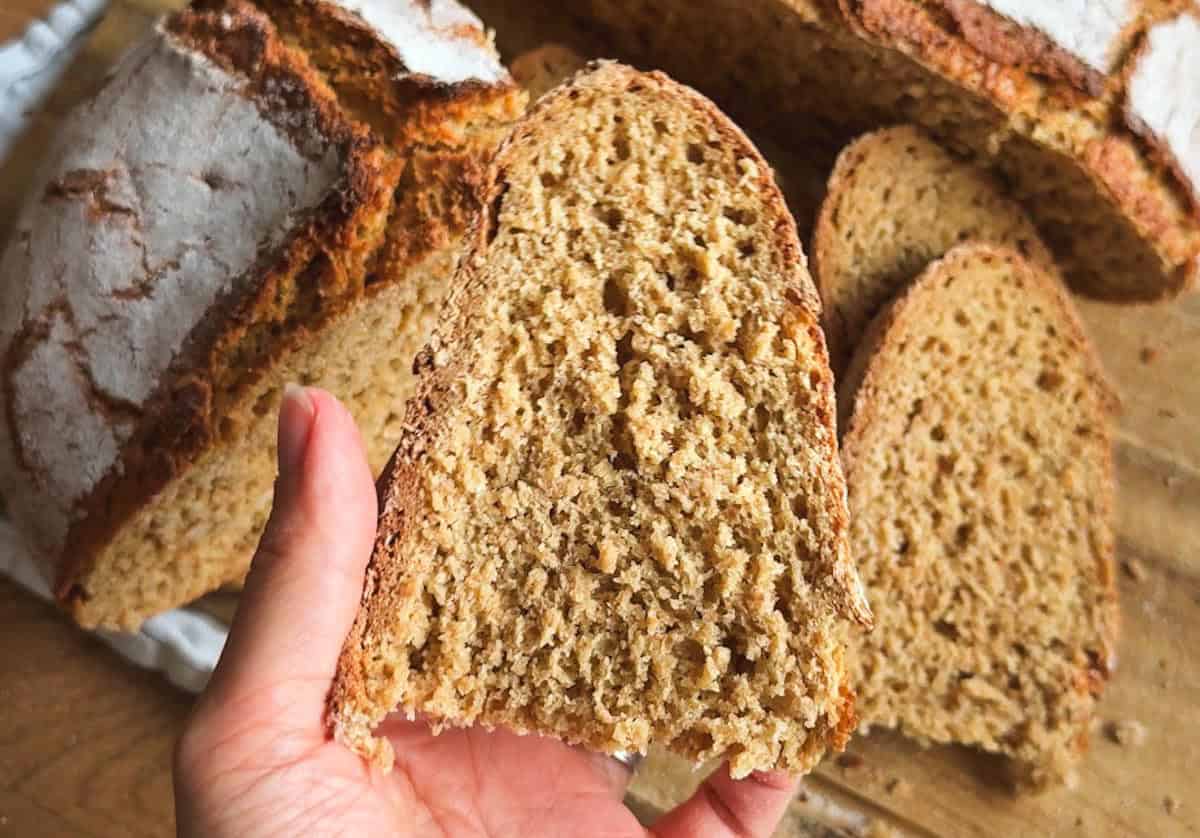
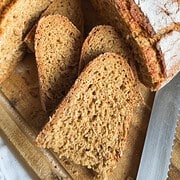
Step 8: Transfer the loaf to a cooling rack and let it cool completely before slicing (this takes about 2 hours). (Image 8)
This is especially important with fresh milled einkorn. Cutting it while it's still hot can leave you with a gummy crumb even when the loaf is properly baked.
Hint: fresh-milled einkorn can look stiff right after the flour and water are mixed. Let it rest for the full 20-30 minutes before deciding if it needs additional water, because it usually doesn't.
Baking Schedule
- 8:00 AM - mix flour and water
- 8:30 AM - add starter and salt
- 9:00 AM - first rest
- 9:30 AM - stretch and fold
- 10:00 AM - bulk fermentation
- 1:00 PM - shape
- 1:15 PM - final proof
- 3:15 PM - score and bake
- 4:05 PM - cool completely and enjoy
💭Crucial Success Tips
Einkorn can absorb plenty of water, but that doesn't mean the dough can support a high hydration level. Begin with 410g and add more only when necessary (it's usually not though!).
Recipe FAQs
Einkorn naturally produces a softer, stickier dough than many modern wheat varieties. Fresh-milled flour also continues absorbing water as it rests. Avoid trying to fix the dough by adding lots of flour or water all at once. Give it time to hydrate, then use the extra flour during shaping when needed.
Look for approximately 20% growth in volume, some visible bubbles, and a dough that feels lighter and slightly aerated. Don't wait for it to double. With einkorn, waiting for a dramatic rise can easily lead to overfermentation.
Yes. After shaping, place the dough seam-side up in a generously floured banneton, cover it, and refrigerate for up to about 12 hours. Keep in mind that a longer cold proof can soften the dough's structure while giving the bread a more pronounced sourdough flavor.
How To Store Fresh-Milled Einkorn Sourdough Bread
For the first couple of days, I like to keep the bread at room temperature in a bread bag, bread box, or loosely wrapped in a clean kitchen towel. Avoid sealing it in an airtight container while it's still warm, since trapped moisture can soften the crust.
If you know you won't finish the loaf within a few days, freezing is a great option. Slice the completely cooled bread, place the slices in a freezer-safe bag or container, and freeze them.
Other Delicious Fresh Milled Sourdough Recipes
- 100% Fresh-Milled Einkorn Sourdough Bread

- Fresh Milled Sourdough English Muffins (Same Day or Overnight)
- Fresh Milled Sticky Pecan Pie Pull-Apart Sourdough Focaccia
- Fresh Milled Apple Cinnamon Crumble Pull-Apart Sourdough Focaccia
If you tried this fresh-milled einkorn sourdough bread or any other recipe on my blog please leave a 🌟 star rating and let me know how it went in the 📝 comments below! Happy Baking!
100% Fresh Milled Einkorn Sourdough Bread
Ingredients
- 650 g freshly milled einkorn flour + extra for shaping, about 100g
- 410-430 g water start with 410g only!
- 200 g active sourdough starter 100% hydration
- 14 g salt
- Some rice flour for dusting your banneton basket or kitchen-towel lined bowl
Instructions
- Add the fresh-milled einkorn flour and 410g water to a large bowl. Mix until there are no dry patches of flour. If you need more water for the dough to come together, slowly start adding, bit by bit, the remaining 20g water (add only as much as you need!). The goal is to get a stiff dough, but you should be able to incorporate all the dry flour in. It'll be similar in texture to a grainy play dough.Cover and let the mixture rest for 20–30 minutes.Fresh-milled flour needs some time to absorb the water, so don't decide that your dough is too dry immediately after mixing.
- Add the active sourdough starter and salt.Mix until everything is evenly incorporated (you'll most likely need your hands for this!). The dough should be tacky and sticky, like play dough. Don't try to make einkorn dough feel like regular bread-flour sourdough. It won't become as elastic or strong!
- Cover and rest for 30 minutes.Perform one and only set of "stretch and folds". Those won't be your typical stretch and folds you're used to with a regular sourdough dough, but it will be rather more like rearranging sticky dough a bit. Don't pull the dough aggressively, but since the dough will be stiff, you'll need to pull with some force.Rest another 30 minutes.TIP: More stretch and folds aren't necessarily better with einkorn. Einkorn has a much more fragile gluten structure than modern wheat, and excessive handling can actually weaken the dough.
- Cover the dough and leave it to bulk ferment at room temperature.Instead of following the clock, watch the dough. You're looking for approximately 20% growth in volume, some visible bubbles (using a glass bowl really helps to see them!), and a dough that looks slightly aerated and feels lighter. For me, that usually means 2-4 hours, usually closer to 4. Keep in mind that the time for bulk fermentation starts when you add in your starter - so in this case, you're going to count stretch and folds in this time as well. Do not wait for the dough to double or anything like that! Einkorn can go from nicely fermented to overfermented much faster than a strong bread-flour dough. Once overfermented, it can become very difficult to shape into a boule. If you want to stay on the safe side, you can even underferment it a little and then leave it to ferment some extra time during the second rise.
- Heavily flour your work surface with the extra einkorn flour you milled at the beginning, and gently turn out the dough. Now we're going to shape this loaf, and for einkorn bread, I find that this is the time to handle it aggressively. That means that you'll be using quite a bit of that extra flour you milled, you're going to be adding in until you'll be able to get a ball of dough that barely sticks to the counter. I like to help myself with a bench scraper here and spend about 5 minutes just shaping the dough from a sticky mess to an almost smooth ball.Then I like to correct the shape a bit and create some surface tension by rotating the ball a bit and pulling it towards myself on the counter.
- Generously flour a banneton (I like using rice four for that), and I mean generously. Einkorn dough will be sticky and there's only a few things worse than the dough sticking to your banneton cover when you want to get it out.Place the boule into the banneton seam-side up, cover, and leave it to puff up some more for about 1-2 hours. Optionally, you can put it into the fridge to cold ferment for up to 12 hours (you can do more, but the dough will start losing structure with time).NOTE: cold proof is going to degrade the structure a little bit and bake the sourdough flavor a bit stronger. Some people like that, some don't, there's only one option for you to find out what you like. Try both!
- When you're ready to bake the bread, preheat your Dutch oven and oven to 450°F (230°C) for at least 30-45 minutes.Keep the dough refrigerated while the oven preheats.Turn the cold dough onto a piece of parchment paper.Score the top with a criss cross slash, but do not make it excessively deep (that could hurt the structure of the loaf). I like to do some shallow cuts too, to help control how the bread opens up in the oven.Transfer it to the hot Dutch oven.Bake for 40 minutes covered at 450°F (230°C). Remove the lid and bake for another 5-10 minutes (depending on how cruncy you want your crust to be).
- Transfer the loaf to a cooling rack and let it cool completely before slicing (this takes about 2 hours).This is especially important with fresh milled einkorn. Cutting it while it's still hot can leave you with a gummy crumb even when the loaf is properly baked.
Notes
It can be tempting to add more water because freshly milled flour absorbs a lot of it. Einkorn, however, doesn't have the gluten strength to support extremely high hydration. Start here and increase the water in future loaves only if your flour can handle it. Don't chase a windowpane.
You’ll never get the dramatic thin, stretchy windowpane you'd expect from strong bread flour. That's okay. Einkorn gluten is brittle and behaves differently. Don't expect huge oven spring.
A 100% einkorn boule isn't going to behave like a loaf made with strong white bread flour. A slightly lower profile and tighter crumb don't mean you've failed. Mill your einkorn as fine as you can.
Very coarse bran makes building structure even harder. For a 100% fresh-milled boule, a relatively fine flour will give you the best chance of some volume. Use the first loaf as your baseline.
If the dough holds its shape beautifully and the crumb is tighter than you'd like, try slightly more water or a little more fermentation next time. If it spreads immediately after leaving the banneton, decrease the hydration, shorten bulk fermentation, or both. Baker's Notes This is intentionally a conservative first recipe for 100% fresh-milled einkorn. Einkorn varieties, milling fineness, starter activity, and fermentation temperature can all change how the dough behaves. Once you've baked it once, you'll know much more about your particular flour. From there, you can gradually increase the hydration or push fermentation further to find the sweet spot between a bit of a lighter crumb (it will still be tight!) and a boule that can still hold its shape.