Why Is My Fresh Milled Sourdough Dense? 7 Mistakes (and How to Fix Them)
Why is my fresh milled sourdough dense? If your loaves keep coming out dense and heavy, you're not doing anything crazy. You're probably just treating it like sourdough made with all-purpose flour.
Here's the truth nobody really tells you: baking sourdough with fresh milled flour needs a different approach.
There are lots of conversion charts and videos online about switching recipes from store-bought flour to fresh milled flour. They make it sound like a numbers game: convert everything correctly and you'll get a nice loaf. It really isn't like that.
In my experience, a dense fresh milled loaf usually comes down to a few habits: dough that ferments for too long, dough that starts out too warm, handling the dough before the bran has softened, or a grain that's hard to work with. Below are the seven mistakes I see most often, and how to fix each one.
Quick Look
Tap a mistake to jump straight to it.
| Mistake | What happens | The fix |
|---|---|---|
| 1. A grain that's hard to work with | Soft wheats, rye and other grains don't hold their shape well | Start with hard white or hard red wheat |
| 2. Dough that starts too warm | Fermentation runs ahead of gluten development | Use the coldest water from your tap. It doesn't need to bi ice cold. |
| 3. Following the recipe too rigidly | Dough is too wet or too stiff for your flour | Hold back some water and adjust by feel |
| 4. Ignoring the bran | Sharp bran works against the gluten | Mix, then leave the dough alone so the bran softens |
| 5. Overworking the dough early | Gluten gets damaged while the bran is still sharp | Be gentle, and fold only once the bran has softened |
| 6. Over-fermenting | The dough runs out of strength and the loaf turns dense | End bulk at around a 30-40% rise |
| 7. Vital wheat gluten without extra water | A denser, harder loaf | Skip it, or add 10-15 g water per tablespoon |
Already baked a dense loaf? Jump to what to check first.
Why Fresh Milled Sourdough Needs a Different Approach
With fresh milled flour, you're working with the whole wheat berry: the bran, the germ and the endosperm. (If you're new to this, here's what fresh milled flour is and why it makes better bread.)
Two things change everything:
- The bran. It's especially tricky for us sourdough bakers. More on that in mistake number four.
- Active enzymes. Fresh milled flour is very "alive," so it ferments a lot faster than you're probably used to.
Because of all those variables, you have to adapt your process. Sometimes the logic isn't just different. It's almost the opposite of what we do with store-bought flour.
If you want the bigger picture first, I've written about how fresh milled flour differs from all-purpose flour.
Prefer to watch? In this video, I walk you through all seven mistakes.

fresh-milled sourdough course
Want to master fresh-milled sourdough?
15 step-by-step video lessons, 4 sourdough recipes, and lifetime access
1. Using a Grain That's Hard to Work With
The fix: start with hard white or hard red wheat. Outside the US, look for wheat with about 12 to 15% protein.
I say "hard to work with" and not "wrong" on purpose. You can technically bake bread with any grain. Some grains are just a lot better suited to bread baking than others.
Stick to hard wheat when you're starting
If you're a beginner, I'd stick to hard wheats rather than soft wheats for bread. I wouldn't experiment with einkorn, rye or spelt yet.
Hard wheats have the right proteins to form gluten. Gluten gives your loaf its structure and helps it hold its shape.
Soft wheats don't have that kind of gluten structure. They tend to be a bit shapeless unless you really know how to work with them.
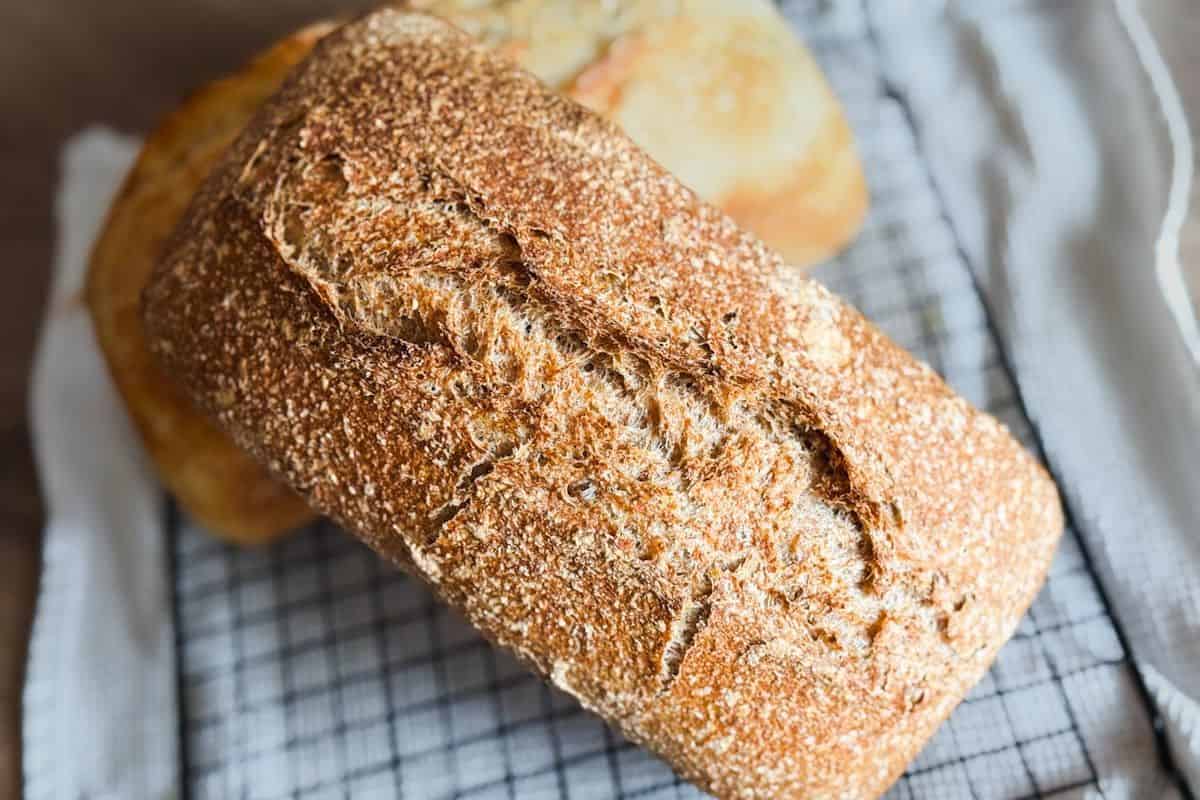
By the way, the easiest way to bake with them is in a loaf pan. The pan holds the dough up while it rises. Rye is a good example: you won't convince rye to form the big, tall loaf you're used to seeing in the grocery store, which is why it's so often baked in a pan.
If you'd like to try a pan loaf, here's my 100% fresh milled sourdough in a loaf pan.
Hard white vs. hard red wheat
If you're in the US, the two main types of hard wheat are hard white wheat and hard red wheat. To really simplify it:
- Hard white wheat tends to be milder in flavor.
- Hard red wheat tends to have a bit more flavor.
That flavor difference is really the only one that comes from the type itself. In my experience, other differences, like one seeming thirstier or grittier when you first mill it, have more to do with the harvest or how long the grain was stored.
So just get yourself some hard white or hard red wheat. It really doesn't matter which.
Outside the US? Look at the protein
In other parts of the world, wheat usually isn't sold as "hard white" or "hard red." You'll find varieties with different names. I was quite confused when I first looked for hard white and hard red wheat here in Europe. Nobody really knew what I meant!
What you're looking for is the protein content. For bread, I look for wheat with about 12 to 15% protein, so roughly 12% or higher.
Protein in wheat varies a lot with growing conditions, so check the label or ask your supplier.
The same grain won't always act the same
Even the same variety can behave quite differently depending on the harvest, where it was grown and how long it's been stored. This is especially true for how much water it needs.
So if your dough acts a bit differently from the recipe, don't feel bad. It might not be the wrong grain at all.
2. Starting With Dough That's Too Warm
The fix: when you use flour straight from the mill, use the coldest water from your tap.
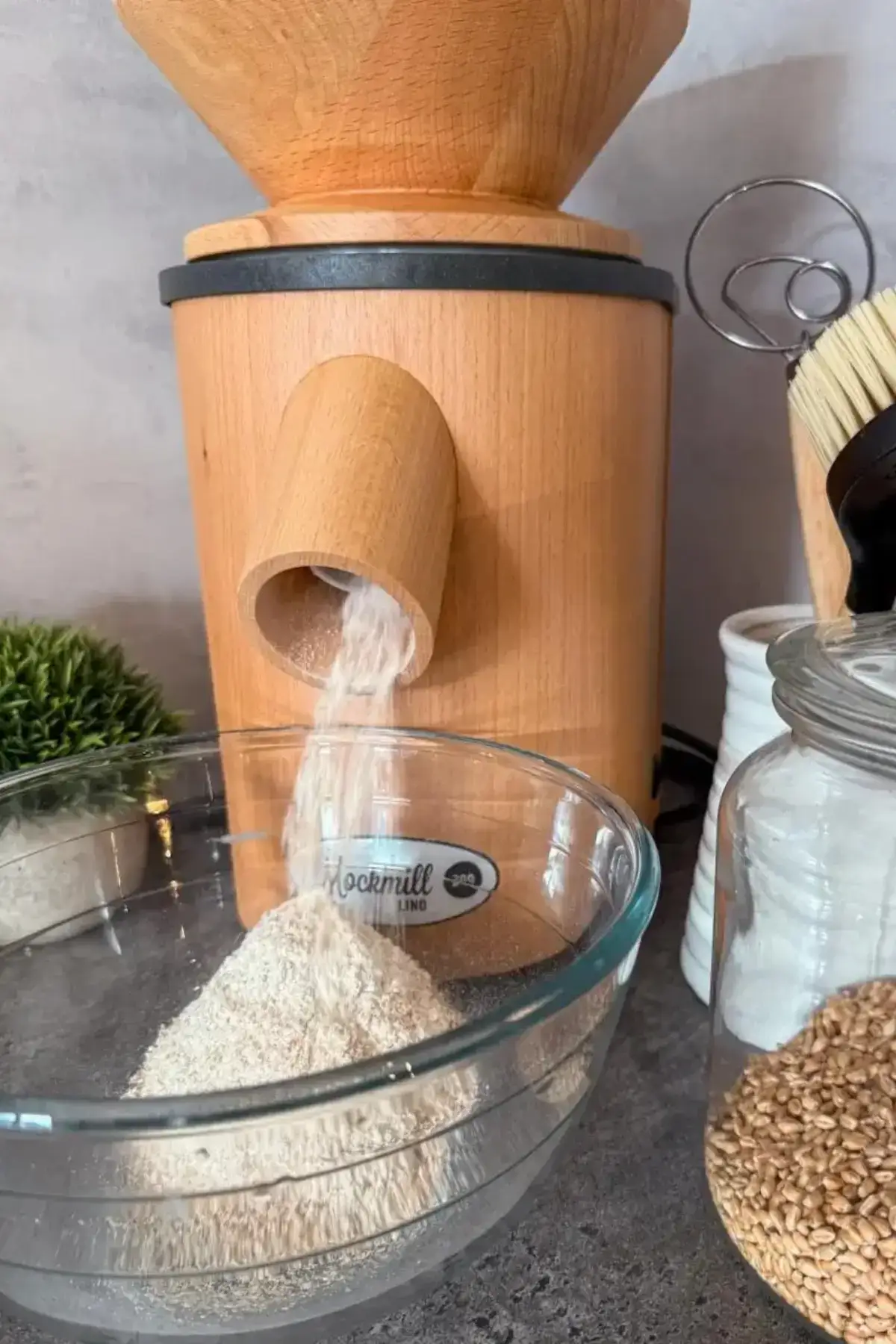
This one catches a lot of people. You mill your flour and use it right away, which is the best part of milling at home. But flour that just came out of the mill is warm, or even hot.
My Mockmill Lino 200 is no exception. (Here's my Mockmill 200 review if you're curious about it.)
If you then add room temperature or just coolish water, the dough starts out quite warm.
Sometimes that's a good thing, if you want fast fermentation. But fresh milled flour already ferments quickly. It becomes a problem when fermentation is so fast that the gluten doesn't have the chance to develop properly.
Why gluten needs time
Gluten development is just a term for the structure building up in your dough. Gluten is the reason your dough gets elastic, holds its shape and gives you nice bubbles in the finished bread.
You want it fully developed before you shape your loaf. That takes time: the dough needs to sit in the bowl for a good while, with some stretching to help it along. If fermentation outruns that, you have a problem.
Why cold water helps
I don't use ice water, just the coldest setting on my tap. That cold water counters the warm flour, so the dough starts out cooler than it would with room temperature water. It gives the gluten time to catch up. I think it's one of the easiest fixes on this list.
3. Following the Recipe Too Rigidly
The fix: treat the recipe as a starting point. Hold back some of the water and adjust by feel.
Sourdough already has a lot of variables. Add fresh milled flour, and you get even more.
Like I mentioned above, the way grain behaves as flour depends on how long it was stored, when it was harvested and the exact variety. So your flour probably isn't quite the same as the flour the recipe developer used.
A recipe is a very good place to start. Just be ready to adjust:
- Hold back some of the water. Add a little less than the recipe calls for, then add the rest by feel.
- Add a little extra water if the dough feels stiff.
- Add a little flour if the dough feels too slack.
I'll be honest: there's no easy formula for this. It really comes down to practice and getting a feel for how the dough should look and feel.
But just knowing that your flour is probably different might give you the confidence to adjust a recipe when you see it needs it. (If the term "hydration" confuses you, my guide to sourdough hydration explains it simply.)
4. Ignoring the Bran
The fix: mix everything, then leave the dough alone so the bran can soften before you start folding.
The bran is the outer layer of the grain berry. When you mill it into flour, those bran specks stay quite harsh, even a bit sharp around the edges.
That matters because gluten is made of strands. Bakers often describe bran as cutting through those strands, and that's how I like to explain it too.
The science is a little more complicated: bran also gets in the gluten's way and competes with it for water. Either way, the dough struggles to build structure while the bran is still rough.
So with fresh milled sourdough, you have two options:
- Sift the bran out and add it back later once it's softened. This works, but it's a bit fussy, so it's not my favorite. (I explain when I do and don't sift fresh milled flour in a separate post.)
- Let the bran soften first. Give the flour and water time to sit together so the edges of the bran soften, and only then start handling the dough. This is my favorite.
How I mix my dough
I usually mix everything together at once: flour, water, sourdough starter and salt.
I don't do a typical autolyse, where you mix just the flour and water first and add the starter and salt later. For me, the benefit isn't worth the fussiness of splitting one step into two. (I compare both ways in my post on whether to autolyse fresh milled flour, including how long I let the dough rest.)
Here's what I do:
- Mix everything together until there are no dry bits of flour left.
- Leave it alone. I don't do anything else with the dough yet, so the bran has time to soften.
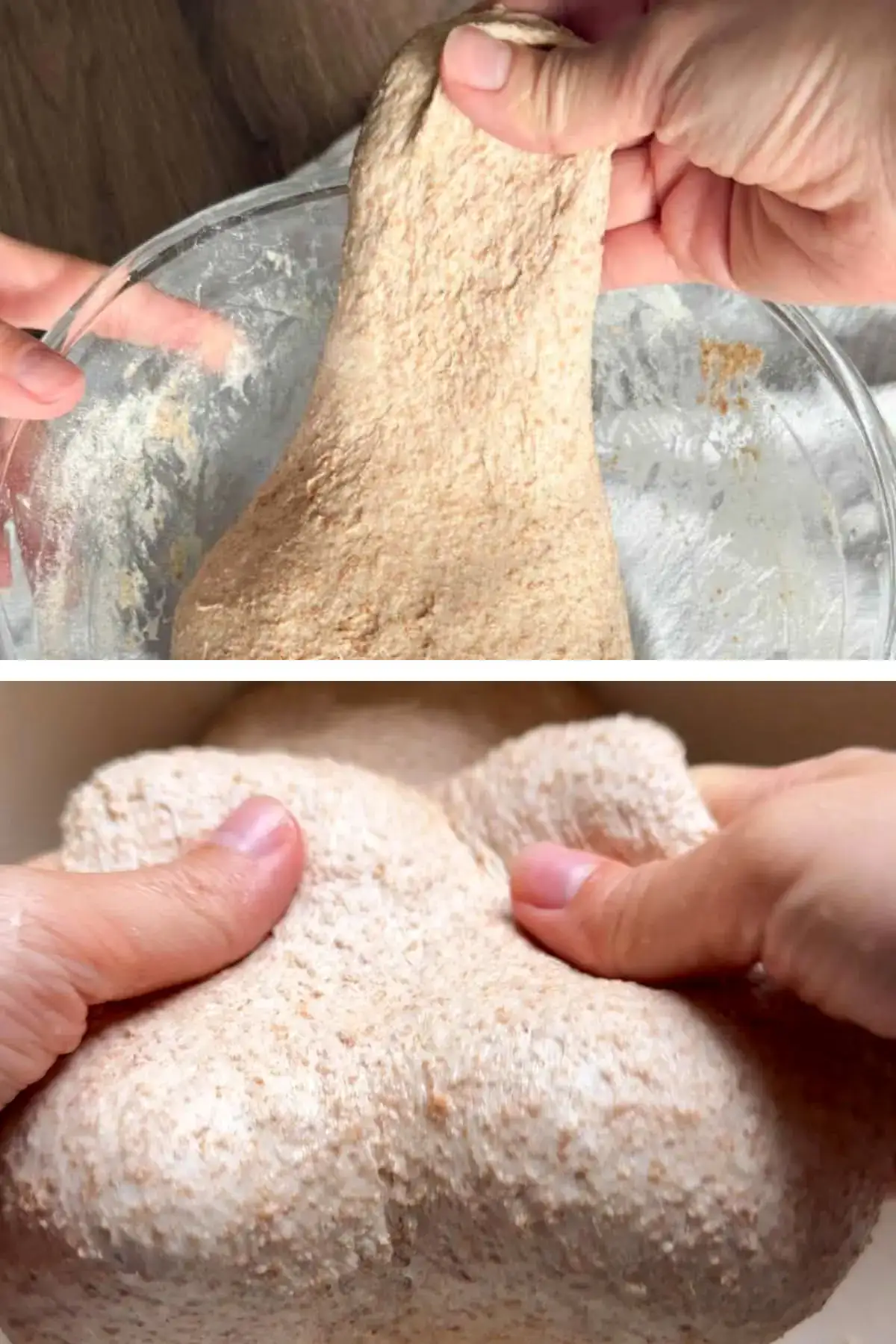
- Start folding only once the bran has softened. That's when I begin stretch and folds or coil folds, or whatever the recipe calls for to build the gluten.
I find that the sourdough starter tenderizes the bran even further. The water and starter together do a really nice job of taking that sharpness off.
This way I get a much nicer loaf than if I forced the dough and worked it hard while the bran was still sharp.
5. Overworking the Dough Too Early
The fix: be gentle with your dough, especially while the bran is still softening. Stretch and folds or coil folds are all you need.
This mistake builds on the last one. I think it comes from a mix-up between baking with yeast and baking with sourdough.
Why yeasted bread gets away with it
When you bake with yeast and fresh milled flour, you do need to work the dough quite hard. Yeast is quick, so within an hour or two the gluten has to be developed.
That's why many people who bake yeasted bread with fresh milled flour recommend a good mixer, or kneading the dough really hard right at the start. With yeast, you kind of get away with it, because yeast is a more aggressive leavener than a sourdough starter.
Why sourdough doesn't
With sourdough, I think working the dough hard right at the beginning is a big mistake. You're working with the bran as well as the germ and endosperm, and that sharp bran becomes a problem if you handle the dough roughly early on.
When the time comes to build strength, gentle techniques are all you need:
- Stretch and folds: you grab one side of the dough, stretch it up and fold it over, then turn the bowl and repeat.
- Coil folds: you lift the dough from the middle and let it fold under itself.
6. Over-Fermenting the Dough
The fix: end bulk fermentation at around a 30 to 40% rise, and use a glass bowl so you can watch the bubbles.
This is probably the most common mistake I see and hear about from people baking fresh milled sourdough.
A lot of people are surprised by how fast fresh milled sourdough ferments. Fresh milled flour is full of enzymes and nutrition, so it ferments very quickly, especially in summer.
There's nothing complicated about this mistake. People just underestimate how fast it can go.
Why experienced sourdough bakers fall into this
Here's the part that surprises people. When readers send me messages about my recipes and what didn't work, the bakers who made sourdough with store-bought flour before are actually more likely to over-ferment.
They're used to the timing of store-bought flour. So after four or five hours, they simply don't expect the dough to be fully fermented. With fresh milled flour, it definitely can be.
If you've baked sourdough before, you may have to go against your instincts and cut bulk fermentation short. (In my post on fresh milled flour vs. all-purpose flour, I mentioned that I've had fresh milled dough finish bulk fermentation in around three hours.)
How much should fresh milled sourdough rise?
Bulk fermentation is the first rise, after you mix your dough and before you shape it. With store-bought flour, you may be used to sourdough roughly doubling during bulk.
Fresh milled sourdough will never really double. The bran is in there, and the gluten just can't develop as much as it does with white flour. So I look for:
- Around a 30 to 40% rise. Not even 50%.
- A dough that's decently puffed up. Don't wait for a dramatic rise or big bubbles everywhere.
Treat that as a guide, not a rule. A warm kitchen speeds everything up, and your starter, grain and temperature all play a part. (For more on reading your dough, see my sourdough bulk fermentation tips.)
Use a glass bowl
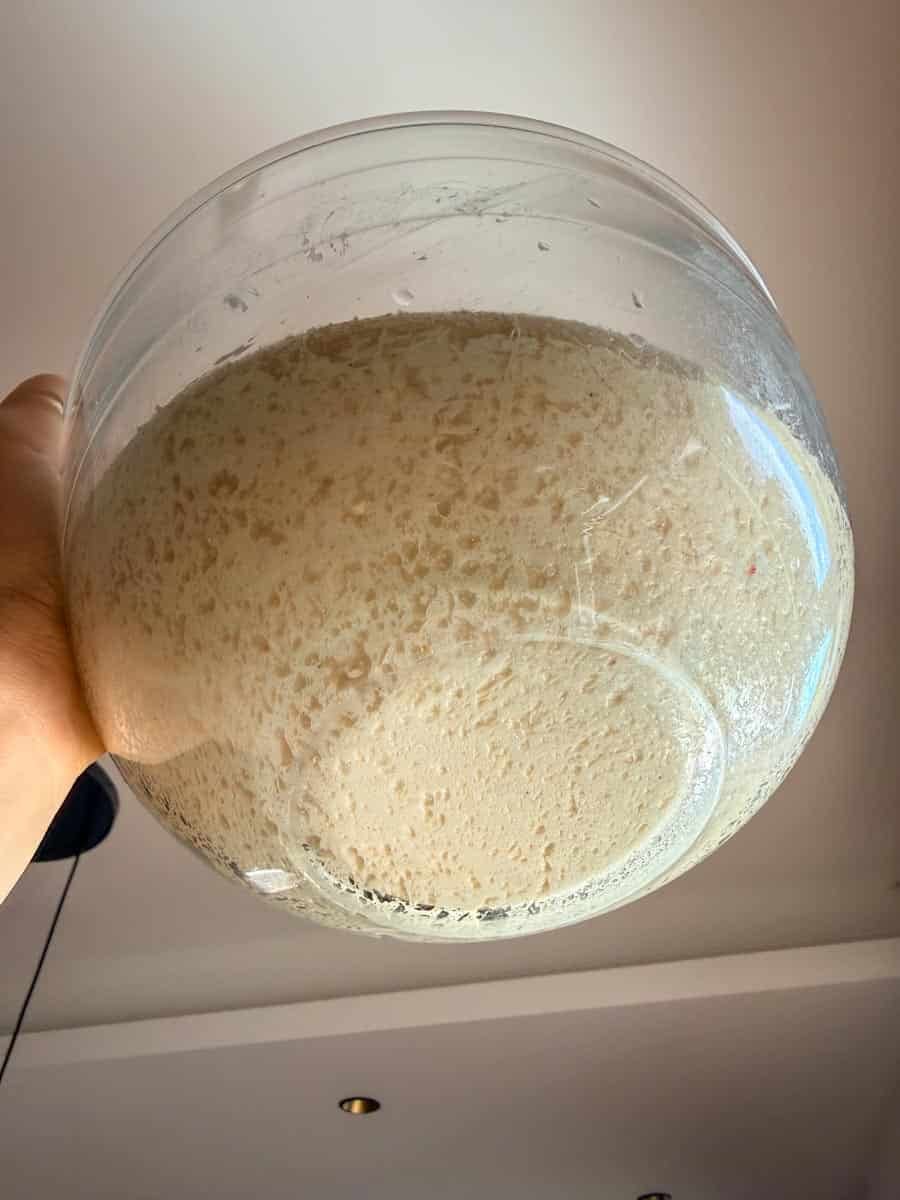
This is one of the easiest fixes. In a glass bowl, I can see much better how many bubbles are in the dough and how big they are.
With fresh milled flour, bubbles aren't very visible on the surface, so the sides of the bowl tell me much more. Here's what I watch for:
- Bubbles start at the bottom of the bowl.
- They slowly work their way up the sides.
- When I see them really high up the glass, close to the surface, I know it's time to end bulk fermentation and shape the bread.
The final proof can also move faster than you expect, so keep an eye on it. I explain the difference between underproofed and overproofed dough in how long to proof sourdough at room temperature.
7. Adding Vital Wheat Gluten (and Not Enough Water)
The fix: I don't use vital wheat gluten myself. If you want to try it, add 10 to 15 grams of extra water for every tablespoon of vital wheat gluten, on top of the water in your recipe.
This one might surprise you. Vital wheat gluten is one of the two really popular additives in the fresh milled community (the other is sunflower lecithin), and not only for sourdough.
What does vital wheat gluten do?
Vital wheat gluten is gluten extracted from wheat. So you're basically adding extra gluten to your bread.
That usually makes the dough easier to work with and more elastic. The loaf ends up closer to a store-bought white flour sourdough.
Some people really like it. I personally don't, because I don't see the need for it. But here's what I see go wrong a lot, and I haven't really heard anyone talk about it:
Vital wheat gluten gives your bread structure, not softness or tenderness.
It's the same mix-up people have with bread flour and all-purpose flour. Bread flour gives you structure, and all-purpose flour gives you softness. A lot of people think more gluten means more softness and fluffiness. But really, it means more structure.
That's why I'm not a fan of it in my bread. When I add it, I lose some of the softness. The loaf might look better, but it isn't as soft or as tender.
If you use it, add more water
Another thing people don't realize is that gluten is very thirsty. It needs extra water.
I think that's the main reason people add vital wheat gluten hoping to fix their bread, and it ends up even denser and harder. They don't account for the extra water. And what's the point in that?
So if you're curious and want to try it, it can give you great results, especially if you're after the look of your sourdough. Just add about 10 to 15 grams of water per tablespoon of vital wheat gluten.
| Vital wheat gluten… | What I'd expect |
|---|---|
| With extra water | A better-looking loaf, but not as soft or tender |
| Without extra water | A denser, harder loaf, possibly worse than without it |
Dense Loaf? What to Check First
If your last loaf came out dense, here's where I'd look. These are possible causes, not a diagnosis. Change one thing at a time on your next bake so you can tell what made the difference.
| What you noticed | Possible cause | What to try next time |
|---|---|---|
| Dense, flat loaf that spread out; dough felt slack and weak at shaping | Over-fermented (mistake 6), or a warm dough that fermented too fast (mistake 2) | End bulk sooner, at around a 30-40% rise; use cold tap water with fresh flour |
| Dough fermented quickly but never got stronger | Warm dough (mistake 2) or handling it before the bran softened (mistakes 4 and 5) | Cold tap water, then let the dough rest before folding, and fold gently |
| Dough felt stiff or very wet compared to the recipe | Your flour behaves differently (mistake 3) | Hold back some water and adjust by feel |
| Loaf won't hold its shape at all | A soft wheat or other low-gluten grain (mistake 1) | Switch to hard white or hard red wheat, or bake it in a loaf pan |
| Dense and hard after adding vital wheat gluten | Not enough extra water (mistake 7) | Add 10-15 g water per tablespoon, or leave it out |
Under-fermented dough can also turn out dense. But with fresh milled flour, in my experience, going too long is the more common problem.
If your starter seems sluggish, check when your sourdough starter is ready to use before your next bake.
Final Thoughts
Fresh milled sourdough isn't harder than regular sourdough. It just asks you to let go of a few white-flour habits:
- Start with a hard wheat.
- Keep the dough cool.
- Let the bran soften before you handle it.
- End bulk fermentation earlier than you think.
If you'd like a loaf to practice on, try my basic fresh milled sourdough bread. Or ease in with my mixed fresh-milled flour sourdough sandwich bread, which combines fresh milled and all-purpose flour.
For more ideas, here are my easy fresh milled flour recipes for beginners.
Which of these mistakes have you run into? Tell me in the comments. I really try to get back to everyone, because I know how frustrating it is to be left with follow-up questions.