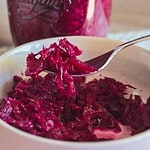
Traditional Red Cabbage Sauerkraut (Rotkraut, Naturally Fermented)

What I love most about traditional red cabbage sauerkraut (traditionally called "rotkraut") is how simple and satisfying it is. There's no cooking, no fancy equipment, and most of the process is completely hands-off. The color becomes deep and vibrant with red cabbage, the texture softens just enough while still keeping a bit of a crunch, and the flavor that develops is incredible. It also feels old-fashioned in the best possible way.
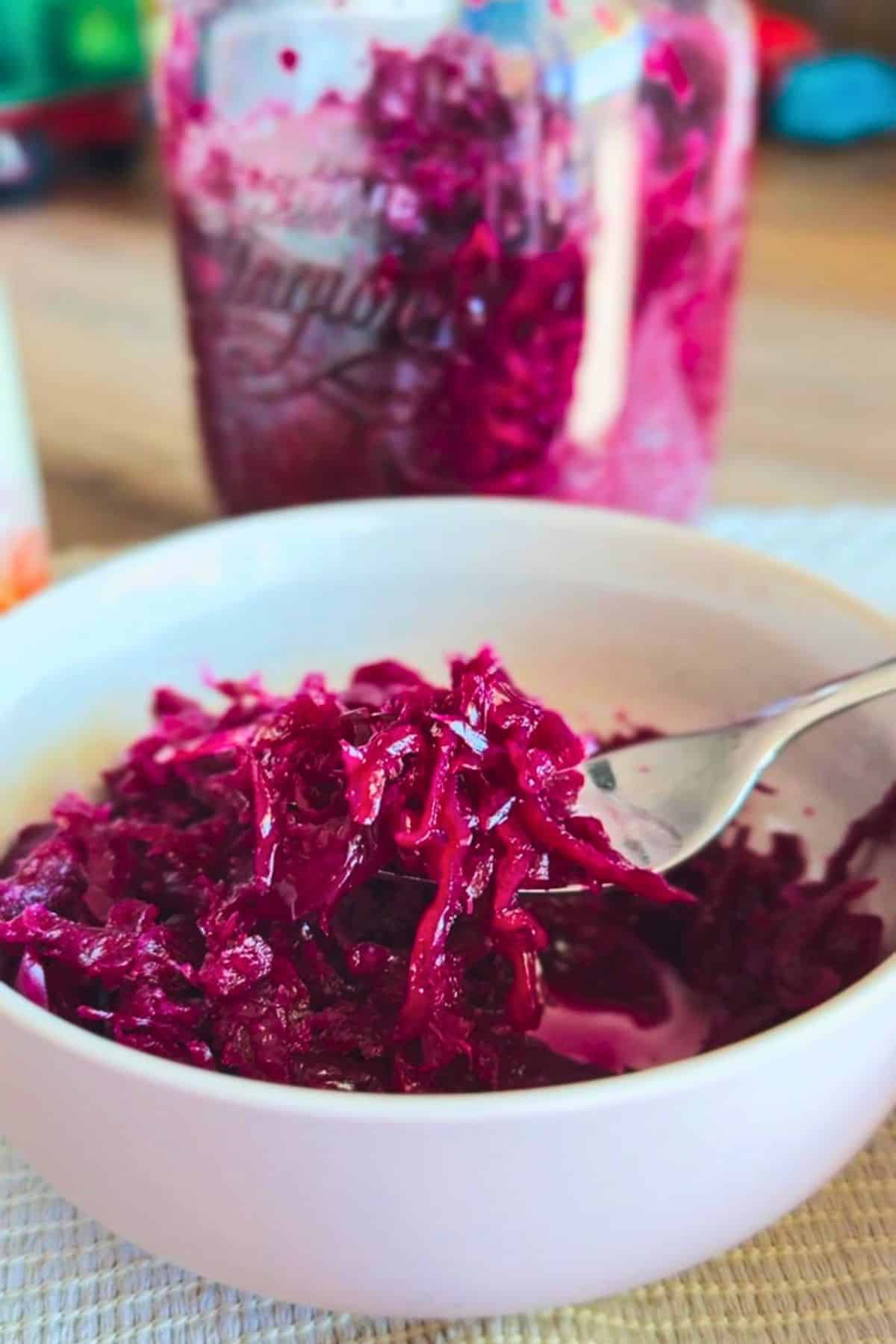
If you have an appetite for more traditional Central European recipes, this rotkraut goes great as a fresh crunchy side to Hackbraten (traditional German meatloaf). If you have some red cabbage leftover, you can make German rotkohl too!
Summarize & Save This Recipe On:
Quick Look
- Prep Time: 15-20 minutes
- Fermentation Time: 5-21 days
- Total Time: 5 days to 3 weeks (mostly hands-off)
- Servings: 1 liter jar (about 8-10 servings)
- Difficulty: Easy
- Baking Method: No bake / fermentation
- Best For: Side dish, meal topping, traditional meals
Jump to:
- Summarize & Save This Recipe On:
- Quick Look
- Important Ingredients
- Substitutions & Variations
- How to Make Traditional Red Cabbage Sauerkraut
- Baking Schedule
- 💭Crucial Success Tips
- Recipe FAQs
- How To Store Traditional Red Cabbage Sauerkraut
- Other Delicious Recipes
- Traditional Red Cabbage Sauerkraut (Rotkraut, Naturally Fermented)
- Need Help Tweaking This Recipe?
- Other Central European Recipes You'll Love
- Fresh Milled Einkorn Fruit Dumplings (Plum or Apricot)
- Fresh Milled Einkorn Crepes
- Apple Millet and Farmer's Cheese Bake
Important Ingredients
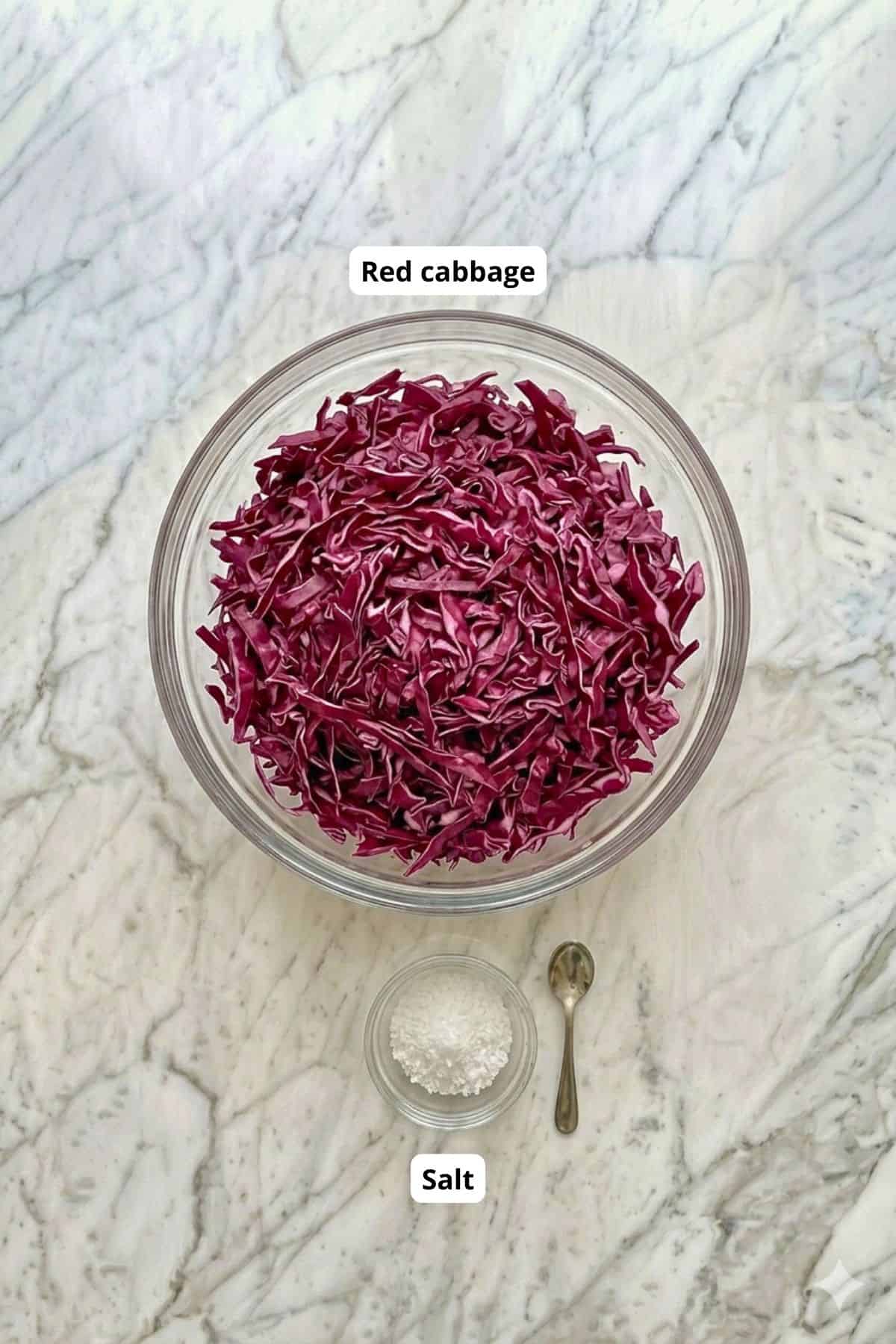
- Red cabbage this is the main ingredient. It's what turns into the sauerkraut after it slowly softens and ferments in the jar.
- Salt helps pull water out of the cabbage. That liquid becomes the natural brine that keeps everything safe while it ferments.
See recipe card for quantities.
Substitutions & Variations
- You can add a few caraway seeds if you want a more traditional flavor.
- A small amount of apple or grated carrot can add a light sweetness.
- Use green cabbage if red cabbage is not available, but the flavor will be a bit milder.
How to Make Traditional Red Cabbage Sauerkraut
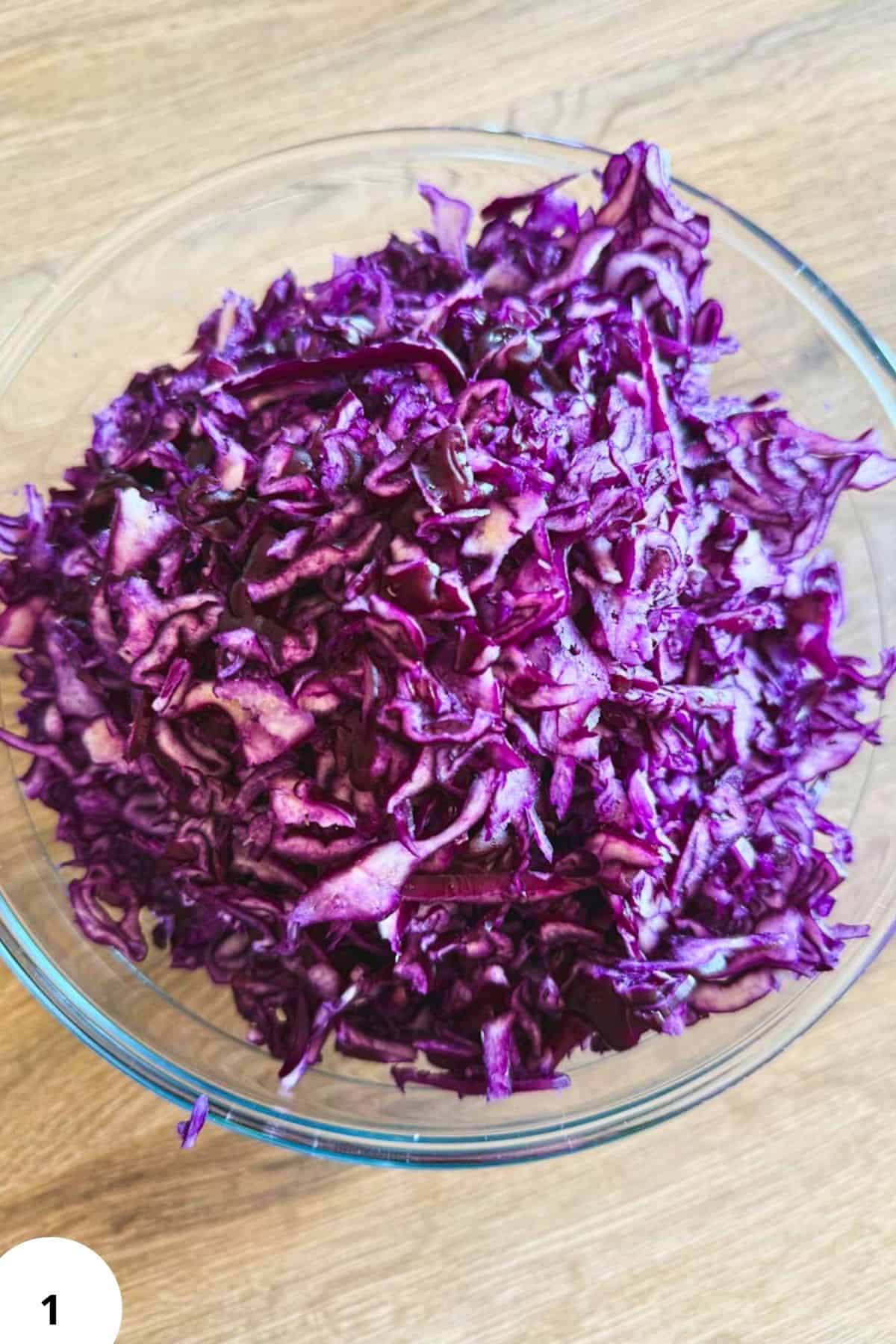
Step 1: Remove one whole outer leaf and set it aside. You'll use this later to help keep everything submerged.
Then shred the rest of the cabbage into thin strips (Image 1). Alternatively, you can cut it up into a thin strips, but shredding it is faster.
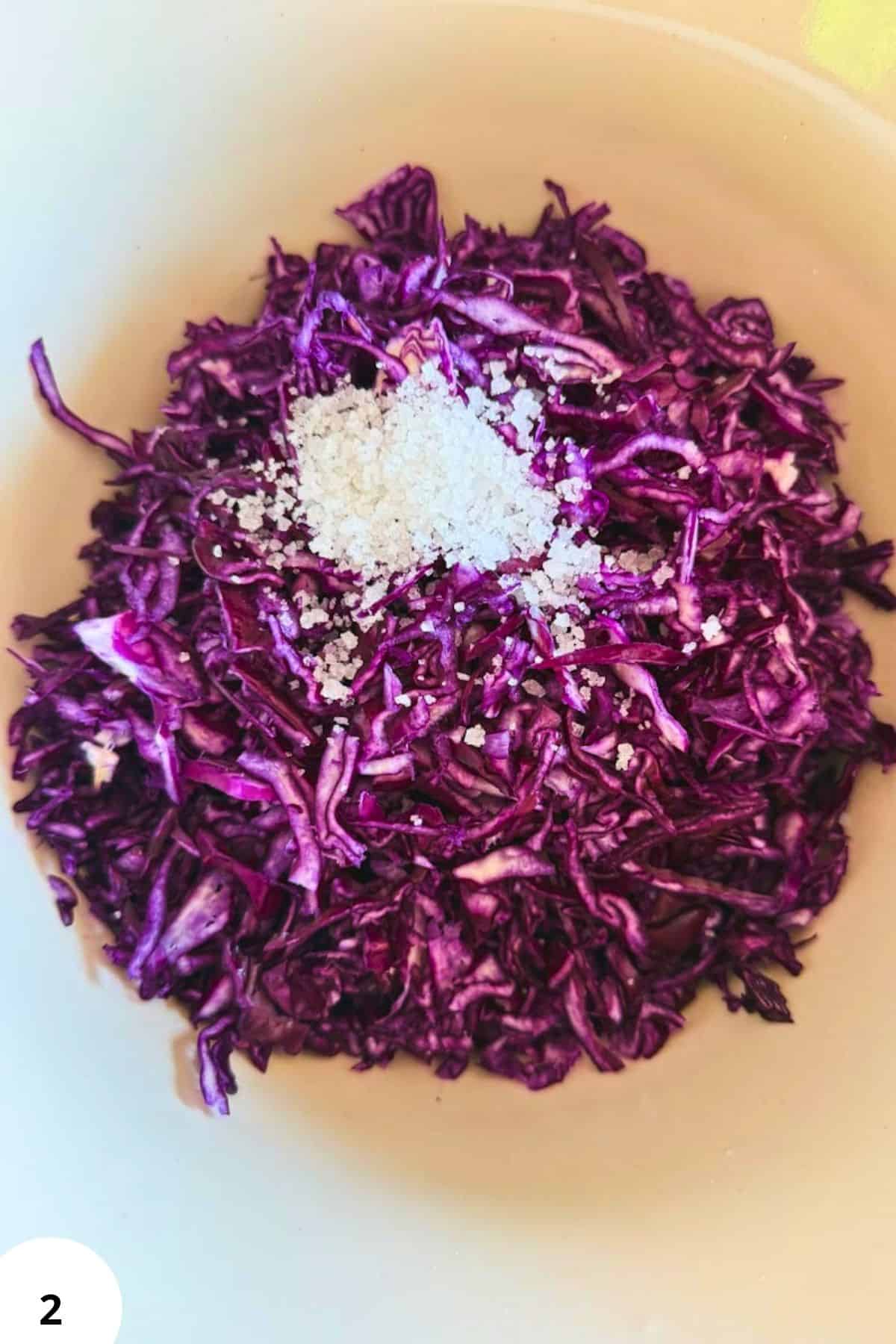
Step 2: Place the shredded cabbage in a large bowl and add the salt (Image 2).
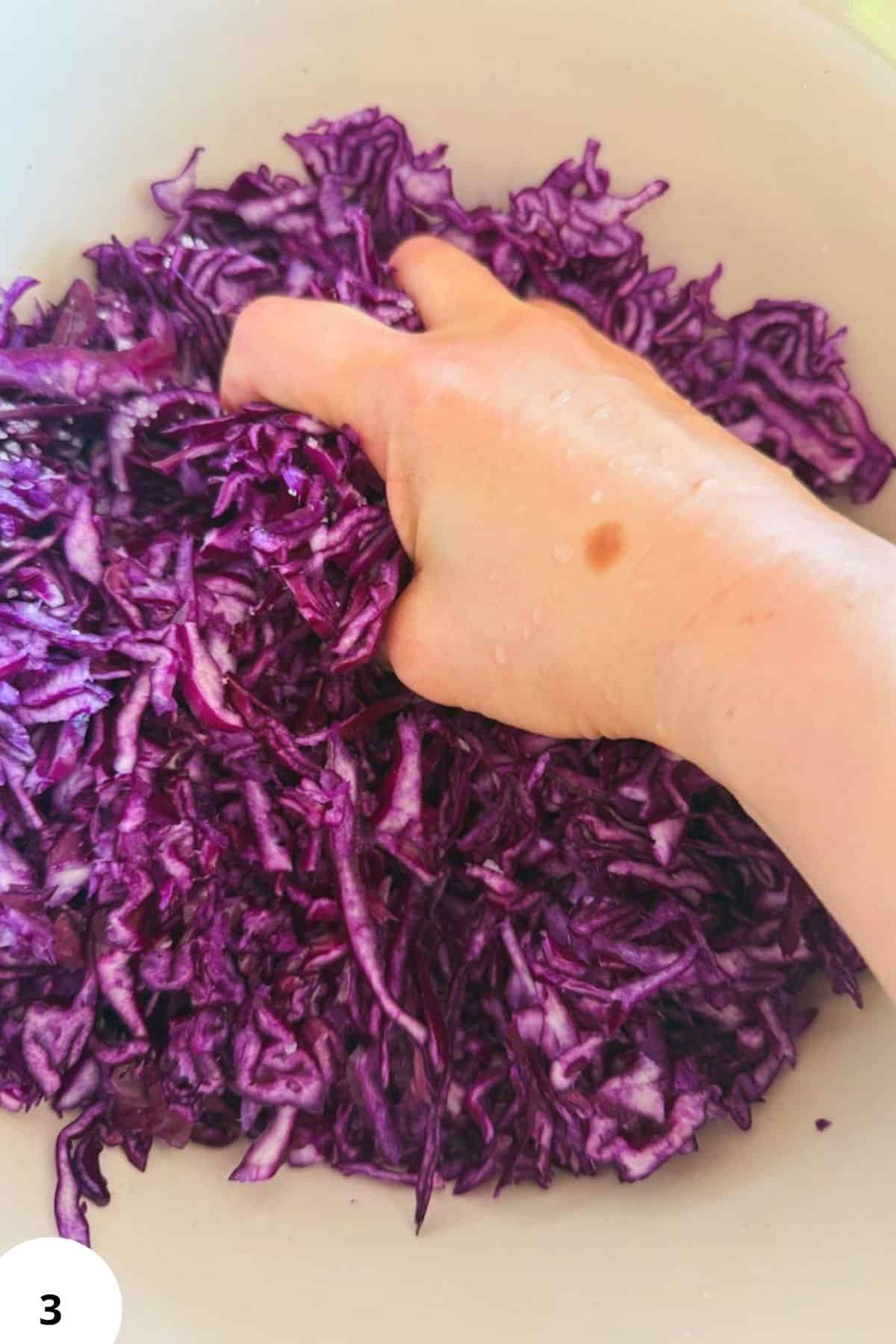
Step 3: Use your hands to massage the cabbage for a few minutes (Image 3).
At first it will feel dry, but then it softens and starts releasing its own brine.
This step is key in traditional fermentation. You're not adding liquid, you're drawing it out.
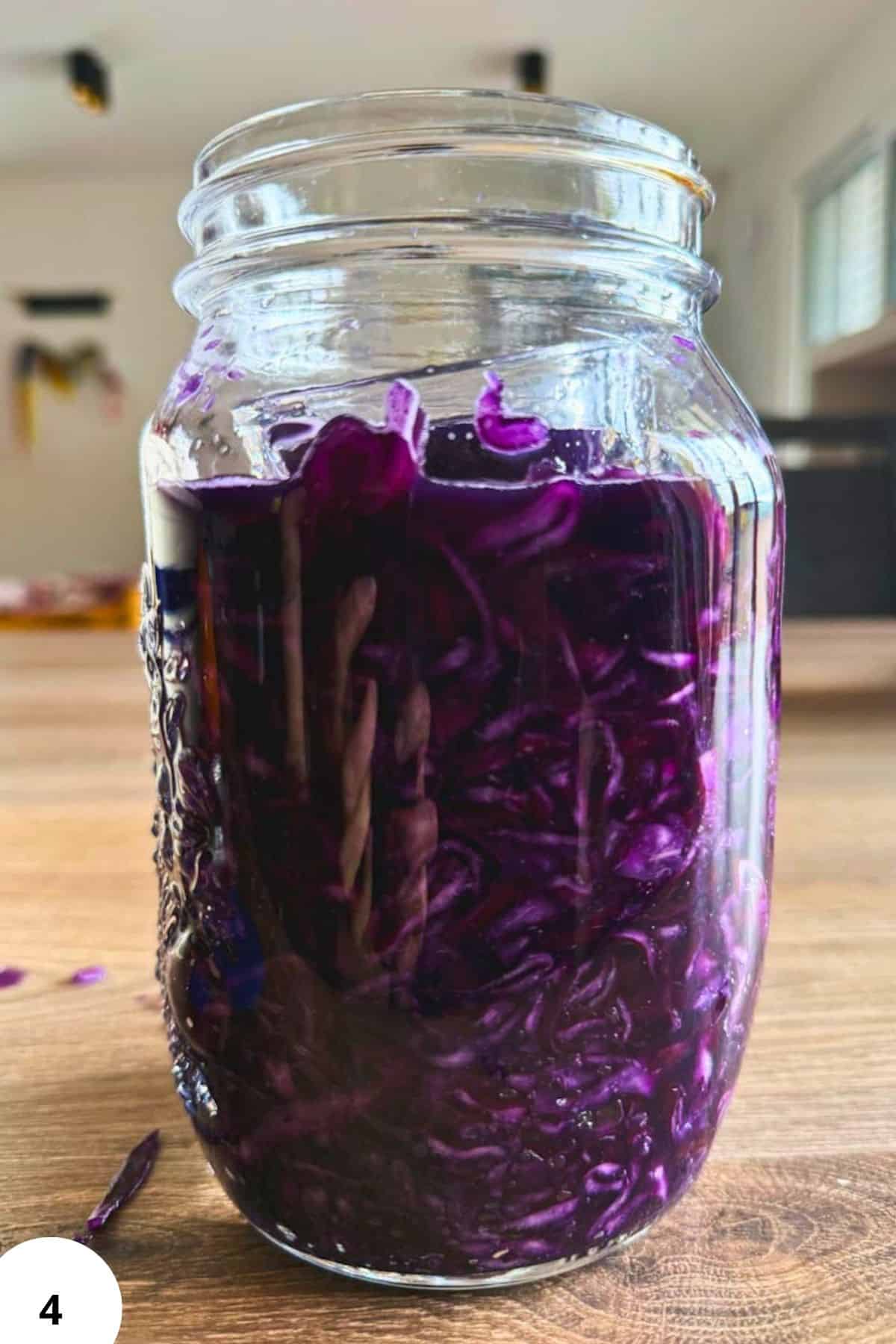
Step 4: Transfer the cabbage into your mason jar, pressing it down firmly as you go (Image 4).
Take your time here. The tighter you pack it, the better it ferments.
Fold the reserved cabbage leaf and place it on top of the shredded cabbage.
This acts like a natural barrier and helps keep the smaller pieces underneath the brine.
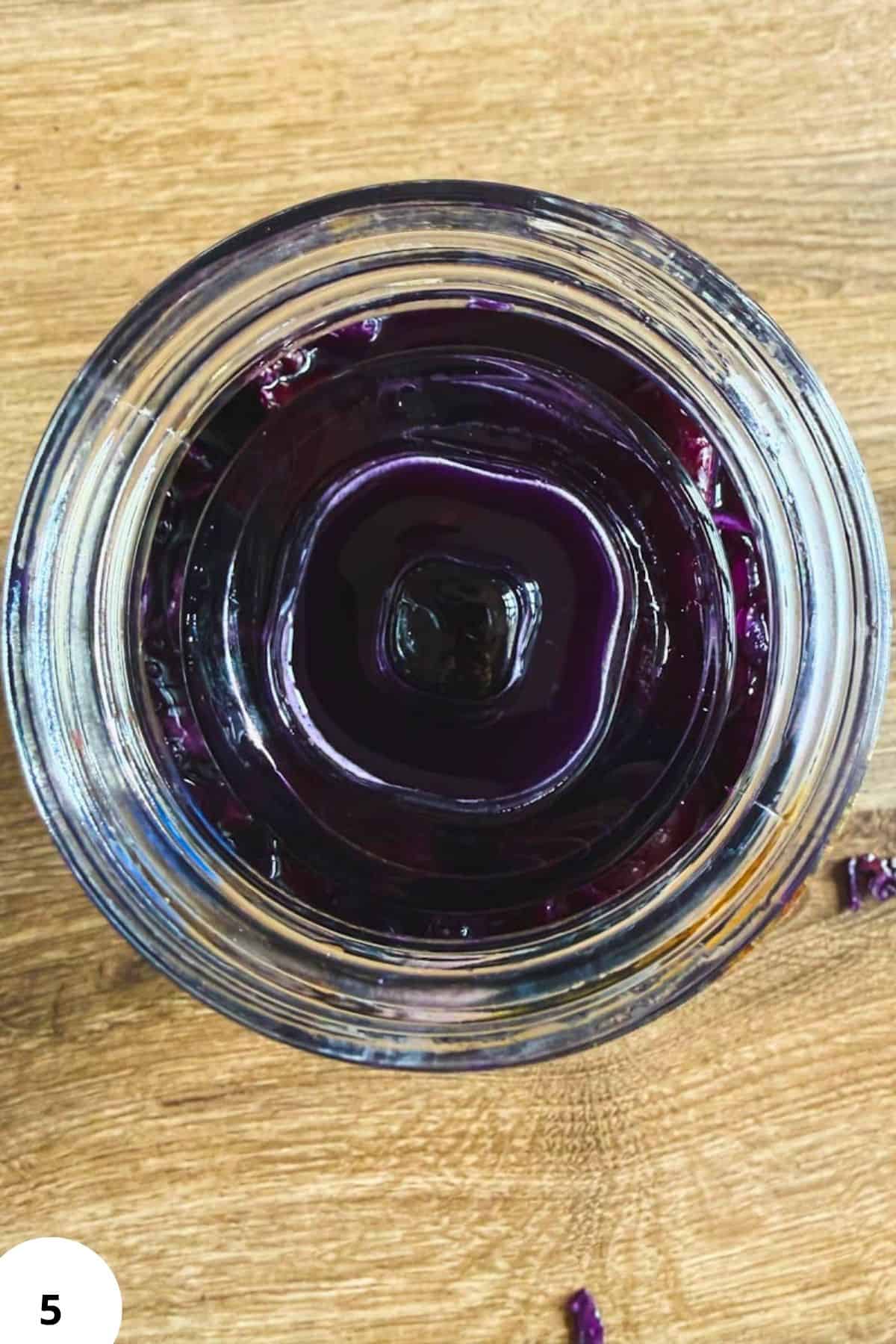
Step 5: The cabbage should be fully covered by its liquid (mage 6).
- You can use a fermentation weight and lid (I do, and it makes things easier)
- But it's not necessary if you packed it well and everything stays under the liquid
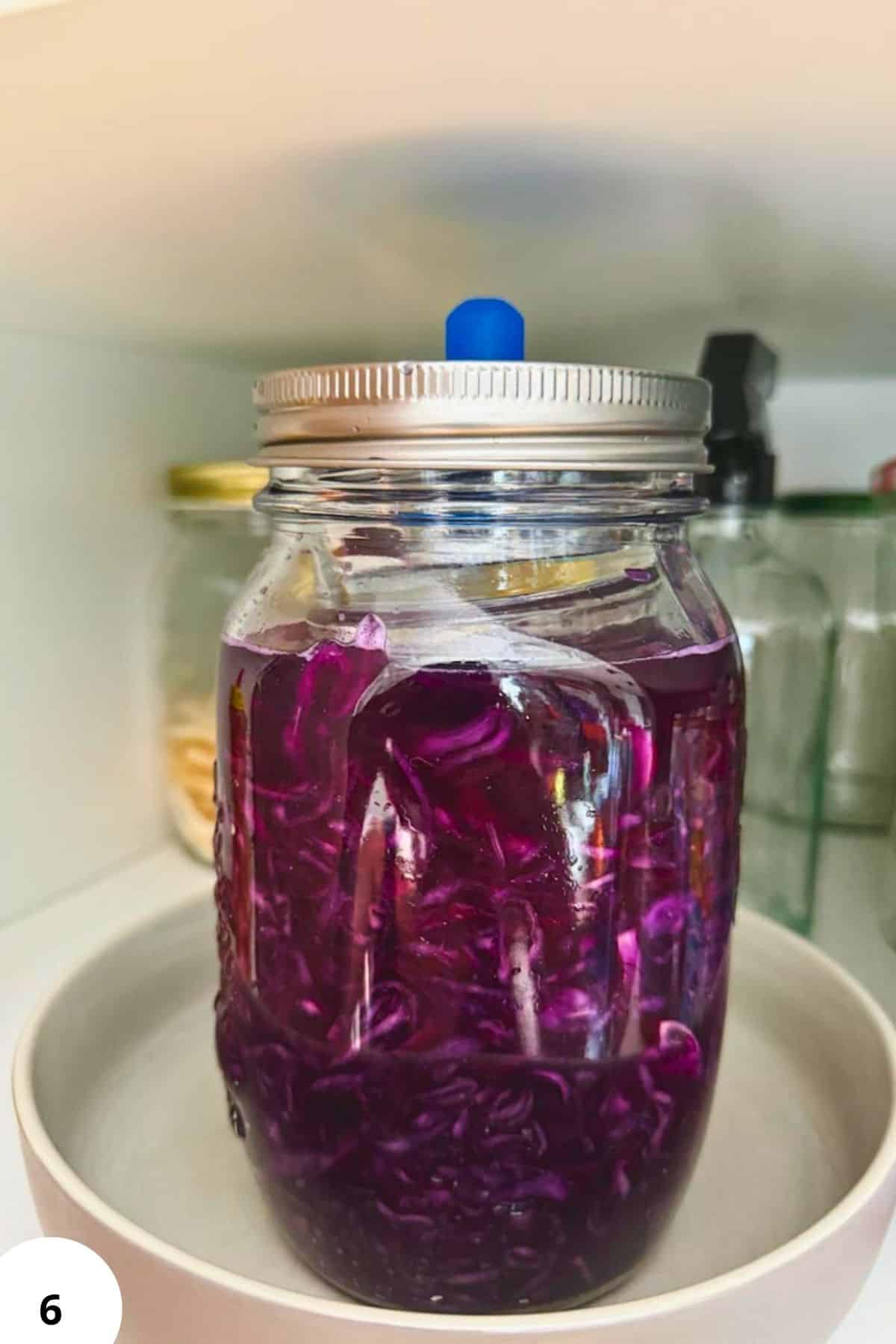
Step 6: Loosely cover the jar (or use a fermentation lid) and leave it at room temperature (Image 6). I recommend putting a deep plate under the jar because the liquid tends to burst out sometimes and leak from the jar!
- Around 5-7 days: mild and fresh
- Around 2-3 weeks: deeper, more traditional flavor
Once it tastes right to you, transfer it to the fridge. It will keep for a long time.
Hint: the most important part of successful sauerkraut is keeping the cabbage fully submerged under the brine during fermentation. Any cabbage exposed to air can dry out or develop mold. Press the cabbage down firmly and check the jar daily during the first few days as the fermentation becomes active.
Baking Schedule
Day 1: Shred cabbage, salt it, and pack the jar
Days 2-4: Fermentation becomes active and bubbly
Days 5-7: Mild, fresh-tasting sauerkraut
Weeks 2-3: Tangier and more traditional flavor develops After fermentation: Move to the refrigerator for long-term storage
💭Crucial Success Tips
Don't skip massaging the cabbage thoroughly with the salt. This step helps release enough liquid to naturally cover the cabbage without needing to add extra water, which gives the best texture and flavor.
Recipe FAQs
You'll usually see small bubbles forming after a day or two, and the cabbage will begin smelling pleasantly sour and tangy. That's a normal sign that fermentation is active.
Press the cabbage down firmly again after a few hours. If needed, you can add a small amount of extra brine made with salt water, but usually the cabbage releases enough liquid on its own.
That depends on your taste preference. Around 5-7 days gives you a fresher, milder flavor, while 2-3 weeks creates a tangier and more developed traditional flavor.
How To Store Traditional Red Cabbage Sauerkraut
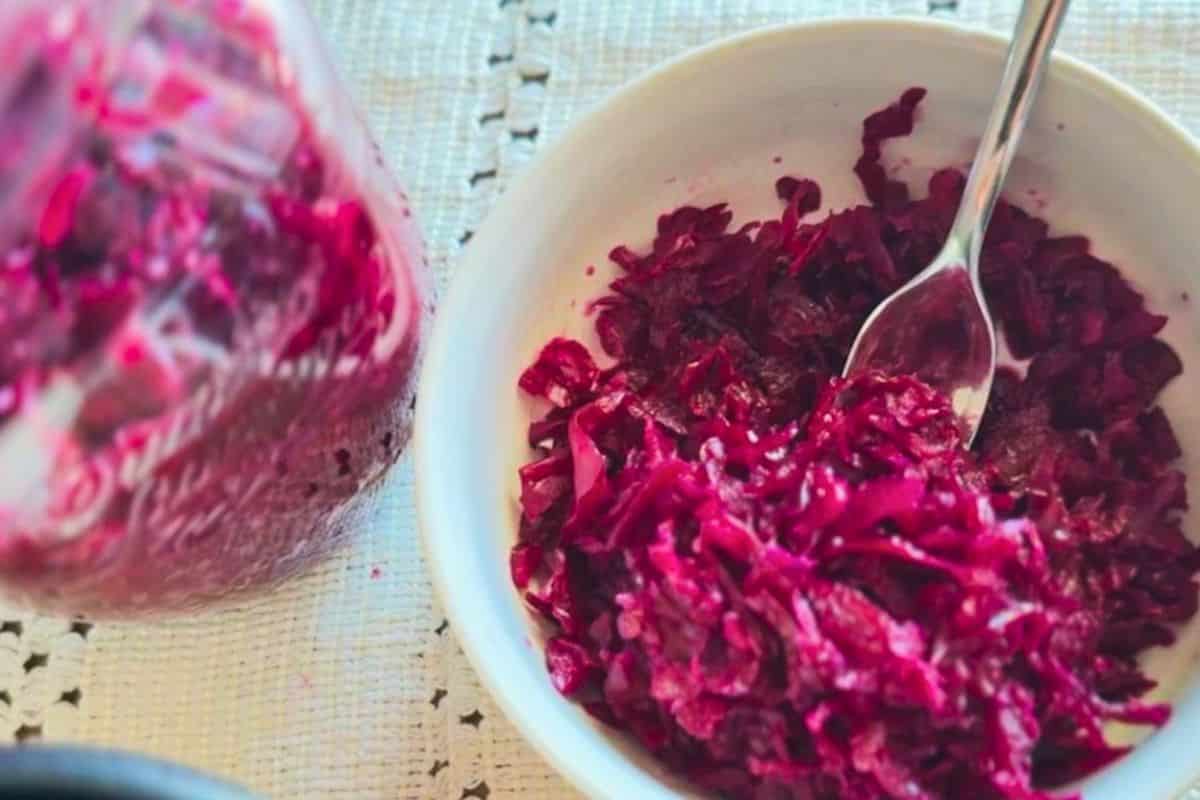
Once fermented to your liking, store it in the fridge. It will keep for several weeks to months. Always use a clean fork when taking some out so it stays fresh longer.
Other Delicious Recipes
- Fresh Milled Buckwheat Sourdough Rolls

- Einkorn Sourdough Bread for Beginners (50% Fresh Milled)
- The Easiest Fresh Milled Einkorn Sourdough Bread (Loaf Pan Method)
- Fresh Milled Sourdough English Muffins (Same Day or Overnight)



If you tried this traditional red cabbage sauerkraut (rotkraut, naturally fermented) or any other recipe on my blog please leave a 🌟 star rating and let me know how it went in the 📝 comments below! Happy Baking!
Traditional Red Cabbage Sauerkraut (Rotkraut, Naturally Fermented)
Ingredients
- 1000 g cabbage red, shredded
- Salt 2% of the cabbage weight
Instructions
- Remove one whole outer leaf and set it aside. You'll use this later to help keep everything submerged. Then shred the rest of the cabbage into thin strips. Alternatively, you can cut it up into a thin strips, but shredding it is faster.
- Place the shredded cabbage in a large bowl and add the salt.
- Use your hands to massage the cabbage for a few minutes. At first it will feel dry, but then it softens and starts releasing its own brine. This step is key in traditional fermentation. You're not adding liquid, you're drawing it out.
- Transfer the cabbage into your mason jar, pressing it down firmly as you go. Take your time here. The tighter you pack it, the better it ferments. Fold the reserved cabbage leaf and place it on top of the shredded cabbage. This acts like a natural barrier and helps keep the smaller pieces underneath the brine.
- The cabbage should be fully covered by its liquid. - You can use a fermentation weight and lid (I do, and it makes things easier)- But it's not necessary if you packed it well and everything stays under the liquid
- Loosely cover the jar (or use a fermentation lid) and leave it at room temperature. I recommend putting a deep plate under the jar because the liquid tends to burst out sometimes and leak from the jar! - Around 5-7 days: mild and fresh-Around 2-3 weeks: deeper, more traditional flavor. Once it tastes right to you, transfer it to the fridge. It will keep for a long time.
Notes
- Red cabbage will stain your hands and jar slightly purple. That's normal.
- The flavor is a bit deeper and earthier than regular sauerkraut.
- If you're new to this, start with a smaller jar. It's easier to manage and gives you confidence quickly.