Italian Semolina Sourdough Bread

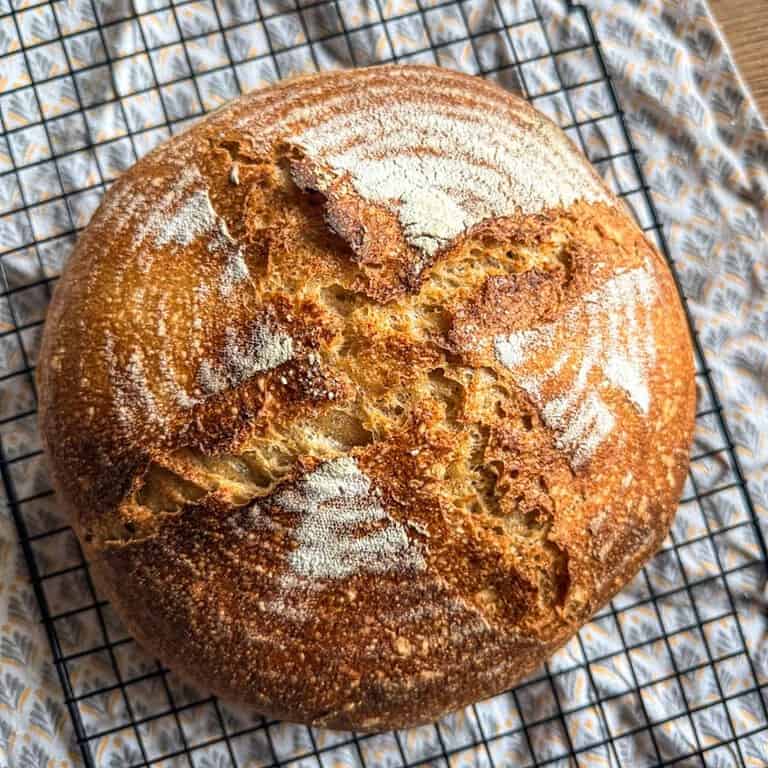
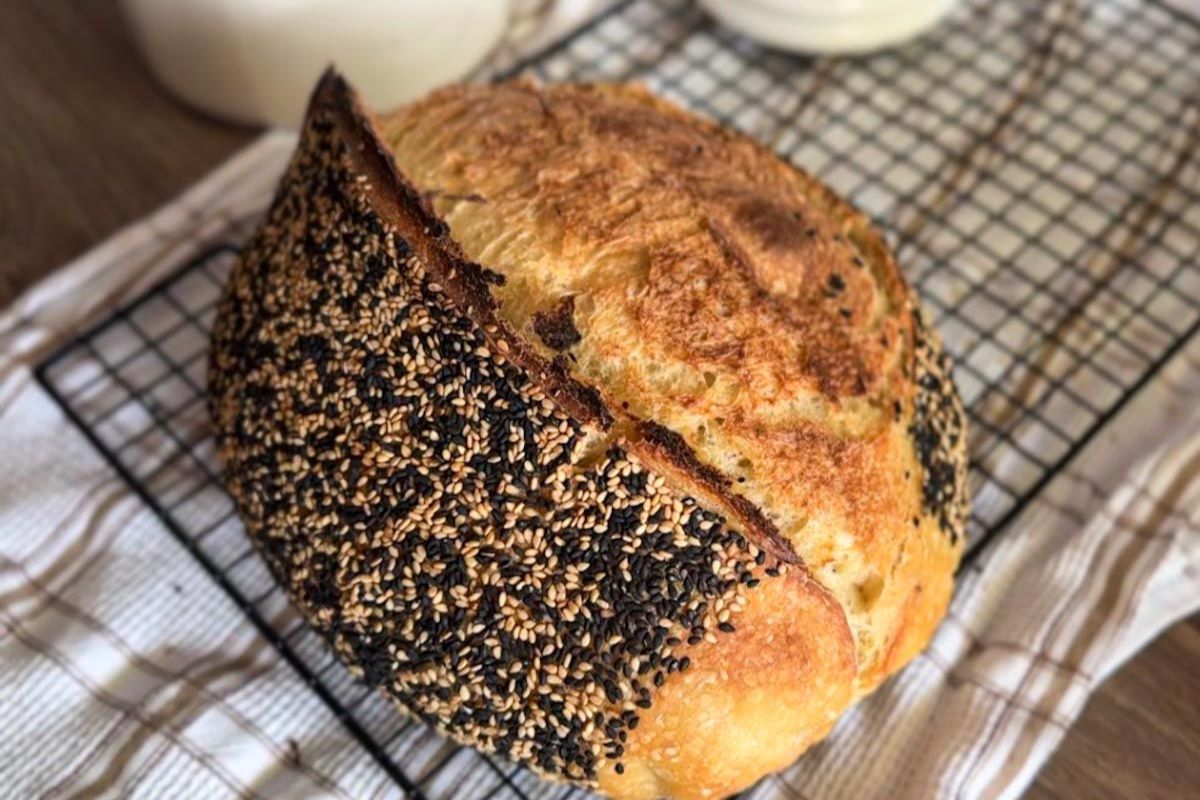
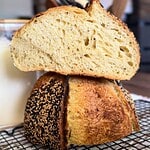
If you love a an artisan loaf with a soft but flavorful inside, this Italian semolina sourdough bread deserves a spot in your baking rotation. Semolina flour gives this loaf a golden color and a slightly sweeter taste, plus it's easy to work with, so the recipe is beginner friendly in my opinion. It's an easy sourdough bread that feels a bit special, but simple enough for everyday sandwiches, toast, and dipping into olive oil.
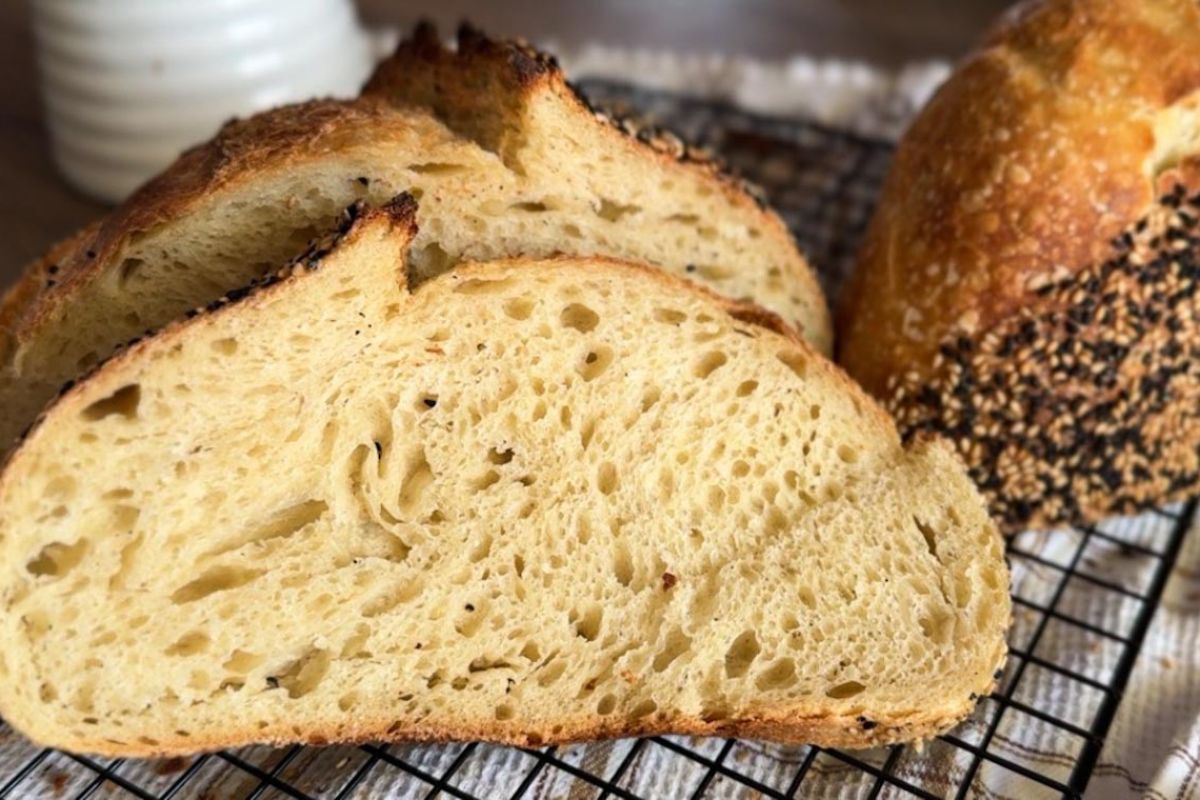
Italian semolina bread has long been a staple in Southern Italy, particularly in regions where durum wheat is grown. That's why almost all bread is yellowish if you visit Southern Italian bakeries! In my country, we have just enough Italian influence that we use semolina in bread, especially in coastal region. Semolina is also great for pizza, focaccia or any type of high hydration, but structured dough.
This recipe was inspired by my most popular same day sourdough bread recipe, and it contains just the right amount of semolina for my taste: enough to give a nice color and taste, but not so much that it makes handling difficult.
Summarize & Adapt This Recipe On:
Quick Look
- Prep Time: 30 minutes
- Bulk Fermentation: 5-8 hours
- Final Proof: 8-16 hours (cold proof)
- Cook Time: 45 minutes
- Total Time: 14-25 hours
- Servings: 1 loaf (10-12 slices)
- Difficulty: Easy
- Baking Method: Dutch Oven
- Best For: Sandwiches, soups, toast, dipping in olive oil
Jump to:
- Summarize & Adapt This Recipe On:
- Quick Look
- Important Ingredients
- Substitutions & Variations
- How to Make Italian Semolina Sourdough Bread
- Baking Schedule
- 💭Crucial Success Tips
- Recipe FAQs
- How To Store Italian Semolina Sourdough Bread
- Other Sourdough Recipes
- Italian Semolina Sourdough Bread
- Need Help Tweaking This Recipe?
- Other Sourdough Bread Recipes You'll Love
- Fresh Milled Buckwheat Sourdough Rolls
- Einkorn Sourdough Bread for Beginners (50% Fresh Milled)
- The Easiest Fresh Milled Einkorn Sourdough Bread (Loaf Pan Method)
Important Ingredients
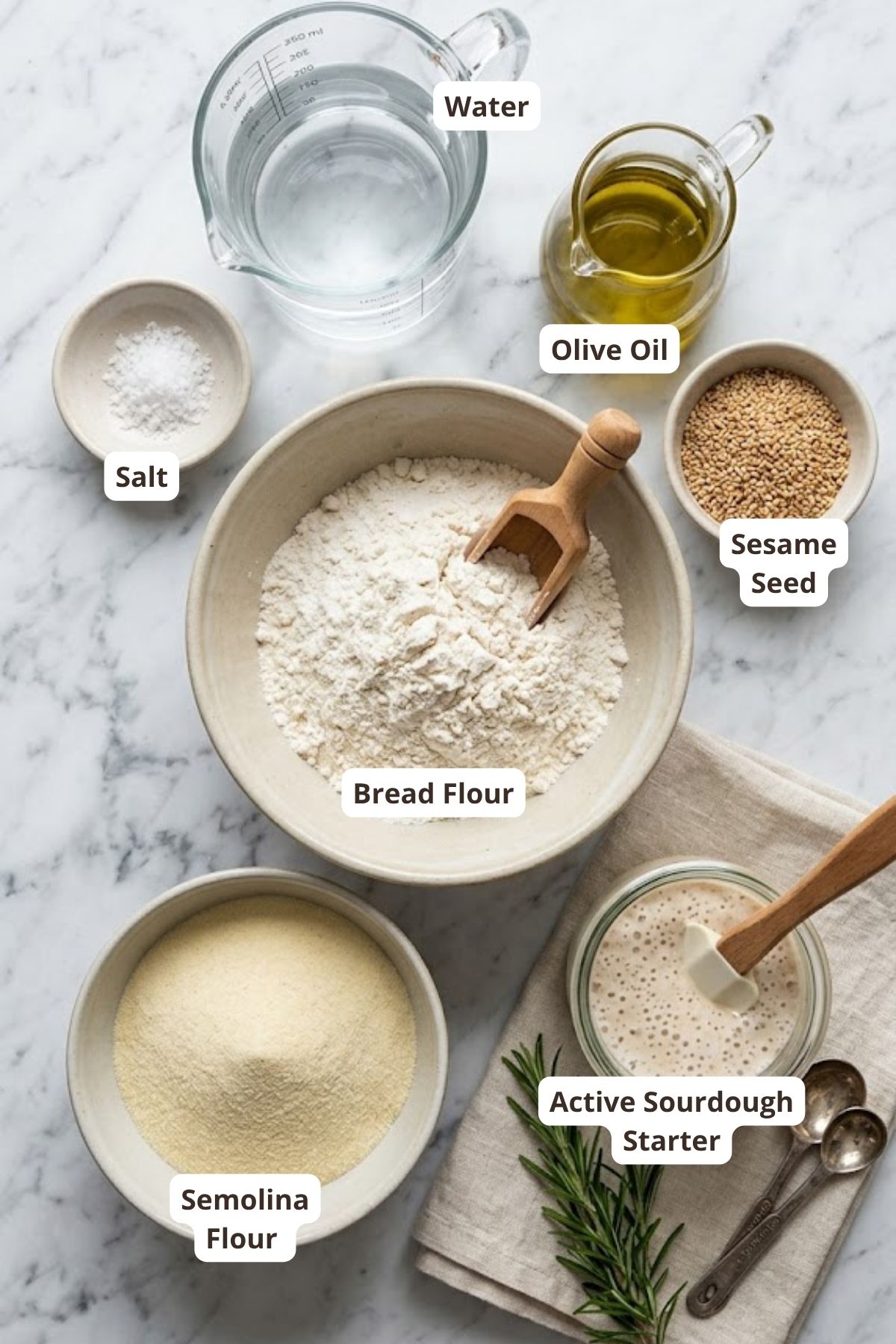
- IMPORTANT NOT ON SEMOLINA FLOUR: Not all semolina flour is the same. For this recipe, you'll want fine-ground semolina flour, sometimes labeled fine durum flour or semola rimacinata. Fine semolina absorbs water better, develops gluten more effectively, and the result is softer and lighter bread. If you're unsure, look for semolina that feels similar in texture to regular flour rather than cornmeal. Using the correct semolina makes a noticeable difference in both the texture and rise of your sourdough loaf.
- Sourdough Starter provides the natural rise and develops flavor during fermentation.
- Sesame Seeds adds extra texture and a nutty flavor that pairs really well with the semolina. Also, traditionally, sesame seeds are often found on semolina bread!
- Olive Oil adds a little softness to the crumb and makes the dough a bit more pliant and easier to work with.
See recipe card for quantities.
Substitutions & Variations
- Bread flour can be replaced with all-purpose flour.
- White sesame seeds, black sesame seeds, or a mixture of both all work well.
- Honey can be used instead of sugar if you prefer.
- Skip the sesame coating if you want a simpler loaf.
- Add some fresh or dried rosemary for a Mediterranean inspired loaf.

Free resource
Get all 3 when you subscribe
Bake beautiful bread that fits Your life - not the other way around
How to Make Italian Semolina Sourdough Bread
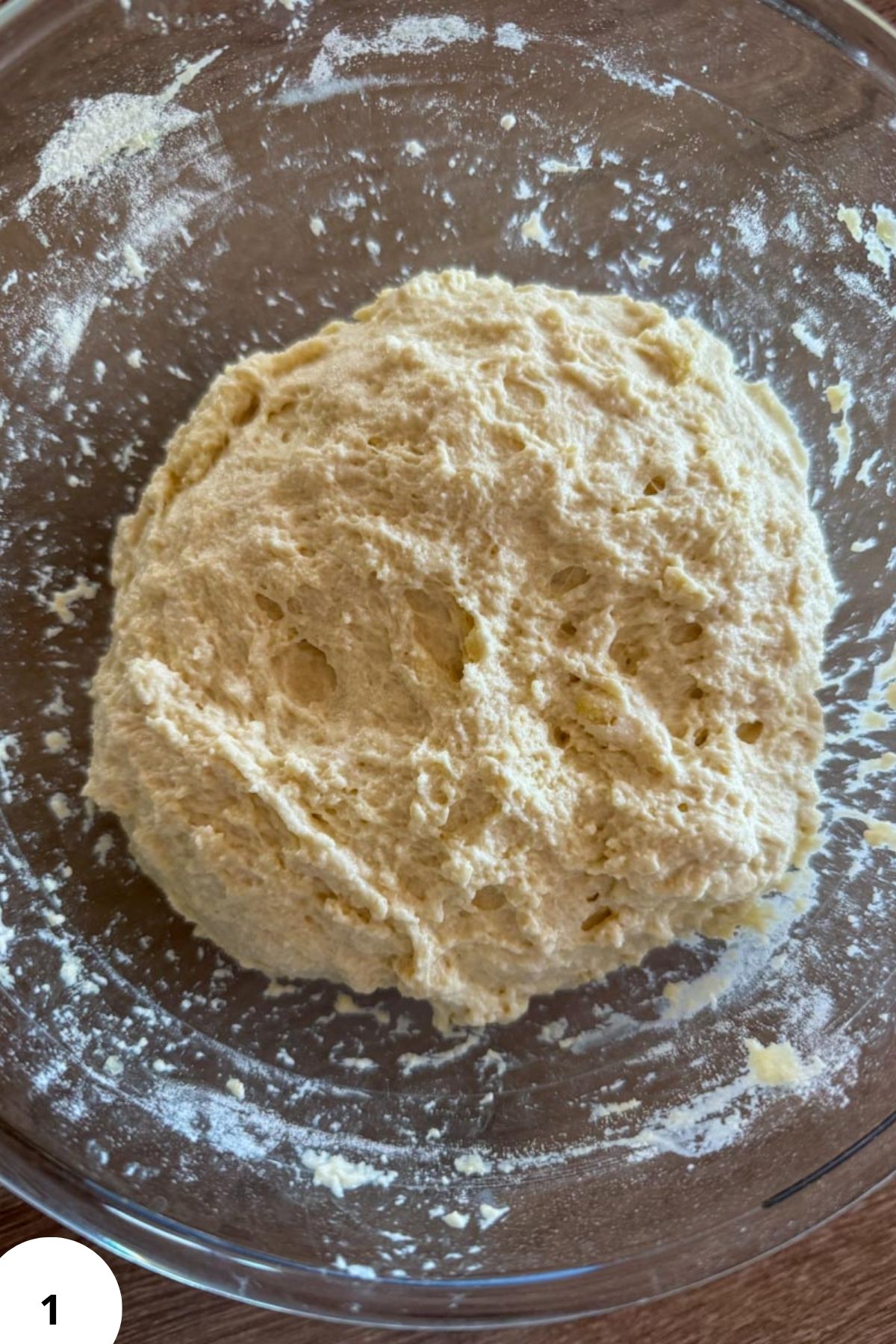
Step 1: In a large mixing bowl, combine 360g of water, 100g of starter, 10g of olive oil, 10g of salt, 300g of bread flour, and 200g of fine semolina flour.
Mix until no dry flour remains (Image 1). I usually do this with wet hands, squeezing and mixing the dough until the starter disappears and the dough starts to feel smoother, altogether about 3 minutes. The dough will look shaggy and rough at this stage.
Cover the bowl and let it rest for 30 to 60 minutes.
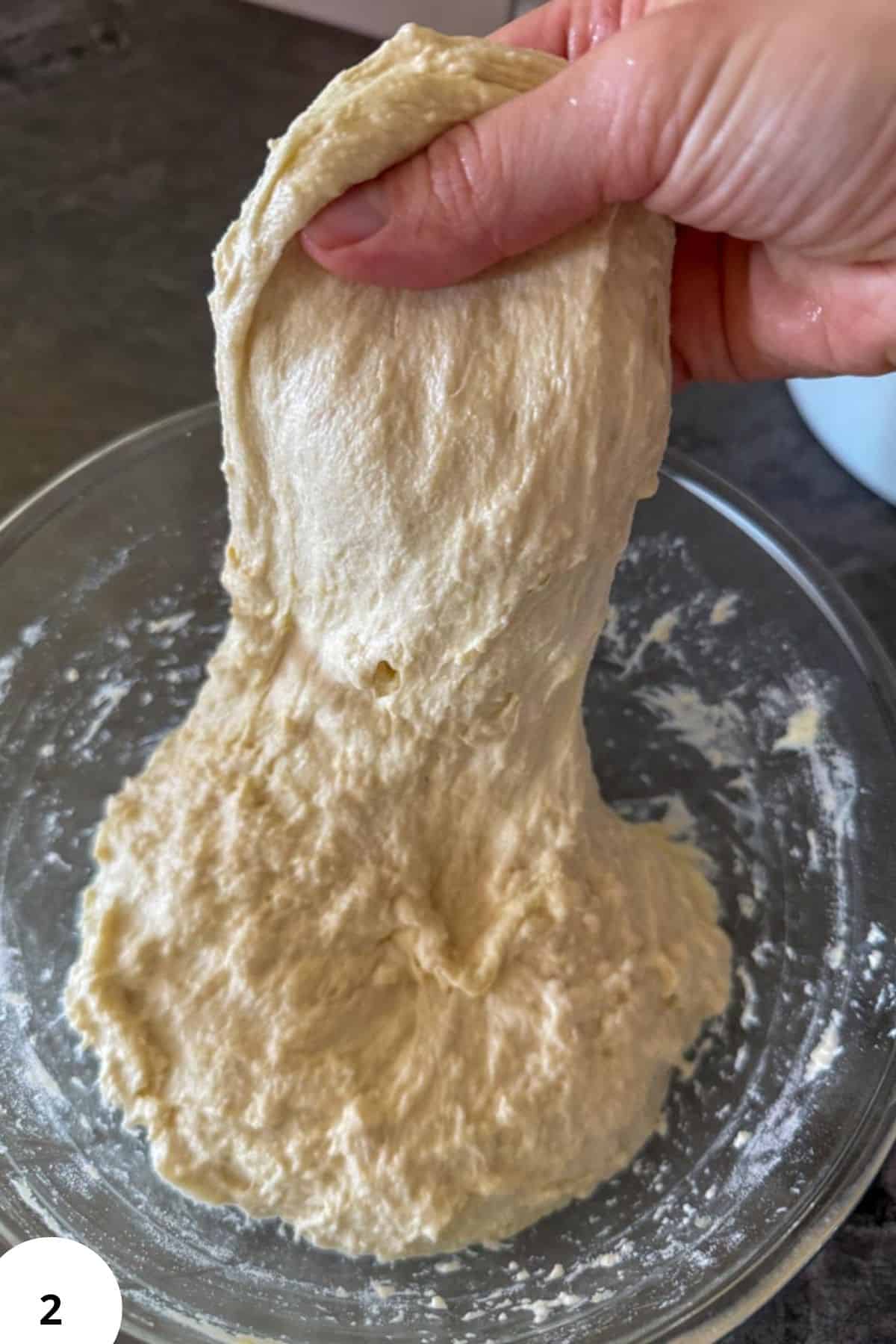
Step 2: Cover the bowl and let the dough rest for 30 minutes.
Perform your first set of stretch and folds by grabbing one side of the dough, stretching it upward, and folding it over itself (Image 2). Rotate the bowl and repeat until all sides have been folded.
Repeat this process two more times, spacing each set about 30 minutes apart.
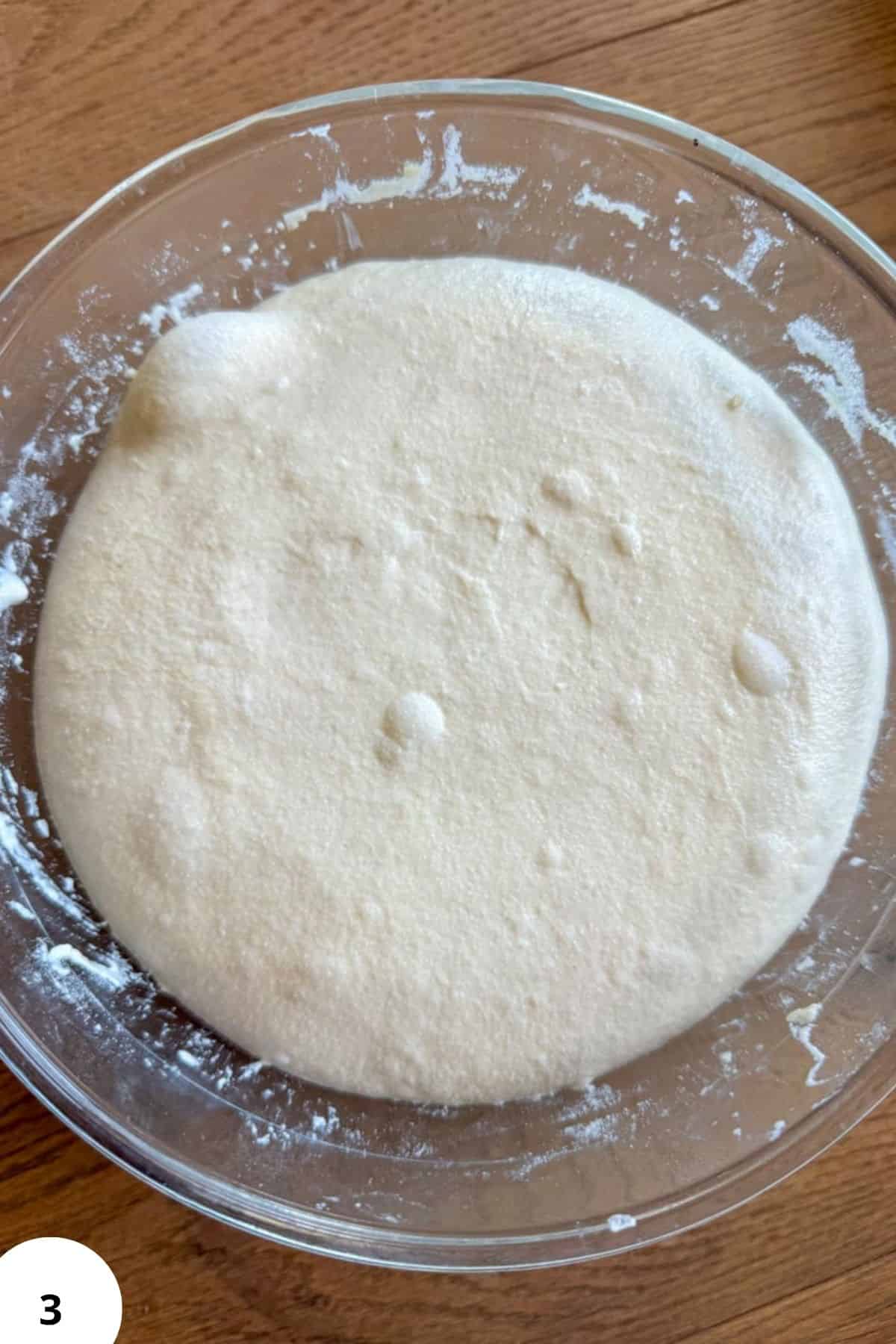
Step 3: Cover the bowl and let the dough continue fermenting at room temperature until it becomes puffy and airy (Image 3).
This usually takes about 5 to 8 hours from the time you added the starter, depending on the temperature of your kitchen.
The dough should look noticeably risen and have bubbles forming along the sides of the bowl, but it will not puff up as much as a regular sourdough would.
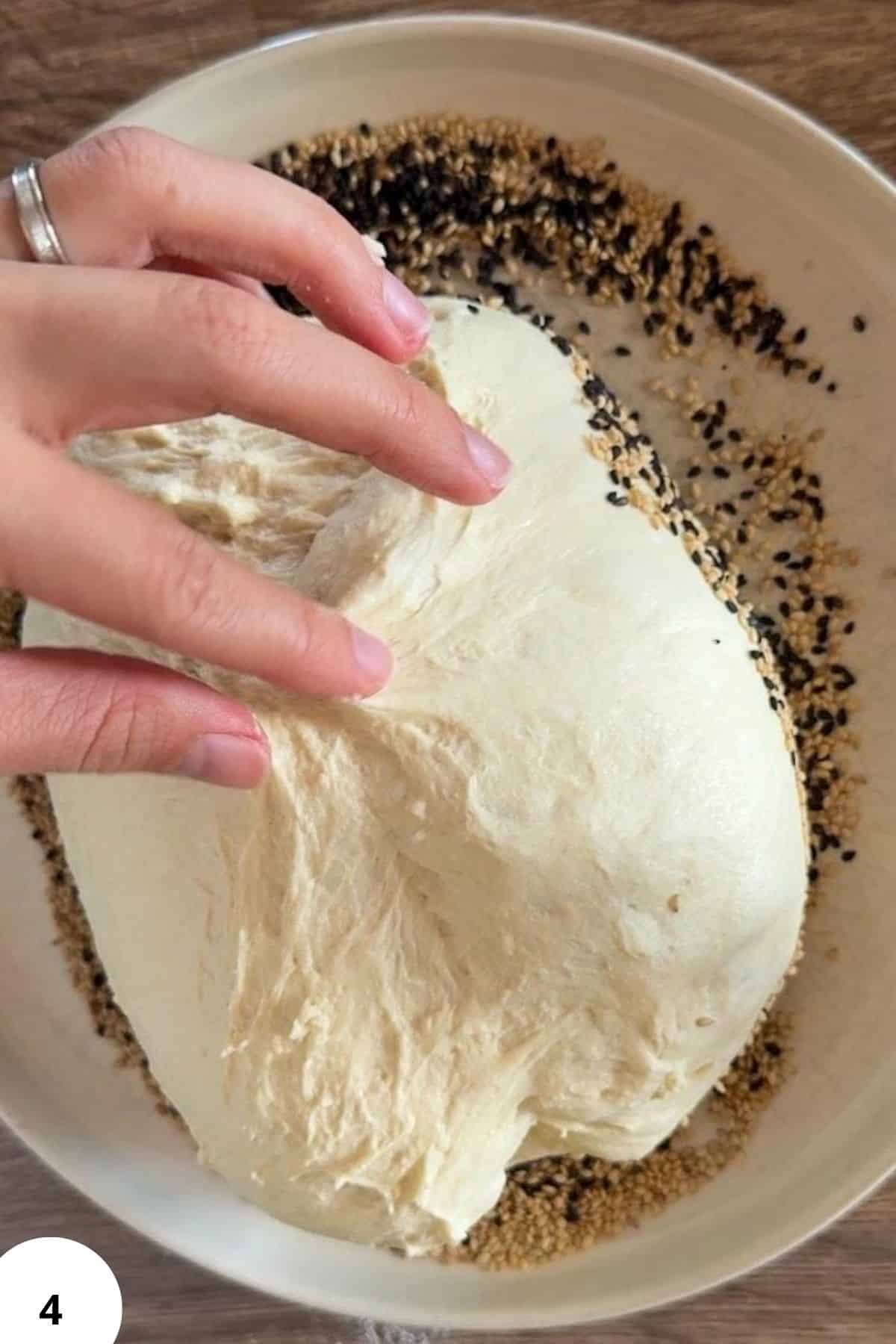
Step 4: Spread a generous layer of sesame seeds onto a large plate (Image 4).
Turn the dough onto a lightly floured work surface and shape it into a round or oval loaf.
Once shaped, brush the top of the loaf with wet hands to make the dough wet. Then gently lift the loaf and place it seam-side up onto the sesame seeds. Roll and rock it back and forth until the entire outside surface is evenly coated.
Transfer the dough to a floured banneton basket with the seam facing up and the sesame-coated side facing down.
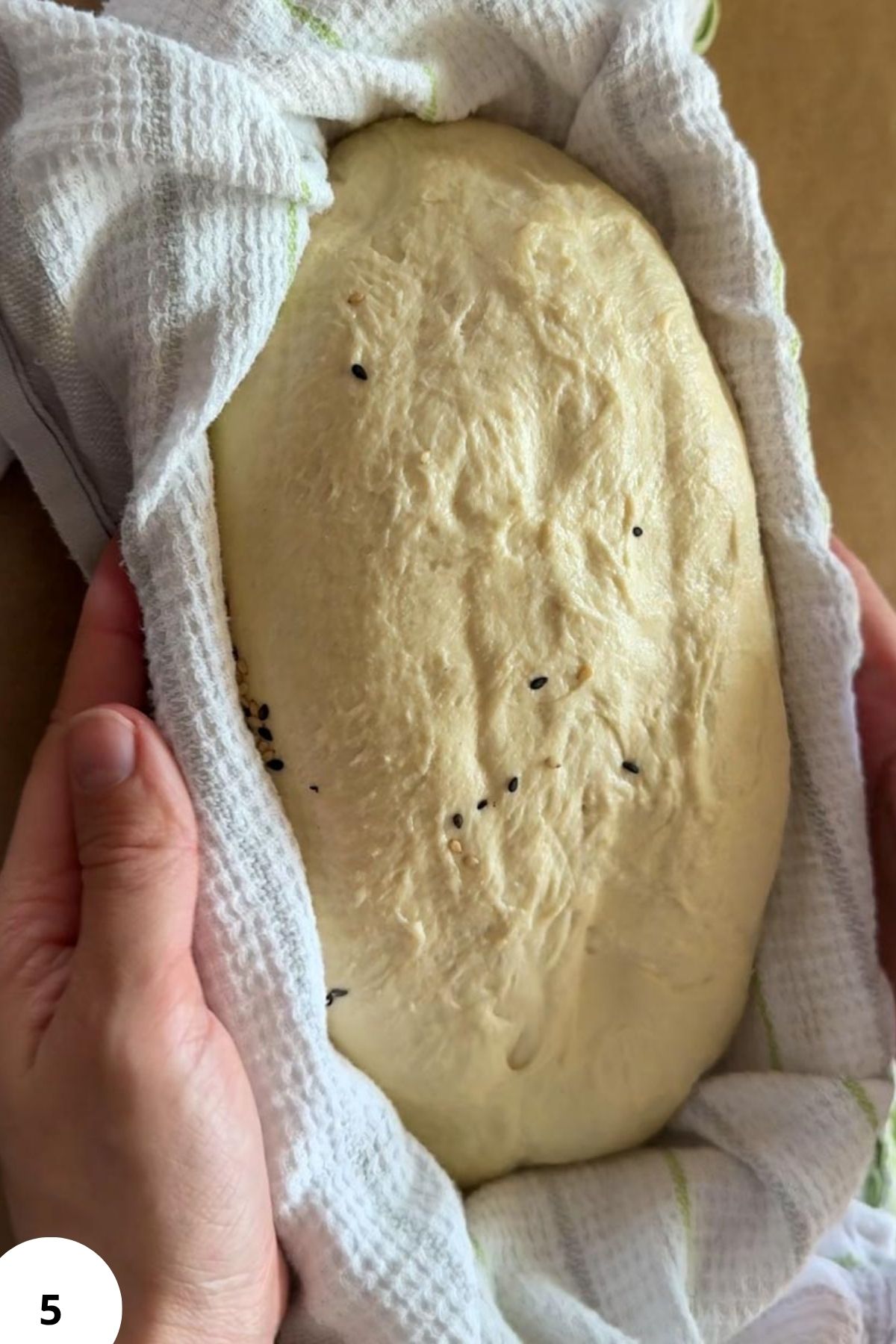
Step 5: Cover the dough and refrigerate overnight, or for 8 to 16 hours (Image 5).
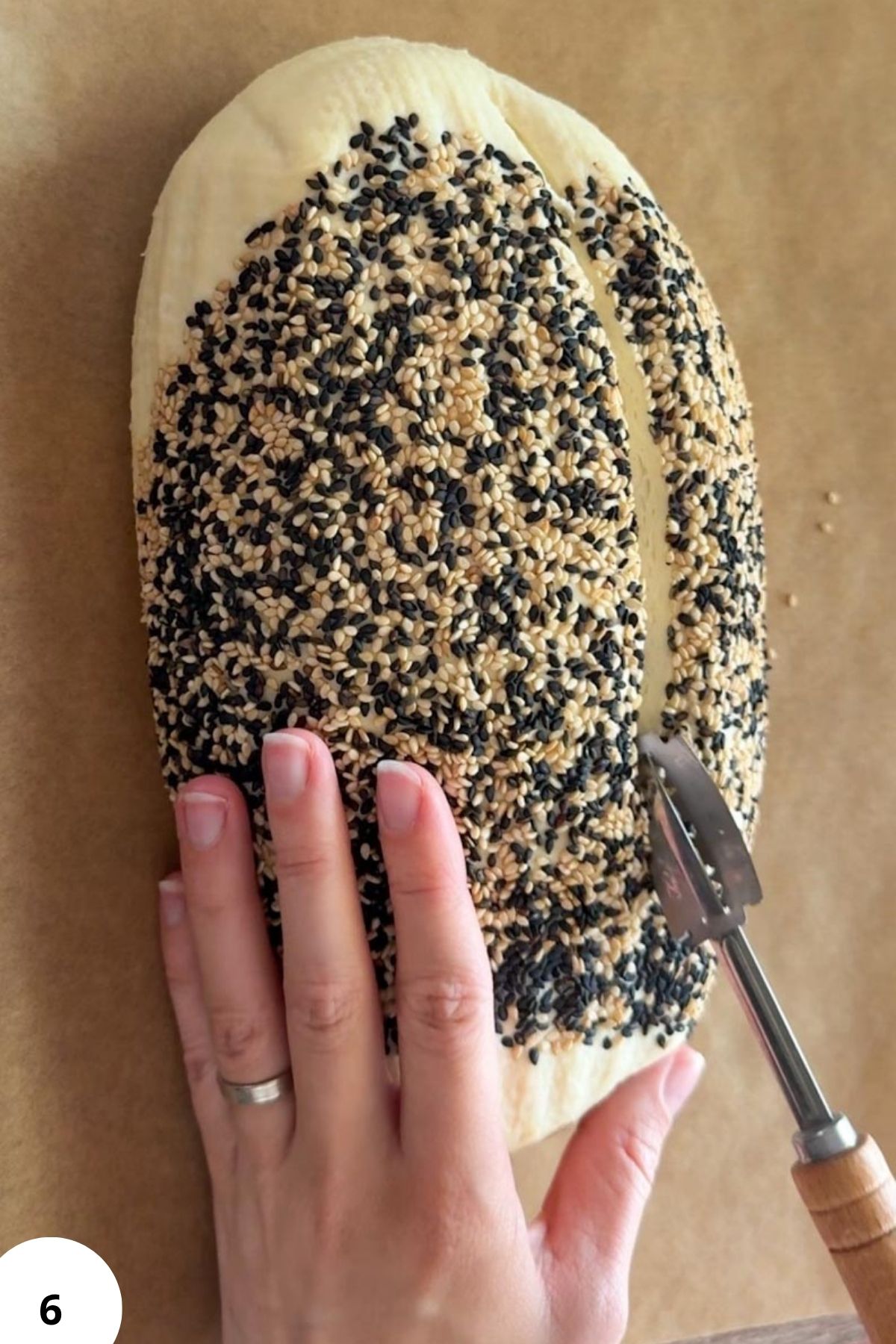
Step 6: Preheat your oven to 475°F (245°C) with a Dutch oven inside.
Turn the dough onto a piece of parchment paper and score the top with a sharp blade (Image 6).
Carefully transfer the dough into the hot Dutch oven.
Bake covered for 20 minutes.
Remove the lid, reduce the temperature to 450°F (230°C), and bake for another 20 to 25 minutes, or until the loaf is deeply golden brown.
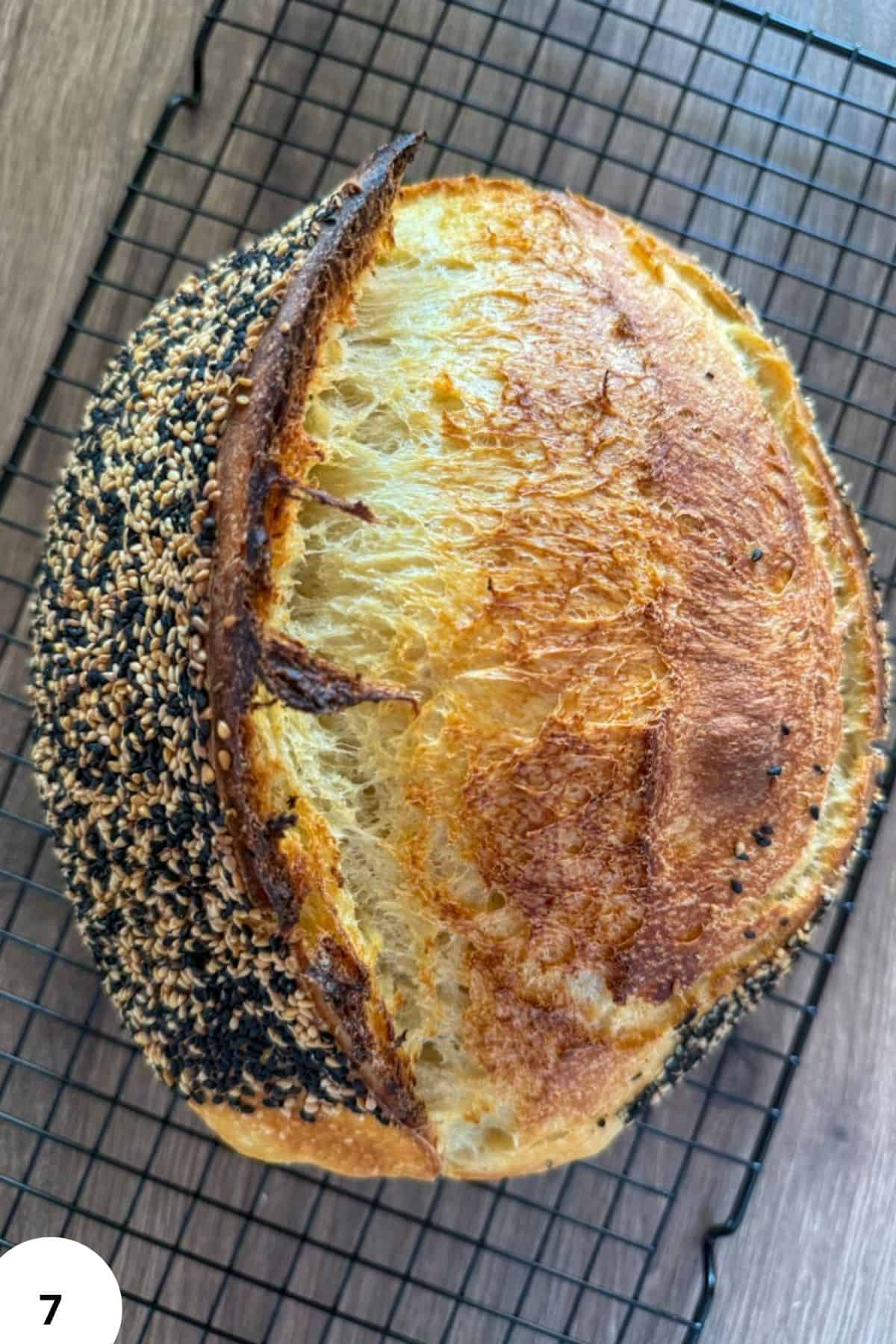
Step 7: Transfer the bread to a wire rack and allow it to cool completely (Image 7) before slicing.
Hint: semolina flour absorbs water differently than bread flour, so don't be tempted to add extra flour if the dough feels sticky during mixing. As the dough rests and develops gluten through stretch and folds, it becomes smoother and easier to handle. Trust the process and let time do the work!
Baking Schedule
Same-Day Mix / Next-Day Bake
- 8:00 AM - Mix dough
- 9:00 AM - First stretch and fold
- 9:30 AM - Second stretch and fold
- 10:00 AM - Third stretch and fold
- 10:00 AM - 4:00 PM - Continue bulk fermentation
- 4:00 PM - Shape and coat with sesame seeds
- 4:15 PM - Refrigerate overnight
Next Morning 8:00 AM - Preheat oven
- 8:30 AM - Bake
- 9:15 AM - Cool completely before slicing
💭Crucial Success Tips
The most important factor in this recipe is watching the dough and determining when it's time to stop fermenting it by the look/feel of it, and not by the clock. Look for about 50%-70% increase in volume, a smoother surface, and bubbles forming around the edges of the bowl. If you shape too early, the loaf may feel dense, but oyu can salvage it by proofing it some more the second time at room temp before putting it into the fridge. If you wait until the dough is properly fermented, you'll get better flavor and better oven spring.
Recipe FAQs
Semolina flour is a coarse flour made from durum wheat. It has a naturally golden color and produces bread with a slightly sweet flavor and chewy texture.
Yes. The sesame coating is traditional and adds wonderful flavor, but the bread bakes perfectly well without it.
Semolina dough often appears less dramatic during bulk fermentation. Instead of focusing only on volume, look for signs like bubbles, increased elasticity, and a lighter feel when handling the dough.
How To Store Italian Semolina Sourdough Bread
Store the loaf at room temperature in a bread box, bread bag, or wrapped in a clean kitchen towel for up to 3 days.
For longer storage, slice the loaf and freeze it for up to 3 months. You can toast slices directly from frozen.
Other Sourdough Recipes
- Fresh Milled Buckwheat Sourdough Rolls

- The Easiest Fresh Milled Einkorn Sourdough Bread (Loaf Pan Method)
- 100% Fresh-Milled Einkorn Sourdough Bread
- Sourdough Scarpaccia (Tuscan Zucchini Tart)

If you tried this Italian semolina sourdough bread or any other recipe on my blog please leave a 🌟 star rating and let me know how it went in the 📝 comments below! Happy Baking!
Italian Semolina Sourdough Bread
Jump to VideoIngredients
- 300 g bread flour
- 200 g semolina flour fine, semola rimacinata
- 350 g water
- 100 g active sourdough starter
- 10 g salt
- 10 g olive oil
- 50 g sesame seed light, black, or a mix of both
Instructions
- In a large mixing bowl, combine 360g of water, 100g of starter, 10g of olive oil, 10g of salt, 300g of bread flour, and 200g of fine semolina flour. Mix until no dry flour remains. I usually do this with wet hands, squeezing and mixing the dough until the starter disappears and the dough starts to feel smoother, altogether about 3 minutes. The dough will look shaggy and rough at this stage. Cover the bowl and let it rest for 30 to 60 minutes.
- Cover the bowl and let the dough rest for 30 minutes. Perform your first set of stretch and folds by grabbing one side of the dough, stretching it upward, and folding it over itself. Rotate the bowl and repeat until all sides have been folded. Repeat this process two more times, spacing each set about 30 minutes apart.
- Cover the bowl and let the dough continue fermenting at room temperature until it becomes puffy and airy. This usually takes about 5 to 8 hours from the time you added the starter, depending on the temperature of your kitchen. The dough should look noticeably risen and have bubbles forming along the sides of the bowl, but it will not puff up as much as a regular sourdough would.
- Spread a generous layer of sesame seeds onto a large plate. Turn the dough onto a lightly floured work surface and shape it into a round or oval loaf. Once shaped, brush the top of the loaf with wet hands to make the dough wet. Then gently lift the loaf and place it seam-side up onto the sesame seeds. Roll and rock it back and forth until the entire outside surface is evenly coated. Transfer the dough to a floured banneton basket with the seam facing up and the sesame-coated side facing down.
- Cover the dough and refrigerate overnight, or for 8 to 16 hours.
- Preheat your oven to 475°F (245°C) with a Dutch oven inside. Turn the dough onto a piece of parchment paper and score the top with a sharp blade. Carefully transfer the dough into the hot Dutch oven. Bake covered for 20 minutes. Remove the lid, reduce the temperature to 450°F (230°C), and bake for another 20 to 25 minutes, or until the loaf is deeply golden brown.
- Transfer the bread to a wire rack and allow it to cool completely before slicing.