Christmas Cranberry Walnut Sourdough Bread

If you have an active sourdough starter this Christmas, try my Cranberry Walnut Sourdough Bread. It's a no-fuss holiday baking idea-just a bubbly starter and a handful of pantry staples. We love it for breakfast, brunch, or a cozy snack, but it's also perfect on a cheese board or served alongside your holiday dinner.

The sweet-tart cranberries and crunchy walnuts make every bite interesting, and the dough itself is super forgiving. It's a balance of sweet and savory sourdough bread that everyone in your family will surely love. You can easily tweak the recipe to suit your taste.
For more sourdough bread recipes that include yummy additions, check out Double Chocolate Sourdough Bread, Chia Seed Sourdough Bread, and Sourdough Bread with Roasted Garlic and Parmesan.
Jump to:
- Ingredients
- Substitutions & Variations
- How to Make Cranberry Walnut Sourdough Bread
- Baking Schedule
- 💭Crucial Success Tips
- Recipe FAQ
- How to Store Sourdough Cranberry Bread With Walnuts
- Other Delicious Recipes
- 📖Printable Recipe
- Artisan Cranberry Walnut Sourdough Bread Recipe
- Other Sourdough Recipes You'll Love
- Fresh Milled Buckwheat Sourdough Rolls
- The Easiest Fresh Milled Einkorn Sourdough Bread (Loaf Pan Method)
- 100% Fresh-Milled Einkorn Sourdough Bread
Ingredients
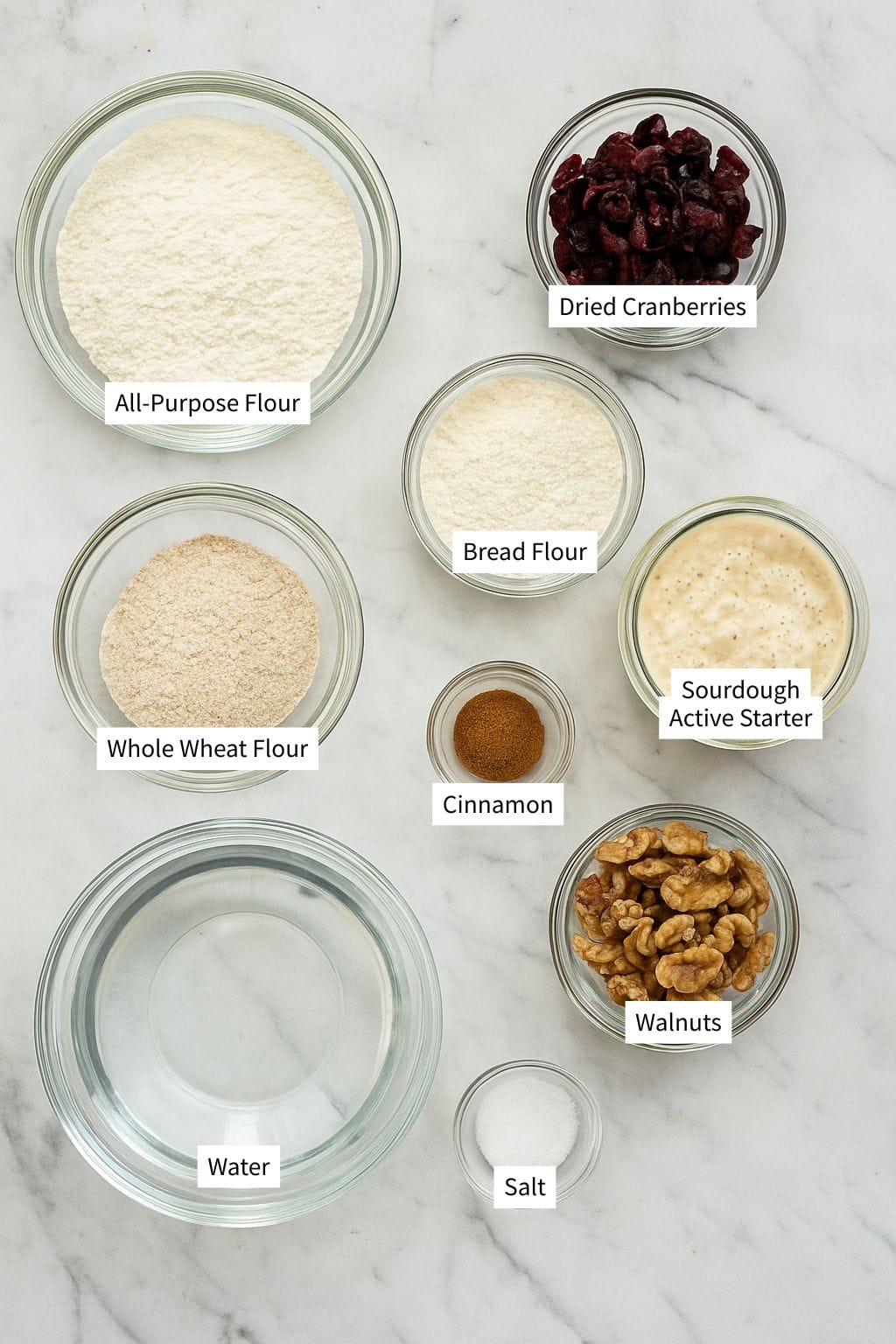
- All-Purpose Flour: The backbone of our dough, providing structure while keeping it soft. Essential for a well-formed loaf.
- Bread Flour: Adds strength to the dough, helping it rise and maintain shape during baking.
- Whole Wheat Flour: Brings a hearty, nutty flavor and extra nutrients to our bread.
- Active Sourdough Starter: The heart of our bread, contributing a unique tang and aiding in the rise.
- Walnuts: Toasted for extra crunch and a deep, earthy flavor.
- Dried Cranberries: Adds a sweet and tart contrast to the nutty walnuts.
- Cinnamon: A dash for a hint of warmth, pairing beautifully with cranberries and walnuts.
See recipe card for quantities.
Substitutions & Variations
- You can substitute cranberries with raisins for a different kind of sweetness (or because you simply don't have cranberries on hand!).
- If you want to add whey, you can swap water with whey for tangier bread. Great for adding depth to the flavors.
- You can replace some of the bread flour with rye for a denser, earthier loaf.
- You can add a teaspoon of orange zest to complement the cranberries for a fruity twist. I usually do this for the holiday season, and the bread instantly feels more special.
If you'd like to learn more about adding inclusions to your sourdough bread, check out my guide: "How to Add Fillings and Add-ins to Your Sourdough Bread."
How to Make Cranberry Walnut Sourdough Bread

Begin by mixing your active sourdough starter, salt, cinnamon, and water in a large bowl. Ensure the starter is well dispersed in the water, then add the all-purpose, bread, and whole wheat flour.

Stir the mixture until you achieve a shaggy dough. Let it rest for 30 minutes, allowing the flour to hydrate properly.
While the dough rests, toast the walnuts in a medium-hot pan. Keep an eye on them, toasting for about 2 minutes or until fragrant

Allow the dough to rest in a warm place for roughly 4 hours, aiming for a 75% rise. During the first 2 hours, perform stretch and folds every 30 minutes.
Fold the toasted walnuts and dried cranberries during the third or fourth stretch and fold. Ensure even distribution.

Post bulk rise, shape the dough into a round ball.

Place it in a floured tea towel-lined banneton basket smooth side down or a similar setup for its final rise, which takes about 1-2 hours. Alternatively, opt for a second rise in the refrigerator.

Transfer the dough onto a piece of parchment paper or a bread baking mat, scoring the top. Place in a preheated Dutch oven, adding a splash of hot water for steam.
Bake at 460°F (238°C) for 25 minutes with the lid on, then uncover and continue baking at 440°F (227°C) for another 10 minutes to achieve a golden brown crust. Bake times can vary slightly, depending on the strength of your oven, so keep an eye on te bread after you uncover it.
Finally, remove the bread from the oven, let it cool on a cooling rack, and cover with a damp towel to soften the crust as it cools.
Hint: since whole wheat flour is used, it tends to absorb more water. You might need to adjust the hydration slightly to get the perfect dough texture.
Baking Schedule
Option 1: Morning Start for Evening Bread
- 8:00 AM: Mix dough and start stretch and folds.
- 11:00 AM - 2:00 PM: Bulk fermentation.
- 2:00 PM: Shape the dough and begin second rise.
- 4:00 PM: Bake the bread.
- 4:45 PM: Take bread out to cool.
Option 2: Morning Starter for Next Morning Bread
- 8:00 AM: Feed the starter.
- 1:00 PM: Start mixing the dough.
- 1:30 PM - 4:30 PM: Proceed with bulk fermentation.
- 4:30 PM: Shape the dough and place it in the fridge for the second rise, covered in plastic wrap.
- Overnight: Let the dough rest in the fridge.
- Next Morning: Take the dough out of the fridge and bake the bread as per the recipe instructions.
💭Crucial Success Tips
- Don't overdo it with cinnamon: Use cinnamon sparingly. Too much can overpower the other flavors. Aim for just a hint to enhance, not dominate.
- Toasting walnuts: Be vigilant when toasting walnuts. They should be lightly browned, not burnt, to avoid a bitter taste.
- Dough consistency: Whole wheat flour's absorbency varies. If the dough is too dry, add a bit more water; if too sticky, a little extra flour. It should be slightly stiffer than regular sourdough.
- Bulk fermentation: Allow the dough to rise enough during bulk fermentation for the best texture and flavor. At room temperature, that should take about 4- 6 hours with the amount of starter we are using in this recipe. But if you think your dough ferments faster or slower, don't be afraid to follow your intuition! Fermentation times in sourdough recipes are ALWAYS just a rough estimate.
Recipe FAQ
No need for it to come to room temperature before baking. I usually preheat my Dutch oven, take my dough out of the fridge, score a cross at the top of the dough, and put it straight into the oven.
I find that baking it straight from the fridge doesn't affect the oven spring at all!
A: Yes, cover the dough with plastic wrap or a plastic bag during fermentation to prevent it from drying out. A shower cap works well too.
How to Store Sourdough Cranberry Bread With Walnuts
At room temperature: Keep it in an airtight container for up to 2 days.
Refrigerator: Store in a container for up to 5 days.
Freezing: I recommend slicing the bread before freezing. Store slices in a single layer, then transfer to a freezer bag.
They can be frozen for up to 3 months. Toast the slices straight from the freezer - they'll taste just as fresh as if they were never frozen!
And be sure to cut thick slices, as they will keep the moisture better.
Other Delicious Recipes
- Mockmill 200 Review: Is the Lino 200 Worth It After a Year?

- Traditional German Savoy Cabbage and Potatoes (Wirsing untereinander)
- German Apple Streusel Cake (Apfelstreuselkuchen)
- Fresh Milled Flour vs. All-Purpose Flour: 5 Practical Differences



If you tried this Cranberry Walnut Sourdough Bread or any other recipe on my blog please leave a 🌟 star rating and let me know how it went in the 📝 comments below! Happy Baking!
📖Printable Recipe

Artisan Cranberry Walnut Sourdough Bread Recipe
Jump to VideoEquipment
- 1 Large mixing bowl
- 1 Cast iron pan for toasting walnuts
- 1 kitchen scale or measuring cups and spoons
- 1 Banneton basket or equivalent lined with a floured tea towel
- 1 Bread baking mat or a piece of parchment paper
- 1 razor blade or sharp knife for scoring
- 1 Plastic wrap or plastic bag for covering dough
- 1 Cooling rack optional
- 1 Bench scraper optional
Ingredients
- 150 grams all-purpose flour
- 100 grams bread flour
- 50 grams whole wheat flour
- 220 grams water
- 60 grams sourdough starter active
- 40 grams dried cranberries
- 50 grams walnuts toasted
- 6 grams salt
- ½ teaspoon cinnamon
Instructions
- Begin by mixing your active sourdough starter, salt, cinnamon, and water in a large bowl. Ensure the starter is well dispersed in the water, then add the all-purpose, bread, and whole wheat flour.
- Stir the mixture until you achieve a shaggy dough. Let it rest for 30 minutes, allowing the flour to hydrate properly.
- While the dough rests, toast the walnuts in a medium-hot pan. Keep an eye on them, toasting for about 2 minutes or until fragrant
- Allow the dough to rest in a warm place for roughly 4 hours, aiming for a 75% rise. During the first 2 hours, perform stretch and folds every 30 minutes.
- Fold the toasted walnuts and dried cranberries during the third or fourth stretch and fold. Ensure even distribution.
- Post bulk rise, shape the dough into a round ball.
- Place it in a floured tea towel-lined banneton basket smooth side down or a similar setup for its final rise, which takes about 1-2 hours. Alternatively, opt for a second rise in the refrigerator.
- Transfer the dough onto a piece of parchment paper or a bread baking mat, scoring the top. Place in a preheated Dutch oven, adding a splash of hot water for steam.
- Bake at 460°F (238°C) for 25 minutes with the lid on, then uncover and continue baking at 440°F (227°C) for another 10 minutes to achieve a golden brown crust. Bake times can vary slightly, depending on the strength of your oven, so keep an eye on te bread after you uncover it.
- Finally, remove the bread from the oven, let it cool on a cooling rack, and cover with a damp towel to soften the crust as it cools.
Video
Notes
- Since whole wheat flour is used, it tends to absorb more water. You might need to adjust the hydration slightly to get the perfect dough texture.
- Don't overdo it with cinnamon: Use cinnamon sparingly. Too much can overpower the other flavors. Aim for just a hint to enhance, not dominate.
- Toasting walnuts: Be vigilant when toasting walnuts. They should be lightly browned, not burnt, to avoid a bitter taste.
- Dough consistency: Whole wheat flour's absorbency varies. If the dough is too dry, add a bit more water; if too sticky, a little extra flour. It should be slightly stiffer than regular sourdough.
- Bulk fermentation: Allow the dough to rise enough during bulk fermentation for the best texture and flavor. At room temperature, that should take about 4- 6 hours with the amount of starter we are using in this recipe. But if you think your dough ferments faster or slower, don't be afraid to follow your intuition! Fermentation times in sourdough recipes are ALWAYS just a rough estimate.