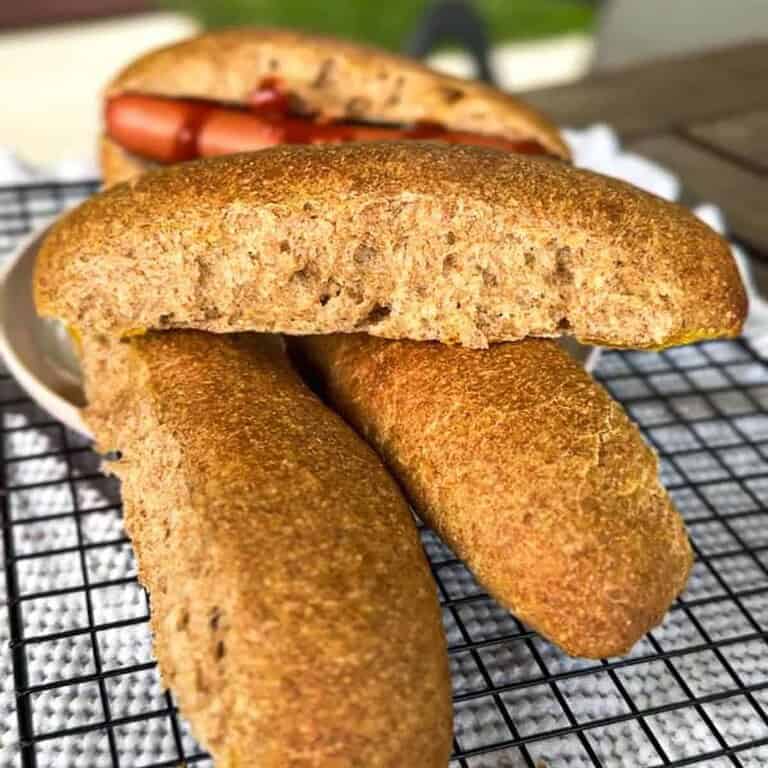
Dinkelbrötchen (Sourdough Spelt Rolls)

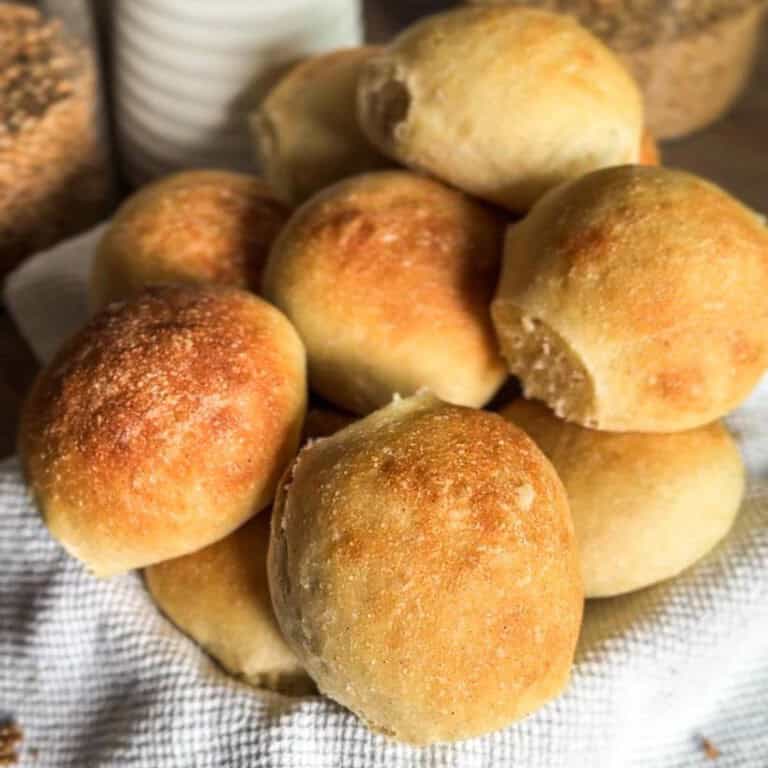
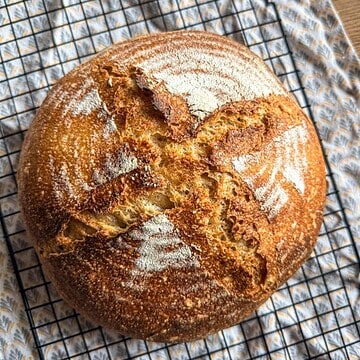
If you love European-style rolls with a crisp crust and soft crumb, these Dinkelbrötchen (sourdough spelt rolls) are such a treat to make at home. They have a lovely, a bit nutty spelt flavor, a beautiful shape, and are just a bit different from your regular bread roll to make them interesting. I love that they work for breakfast, soup night, or an easy lunch, and once you make them a time or two, the process feels simple and natural.
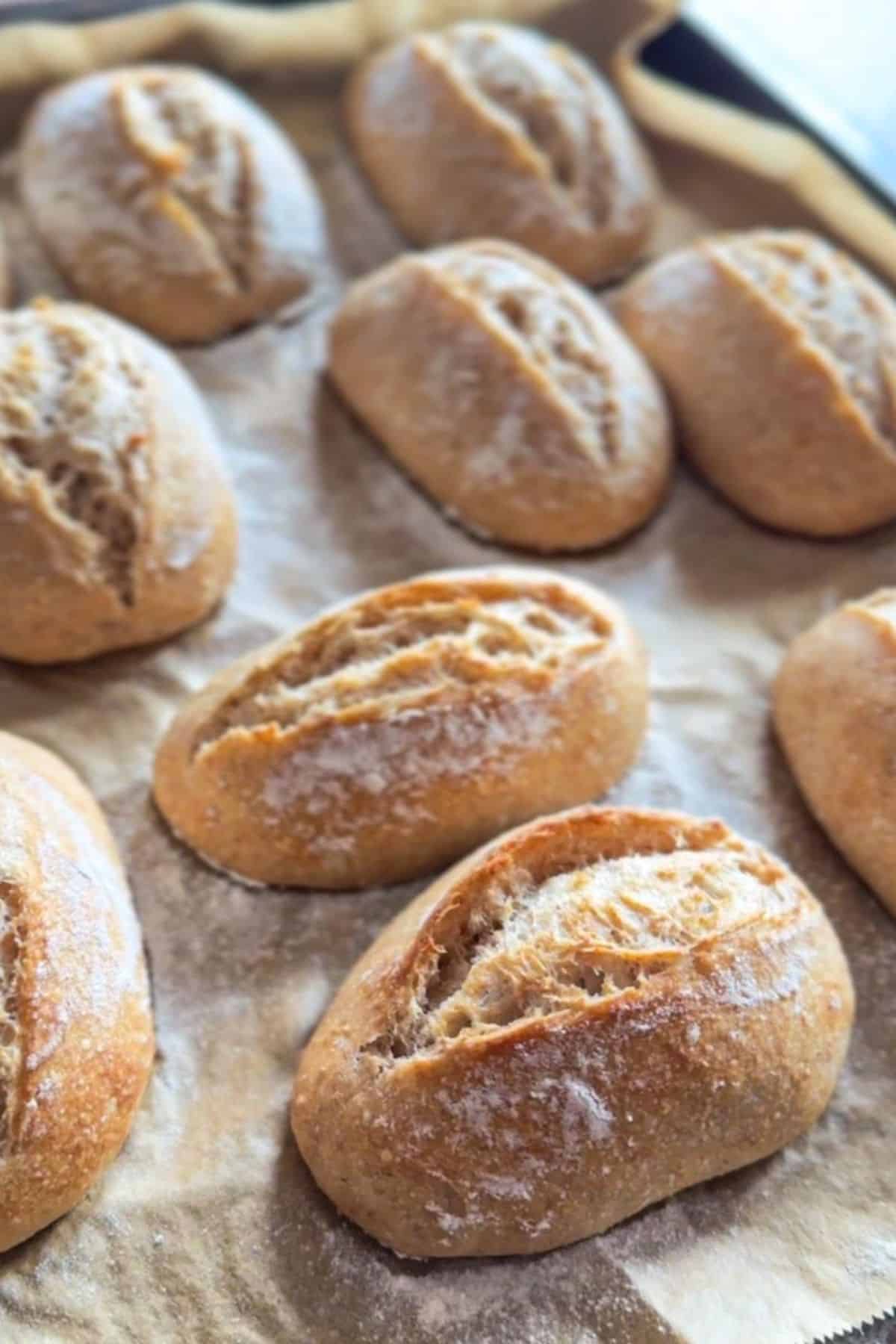
Dinkelbrötchen are especially popular in German-speaking countries and all across Central Europe, where fresh rolls are a staple for breakfast and brunch especially. I especially love making them on slower mornings or the day before guests come over, because they look impressive but are very doable.
If you love making bread rolls, I also have a yeasted bread roll recipe, as well as a recipe for soft Italian milk rolls and sourdough brioche dinner rolls!
Summarize & Save This Recipe On:
Quick Look
- Prep Time: 45-60 minutes
- Bulk Fermentation: 3-6 hours
- Final Proof: 1-3 hours (or overnight)
- Cook Time: 16-22 minutes
- Total Time: ~5-9 hours (plus optional overnight)
- Servings: 8-10 rolls
- Difficulty: Beginner to Intermediate
- Baking Method: Oven (with steam)
- Best For: Breakfast, sides, everyday bread
Jump to:
- Summarize & Save This Recipe On:
- Quick Look
- Important Ingredients
- Substitutions & Variations
- How to Make Dinkelbrötchen (Sourdough Spelt Rolls)
- Baking Schedule
- 💭Crucial Success Tips
- Recipe FAQs
- How To Store Dinkelbrötchen (Sourdough Spelt Rolls)
- Other Delicious Recipes
- Dinkelbrötchen (Sourdough Spelt Rolls)
- Need Help Tweaking This Recipe?
- Other Sourdough Bread Recipes You'll Love
- Fresh Milled Buckwheat Sourdough Rolls
- Einkorn Sourdough Bread for Beginners (50% Fresh Milled)
- The Easiest Fresh Milled Einkorn Sourdough Bread (Loaf Pan Method)
Important Ingredients
- Spelt flour gives a nice nutty flavor. You can use regular store bought spelt flour, or mill your own!
- All-purpose or bread flour helps with structure and softness
- Active sourdough starter for rise and flavor
- Water brings everything together
- Salt balances the dough
- Sugar or honey helps with browning
- Olive oil (optional) makes the rolls softer
See recipe card for quantities.
Substitutions & Variations
- You can use any type of spelt flour, fresh milled or store bough.
- Skip the oil for a slightly crispier crust
- Use more spelt for a more rustic texture (dough will be softer)
- Swap sugar with honey depending on what you have
- Shape into rounds instead of ovals if preferred
Free resource
Get all 3 when you subscribe
Bake beautiful bread that fits Your life - not the other way around
How to Make Dinkelbrötchen (Sourdough Spelt Rolls)
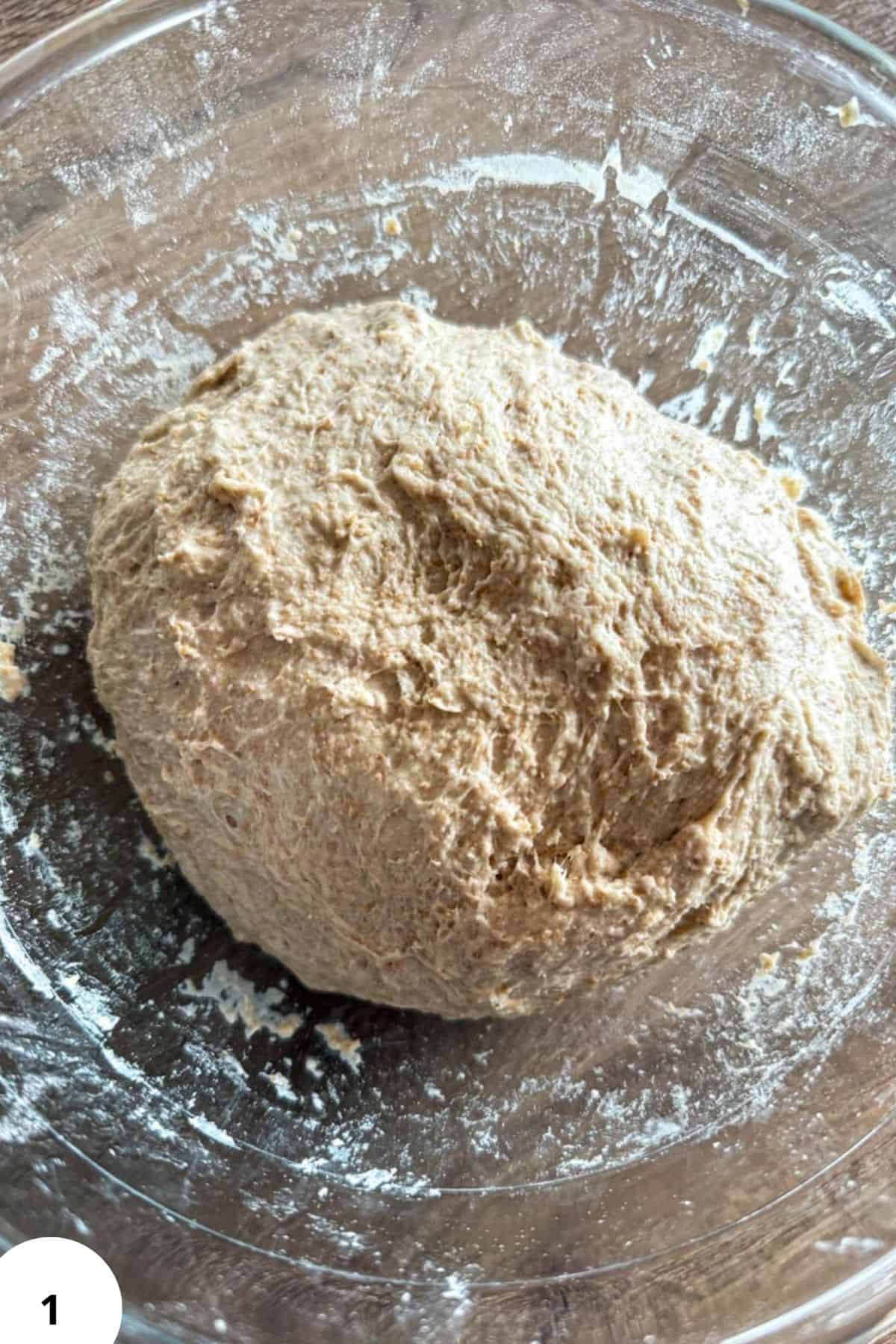
Step 1: In a large bowl, combine both flours, water, sourdough starter, salt, sugar or honey, and olive oil (if using). Mix until no dry flour remains and a rough dough forms (Image 1).
Cover the bowl with a lid, plate, or damp towel and let it rest for 30 minutes.
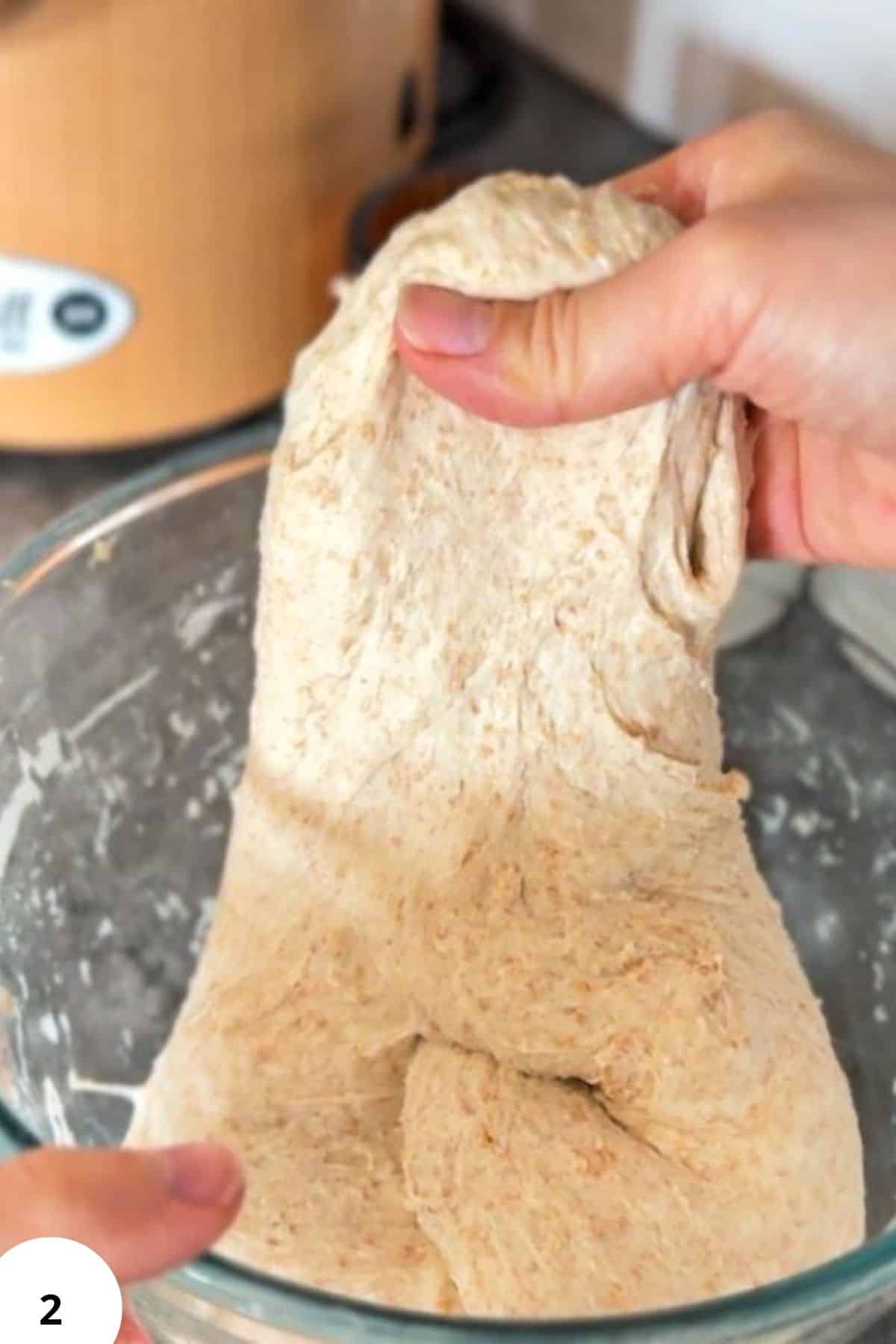
Step 2: Perform 2-3 sets of stretch and folds over the next hours or so (Image 2).
To do this, grab one side of the dough, stretch it up, and fold it over itself. Turn the bowl and repeat a few times. That constitutes one set,
Cover the dough between each set so it doesn't dry out.
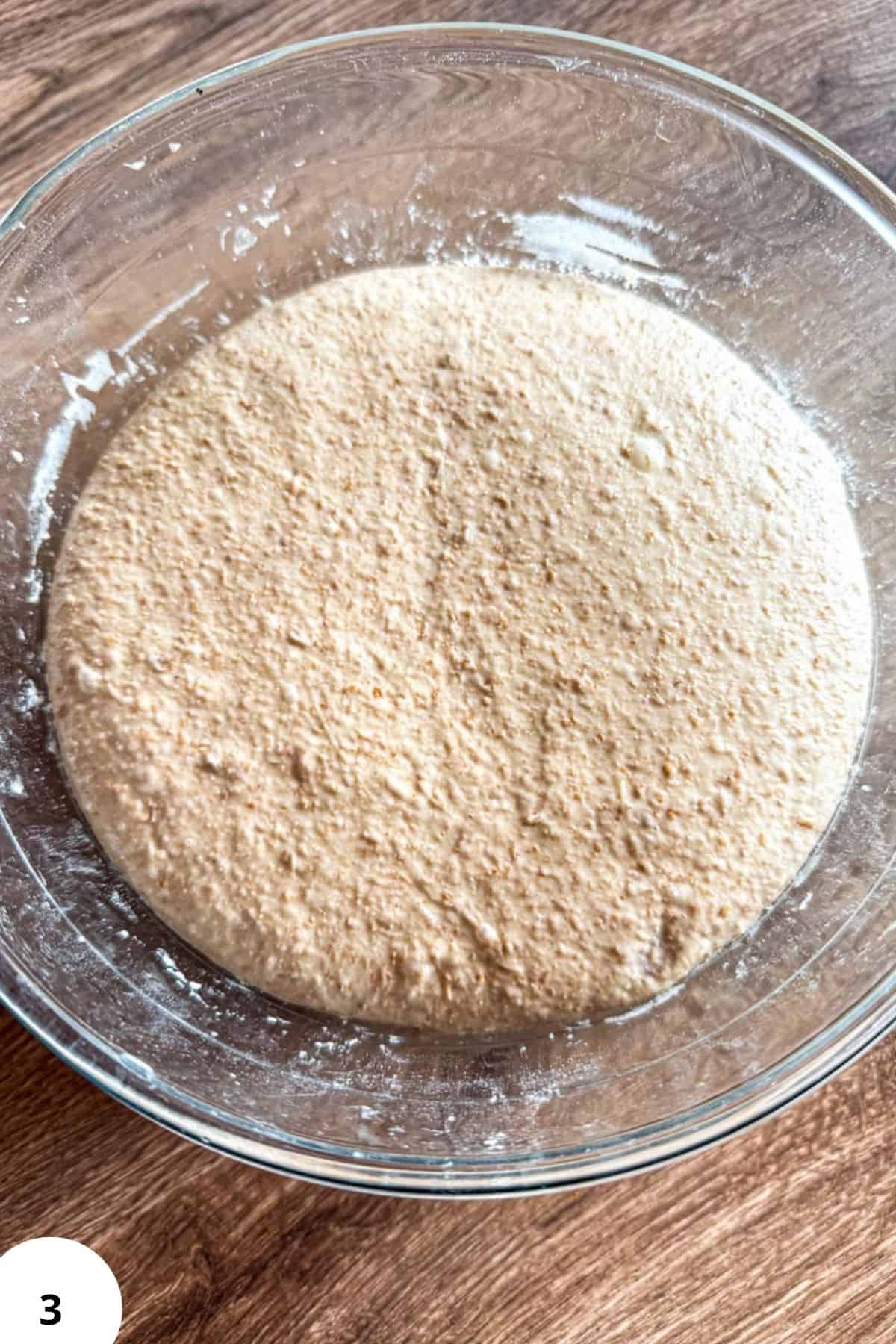
Step 3: Cover the bowl and let the dough rise at room temperature for about 3-6 hours (Image 3).
It should look slightly puffy and airy, but not necessarily doubled.
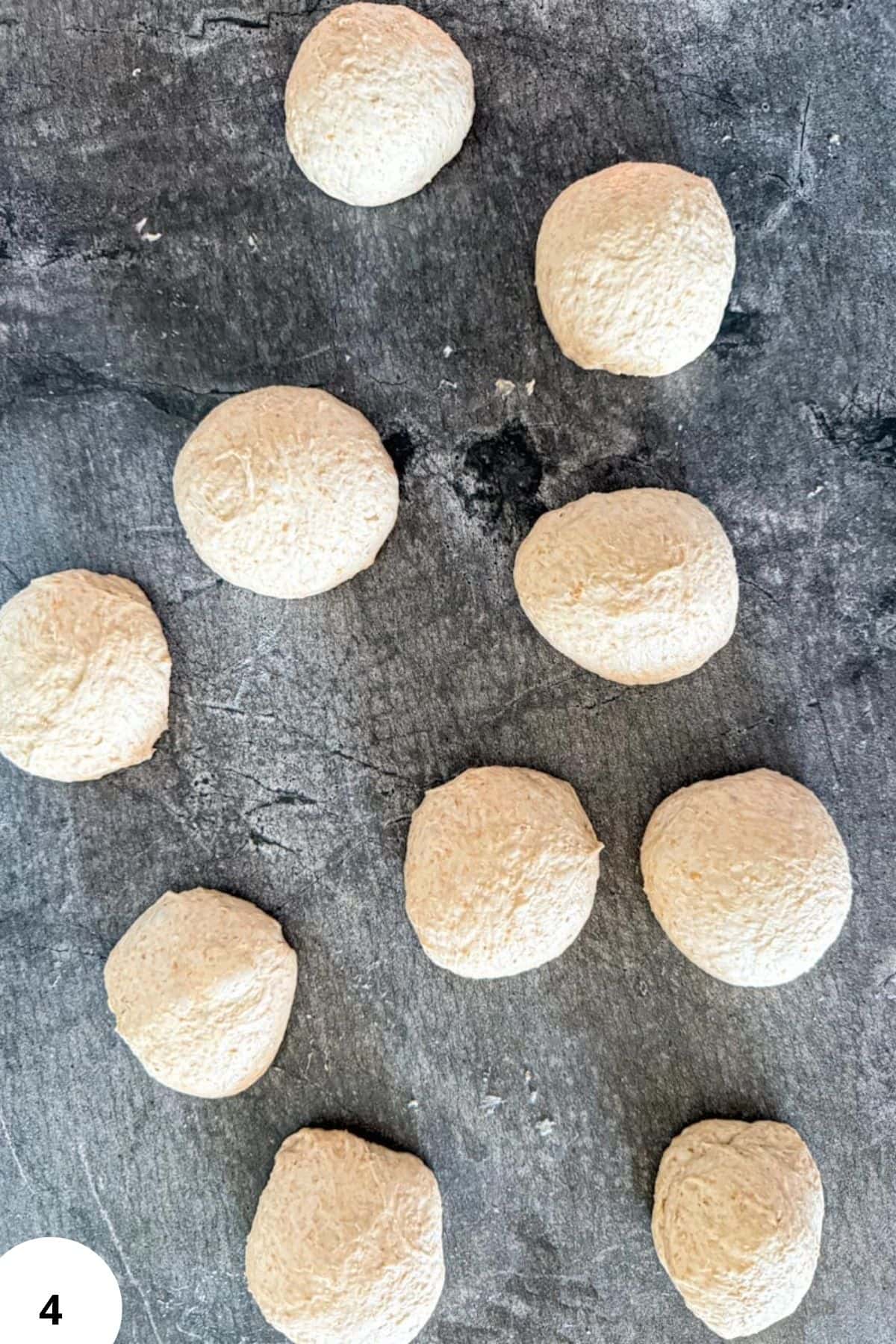
Step 4: Turn the dough out onto a lightly floured surface. Divide into 8-10 pieces and shape into loose balls (Image 4).
Cover and let them rest for 10-15 minutes.
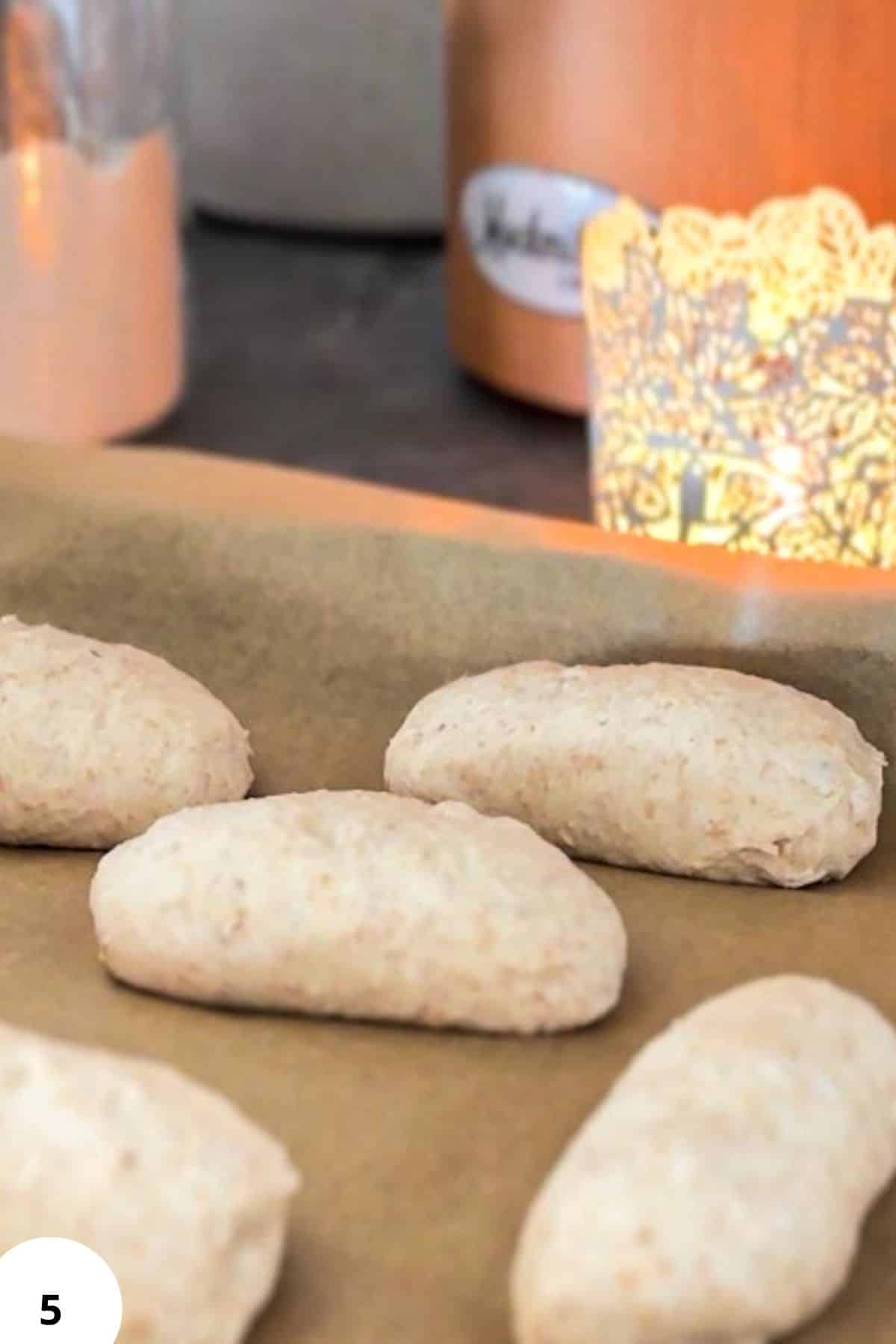
Step 5: Flatten each piece slightly, fold one side toward the center, then gently roll into a short oval (Image 5).
Place seam-side up on a lined baking tray.
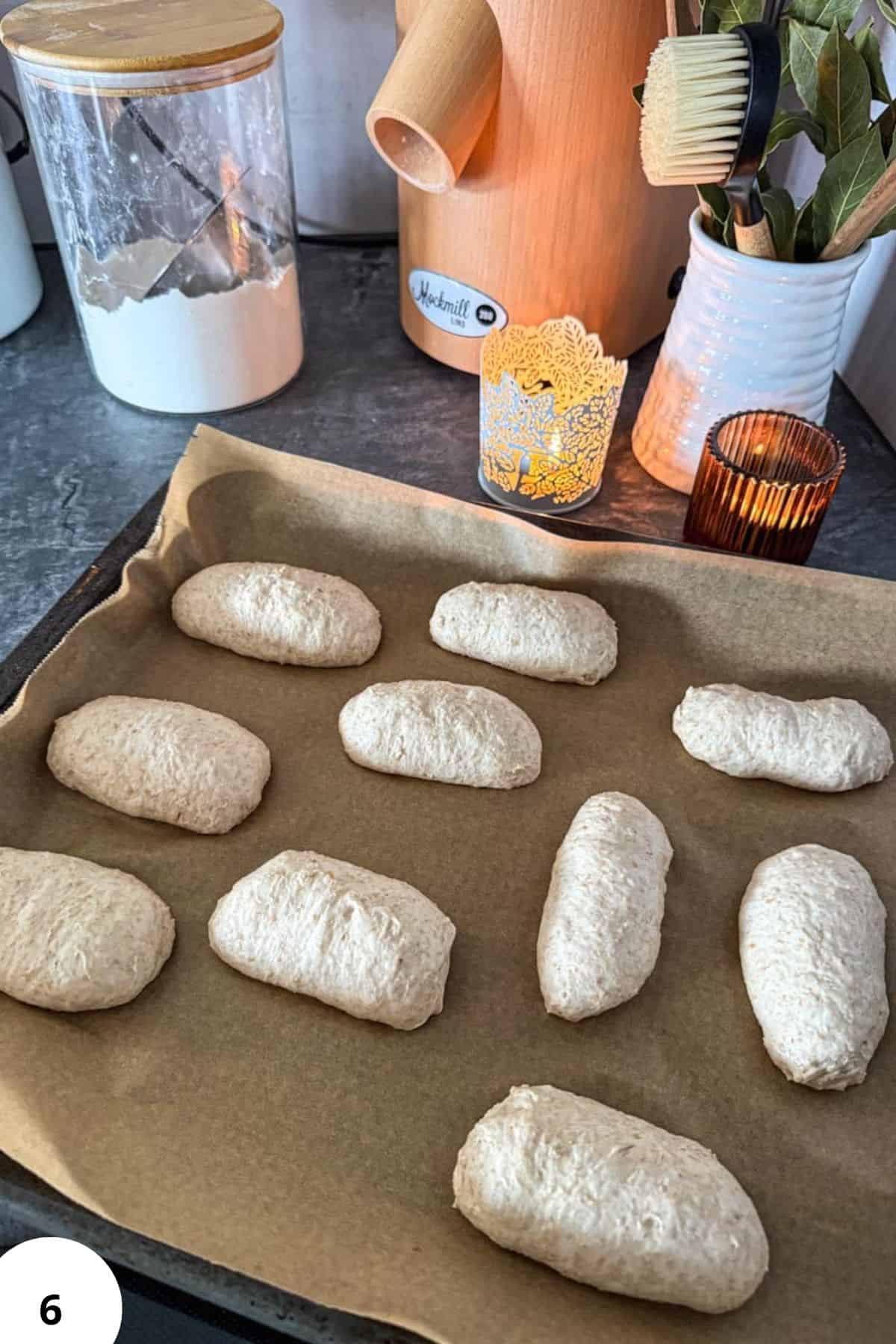
Step 6: Cover the rolls and let them rise for 1-3 hours, until slightly puffy (Image 6).
Alternatively, place them in the fridge overnight and bake the next day.
Step 7: Preheat the oven:
- Conventional oven: Preheat to 220°C (425°F)
- Fan (convection) oven: Preheat to 200°C (390°F)
Place an empty baking dish or tray on the bottom rack while the oven heats.
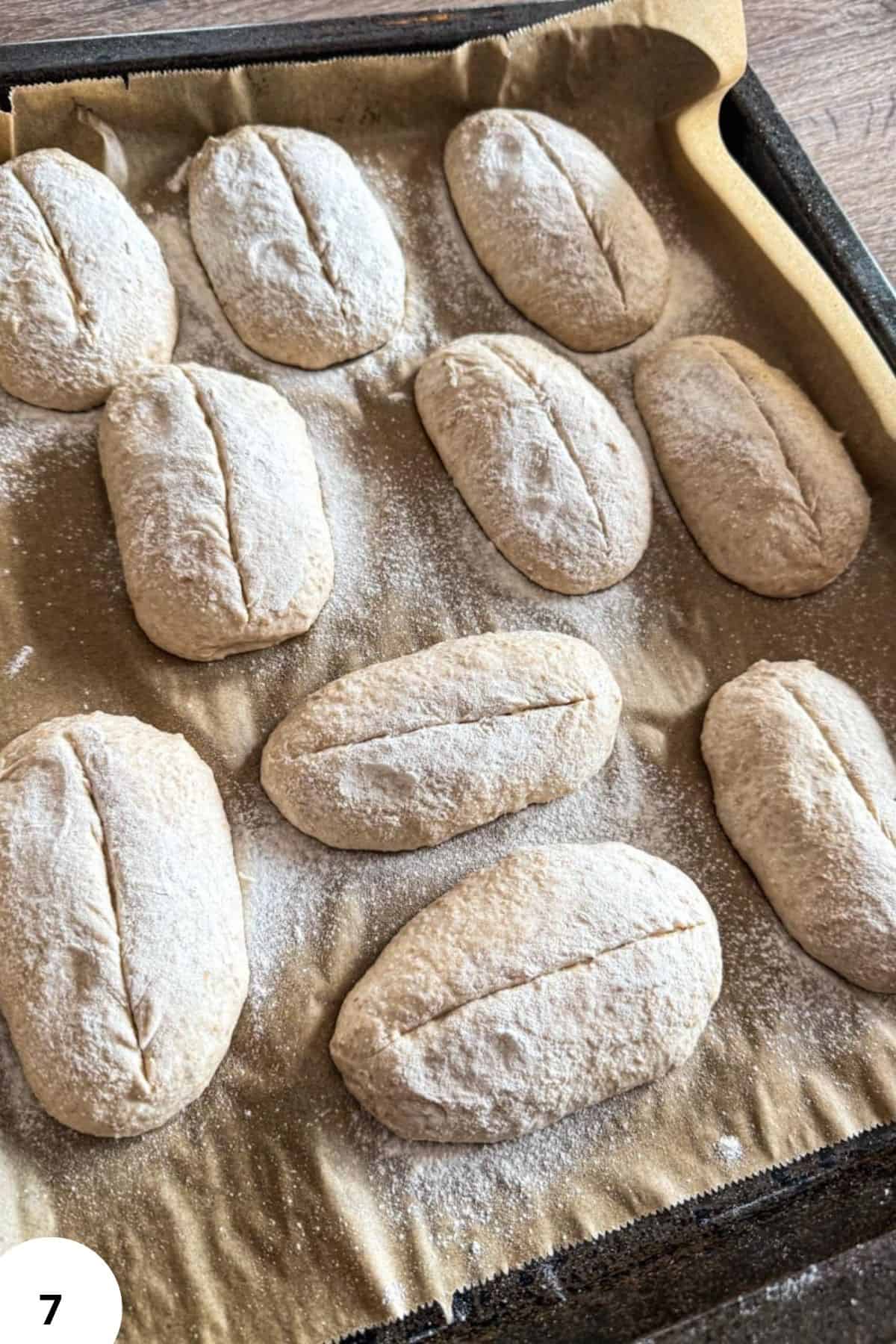
Just before baking, score rolls in a way that you do a simple vertical line down the longer side (Image 7), and carefully pour a cup of boiling water into the hot dish to create steam.
Place the rolls in the oven and bake for:
- Fan oven: Bake 16-20 minutes
- Conventional oven: Bake 18-22 minutes
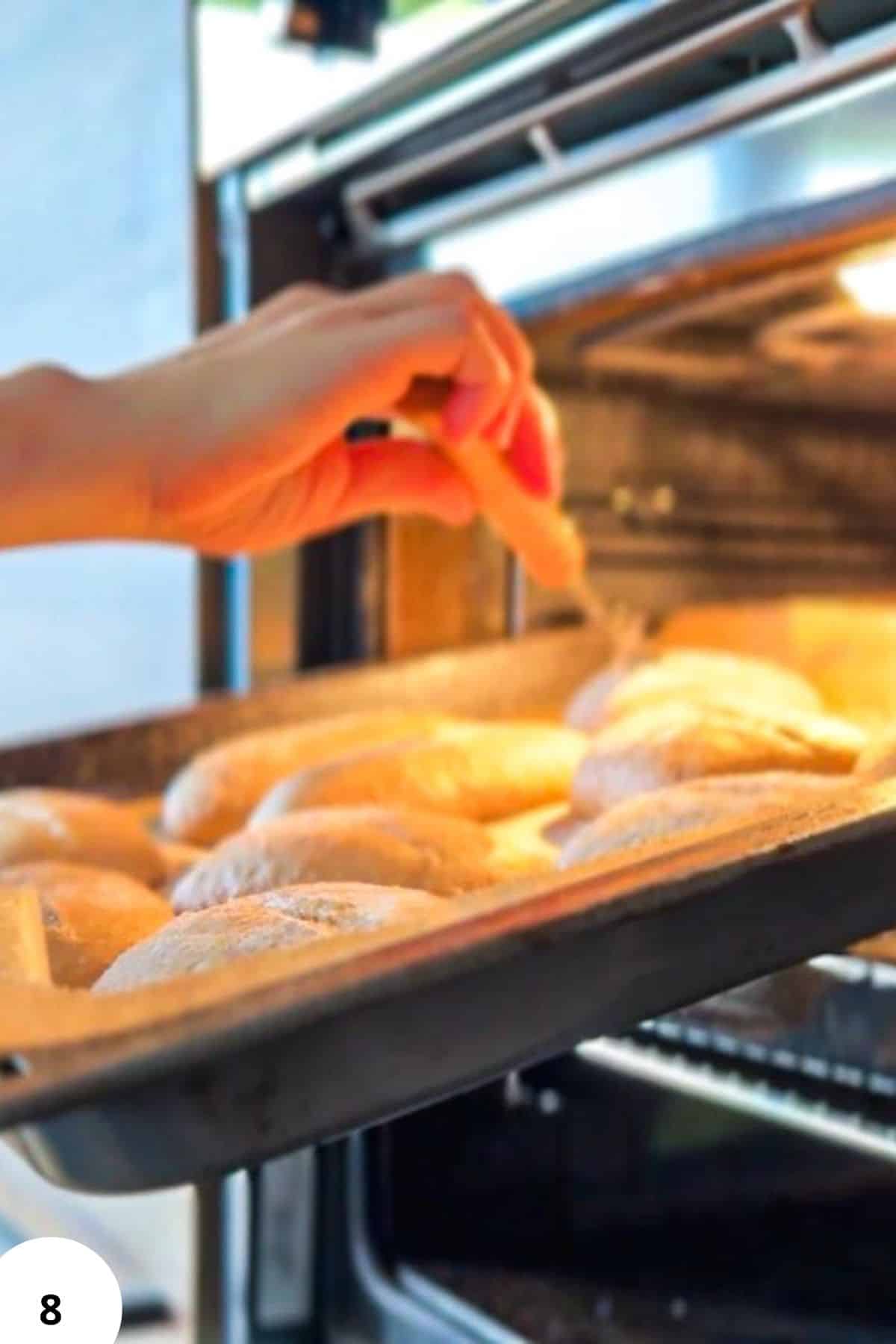
Step 8: The trick to getting those nice open tops on bread rolls is a second score right after they go into the oven.
Bake for 3-5 minutes, then take the tray out (Image 8) and deepen the cuts slightly. Put them back in to finish baking, and once done, cool them on a wire rack.
Hint: if your dough feels sticky, try resisting the urge to keep adding flour. Spelt dough is naturally softer, and too much extra flour can make the rolls dry. Lightly wet hands or a lightly floured surface usually works better than heavily dusting everything.
Baking Schedule
- Morning: Mix and start fermentation
- Midday: Stretch and folds + bulk rise
- Afternoon: Shape and proof
- Evening: Bake
Or:
- Day 1: Prepare dough
- Day 2: Bake after overnight proof
💭Crucial Success Tips
The biggest thing with these rolls is not over-proofing the dough. Spelt has a more delicate gluten structure, so if it ferments too long, the dough can feel weak and spread more than you want. You're looking for dough that feels airy, not overly loose. These rolls also do not need aggressive kneading. A few stretch and folds and careful shaping will do far more for the final texture than rough handling!
Recipe FAQs
Yes, but the dough will a bit denser and a little trickier to shape. Using some all-purpose or bread flour helps with structure and gives you a lighter result.
No, the overnight proof is optional. You can absolutely make them the same day if your kitchen is warm enough and your starter is active.
That usually comes down to one of three things: not enough steam, shallow scoring, or slightly over-proofed dough. A good hot oven, steam at the start, and a confident score all help the rolls expand better.
How To Store Dinkelbrötchen (Sourdough Spelt Rolls)
Store in an airtight container at room temperature for up to 2-3 days. They also freeze well, just let them cool completely before freezing, then reheat when needed.
Other Delicious Recipes
- Fresh Milled Buckwheat Sourdough Rolls

- Einkorn Sourdough Bread for Beginners (50% Fresh Milled)
- The Easiest Fresh Milled Einkorn Sourdough Bread (Loaf Pan Method)
- Fresh Milled Sourdough English Muffins (Same Day or Overnight)
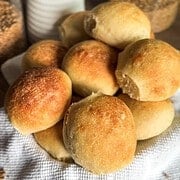
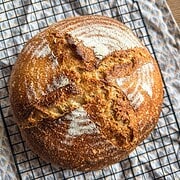
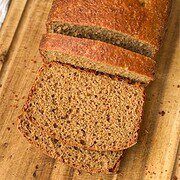
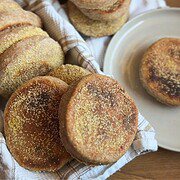
If you tried these dinkelbrötchen (sourdough spelt rolls) or any other recipe on my blog please leave a 🌟 star rating and let me know how it went in the 📝 comments below! Happy Baking!

Dinkelbrötchen (Sourdough Spelt Rolls)
Jump to VideoIngredients
- 300 g all-purpose flour or bread flour
- 200 g flour fresh milled spelt
- 320 g water
- 100 g active sourdough starter
- 9 g salt
- 5 g sugar or honey
- 10 g olive oil optional
Instructions
- In a large bowl, combine both flours, water, sourdough starter, salt, sugar or honey, and olive oil (if using). Mix until no dry flour remains and a rough dough forms. Cover the bowl with a lid, plate, or damp towel and let it rest for 30 minutes.
- Perform 2-3 sets of stretch and folds over the next hours or so. To do this, grab one side of the dough, stretch it up, and fold it over itself. Turn the bowl and repeat a few times. That constitutes one set, Cover the dough between each set so it doesn't dry out.
- Cover the bowl and let the dough rise at room temperature for about 3-6 hours. It should look slightly puffy and airy, but not necessarily doubled.
- Turn the dough out onto a lightly floured surface. Divide into 8-10 pieces and shape into loose balls. Cover and let them rest for 10-15 minutes.
- Flatten each piece slightly, fold one side toward the center, then gently roll into a short oval. Place seam-side up on a lined baking tray.
- Cover the rolls and let them rise for 1-3 hours, until slightly puffy. Alternatively, place them in the fridge overnight and bake the next day.
- Preheat the oven:- Conventional oven: Preheat to 220°C (425°F)- Fan (convection) oven: Preheat to 200°C (390°F)Place an empty baking dish or tray on the bottom rack while the oven heats.Just before baking, score rolls in a way that you do a simple vertical line down the longer side, and carefully pour a cup of boiling water into the hot dish to create steam.Place the rolls in the oven and bake for:- Conventional oven: Bake 18-22 minutes- Fan oven: Bake 16-20 minutes
- The trick to getting those nice open tops on bread rolls is a second score right after they go into the oven.Bake for 3-5 minutes, then take the tray out and deepen the cuts slightly. Put them back in to finish baking, and once done, cool them on a wire rack.
Video
Notes
- What "traditional" actually looks like
These aren't perfectly smooth buns. The surface should look slightly uneven, and the score should open nicely in the oven. - Why the fold matters
That simple fold creates a weak spot in the dough. When the rolls hit the oven, that's where they expand.
→ This replaces scoring and gives that classic bakery look. - Oval vs round
Traditional Brötchen are often slightly oval, not perfectly round. - Don't over-tighten the shaping
Gentle shaping gives better oven spring and that rustic look. - Steam = crust
Steam helps create that thin, crisp crust you expect from bakery-style rolls. - Spelt behavior
Spelt ferments faster and feels softer. Watch the dough, not just the clock. - Overproofing tip
If the rolls spread too much, they may be slightly overproofed, but still bake them. - Overnight option
Cold fermentation improves flavor and makes the dough easier to handle.