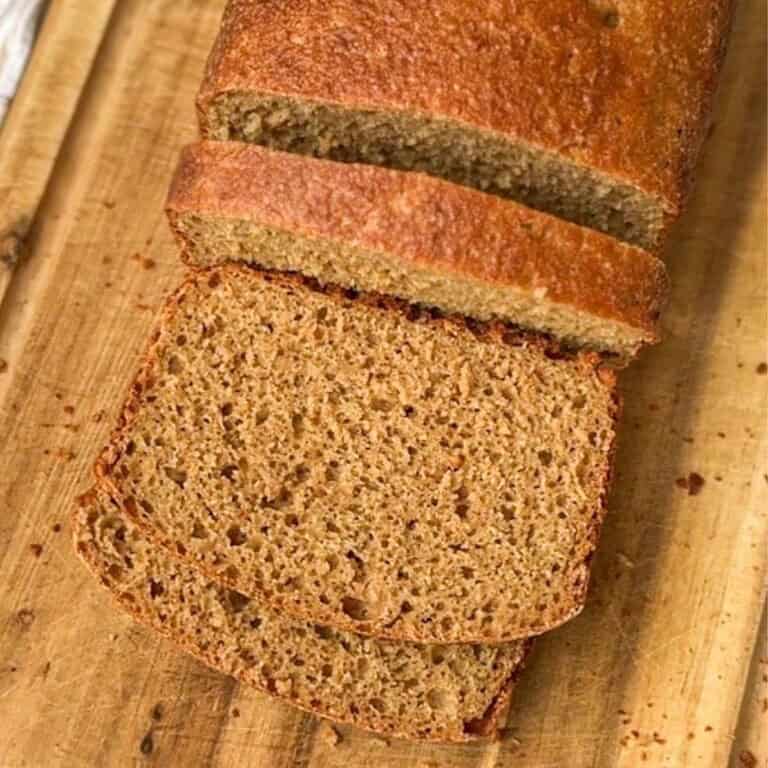
Soft Sourdough Crescent Rolls

These Sourdough Crescent Rolls are one of my favorite homemade sourdough roll recipes. They're soft, buttery, and made with an enriched dough that's full of flavor and gently fermented overnight. They're ideal for breakfast with jam, as a dinner side, or simply enjoyed with a swipe of butter.

I love making these during special weekends or holidays like Thanksgiving, Christmas, or Easter brunch.
You can make rolls from this exact dough too: check out my Same Day Sourdough Brioche Rolls for exact instructions!
I know you're looking for other easy sourdough roll recipes, so you might want to check out my "Sourdough Rolls in Dutch Oven" and "Soft Sourdough Sandwich Rolls" recipes.

Important Ingredients

- All Purpose Flour: Keeps the rolls soft and tender.
- Active Sourdough Starter: The key to getting a good rise and that lovely tangy flavor.
- Milk: Helps enrich the dough, giving the rolls their soft texture and subtle sweetness.
- Granulated Sugar: Add a touch of sweetness and help with browning.
- Unsalted Butter: Adds richness and flavor-also, brushing some on top after baking.
- Egg: Adds moisture, richness, and helps bind the dough together.
- Salt: Balances the sweetness and enhances all the other flavors.
See recipe card for quantities.
Substitutions & Variations
- If you don't have milk on hand, you can use any unsweetened plant-based milk (like oat or almond). Just note-it might slightly change the flavor and texture, but it'll still be delicious.
- If you want to make them sweet, try adding mini chocolate chips or a sprinkle of cinnamon sugar inside each roll before rolling.
- For a savory version, tuck in a small slice of cheese or a little ham before rolling.
- If you run out of egg wash, you can brush with milk or cream instead for a matte finish. Or skip it altogether and brush with melted butter right after baking for a soft, golden look.
How to Make Sourdough Crescent Rolls
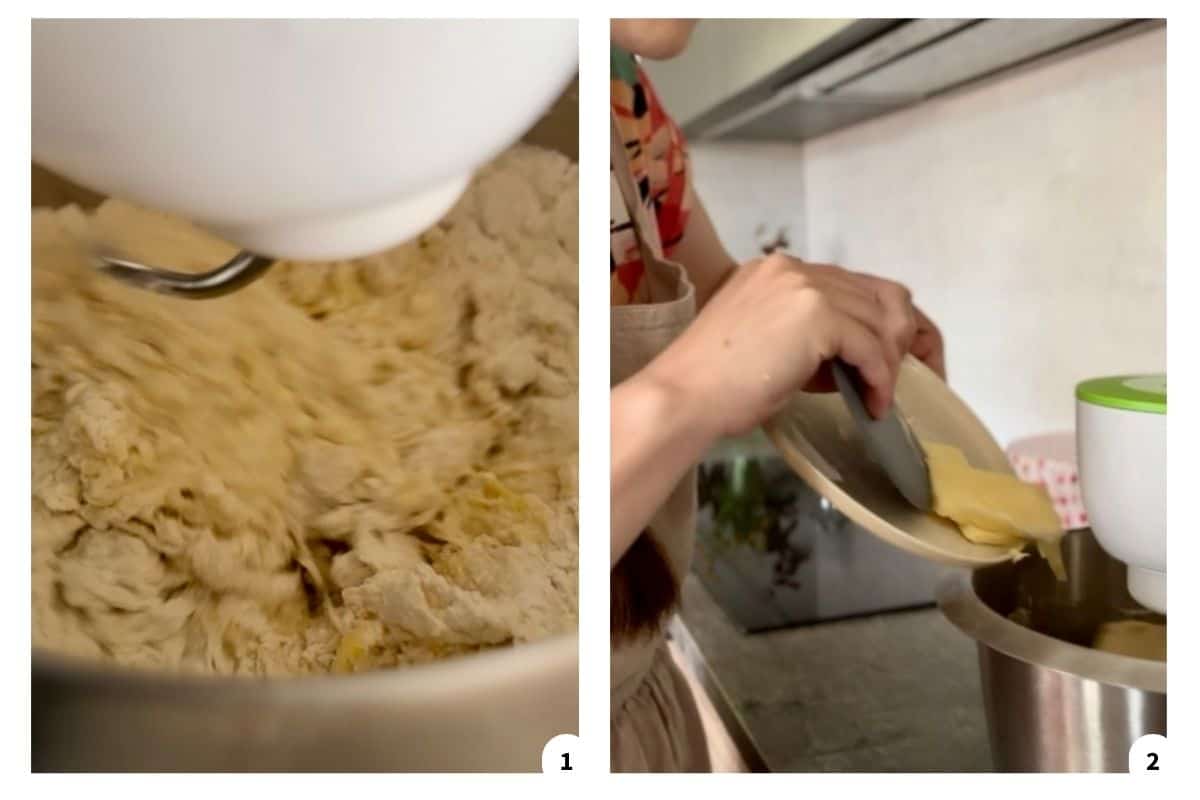
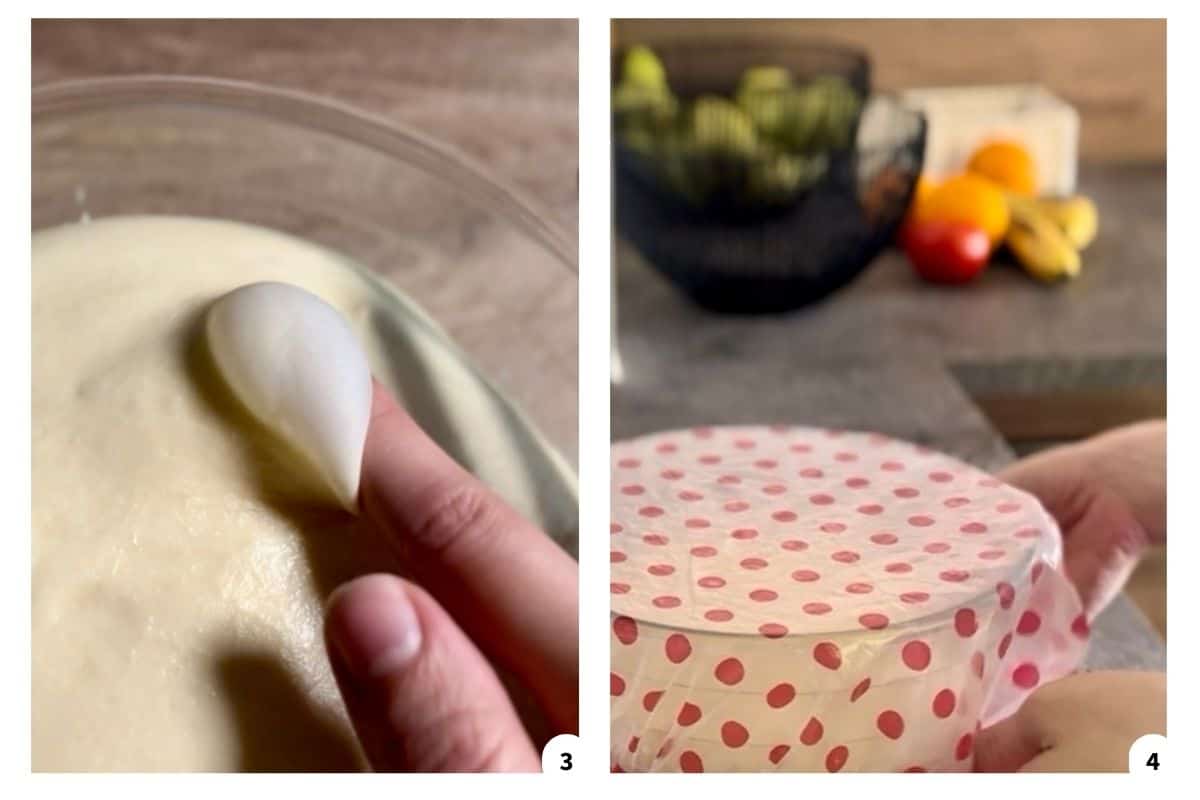
Step 1: In the bowl of a stand mixer, combine all the dough ingredients except for the butter. Mix on low speed until the flour is fully hydrated and no dry spots remain (Image 1). Add the butter one tablespoon at a time (Image 2), waiting for each portion to incorporate before adding the next. Once all the butter is added, slightly increase the speed and mix for about 20 minutes. The dough should be soft, smooth, and elastic-when gently stretched, it should pass the windowpane test (Image 3). Scrape down the bowl, cover it with a damp towel or plastic wrap (Image 4), and let it rest for 30 minutes. Perform 2 to 3 sets of stretch and folds, spaced 30 minutes apart.
Step 2: Let the dough rise at room temperature until it increases by about 50 percent in size. This usually takes 6 to 8 hours at around 72°F or 22°C. Then cover the bowl (Image 4) and refrigerate overnight.
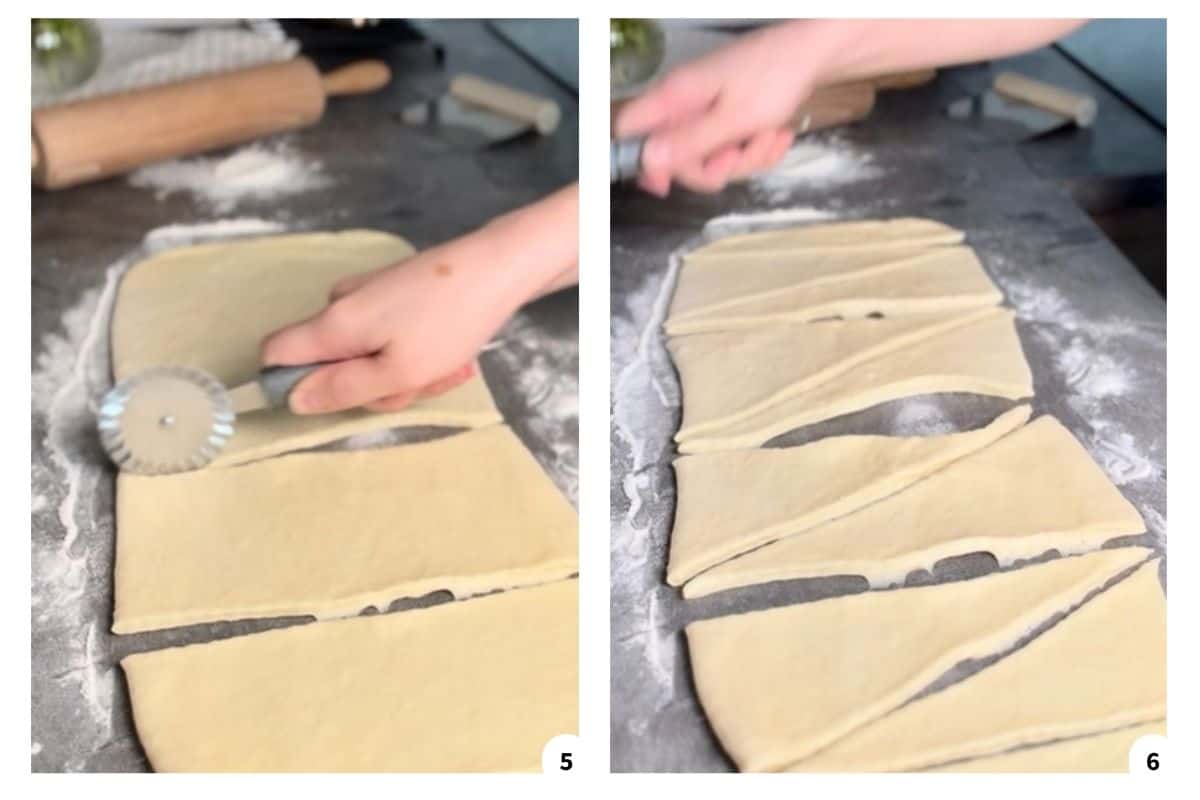
Step 3: The next day, place the chilled dough on a lightly floured surface. Roll it into a rectangle approximately 20 x 10 inches (50 x 25 cm). Use a knife or pizza cutter to cut the dough into 10 equal strips lengthwise (Image 5). Then, cut each strip diagonally to create 20 long triangles (Image 6).
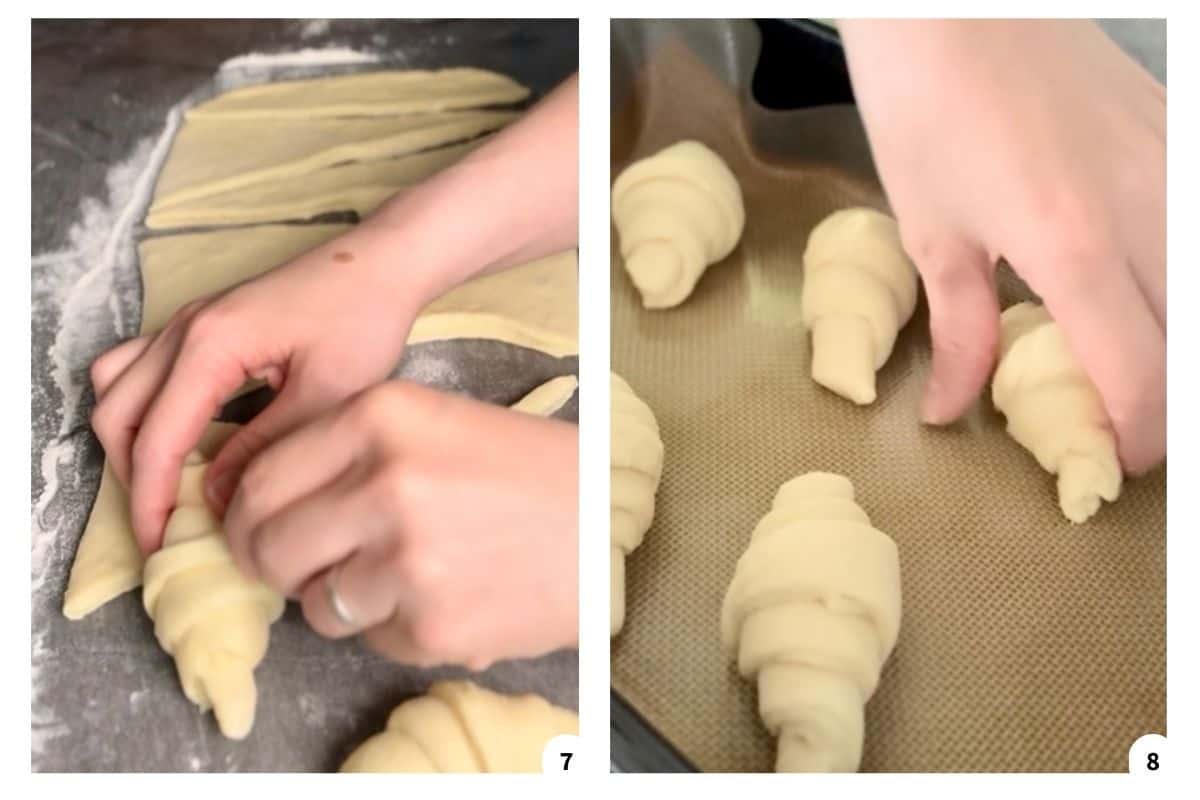
Step 4: Take one triangle and gently stretch the wide end to elongate it slightly. Roll it up tightly from the wide end toward the tip (Image 7). Once rolled, pinch the tip into the dough so it doesn't unroll. Place each roll on a parchment-lined baking sheet with the point tucked underneath (Image 8).
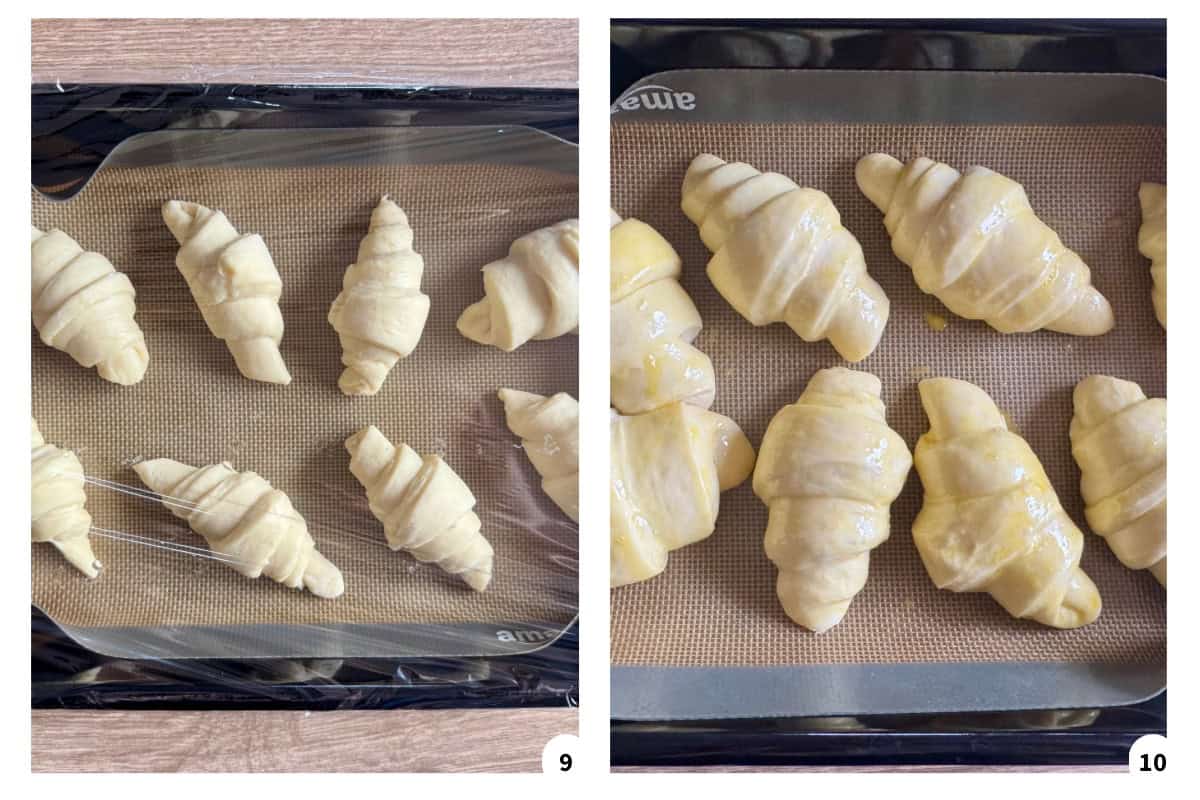
Step 5: Let the crescent rolls rise at room temperature for 2 to 4 hours (Image 9), or until noticeably puffed. If your kitchen is cool, they may take a bit longer. These rolls are quite forgiving and difficult to overproof.
Preheat your oven to 400°F (205°C). Just before baking, beat an egg and brush it over the tops of the rolls for a shiny finish (Image 10). Bake for 20 to 25 minutes, or until golden brown and fully baked through (Image 11).

Step 6: While still warm, optionally brush the rolls with melted butter for extra flavor. Serve fresh or rewarm slightly before serving later (Image 12).
Hint: To get that perfect, tender crumb, make sure your butter is truly at room temperature before you start. Cold butter will struggle to mix in and slow down gluten development.
Baking Schedule
Day 1 - Prep the Dough
- 5:30 PM: Mix the dough (except butter), then knead in the butter a little at a time.
- 6:00 PM: Let the dough rest for 30 minutes.
- 6:30 PM: First stretch and fold.
- 7:00 PM: Second stretch and fold (optional third at 7:30 PM if dough needs it).
- 8:00 PM: Let the dough finish bulk fermentation at room temp (until about 50% bigger).
- Before bed (~9:30 PM): Place the dough in the fridge overnight to ferment and firm up for easy shaping.
Day 2 - Shape, Proof, and Bake
- 7:00 AM: Take dough out of the fridge, roll into a rectangle, cut, and shape into crescents.
- 7:30 AM: Place on a baking sheet, cover loosely, and let rise at room temperature until puffy (about 2-3 hours, depending on your kitchen).
- 9:30-10:00 AM: Preheat oven to 400°F (205°C).
- 10:00 AM: Brush with egg wash and bake for 20-25 minutes.
- 10:30 AM: Let cool slightly, brush with melted butter (optional), and enjoy warm!
💭Crucial Success Tips
- Don't rush the bulk fermentation. Give the dough time to develop flavor and strength. Sourdough loves patience.
- The windowpane test matters. This shows your dough is well-kneaded and will result in soft, fluffy rolls.
- Chill the dough overnight. This not only makes it easier to shape but also enhances the flavor.
- Roll tightly, but don't stretch too thin. Rolling too loosely causes them to unroll, but stretching too much will tear the dough.
- Use a kitchen scale. Measuring by weight keeps everything consistent, especially with enriched doughs.
FAQ
Not for this recipe. You need active, bubbly starter to get the rise and fluffiness. Discard won't have enough strength.
Definitely. Bake a day ahead, store airtight, and warm gently before serving. You can also shape and refrigerate overnight before the final rise.
If they collapse in the oven or spread too much, they may have gone too far. Aim for just noticeably puffy and jiggly.
Your oven may be a bit cooler than it says. Try baking 5 more minutes, or place an oven thermometer inside to check.


Sourdough Crescent Rolls
Jump to VideoIngredients
Dough ingredients:
- 500 grams all-purpose flour
- 100 grams active sourdough starter
- 240 grams milk room temperature
- 80 grams granulated sugar
- 60 grams unsalted butter room temperature
- 1 egg approx. 50 g
- 6 grams salt
For brushing:
- 1 egg for egg wash
- Melted butter for brushing after baking optional
Instructions
- In the bowl of a stand mixer, combine all the dough ingredients except for the butter. Mix on low speed until the flour is fully hydrated and no dry spots remain. Add the butter one tablespoon at a time, waiting for each portion to incorporate before adding the next. Once all the butter is added, slightly increase the speed and mix for about 20 minutes. The dough should be soft, smooth, and elastic-when gently stretched, it should pass the windowpane test. Scrape down the bowl, cover it with a damp towel or plastic wrap, and let it rest for 30 minutes. Perform 2 to 3 sets of stretch and folds, spaced 30 minutes apart.
- Let the dough rise at room temperature until it increases by about 50 percent in size. This usually takes 6 to 8 hours at around 72°F or 22°C. Then cover the bowl and refrigerate overnight.
- The next day, place the chilled dough on a lightly floured surface. Roll it into a rectangle approximately 20 x 10 inches (50 x 25 cm). Use a knife or pizza cutter to cut the dough into 10 equal strips lengthwise. Then, cut each strip diagonally to create 20 long triangles.
- Take one triangle and gently stretch the wide end to elongate it slightly. Roll it up tightly from the wide end toward the tip. Once rolled, pinch the tip into the dough so it doesn't unroll. Place each roll on a parchment-lined baking sheet with the point tucked underneath.
- Let the crescent rolls rise at room temperature for 2 to 4 hours, or until noticeably puffed. If your kitchen is cool, they may take a bit longer. These rolls are quite forgiving and difficult to overproof.
- Preheat your oven to 400°F (205°C). Just before baking, beat an egg and brush it over the tops of the rolls for a shiny finish. Bake for 20 to 25 minutes, or until golden brown and fully baked through.
- While still warm, optionally brush the rolls with melted butter for extra flavor. Serve fresh or rewarm slightly before serving later.
Video
Notes
- Don't rush the rise: This dough is enriched with milk, egg, and butter, so it rises slower than lean doughs. Look for volume and softness rather than relying solely on the clock. During bulk fermentation, aim for about a 50 percent increase in size. After shaping, the rolls should look puffier and slightly jiggly before baking.
- Cold dough is easier to work with: Shaping crescent rolls is much easier when the dough is well-chilled. The overnight rest not only helps with flavor and structure but also makes the dough less sticky and easier to roll and cut.
- Pinch to seal: When you roll up each triangle, be sure to pinch the tip into the dough so the rolls don't uncoil in the oven. Placing the point underneath while baking helps keep the shape neat.
- Freezer-friendly: You can freeze the shaped, unbaked rolls on a baking sheet. Once solid, transfer them to a bag or container. When ready to bake, let them thaw and rise until puffy before proceeding with the egg wash and baking.
- Make-ahead tip: These rolls are great for prepping the day before a gathering. Shape them, cover with plastic wrap, and refrigerate overnight. The next day, take them out and let them sit at room temperature for 2 to 3 hours before baking.
- Serving idea: These rolls are lightly sweet and buttery on their own, but you can also split and fill them with jam, Nutella, or soft cheese for a brunch spread or snack.
Nutrition
If you gave these sourdough crescent rolls a try, I'd love to hear about it! Leave a ⭐️ star rating and drop a comment below to let me know how they turned out.
How To Store Sourdough Crescent Rolls
Store any leftover sourdough crescent rolls in an airtight container at room temperature for up to 2 days-just warm them briefly before serving for the best texture.
For longer storage, keep them in a sealed bag in the fridge for up to 4 days and refresh them in the oven or toaster oven.
You can also freeze the baked rolls for up to 2 months; just let them thaw and rewarm in a 300°F (150°C) oven for 8-10 minutes until soft and toasty again.