How I Cut Our Grocery Bill Without Giving Up Healthy, Homemade Meals
At a glance: when I want to keep our grocery budget in check without compromising on health, I focus less on strict rules and more on habits that make homemade food simpler, warmer, and more sustainable.
Why I Start Thinking About This Before the Busy Season
Although spring and summer are traditionally times when people feel inspired and fresh and try new things, I think fall and winter are a bit underrated in that aspect because we are home a lot.
The days are shorter. If you're here in the Northern Hemisphere, it's so cold outside some days that we are just naturally inside more.
And with that, I'm reminded every year that I have to be intentional and just really think about how I want my home to feel, like how to create that warm, cozy place for my family.
I'm definitely thinking more about homemaking, cooking, baking, and just in general having a nice atmosphere at home, especially throughout the colder months of the year. And since we're usually preparing a bit more food around that time, I am painfully reminded that grocery budgets definitely can get out of hand.
To avoid that, I very intentionally think about my habits, my kitchen flow, and how to make everything a bit more budget friendly, but without sacrificing my health.
Because although I am very happy if I can get food cheaper, I'm definitely the type of person that values my health and the health of my family.
So even though seed oils are very cheap at the store and a lot of processed foods are very cheap, I will always go for the quality ingredients and try to make up for the cost by cooking most things from scratch.
Eat Locally and Seasonally as Much as You Can
This tip is a little generic, but I think it's really, really important.
It's also difficult to give exact advice on it because we are all living in different environments and have access to different foods. But I think the smartest way to go about it is to figure out which dishes, meals, and foods are traditional in your area, because usually the foods your grandma cooked, if you're still living in the same place as your grandma, are the foods that use ingredients grown locally and available seasonally.
I know I'm always shocked when I look at my grandma's fridge. There's not a lot of things in there. She has a cellar with root vegetables and homemade canned things, but overall she doesn't have a lot of different ingredients available when she starts cooking, and she still makes amazing meals.
She knows how to combine those ingredients. She knows all the little things that make dishes great, even though they are made from humble and cheap things. She can do so much with just cabbage and turnips and beets.
Of course that's a skill she learned over decades, so I don't expect myself to suddenly be grandma in the kitchen. But I do think it's worth keeping your eyes open and paying attention to how the older women in your family cook, what they use, and which dishes are local to where you live.
Join me on my YouTube channel ...
And see how that looks like in real life!
Subscribe to my
Cook Different Meals That Use the Same Ingredients
Another tip that goes along with this is to make recipes that revolve around the same ingredients.
Whenever I'm browsing for recipes, especially when I'm tired of everything I've been cooking lately and want something new, I usually make sure I find something I already have ingredients for in the fridge.
As tempting as it is to go for something that uses lots of special sauces or spices I never normally buy, I have to stop myself and remember that if I like the dish, I'll probably want to make it again.
And I don't want it to include a lot of ingredients that I usually don't keep on hand, because over time I'll end up with a fridge and pantry full of random things that only work for one recipe here and there.
That is one of the worst things you can do for your grocery budget.
Warm Food Feels More Filling and More Complete
One thing that really comes in handy if you want to stretch your food is to make sure that if you want a meal to feel proper, make it something warm.
I'm constantly reminded, especially in the colder months, that if you have something warm on the table, it instantly feels like a real meal, even if it's not actually that filling or that hearty.
If your family is craving that classic sit-down dinner where everyone gathers around the table and you want something substantial to serve, a simple soup with good bread, or a stew, or something similar can do so much.
It gives people the feeling that a proper meal was served, even if it wasn't meat and potatoes and several side dishes. Just the fact that it's warm kind of sends that message.
Use Simple Salads to Round Out a Meal
At the beginning of the colder season, I always struggle a little because there are no fresh cucumbers and tomatoes and garden vegetables anymore.
But then I'm reminded that there are still so many ways to make simple salads to go alongside meals, and this is one of my favorite tricks.
If I'm not in the mood to cook a vegetable-heavy side dish, I can make a simple meat and a simple starch like potatoes or bread or tortillas, and then just serve a salad with it.
That way you still get all three components of a meal-vegetables, meat, and starches-without having to cook the vegetable side, which is often the part that takes the most prep and effort.
In winter, that often means I have bags of green beans in the freezer that I can throw into boiling water, slice some onions, and serve. I keep jars of sauerkraut on hand. You can also make a pasta salad and go really heavy on the vegetables.
The nice thing about pasta salad is that it keeps in the fridge for a couple of days, so you can make it in bulk and let it help with meals over the next few days.
Sometimes Simple Really Is Enough
Sometimes we just have to remind ourselves that we can keep it simple.
Where I live, we are very big on lunch, so we usually cook a substantial lunch, and then for dinner we often have something more like a charcuterie-style meal. We almost always eat something on bread.
I always joke that we eat bread with bread, because we really do eat a lot of it.
And because all of us know now that having some vegetables with dinner is a good idea, I usually just ask the kids what they want to crunch on. In my house, carrots and red bell peppers are especially popular, and they're very easy.
I don't even cut them up that much. If you just cut bell peppers in half and remove the seeds, and leave carrots whole, people are usually perfectly happy to grab them and munch on them while they're eating.
Homemade Bread Saves Money and Improves Quality
On the topic of bread, one thing I've been doing more of is milling my own flour.
I was very reluctant to buy a grain mill because they are not cheap, but once I did a bit of math, I realized I would not only use it for flour. I can also make coarser flour for things like cream of wheat, and mill buckwheat, corn, and other dry grains or seeds.
Right now I'm mostly sticking to hard white wheat for bread baking because I'm still testing my sourdough recipes with freshly milled flour.
But even if you're not milling your own flour, just baking your own bread products at home can reduce your grocery budget significantly. And bread is one of those things that often contains ingredients I'd rather avoid if I'm buying the general store version.
So making it at home is one of those rare things that can be both cheaper and better for your long-term health.
I was honestly surprised by how well freshly milled flour worked in sweet bakes. Bread has actually been the trickiest thing for me. For bread, we usually prefer around 60 to 70 percent freshly milled flour and then 20 to 30 percent all-purpose flour, because I still want the bread fluffy with a good crust, and that's not something I'm willing to compromise on.
But for brioche-type recipes, I've been enjoying making them 100 percent whole grain, which has been a real surprise. So if you've been nervous that your baking won't turn out the same with fresh flour, it may actually turn out even better in some cases.
Don't Underestimate Herbs
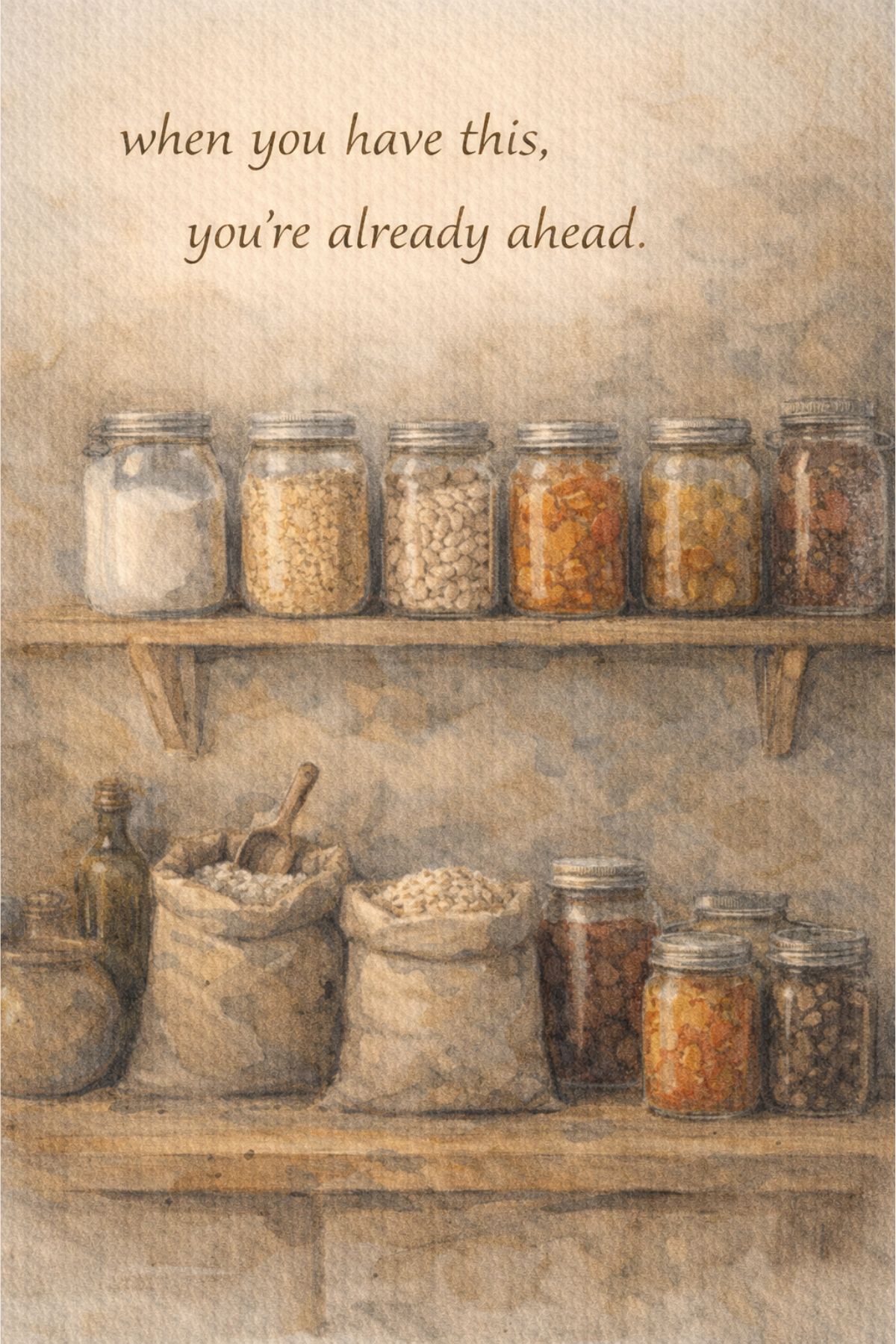
Another thing that is underrated are herbs.
There aren't always a lot of fresh herbs available in fall and winter, although I'm always happy to still have rosemary and thyme going in the garden. But even dry herbs, and simply knowing how to use them, can do wonders for dishes.
That way you don't have to rely on expensive and exciting ingredients from the store to make food taste good.
If you know how to use herbs well and flavor food simply, it makes such a difference, especially for soups and stews, which are often more vegetable-heavy and need that little extra something.
Eggs Are One of the Best Budget Staples
I have to mention eggs, even though it might sound obvious.
They are probably the most versatile thing in the fridge because they are one of the few things you can make a whole meal out of, especially if you have some bread on hand. You can fry them, boil them, make them in so many different ways.
Sometimes I even get requests to just make eggs for lunch or dinner. Because again, if you know how to season them well, and you have quality homemade bread to go along with them, they can become such a substantial, satisfying meal.
And if you add one of those simple salads alongside, that checks all the boxes for me. It's not Christmas dinner, but it fills everyone up, uses what we already have, and nobody complains.
Stretch Meat with Lentils, Grains, or Dough
One thing I rely on quite a lot is stretching meat with vegetables or grains.
Instead of cooking something like steak with potatoes on the side, since meat is usually the expensive part of the meal, I like to make meals that have some meat in them so you still feel like you're getting your portion of meat, but you aren't actually using that much.
In stews, for example, I really like using lentils. I still use meat, but I make sure there is less of it, and then the lentils make up for some of the protein and bulk out the meal.
Another example is making something like a meat roll where some type of dough is wrapped around the filling. Again, you don't need much meat, but the meal still feels substantial.
Homemade Snacks Are Almost Always Cheaper
Snacks are another area where costs can creep up really fast.
Store-bought snacks are often expensive, not because the ingredients are especially costly, but because you're paying for convenience. So if you're prepared to spend a little extra time making your favorite snacks at home, or simple versions of them, that can save a surprising amount.
In our house, we try to snack on fruit and pair it with something like cottage cheese or yogurt so there's some protein with it.
And if we want something sweeter than fruit, I usually make chocolate dates. I just cut the dates in half, drizzle some melted chocolate over them, and sometimes add peanut butter. Usually I do half with just chocolate and half with chocolate and peanut butter because we all have different preferences.
Sometimes I also make homemade granola bars, which are very similar to homemade granola. And if we want something salty, I usually have some kind of crackers on hand. I really like sourdough crackers for that.
Filling Meals Naturally Cut Down on Snacking
What I've found in general is that if I make the main meals substantial and filling, and I make sure they include enough protein and fiber, we don't really have the desire to snack all that much.
That's a great side effect. If your meals are truly satisfying, you will probably end up snacking a lot less without even trying to force it.
A Final Thought on Saving Money Without Going Too Far
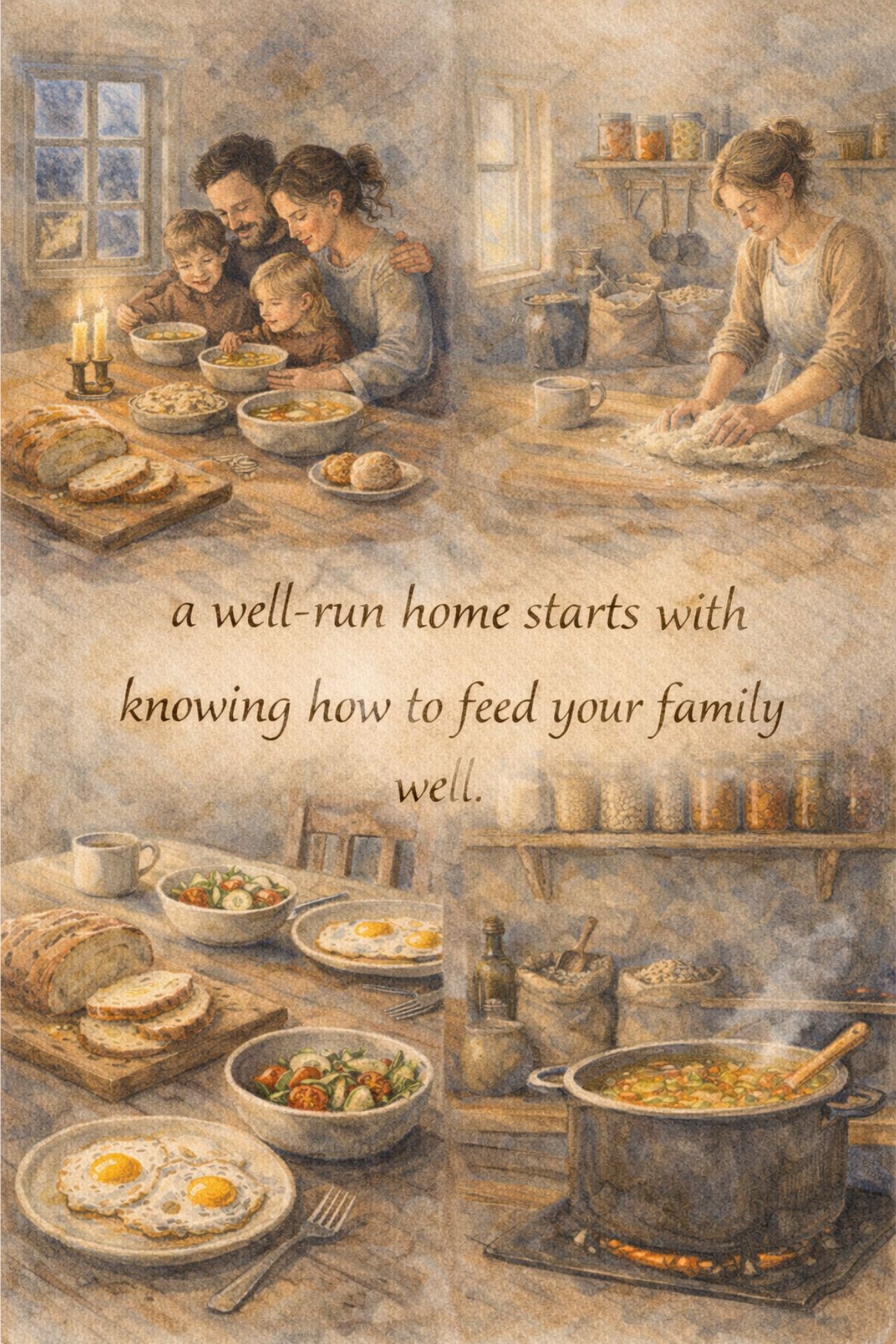
I do think it's important to be a good steward of your money. But I think it's just as important to look after your health and make happy memories in your home.
And if that means that sometimes you splurge a little, or don't make everything from scratch because life is full and there are other good things going on, that's completely fine too.
You should never feel guilty for that.