Sourdough Palatschinken (Central European Crepes with Sourdough Starter or Discard)

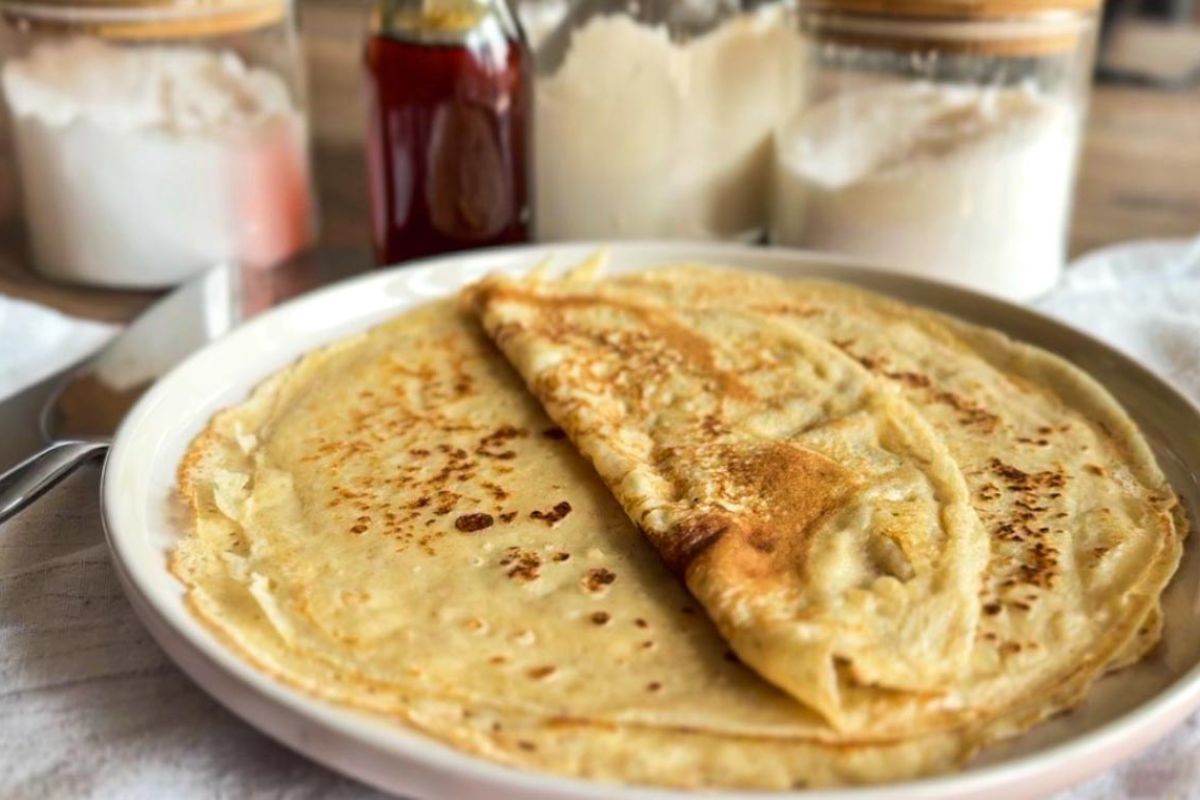
If you have sourdough discard sitting in the fridge and want something easy and actually worth making, these sourdough palatschinken are ... hands down, the first thing that I do! They are thin, soft Central European crepes with just a little extra flavor from the starter. I love them because they come together quickly, cook fast, and work for breakfast or dessert.
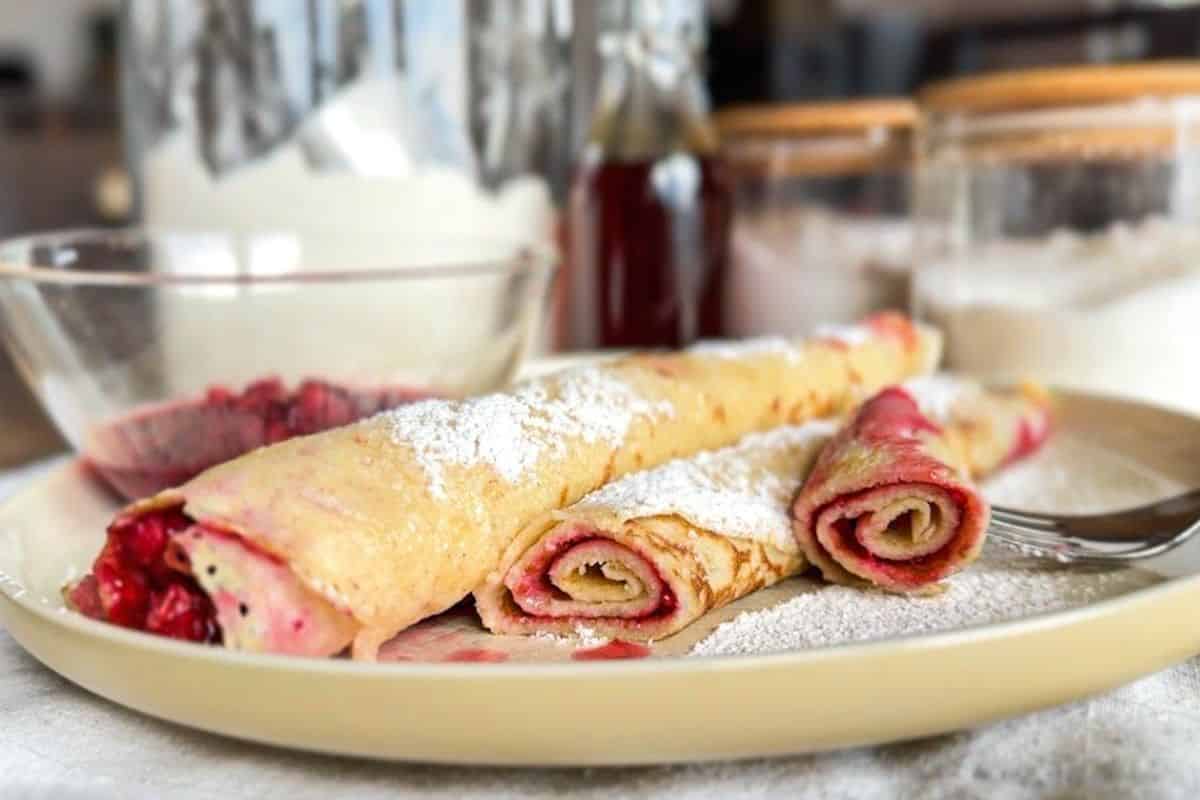
Palatschinken are a classic in many Central European homes, especially in Austria, Slovenia, and Hungary. They're our version of pancakes, and the best thing about them is that they work all year round, no matter the occasion, because it's just guaranteed that everyone will lake them.
If you want to try more European inspired quick meals, be sure to check out my Kaiserschmarrn (which is essentially a super easy shredded pancake), and if you have some palatschinken leftover, PLEASE make baked crepes with sweet cheese filling, one of the best things on the planet.
Summarize & Save This Recipe On:
Quick Look
- Prep Time: 10-15 minutes
- Final Proof: None (optional 15-30 min rest)
- Cook Time: 15-25 minutes
- Total Time: ~25-45 minutes
- Servings: 10-15 palatschinken
- Difficulty: Easy / beginner-friendly
- Baking Method: Stovetop
- Best For: Quick meals, dessert, using sourdough discard
Jump to:
- Summarize & Save This Recipe On:
- Quick Look
- Important Ingredients
- Substitutions & Variations
- How to Make Sourdough Palatschinken
- NOTES:
- Why are my palatschinken sticking to the pan?
- 💭Crucial Success Tips
- Recipe FAQs
- How To Store Sourdough Palatschinken
- Other Delicious Recipes
- Sourdough Palatschinken (Central European Crepes with Sourdough Discard)
- Need Help Tweaking This Recipe?
- Other Central European Recipes You'll Love
- Fresh Milled Einkorn Fruit Dumplings (Plum or Apricot)
- Fresh Milled Einkorn Crepes
- Apple Millet and Farmer's Cheese Bake
Important Ingredients
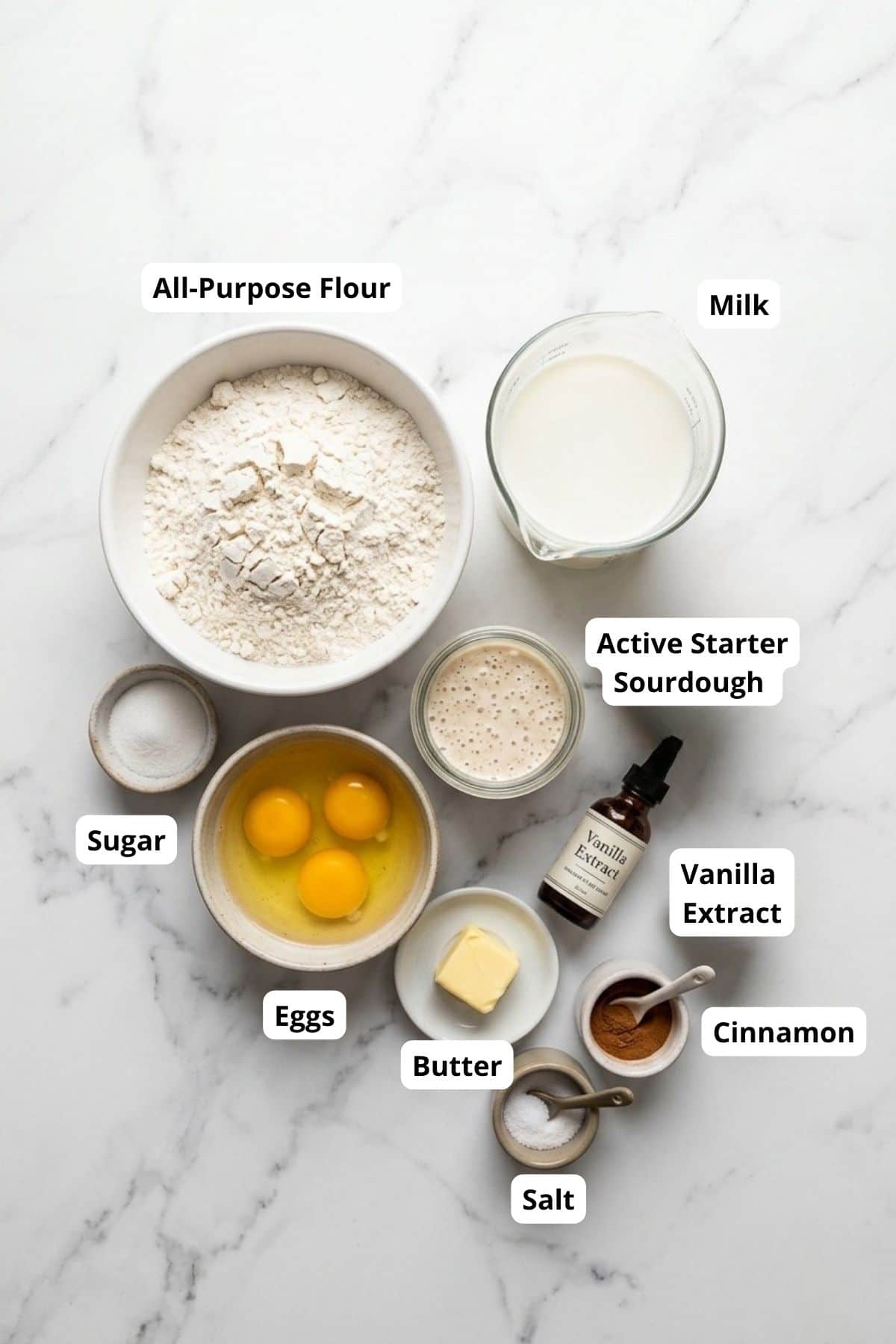
- Milk base of the batter, keeps the crepes soft and rich
- Eggs structure and flexibility
- Sourdough starter adds flavor and uses up discard
- Flour gives body to the batter
- Sugar light sweetness
- Salt balances flavor
See recipe card for quantities.
Substitutions & Variations
- Use plant-based milk if you want to
- Skip sugar for a more neutral version
- Add vanilla or cinnamon for extra flavor
- Adjust milk slightly if batter feels too thick
How to Make Sourdough Palatschinken
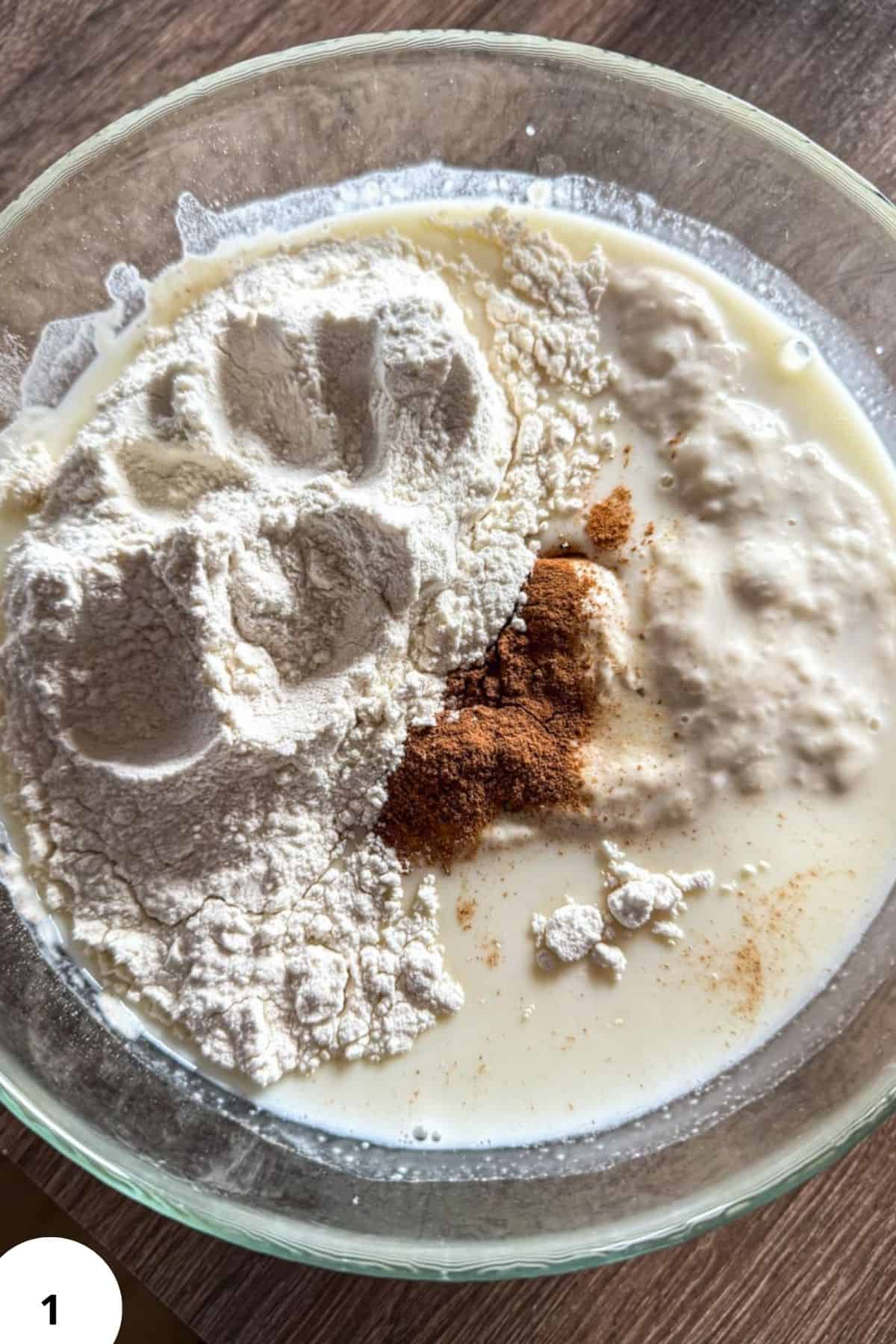
Step 1: In a large mixing bowl, add the milk, eggs, sourdough starter, flour, sugar and salt (Image 1).
If you like, also add the vanilla extract and cinnamon. Both are optional, but they work nicely if you plan to serve the palatschinken with jam or chocolate.
Mix everything together using a whisk, hand mixer, or immersion blender until the batter is smooth and most lumps are gone.
The batter should be quite thin, similar to heavy cream. If it seems thick, add a splash of milk.
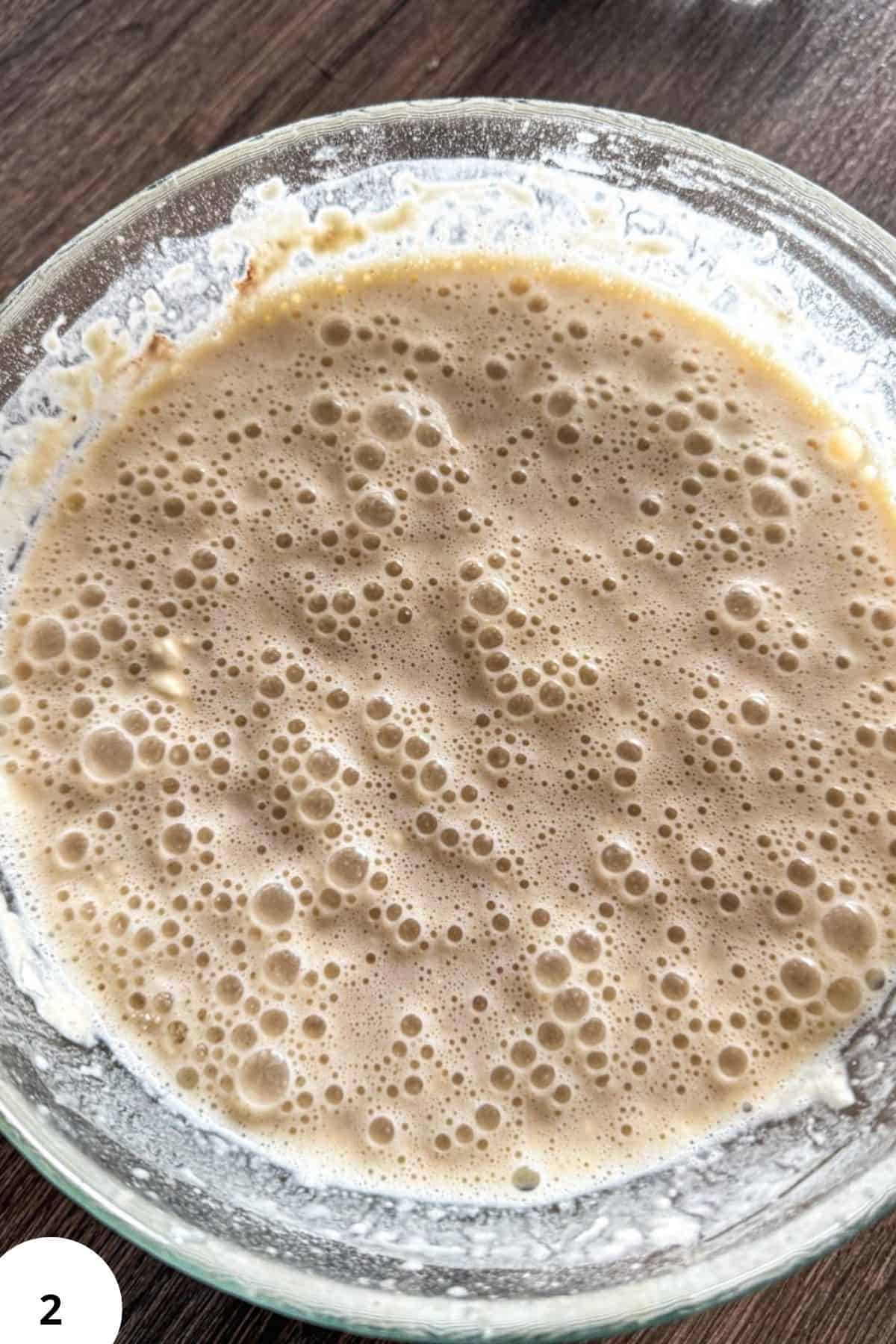
Step 2: Some recipes recommend letting the batter rest for 15-30 minutes (Image 2).
Personally, I rarely bother. I usually just mix the batter and start cooking right away.
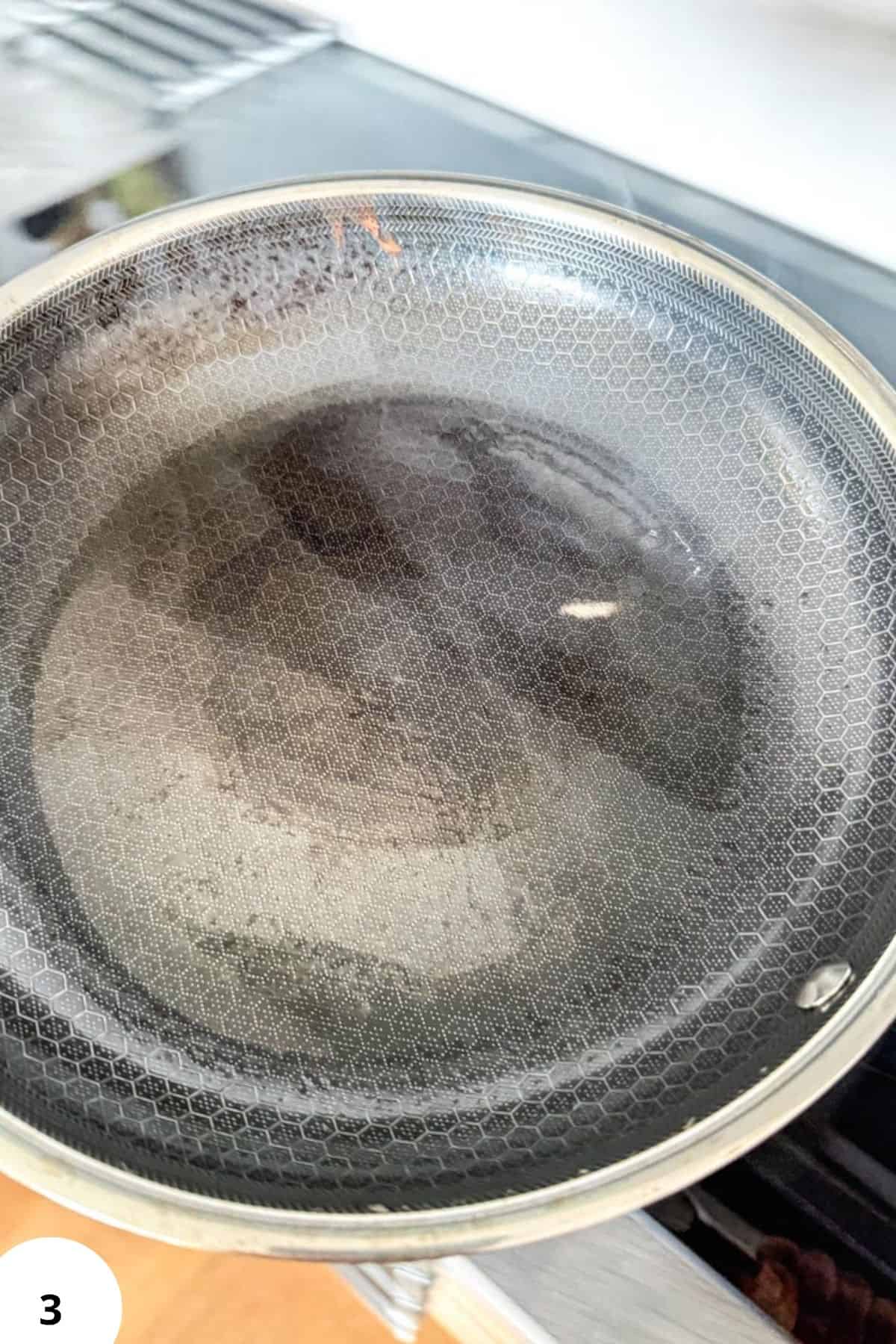
Step 3: Heat a nonstick skillet over medium heat.
A good nonstick pan makes palatschinken much easier to cook. I usually use a nonstick skillet, but a well-seasoned cast iron pan can also work.
Lightly grease the pan with a little butter or oil (Image 3).
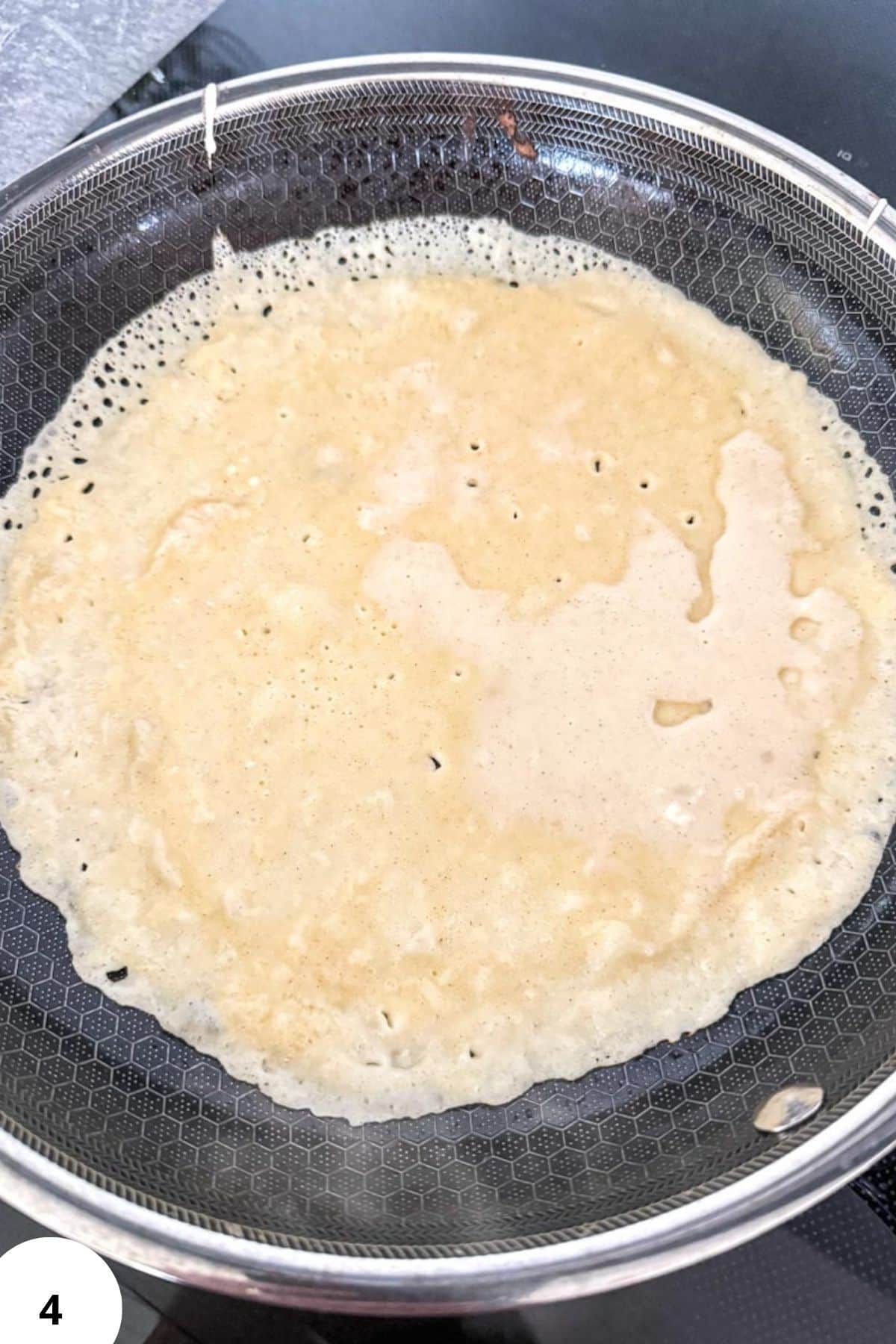
Step 4: Pour about ¼-½ cup of batter into the center of the pan (depending on the size of the pan and how thick you like them) (Image 4).
Immediately tilt and swirl the pan so the batter spreads into a thin layer covering the bottom.
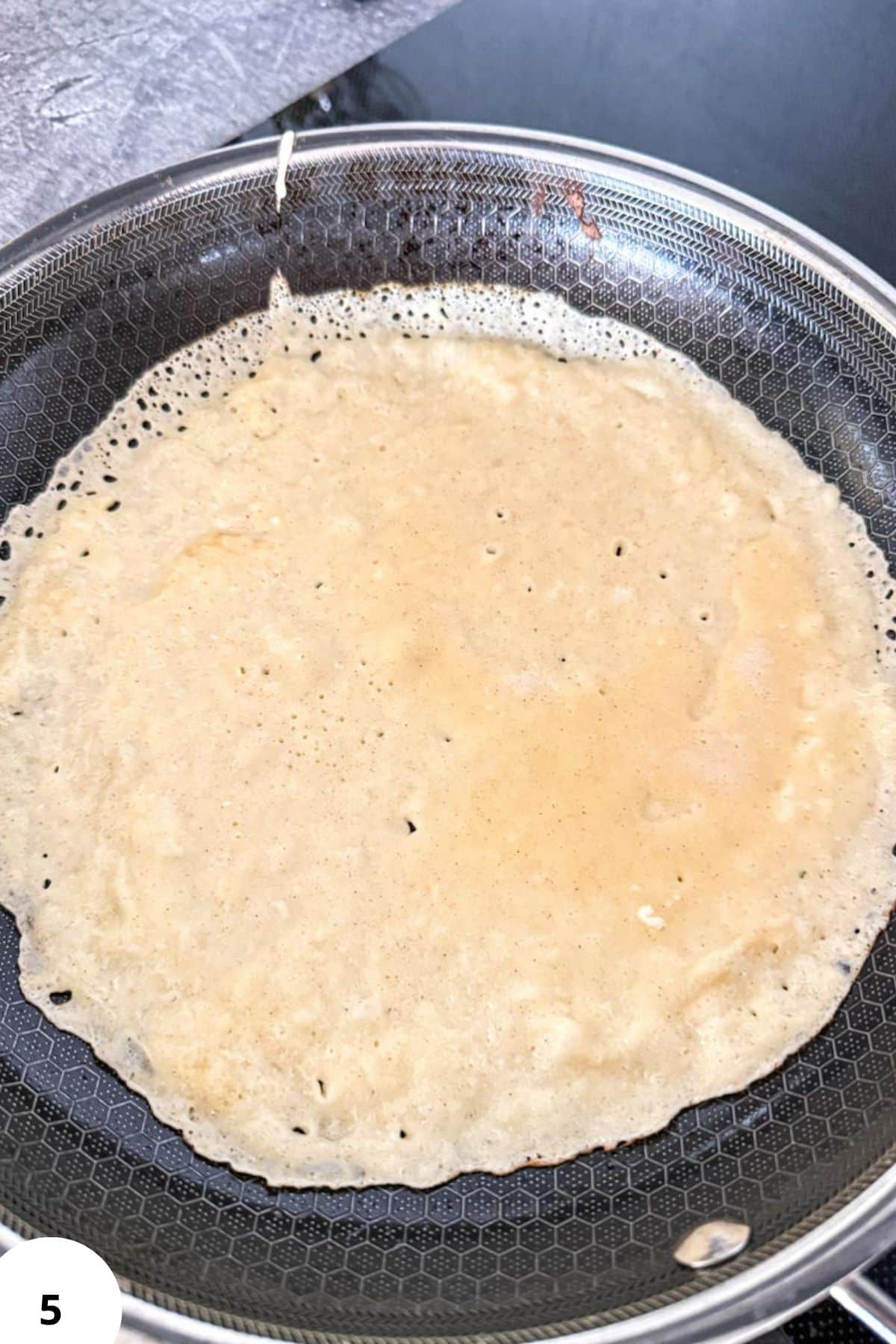
Step 5: Cook the palatschinken for about 45-60 seconds.
You'll know it's ready to flip when the edges start lifting slightly and the bottom turns lightly golden (Image 5).
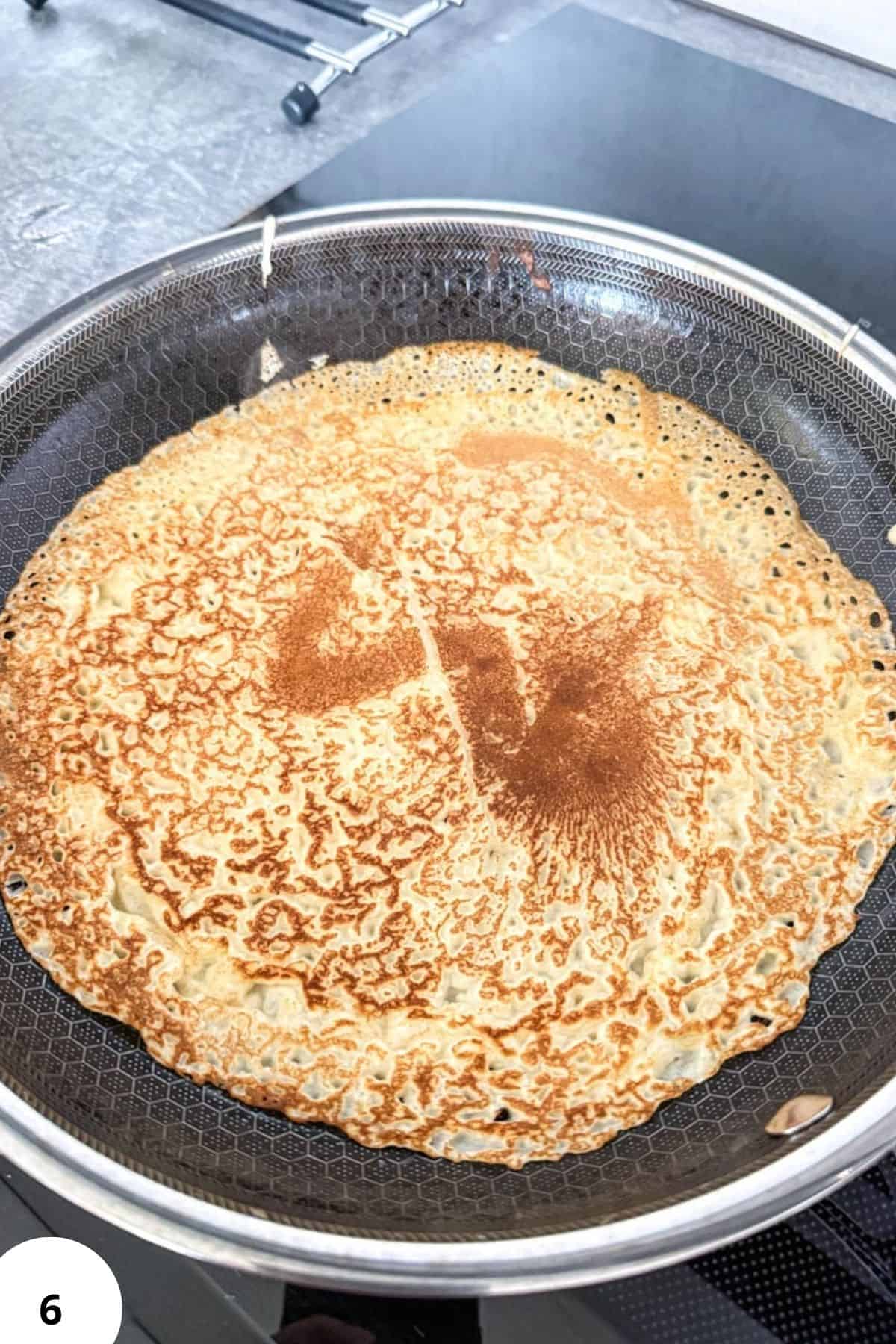
Step 6: Slide a thin spatula under the crepe and flip it. I like using an offset spatula, which slides under the crepe very easily. I often help myself with a cake server (the triangular tool used for serving cake) to support the other side while flipping
Cook the second side for another 20-30 seconds (Image 6). If the crepe feels delicate, using two spatulas can make flipping easier.
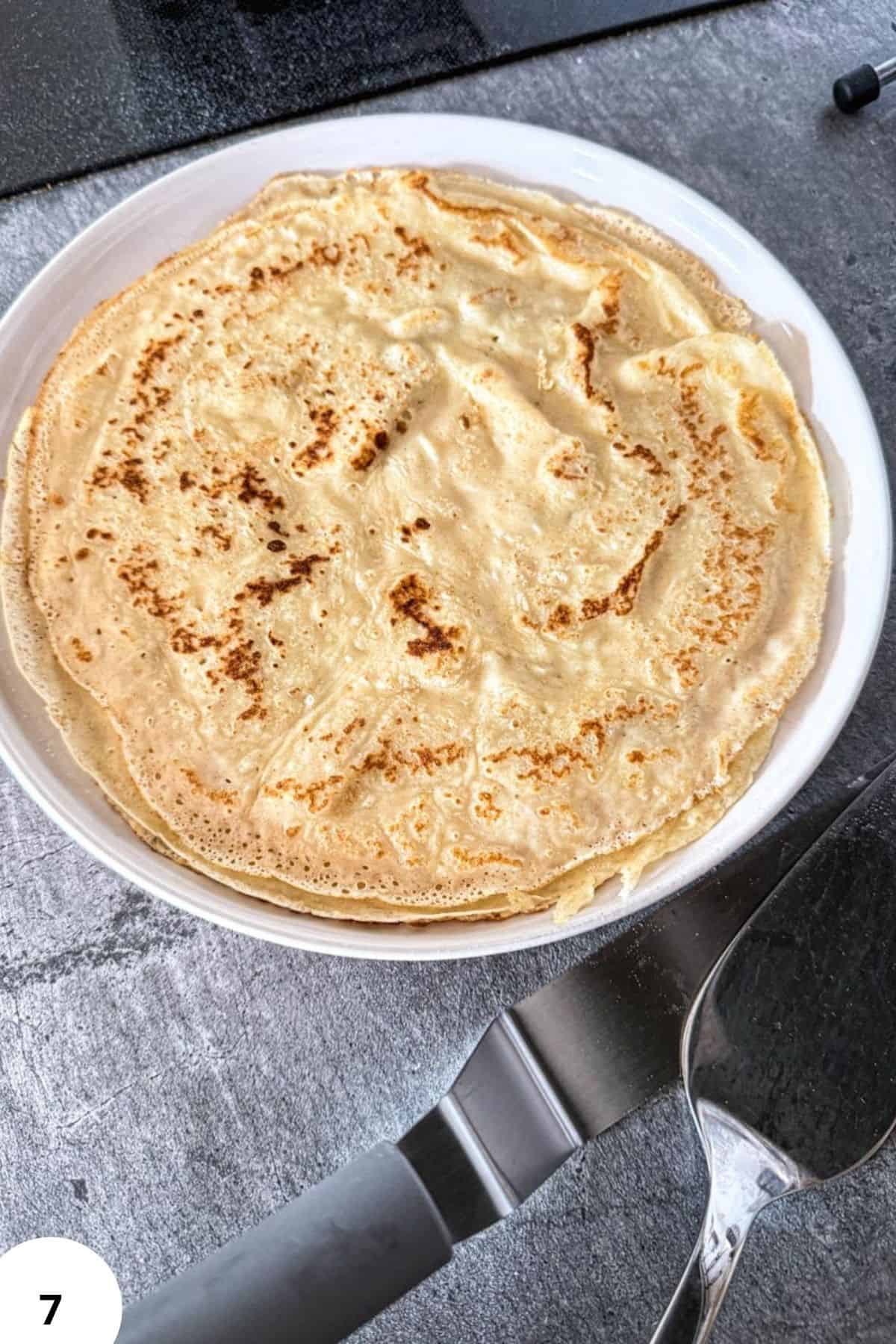
Step 7: Transfer the finished palatschinken to a plate and continue cooking the rest of the batter (Image 7).
You can stack them directly on top of each other. They stay soft and flexible th
NOTES:
Sparkling water trick
In many Austrian and Slovenian kitchens, cooks add a small splash of sparkling mineral water to palatschinken batter. The bubbles help make the crepes a little lighter and more delicate.
Discard or active starter
This recipe works with both sourdough discard and active starter. I usually use discard since it's an easy way to use up leftover starter.
Batter consistency
The batter should be quite thin, similar to heavy cream. If it feels thick or doesn't spread easily in the pan, add a splash of milk.
The first crepe is a test
The first palatschinken often acts as a test while you adjust the heat and the amount of batter. The rest usually cook much more smoothly once the pan is properly heated.
Why are my palatschinken sticking to the pan?
If palatschinken are sticking to the pan, it's usually one of three things.
1. The pan isn't nonstick enough.
A good nonstick skillet makes a big difference when making thin crepes like this. If you don't have one, a very well-seasoned cast iron pan can also work.
2. The pan isn't hot enough.
The batter should start setting almost immediately when it hits the pan. If it just sits there and spreads slowly, the pan likely needs a little more heat.
3. The pan needs a little more fat.
Even with nonstick pans, adding a small amount of butter or oil before each crepe helps prevent sticking.
If you're new to making palatschinken, it's completely normal for the first one to be a bit of a test pancake while you adjust the heat and the amount of batter. Once the pan is at the right temperature, the rest usually cook much more easily.
💭Crucial Success Tips
Do not worry if the first one is not perfect, that's expected! That first crepe is usually the one that helps you adjust the heat, the amount of batter, and your timing. Once those three things are dialed in, the rest go very smoothly!
Recipe FAQs
Palatschinken are thin Central European pancakes that are very similar to French crepes. They are common in Austria, Hungary, Slovenia, and the Czech Republic, and are usually served rolled with sweet fillings like jam, chocolate spread, or sweet cheese.
Unlike American pancakes, palatschinken are very thin and flexible, which makes them perfect for rolling.
They are also a very common quick meal or dessert in many Central European homes.
Palatschinken and crepes are very similar, but there are a few small differences.
Palatschinken are typically slightly larger and are almost always rolled with a filling, while French crepes are often folded.
The batter is also sometimes a little simpler, which makes them a very quick meal to prepare.
In everyday cooking, though, the two are very close, and many people simply describe palatschinken as Central European crepes.
Yes, and it works really well.
Sourdough discard adds a little extra flavor to the batter without making the crepes taste sour. It's also a great way to use up leftover starter.
Both discard and active sourdough starter work in this recipe.
Some recipes recommend letting crepe batter rest for 15-30 minutes.
In practice, I rarely find this necessary for palatschinken. Most of the time I simply mix the batter and start cooking right away.
The crepes still turn out thin and flexible.
Palatschinken should be very thin, much thinner than American pancakes.
The batter should spread easily when you swirl the pan, and each crepe should cook in about a minute.
If the crepes turn out thick, simply use a little less batter for the next one.
How To Store Sourdough Palatschinken
Store the cooked palatschinken in an airtight container in the fridge for up to 2-3 days. They can be stacked directly on top of each other, they stay soft this way.
You can also freeze them for a few weeks. Just separate layers with parchment paper and reheat gently when needed.
Other Delicious Recipes
- Fresh Milled Buckwheat Sourdough Rolls

- Einkorn Sourdough Bread for Beginners (50% Fresh Milled)
- The Easiest Fresh Milled Einkorn Sourdough Bread (Loaf Pan Method)
- Fresh Milled Sourdough English Muffins (Same Day or Overnight)
If you tried these sourdough palatschinken (central European Crepes with Sourdough Discard) or any other recipe on my blog please leave a 🌟 star rating and let me know how it went in the 📝 comments below! Happy Baking!
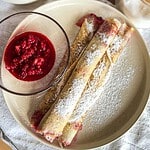
Sourdough Palatschinken (Central European Crepes with Sourdough Discard)
Ingredients
- 480 g milk
- 3 eggs large
- 20 g sugar
- 120 g sourdough starter discard or active
- 160 g all-purpose flour
- ¼ teaspoon salt
- 1 teaspoon vanilla extract optional
- ¼ teaspoon cinnamon optional
- Butter or oil for the pan
Instructions
- In a large mixing bowl, add the milk, eggs, sourdough starter, flour, sugar and salt. If you like, also add the vanilla extract and cinnamon. Both are optional, but they work nicely if you plan to serve the palatschinken with jam or chocolate. Mix everything together using a whisk, hand mixer, or immersion blender until the batter is smooth and most lumps are gone. The batter should be quite thin, similar to heavy cream. If it seems thick, add a splash of milk.
- Some recipes recommend letting the batter rest for 15-30 minutes. Personally, I rarely bother. I usually just mix the batter and start cooking right away.
- Heat a nonstick skillet over medium heat. A good nonstick pan makes palatschinken much easier to cook. I usually use a nonstick skillet, but a well-seasoned cast iron pan can also work. Lightly grease the pan with a little butter or oil.
- Pour about ¼-½ cup of batter into the center of the pan (depending on the size of the pan and how thick you like them). Immediately tilt and swirl the pan so the batter spreads into a thin layer covering the bottom.
- Cook the palatschinken for about 45-60 seconds. You'll know it's ready to flip when the edges start lifting slightly and the bottom turns lightly golden.
- Slide a thin spatula under the crepe and flip it. I like using an offset spatula, which slides under the crepe very easily. I often help myself with a cake server (the triangular tool used for serving cake) to support the other side while flipping Cook the second side for another 20-30 seconds. If the crepe feels delicate, using two spatulas can make flipping easier.
- Transfer the finished palatschinken to a plate and continue cooking the rest of the batter. You can stack them directly on top of each other. They stay soft and flexible this way.
Notes
- Starter:
This recipe works with sourdough discard or active starter. I usually use discard. - Pan size:
A 9-10 inch skillet works best for thin palatschinken, but you can make them larger or smaller if you want to. - Color:
Some people prefer very pale crepes, while others like them slightly golden. Both are traditional. - Consistency tip:
The batter should be thin enough to spread easily when you swirl the pan. It should be way more pourable than the batter for American pancakes.
Filling Ideas
Traditional fillings include:- Apricot jam
- Nutella or chocolate spread
- Sweet farmer's cheese
- Powdered sugar
- Lemon juice and sugar