
Same Day Sourdough Bread

Are you craving the delightful aroma of freshly baked bread without the wait? Look no further! This easy same day sourdough bread recipe will have you enjoying a delicious loaf of bread in just a matter of hours.
With a few simple ingredients and a little bit of patience, you'll achieve that beautiful golden-brown crust and airy crumb you've been dreaming of- without compromising the taste or the fermentation benefits of sourdough bread. AND it is totally appropriate for a beginner baker- just like my skillet sourdough naan recipe!

Summarize & Adapt This Recipe On:
If you've always been intimidated by the idea of making your own sourdough, you're going to love this recipe. It's really easy to put together, you can plan it around your schedule and is actually quite forgiving too!
If you're super into bread baking and you mill your own flour at home (like I do!), here's a fresh milled same day sourdough bread recipe you need to check out!

Free resource
Get all 3 when you subscribe
Bake beautiful bread that fits Your life - not the other way around
Recipe Quick Look
- Prep time: 2 hours.
- Cook time: 45 mins.
- Servings: 15 slices.
- Main ingredients: Flour, sourdough starter, water, salt.
- Cooking method: Combine water, starter and salt 🡢 add flour 🡢 mix, cover and rest 🡢 do 1 set of stretch and folds 🡢 cover and rest for 20 minutes 🡢 do 1 more set of stretch and folds 🡢 shape into a ball, cover and let rise for 3-4 hours 🡢 shape dough ball 🡢 rise again and score 🡢 transfer to parchment paper and into a Dutch oven 🡢 bake for 30-40 minutes 🡢 cool, slice and serve.
- Difficulty: Medium.
- Serving ideas: Serve a slice of the crusty sourdough with a bowl of your favorite soup, or use it as a bowl to make broccoli cheddar soup in a sourdough bowl.
Jump to:
- Summarize & Adapt This Recipe On:
- Recipe Quick Look
- Important Ingredients
- Substitutions & Variations
- How to Make Same Day Sourdough Bread
- Baking Schedule
- Crucial Success Tips
- Recipe FAQs
- More Easy Sourdough Recipes
- Same Day Sourdough Bread
- Need Help Tweaking This Recipe?
- Other Sourdough Recipes You'll Love
- Fresh Milled Buckwheat Sourdough Rolls
- The Easiest Fresh Milled Einkorn Sourdough Bread (Loaf Pan Method)
- 100% Fresh-Milled Einkorn Sourdough Bread
Important Ingredients
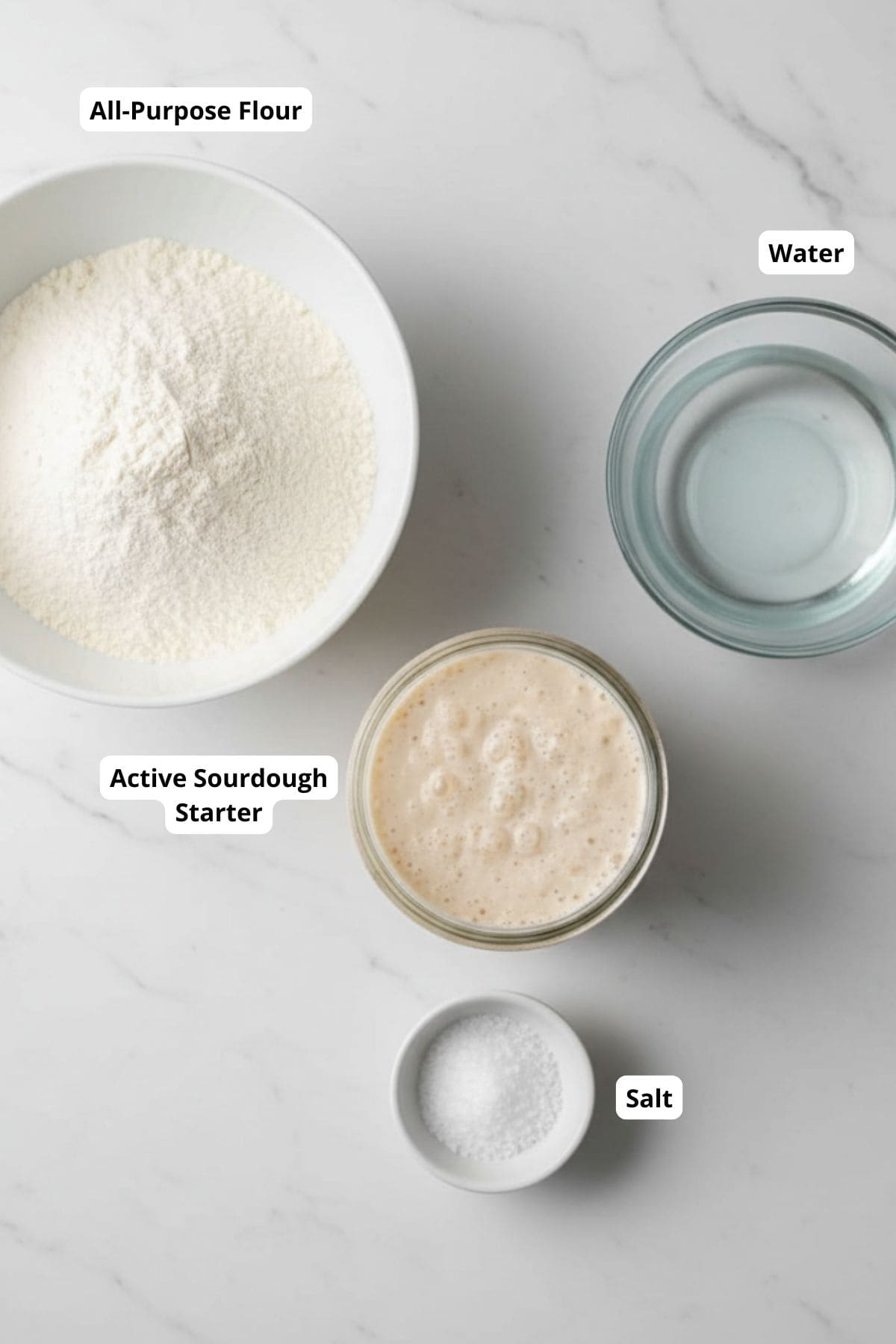
- Active sourdough starter: For that signature tang and lift. If you don't have this at hand, follow my easy recipe that teaches you how to make sourdough starter from scratch.
- Water: To hydrate the dough and activate the starter for fermentation.
- Salt: To enhance the flavor and strengthen the dough structure.
- All-purpose flour: The base of your dough creating structure and texture for the loaf.
See recipe card for quantities. I included a baking schedule at the end, so you'll have an easier time calculating when to feed your starter and start the whole process.
Also, a Dutch oven is a must if you ask me. There are ways of baking bread that don't require you to have it, but having it makes everything much simpler!
Substitutions & Variations
- You can swap up to 20% of the all purpose flour you're using here for a different kind of flour like rye flour or bread flour to create different versions of the bread. If you want to bake your sourdough using whole wheat flour, I suggest you check out my no-knead rustic whole wheat sourdough bread recipe.
- You can also top the bread with some seeds for a bit of extra texture and deliciousness. Sesame seeds, poppy seeds, pumpkin seeds, and sunflower seeds are all great options.
- For that hint of golden yellow color, you can also add some turmeric powder into the mix. I usually about 1 teaspoon at the beginning to my water, starter, and salt mixture to ensure it is evenly distributed.
- To make a cheesy loaf, add a cup of shredded cheese into the dough during the last series of stretch and folds. This one's sure to be a total crowd pleaser- just like my roasted garlic and Parmesan sourdough bread.
How to Make Same Day Sourdough Bread

In a large bowl, combine water, starter, and salt. I like mixing those up first so the starter and the salt have a chance to disperse in the water

Add the flour and mix well. I usually do this with a spoon and finish with my hands to break up all the flour. Cover with something airtight (plastic wrap, aluminum foil, plastic bag, even a shower cap works!) and let rest for 30 minutes.

After 30 minutes, do a set of stretch and folds. Grab the edge of the dough, stretch it up, and fold it under on the other side. Rotate your bowl for 90 degrees and repeat 3 more times. We're going for 4 sets of stretch and folds in total. Cover again and leave to rest for 20 minutes and do another set of stretch and folds. Repeat this process until you do 4 sets of stretch and folds (which should take 1 hour in total). Be sure to cover your dough with something airtight in-between sets of stretch and folds to prevent the dough from drying out! After that's done, let the dough ball rise for 3 - 4 hours at room temperature.

Once it looks almost double in volume, transfer your dough to a lightly floured surface. It's now time to shape the dough! Grab the opposite ends of the dough and pinch them together on top. Repeat with the other two opposites. Prepare your bread basket (or banneton basket) so that you line it with a lightly floured tea towel.

Carefully transfer your dough ball into a tea towel-lined basket. The pinched parts should be facing upwards. Preheat your oven and prepare a piece of parchment paper. Transfer your dough from the basket to the parchment paper, so the floured bottom of the dough is now the top of the dough up. Score your dough with a razor blade or a sharp knife; make two deep cuts so you get a crisis cross pattern.

Transfer your parchment paper with a dough on it into a hot Dutch oven. Splash just a bit of water between the parchment paper and Dutch oven to create some steam and cover quickly to capture it inside. Put the bread in the oven for 30 minutes at 460°F (238°C). Take the lid off and bake for an additional 10 minutes with the lid off at 440°F (227°C) to get that golden brown color. Transfer to a cooling rack, cover with a damp kitchen towel and cool for at least an hour before you slice into it.
Pro Tip: Use a HEAVY bowl for mixing the dough and doing stretch and folds. I love using this natural ceramic bowl from Amazon (also in the pictures above!). When I stretch the dough, no matter how dense it is, the bowl stays on the counter. And I can make big amounts of dough in it when I'm batch baking sourdough bread.
If you're making this for the whole family, I also have a guide on when babies can have sourdough bread and how to serve it safely.
Baking Schedule
OPTION 1: Feed the starter the day before, have bread for dinner the next day.
- 8.00: Mix up the dough.
- 8.30: Start stretch and folds.
- 9.30 - 12.30: Bulk rise.
- 12.30: Shaping and second rise.
- 13.30: Bread goes in the oven.
- 14.15: Bread comes out of the oven to cool down.
OPTION 2: Feed the starter in the morning, have bread for late dinner or the next day.
- 8.00: Feed starter.
- 13.00: Mix up the dough.
- 13.30: Start stretch and folds.
- 14.30 - 17.30: Bulk rise.
- 17.30: Shaping and second rise.
- 18.30: Bread goes in the oven.
- 19.15: Bread comes out of the oven to cool down.
Crucial Success Tips
- The temperature of your kitchen plays a big role in how fast your dough will rise. If you want to speed your process up a little, proof your dough in a warmer spot if you have one.
- For best results, wet your fingers with water to prevent the dough from sticking to your hands when you handle the dough. It will still stick a bit (because we're dealing with medium to high-hydration dough, but wetting your hands really helps! Use this tip especially when doing the sets of stretch and folds.
- It is normal for the dough to be very sticky the first time you do stretch and folds- don't panic. Just keep going.
- If you're adding seeds to your same day sourdough bread, sprinkle them in during the last series of stretch and folds.
- Wrap your cooled sourdough bread in a clean cloth or paper bag. This allows the bread to breathe slightly and helps maintain its crust's texture.
- Avoid storing sourdough bread in plastic bags, as they can trap moisture and make the crust soft. However, if you want to keep the crust softer for a longer time, you can use a plastic bag but leave it open or puncture a few holes in it.
- If you have a bread box, it can be an excellent option for storing your sourdough bread. A bread box provides a slightly humid environment that can help keep the bread's crust from becoming too hard.
Recipe FAQs
Check the size of the dough. If it has nearly doubled in size, it has proofed. You can also perform a "poke test." When you poke the bread dough, your finger should leave a dent behind, but the dent should slowly start to fill up again.
Absolutely! A (mature) starter is usually ready to use in baking after 4 - 6 hours after feeding. If you look at the first baking schedule below, you'll see that it calls for feeding your starter in the morning and having the bread baked in the late afternoon.
Although sourdough bread can last up to a week at room temperature, it's best to eat it within the first three days.
After three days, consider freezing it. If it goes stale before you have a chance to eat or freeze it, you can always turn it into bread pudding, stuffing, breadcrumbs, etc.
More Easy Sourdough Recipes
Looking for other recipes like this? Try these:




If you tried this same day sourdough bread or any other recipe on my blog please leave a 🌟 star rating and let me know how it went in the 📝 comments below! Happy Baking!

Same Day Sourdough Bread
Jump to VideoEquipment
Ingredients
- 410 grams all-purpose flour
- 290 grams water
- 160 grams starter
- 8 grams salt
Instructions
- In a large bowl, mix together your water, starter, and salt. I like mixing those up first so the starter and the salt have a chance to disperse in the water.
- Add the flour and mix well. I usually do this with a spoon and finish with my hands to break up all the flour. Cover with something airtight (plastic wrap, aluminum foil, plastic bag, even a shower cap works!) and let rest for 30 minutes. I find putting a plastic bag over top is the most practical.
- After 30 minutes, do a set of stretch and folds. That means that you grab the edge of the dough, stretch it up, and fold it under on the other side. Rotate your bowl for 90 degrees and repeat 3 more times. We're going for 4 sets of stretch and folds in total. Cover again and leave to rest for 20 minutes and so another set of stretch and folds.
- Repeat this process until you do 4 sets of stretch and folds (which should take 1 hour in total). Be sure to cover your dough with something airtight in-between sets of stretch and folds to prevent the dough from drying out!
- After you are finished with stretch and folds, cover the dough again (it should resemble a smooth ball by now) and let the dough rise for 3 - 4 hours at room temperature (I usually just leave it on the counter). It should almost double in volume.
- After the bulk fermentation, transfer your dough to a lightly floured surface. We are going to shape your dough. The way to do that is to grab the opposite ends of the dough and pinch them together on top. Repeat with the other two opposites.
- Prepare your bread basket (or banneton basket) so that you line it with a lightly floured tea towel. Carefully transfer your dough ball into a tea towel-lined basket. The pinched parts should be facing upwards. If your dough is extra wobbly, you can help yourself with a dough scraper.
- Cover the dough again (I use the same plastic bag as before) and let it do its final rise for 2 hours at room temperature. About an hour in, you can turn your oven on to preheat it.
- When your dough puffed up a bit and your dutch oven and oven are both sufficiently preheated, prepare a piece of parchment paper. Transfer your dough from the basket to the parchment paper, so the floured bottom of the dough is now the top of the dough. Score your dough with a razor blade or a sharp knife; make two deep cuts so you get a crisis cross pattern.
- Transfer your parchment paper with a dough on it into a hot dutch oven. Splash just a bit of water between the parchment paper and dutch oven to create some steam and cover quickly to capture it inside. Put the bread in the oven for 30 minutes at 460°F (238°C). Take the lid off and bake for an additional 10 minutes with the lid off at 440°F (227°C) to get that golden brown color. Bake time depends on the strength of your oven, so you can adjust it a bit after. After taking the bread out of the oven, put it on a cooling rack, cover it with a damp kitchen towel and leave it to cool for at least an hour before you slice into it.
Video
Notes
- Wet your fingers with water before doing the stretch and folds. This will help prevent the dough from sticking to your fingers.
- Allow the dough to proof until almost double in size.
- Add your mix-ins like seeds, spices and cheese during the last series of stretch and folds.

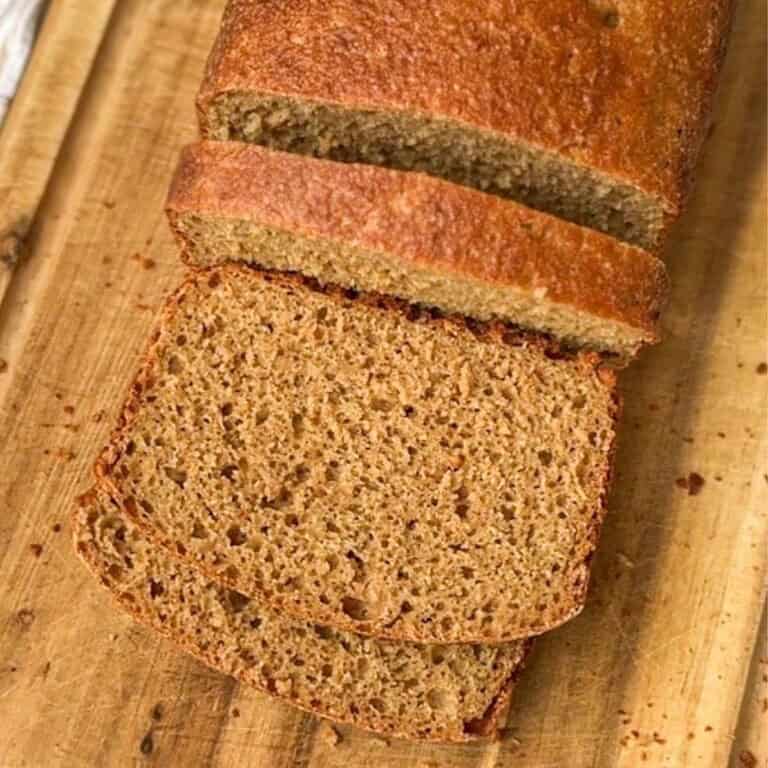
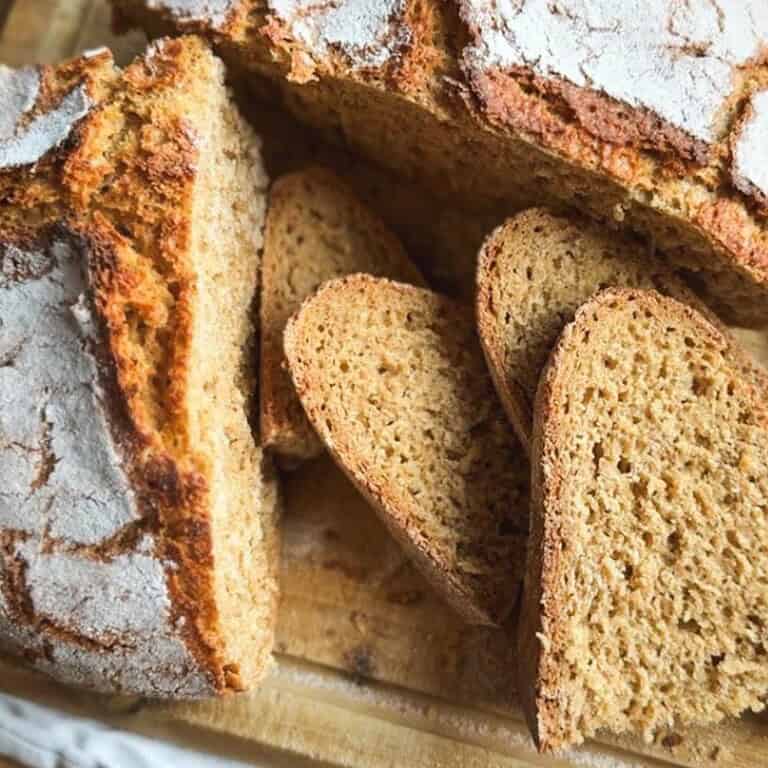
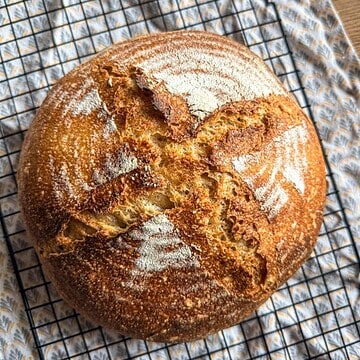






This was my second attempt at baking sourdough bread. The first one was too sour.
I used your recipe today and my bread is beautiful and tastes so yummy. Thanks so much!
So easy to follow and the video was really helpful.
I will be using this recipe again!
Hi Sara Jane, I'm so glad I could help!! I know sourdough is tricky in the beginning so making a good loaf on the second attempt is amazing! =D
I'm leaving my Sourdough in the fridge over night, Once taken out in the morning, how long do I need to wait until baking?
Hi Sara!
You can bake it straight from the fridge - that's my preference actually, I find that it's easier to score straight from the fridge. I usually preheat my oven and then take the dough from the fridge right before I put it into the oven 🙂
This is such a great recipe. I have also, "messed up" a couple of times with times thinking I knew what I was doing, or getting too busy with other things to open the recipe back up to look and finding out later. But, still has come out fantastic, every time. I always forget to start my bread the night before, except for pulling it out of the refrigerator, letting it sit an hour and then feeding. So if I want bread, this ends up being my go to! Thanks for sharing it.
Hi Alisha,
that is exactly the reason I rely on this recipe so much: I'm always late to remember I need to feed my starter, so I end up rushing. And with the amount of starter in tis recipe, rushing gives it a great result! I'm so happy you find it convenient as well! =D
This is my go-to sourdough recipe. It's so easy to follow and makes the perfect boule everytime - it doesn't get any better than this!
Yay, thank you so much for taking the time to comment! =D
I absolutely love this recipe and use it all the time. I had a question about proofing when my time schedule is off… can I do the bulk rise overnight for 9 hours instead of 3-4? If I did that, should I do it in the fridge or on the counter in a cool house (70 degrees ish)?
Hi Kat!
I'm glad you love the recipe! Regarding your question about proofing, doing a bulk rise overnight for 9 hours might lead to overfermentation due to the large amount of starter in the recipe, especially if your kitchen isn’t very cold. If your kitchen stays around 70 degrees, it might be a bit warm for such a long rise on the counter.
However, if you have a cooler spot, it could potentially work. Experimenting is often the best way to find out, so you could give it a try and see how it turns out. I'd love to hear how it goes if you decide to test it overnight!
I love this recipe and use it as my go-to bread. I have made so many loaves and have shared them with family and friends and they love it too!! I usually do an overnight proofing because it works best with my schedule. I e also made it with Parmesan cheese and garlic which is so yummy. Thank you for sharing it! 🥰🍞
Hi Susan!
I'm thrilled to hear the recipe is a hit with you and your loved ones! Adding Parmesan and garlic sounds delicious. Thanks for making it your go-to and for sharing your success! And of course thank you for taking the time to leave a comment! =D
Susan,
I am new to this. So when you put it in the frig-was that after the 4 sets of stretch and pulls or does it have to double in size first-then in the frig overnight? Thanks in advance..
Hi Kim,
Yes the dough needs to (almost) double in size first, then you can put it into the fridge overnight 🙂 The idea is that the dough has a chance to ferment and rise at room temperature first, then it can go on "pause" to the fridge. If anything else is unclear, please let me know!
Hello , I’m new to sourdough bread making and have tried a lot of recipes.this one is the best of them all so easy and fast we love putting the damp towel on after baking was a hit in our house. So making more 🫶
Hi Angie!
I'm so glad to hear that this recipe worked well for you and that the damp towel trick was a hit! Keep enjoying the baking, and don't hesitate to reach out if you have any questions!
Can you use bread flour or is it best to use all purpose flour?
Hi Brandi!
You can definitely use bread flour for the recipe! It tends to create a better structure for the bread, giving you a nicer crumb and potentially a better rise. I used all-purpose flour in the recipe to keep it accessible and affordable, but using bread flour is a great option if you have it—it's actually a step up, so go ahead and use it if you prefer!
The bread is in the oven and baking. I hope, it will come out right. It did doubled in size but the dough seemed too soft to even score it.
Hi Elly!
I hope you'll like it too! As for the softness of the bread - if you didn't do a second proof in the fridge (which is ok!), it's normal that it was a bit difficult to score. As far as my experience goes, it comes out very soft out of the oven as well if that's the case =D
Can this be made into a sandwich bread loaf?
Hi Paige!
Yes, you can definitely make this into a sandwich bread loaf! Keep in mind that it will still have the texture of an artisan loaf, but baking it in a loaf pan should give it a shape that's more convenient for sandwiches if that's what you're after.
I'm making now and will let the final shaped loaf proof in frig overnight...do you think that'll work?
Hi Pat!
Hi there,
Absolutely, that will work! Letting the final shaped loaf proof in the fridge overnight is actually something I do about 50% of the time. It can really enhance the flavor and texture of the bread. Hope it turns out great for you!
How long can the final shape proof in the fridge for? For example, if I prepared everything and out the final shape in at night around 8/9pm, can I take it out the next day to bake at 4pm? If so, I would just take it out, score and place in pre-heated Dutch oven?
I’m just starting out and your recipe by far has been the easiest to follow.
Hi Hayley!
I usually leave the dough in the fridge for the second rise anywhere from 12 - 24 hours. I find that if you leave it longer, it gets slightly more sour. But up to 48 hours is fine! So yes, if you put it into the fridge in the evening and then bake it at 4pm next day, that is completely fine. And yes, I actually prefer to bake straight from the fridge (so I don't take the dough out earlier to come to room temperature), because I find the dough easier to score straight from the fridge and the oven spring is really good that way.
I'm so glad you liked the recipe!
I made this recipe but the final proofing was done in the frig and baked the next day. This was the softest bread inside. And perfectly crusty on the outside. I’m saving this recipe.
Hi Andrea,
thanks for your feedback! I'm so glad to hear the bread turned out well and that you enjoyed the recipe. Comments like yours truly make my day!
I made this bread yesterday and came out great, it is a keeper. but I wonder if I can I change the Dutch oven and use a regular loaf pan.
Hi Jose!
Absolutely, you can bake this bread without a Dutch oven. I frequently use a loaf pan when my Dutch oven is in use. Simply line the loaf pan with parchment paper, and cover it with another loaf pan on top. Bake at 464°F (240°C) with the cover for 30 minutes, then remove the cover and reduce the temperature to 446°F (230°C) for an additional 10 minutes. This method works well for me, but let me know if you have any more questions about it!
I tried this recipe…started around noon and my dough still has not risen.
This happened to me the first time I tried as well. I had my starter in the fridge. I found taking the starter out the night before then feeding early in the morning to let it double. That allowed my dough recipe to rise well.
It sounds like the dough is slow to rise, which could be due to cool room temperatures or a less active starter. Try placing the dough in a warmer spot or giving it more time to rise. Sourdough can be a bit unpredictable and sometimes just needs a little extra patience.
Keep at it, and don't get discouraged—sourdough baking is all about learning and adjusting! 🙂
This happens to me because my house is too cold. I like to turn my microwave on for like a minute with nothing in it, and then store my bread covered to rise in the warmed up microwave. Works everytime
Hi Kelly, that's a great tip, thank you!
My house is extremely cold in the winter so I put my bowl on a heating pad set on low during the whole process or absolutely nothing happens. I even keep my starter on it when I’m activating it.
Directions are fabulous. My question is what size Dutch oven to buy. Do you have different sizes in your kitchen? Please share.
Hi Beth!
I'm glad you found the directions helpful! For sourdough bread, I use a 6-quart Dutch oven from Lodge, which I ordered on Amazon. It's been fantastic for baking bread because it's the perfect size to give the dough plenty of room to expand and get a nice crust. I really can't say enough good things about it! If you're considering buying one, this size is very versatile and a great choice for a variety of recipes.
Hi!
I tried the original recipe with the Dutch oven today, it turned out amazing! I have a bread stone, and was wondering if there were and certain steps I need to do to use that.
Hi Liat!
I wish I knew how to answer that! Unfortunately, I don't have a bread stone, so I can't give you any pointers. I do expect that you'll have to figure something out in regards to creating a steam in the oven (dutch ovens do that), and also the baking time will probably be shorter. Other than that, I'm afraid I can't answer properly :/
Did you use your stone? I am using my stone Dutch oven now. Hope it works!
Hi Beth,
Yes, I use a cast iron Dutch oven—it works wonderfully for sourdough. I hope your stone Dutch oven does the trick too! Let me know how it goes.