Honey Oat Sourdough Sandwich Loaf

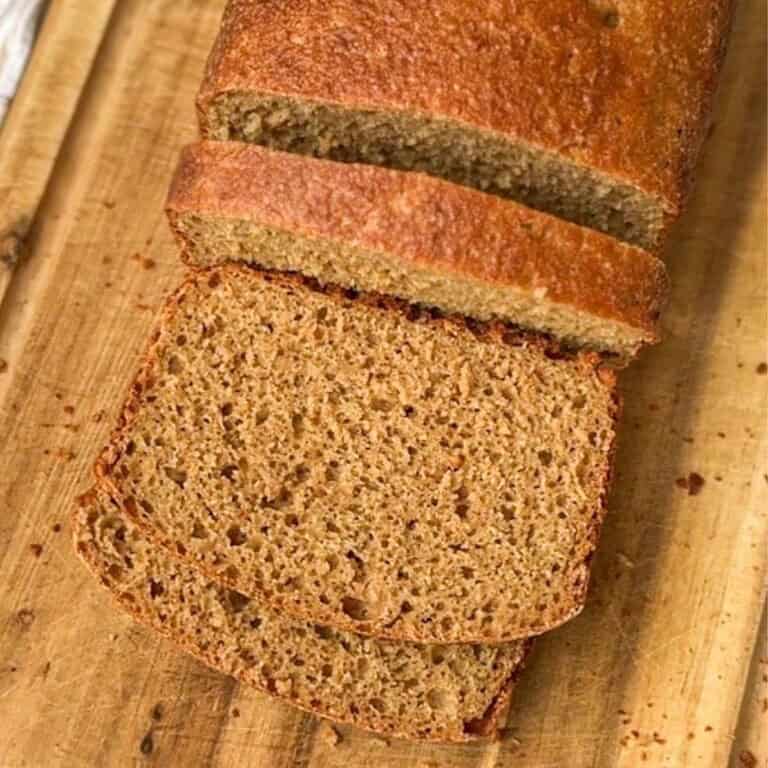
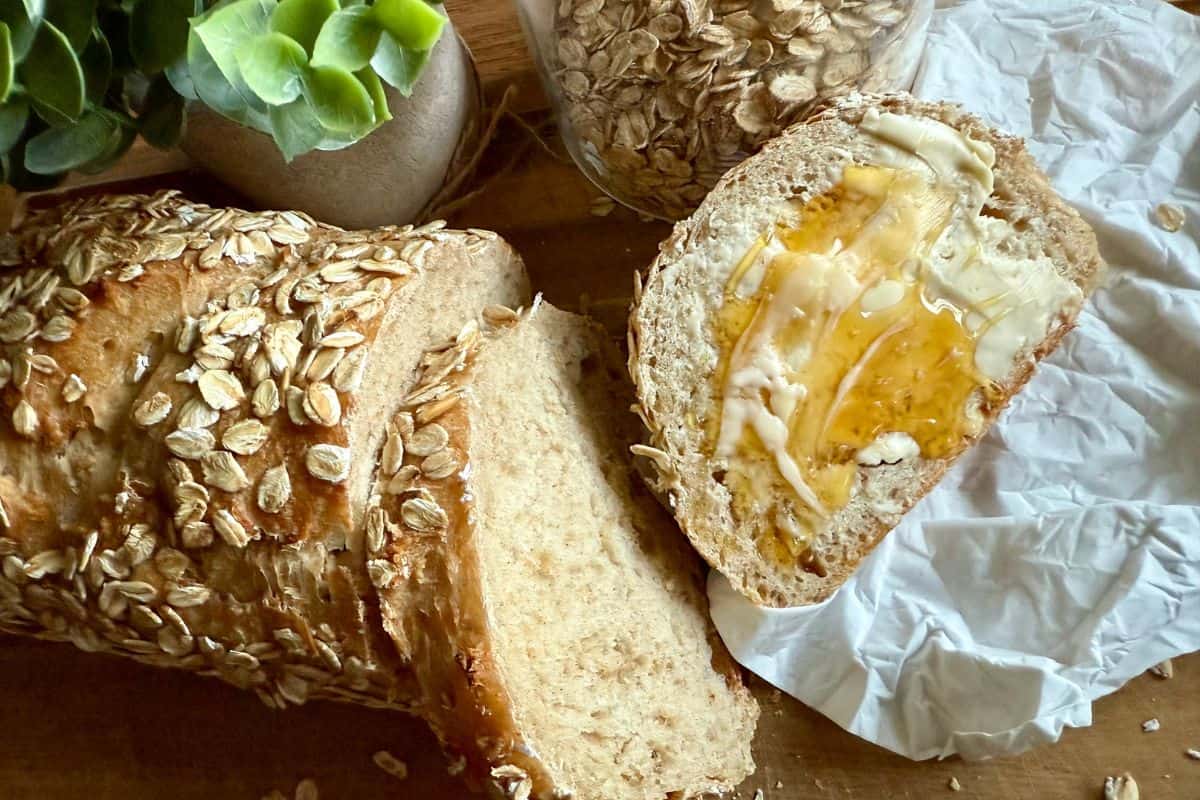
This Honey Oat Sourdough Sandwich Loaf is one of those recipes that instantly makes your bread interesting without much work. It's soft, lightly sweetened with honey, and has a wholesome texture from the oats. It's perfect for everyday sandwiches or morning toast, and the slight sweetness makes it the best leftover bread for French toast!
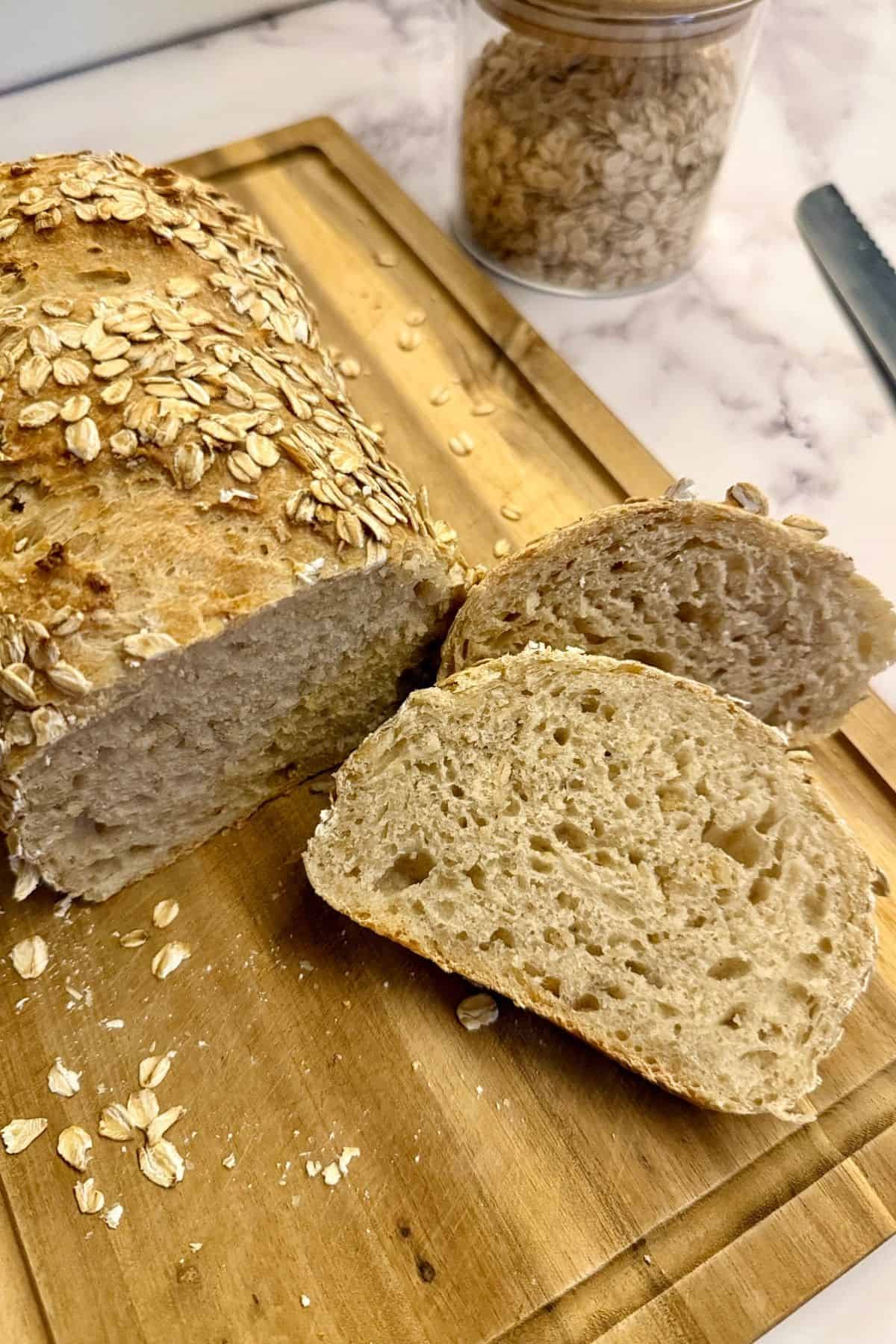
Sourdough with oats and honey is a perfect example for how to balance the slight tang with just a bit of sweetness.
If you prefer a more traditional sandwich bread, head over to my Easy Sourdough Sandwich Bread. Although in all fairness, stay on this one if you like your bread a bit special.
Quick Look
- Prep time: 30mins.
- Fermentation Time: 7-9 hours.
- Cook time: 45 mins.
- Servings: 1 loaf (fits a 9×5-inch loaf pan).
- Main ingredients: rolled oats, honey, sourdough starter, olive oil, all-purpose flour
- Cooking method: baked 🡢 oven
- Difficulty: moderate
- Serving ideas: serve with butter, jam, or use for sandwiches and toast
Jump to:
- Quick Look
- Important Ingredients
- Substitutions & Variations
- How to Make Honey Oat Sourdough Sandwich Loaf
- Baking Schedule
- 💭Crucial Success Tips
- Recipe FAQs
- How To Store Honey Oat Sourdough Sandwich Loaf
- Other Delicious Recipes
- Honey Oat Sourdough Sandwich Loaf
- Other Sourdough Recipes You'll Love
- Fresh Milled Buckwheat Sourdough Rolls
- The Easiest Fresh Milled Einkorn Sourdough Bread (Loaf Pan Method)
- 100% Fresh-Milled Einkorn Sourdough Bread
Important Ingredients
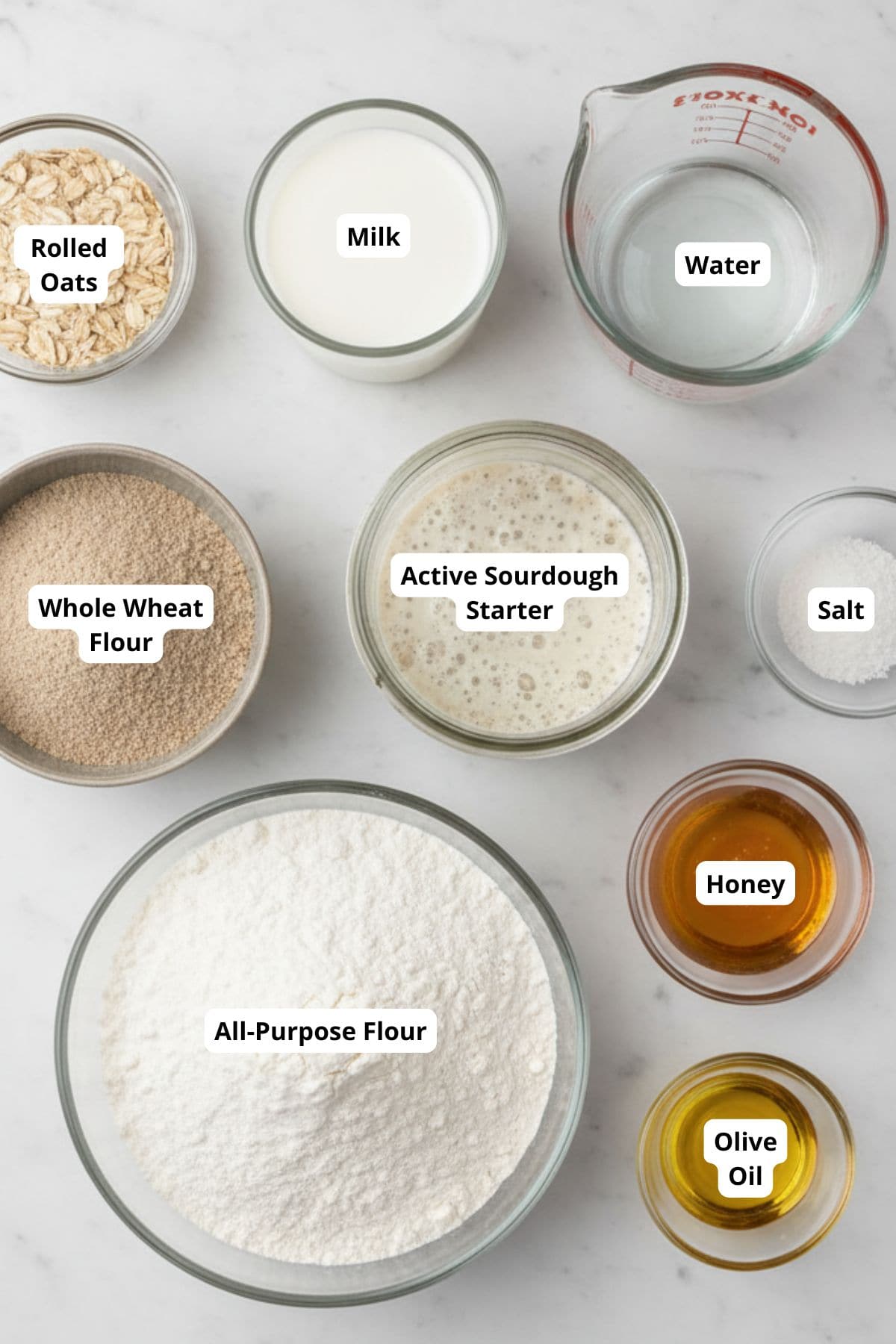
- Rolled Oats give the bread a soft, chewy texture and that rustic look when sprinkled on top.
- Honey adds natural sweetness and helps the loaf brown beautifully.
- Active Sourdough Starter gives rise, flavor, and that classic tang that balances the sweetness.
See recipe card for quantities.
Substitutions & Variations
- Butter instead of Olive Oil - Melted butter works too, though olive oil makes the crumb softer while butter gives a richer flavor.
- No Honey? - Use sugar instead, or even skip the sweetener altogether (just extend fermentation by about an hour).
- Less Sweet Option - Cut the honey or sugar in half for a more savory loaf.
How to Make Honey Oat Sourdough Sandwich Loaf
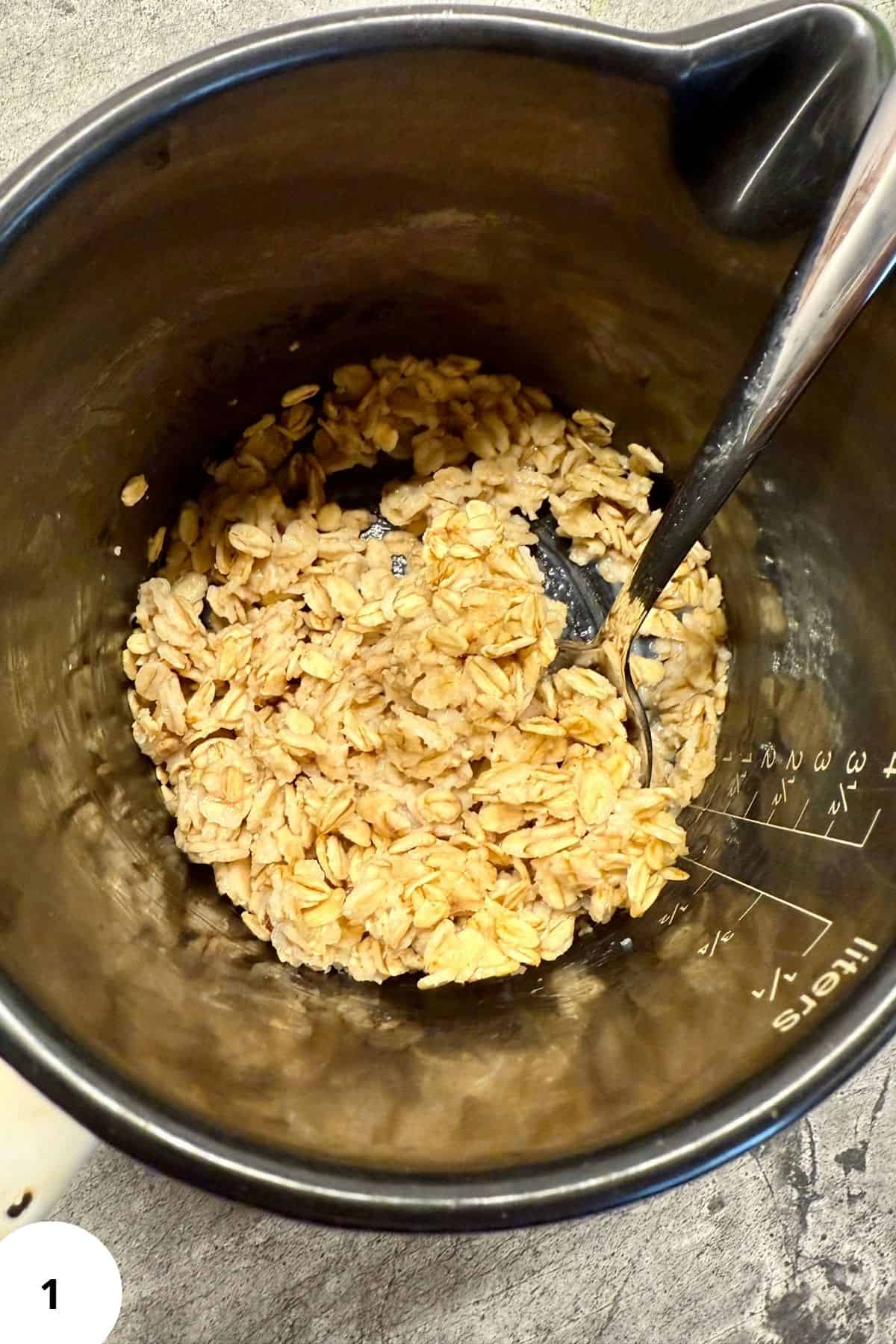
Step 1: Add oats and milk to a small saucepan (Image 1). Bring to a gentle simmer over medium-low. Let it simmer 1-2 minutes, cover, turn off heat, and set aside to cool slightly.
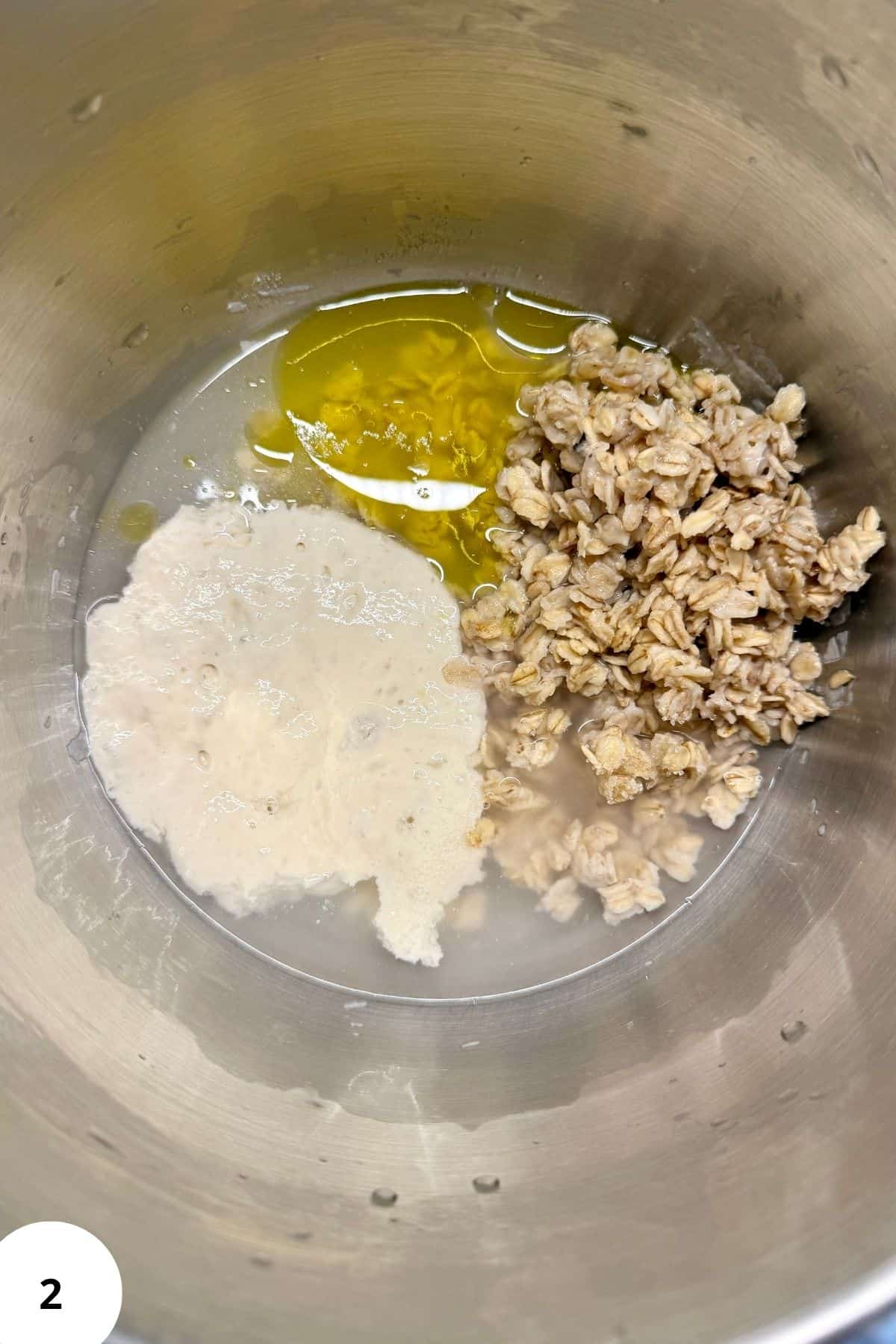
Step 2: In the bowl of a stand mixer, add all ingredients, flours, water, starter, oil, honey (or sugar), salt, and the cooked oat mixture (Image 2).
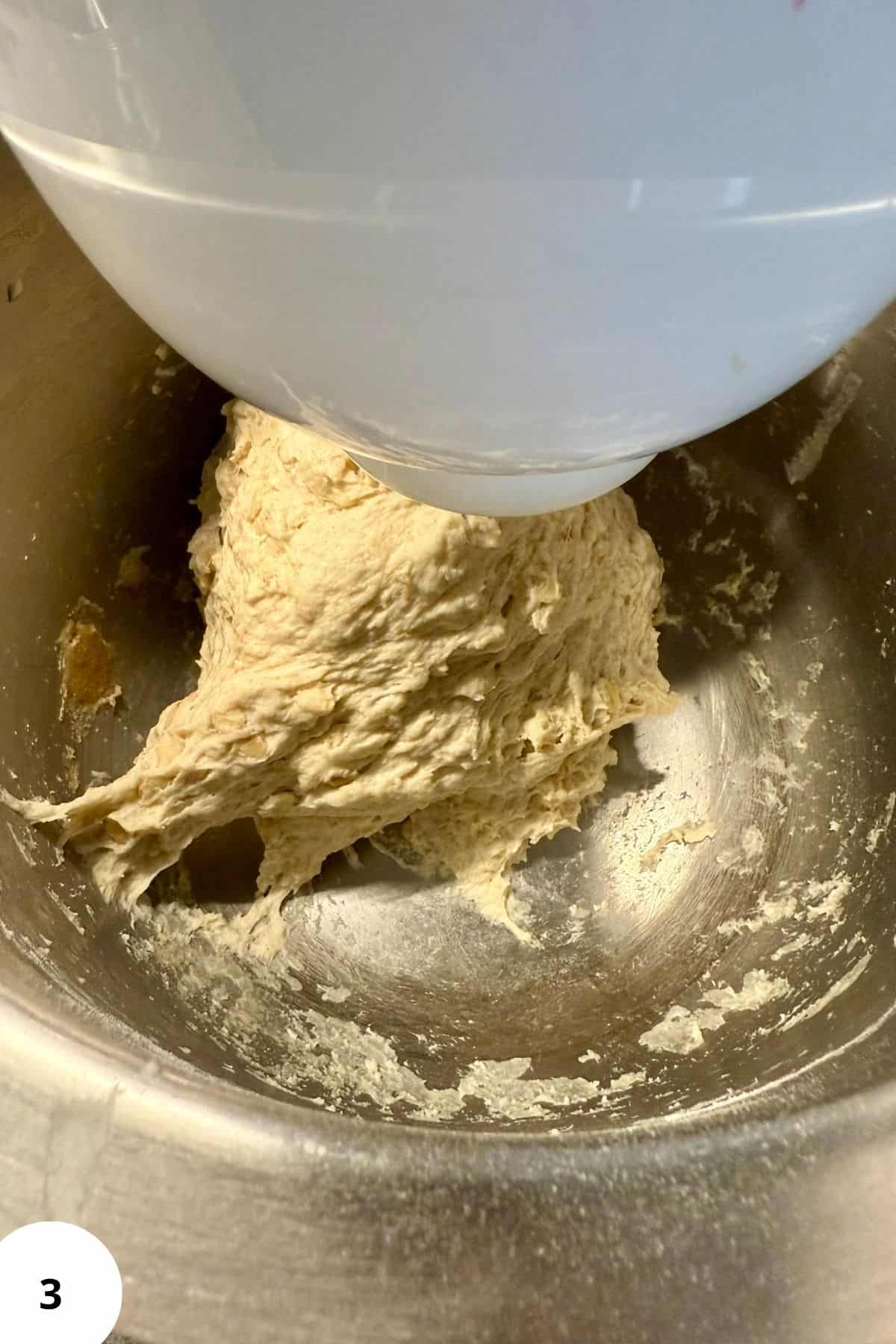
Step 3: Mix on medium speed ~5 minutes until a cohesive dough forms (Image 3). The goal here is not gluten development, flour isn't fully hydrated yet.
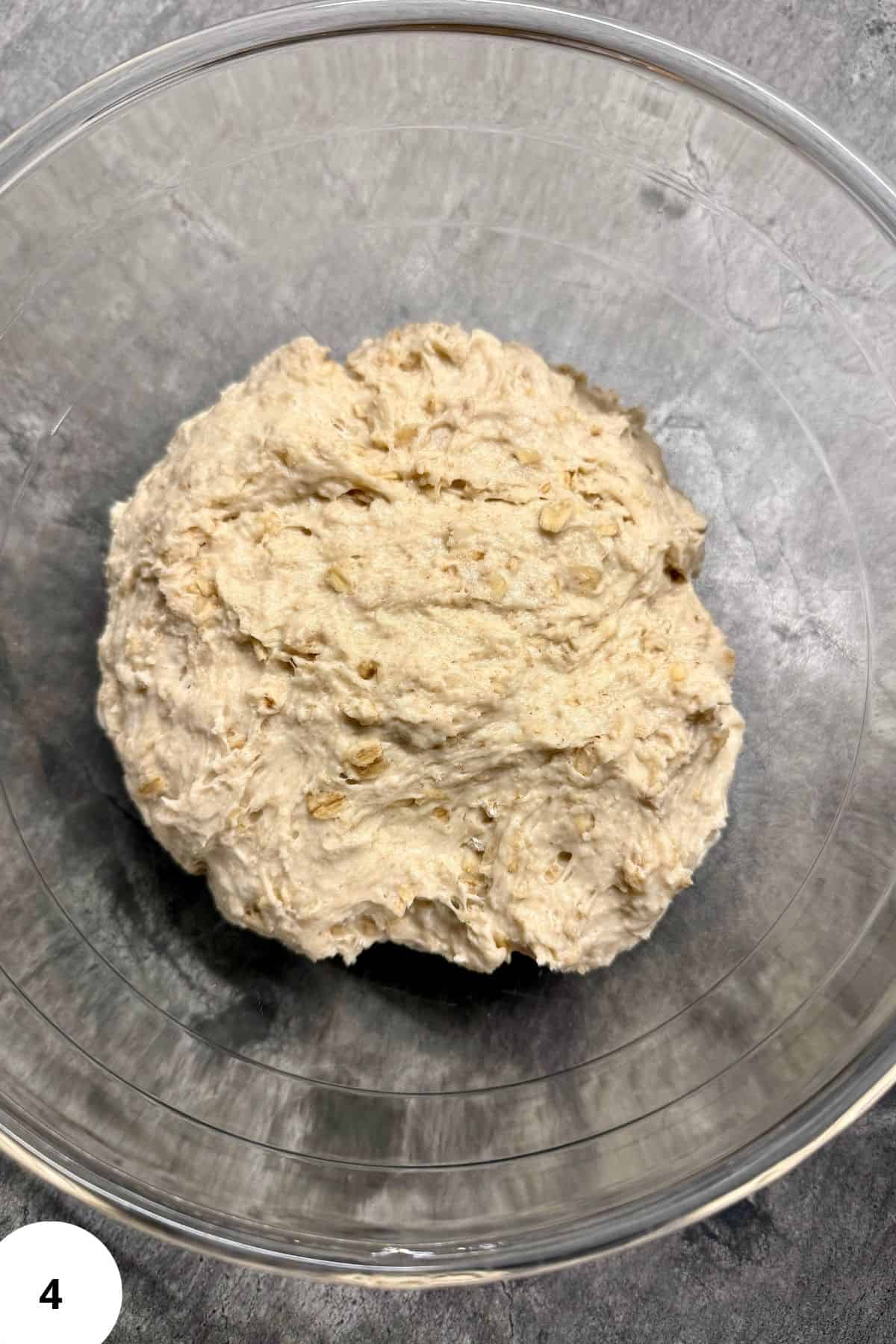
Step 4: Move the dough to the bowl where you'll bulk ferment and do stretch-and-folds (Image 4).
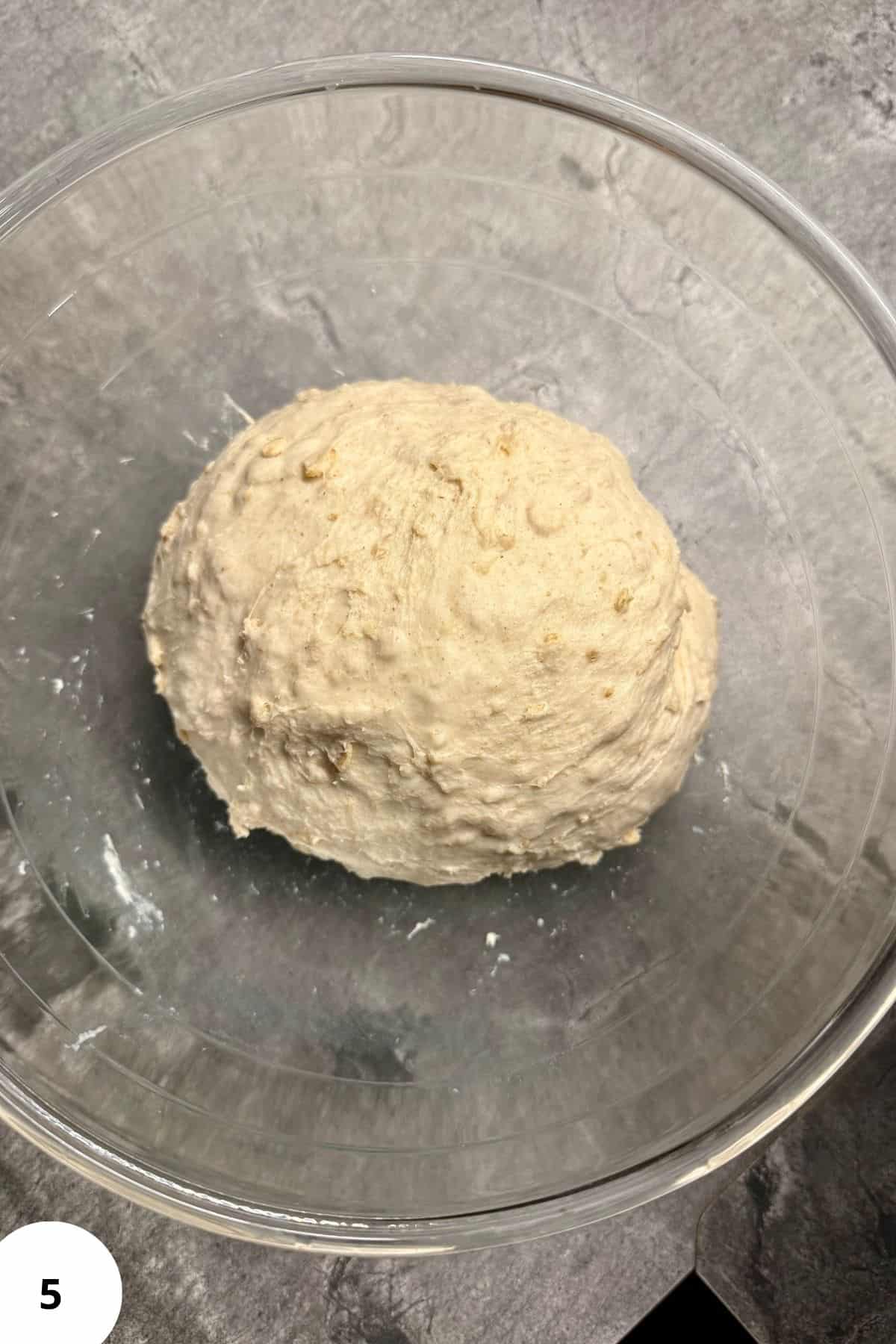
Step 5: Cover and rest 30 minutes (Image 5). Perform 2-3 sets of stretch-and-folds every 30 minutes after the 30-minute rest in step (4).
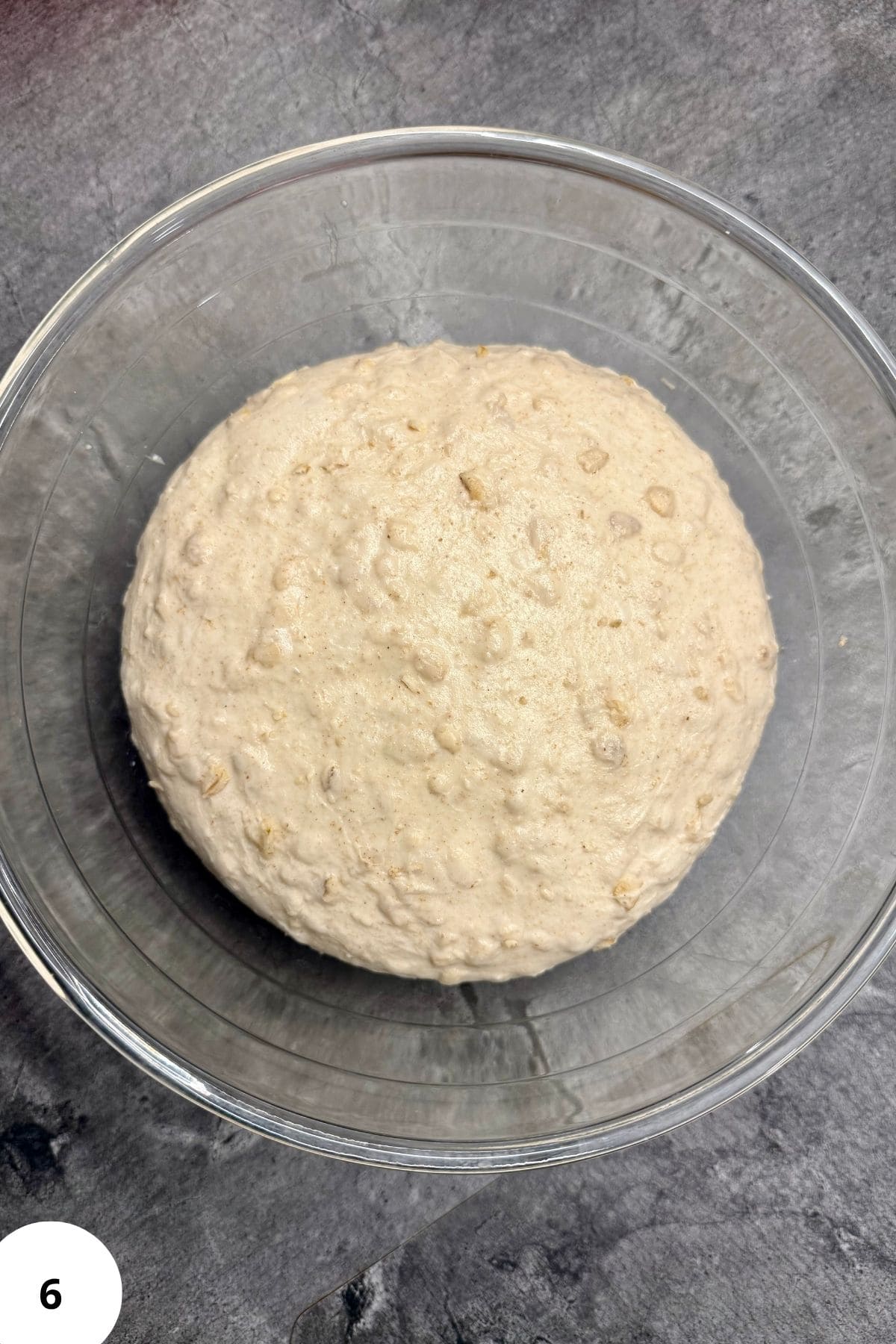
Step 6: Let the dough bulk ferment based on dough temp and visible signs. In warm conditions it may take ~5 hours; in cooler conditions closer to ~9 hours. Dough should be airy, soft to the touch, and risen in volume (Image 6).
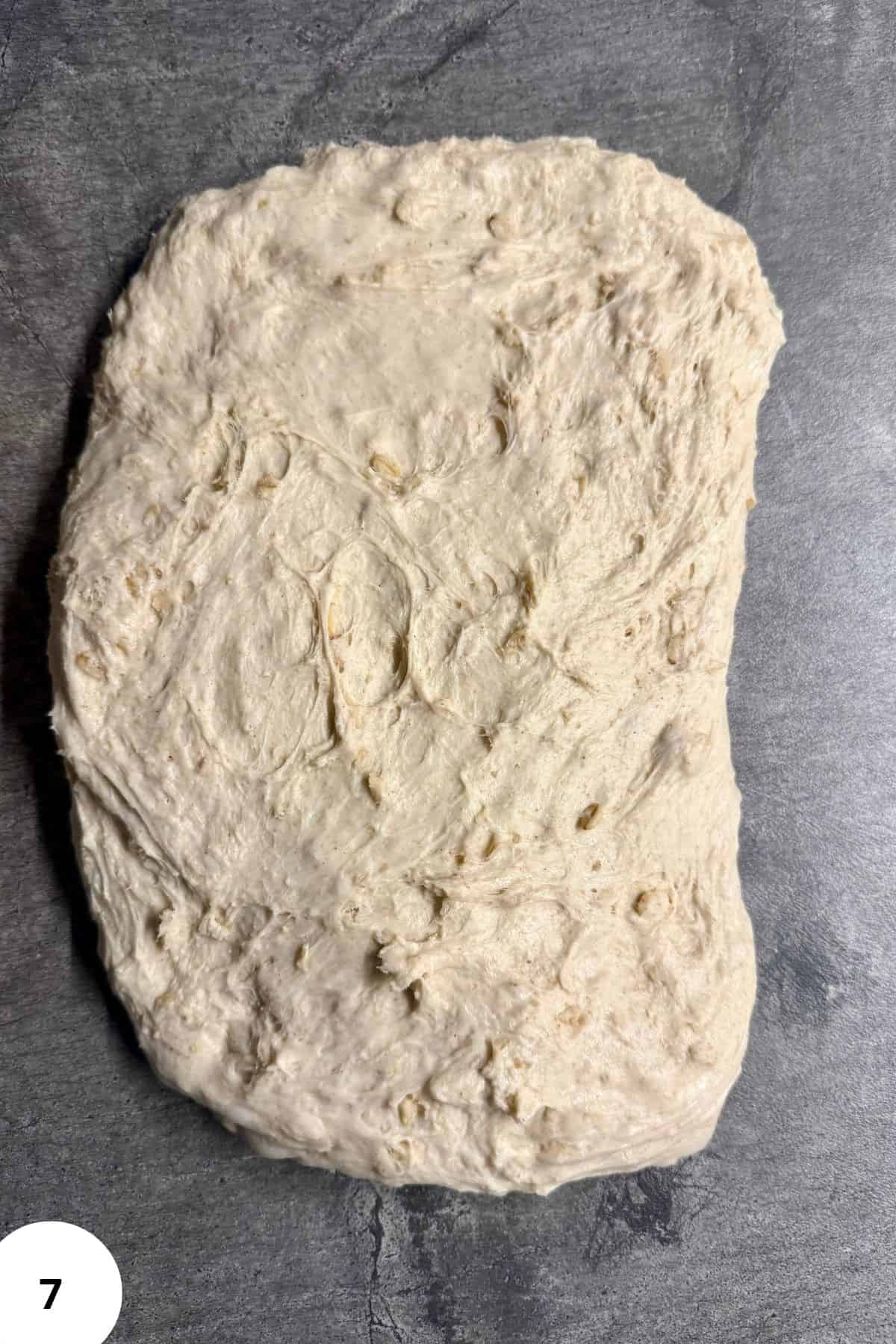
Step 7: Turn the dough onto the counter, placing the former top side down so it's less sticky (Image 7). I usually skip flour, but if it feels tacky, dust the surface lightly.
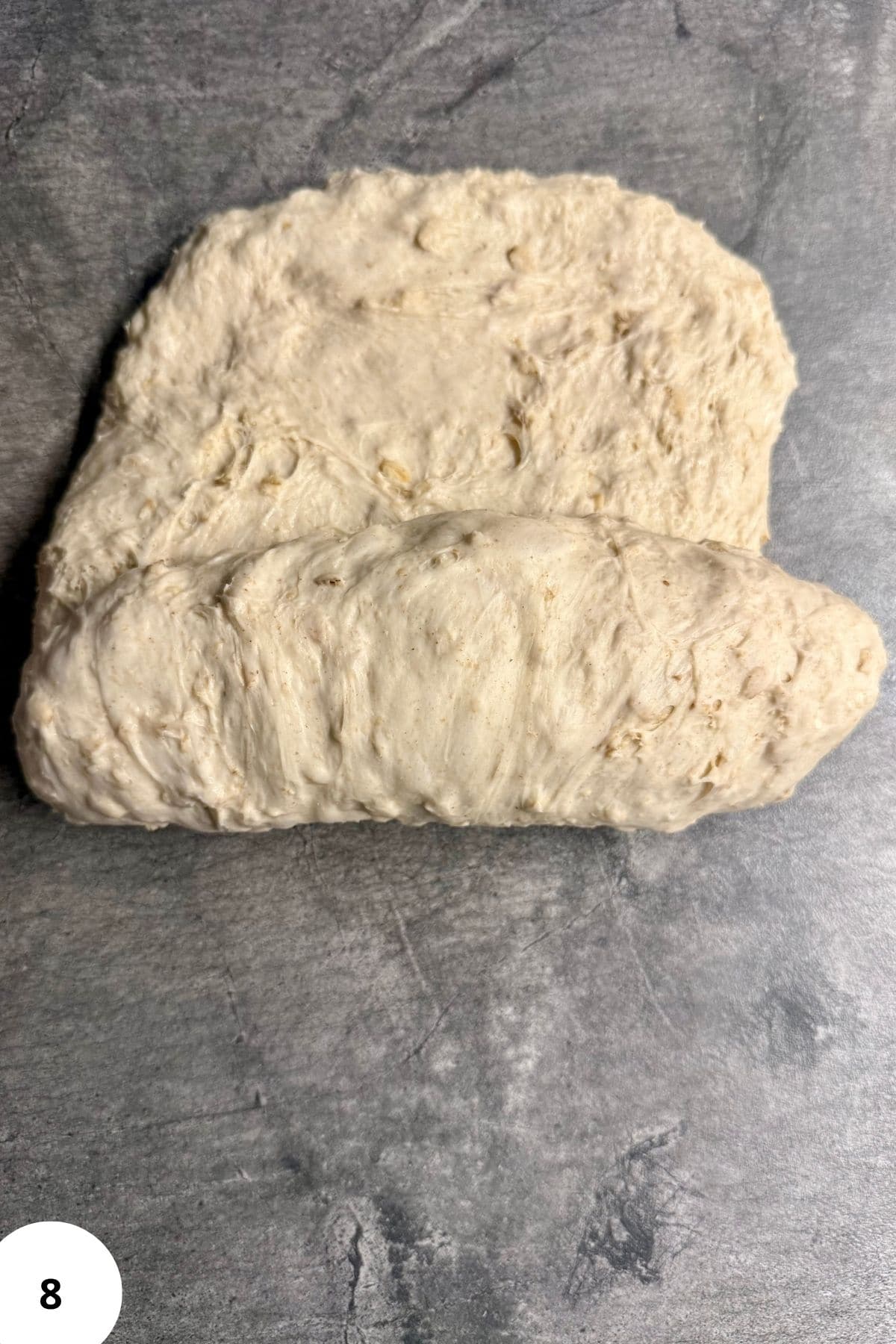
Step 8: Gently stretch the dough into a rectangle, then roll it into a log (Image 8).

Step 9: Mist the surface with water, roll the log (Image 9) in rolled oats, and set it seam-side down in a parchment-lined 9×5-inch pan (Image 10). Cover with a damp tea towel, plastic bag, or a shower cap.
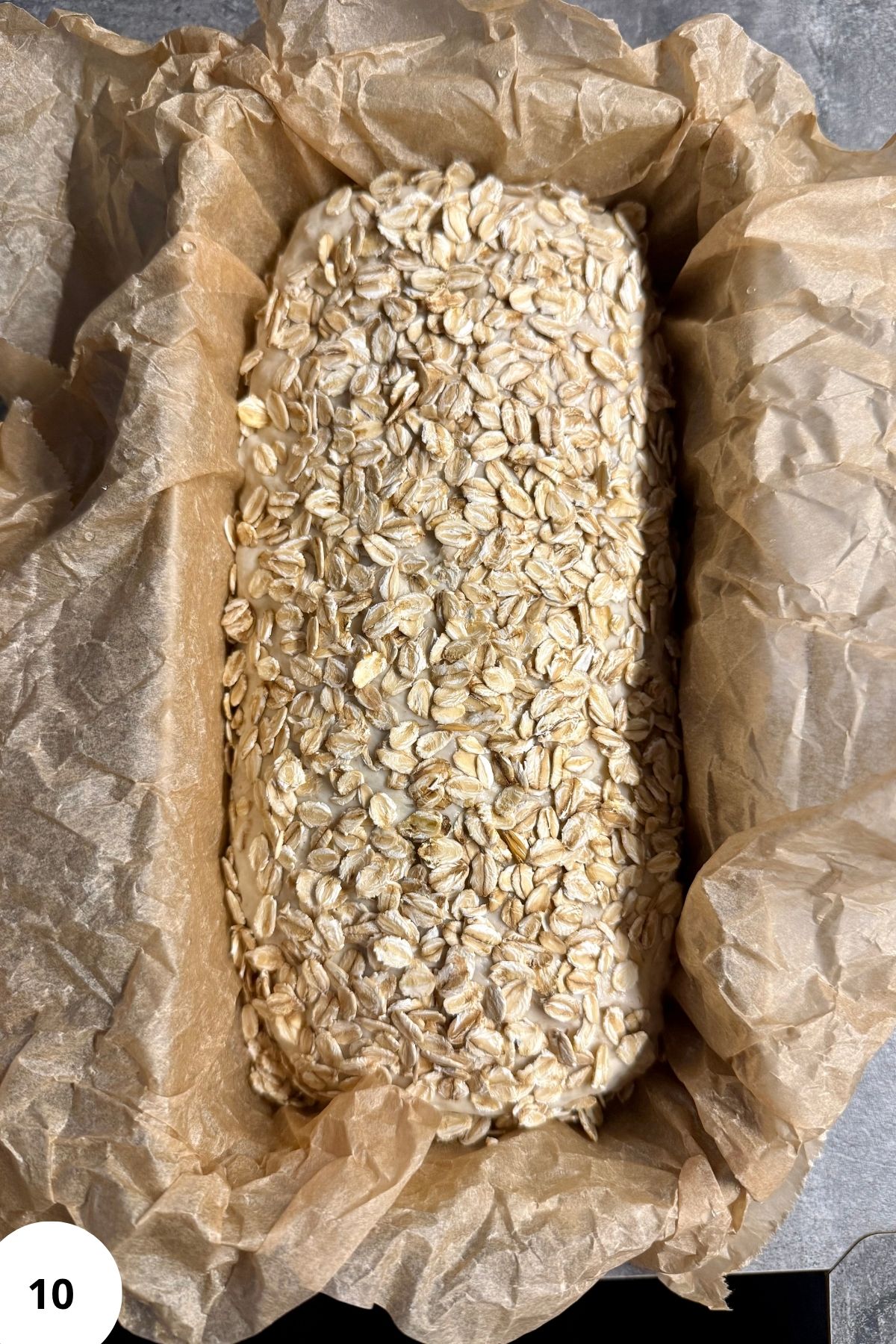
Step 10: Let the shaped loaf proof at room temperature (Image 10) for about 2-3 hours until puffy and well-risen, or cover and refrigerate to cold proof; if cold-proofed, finish the second rise at room temperature before baking. *if you're in a hurry, skip the second rise altogether, and you'll still get a result that's 95% perfect!
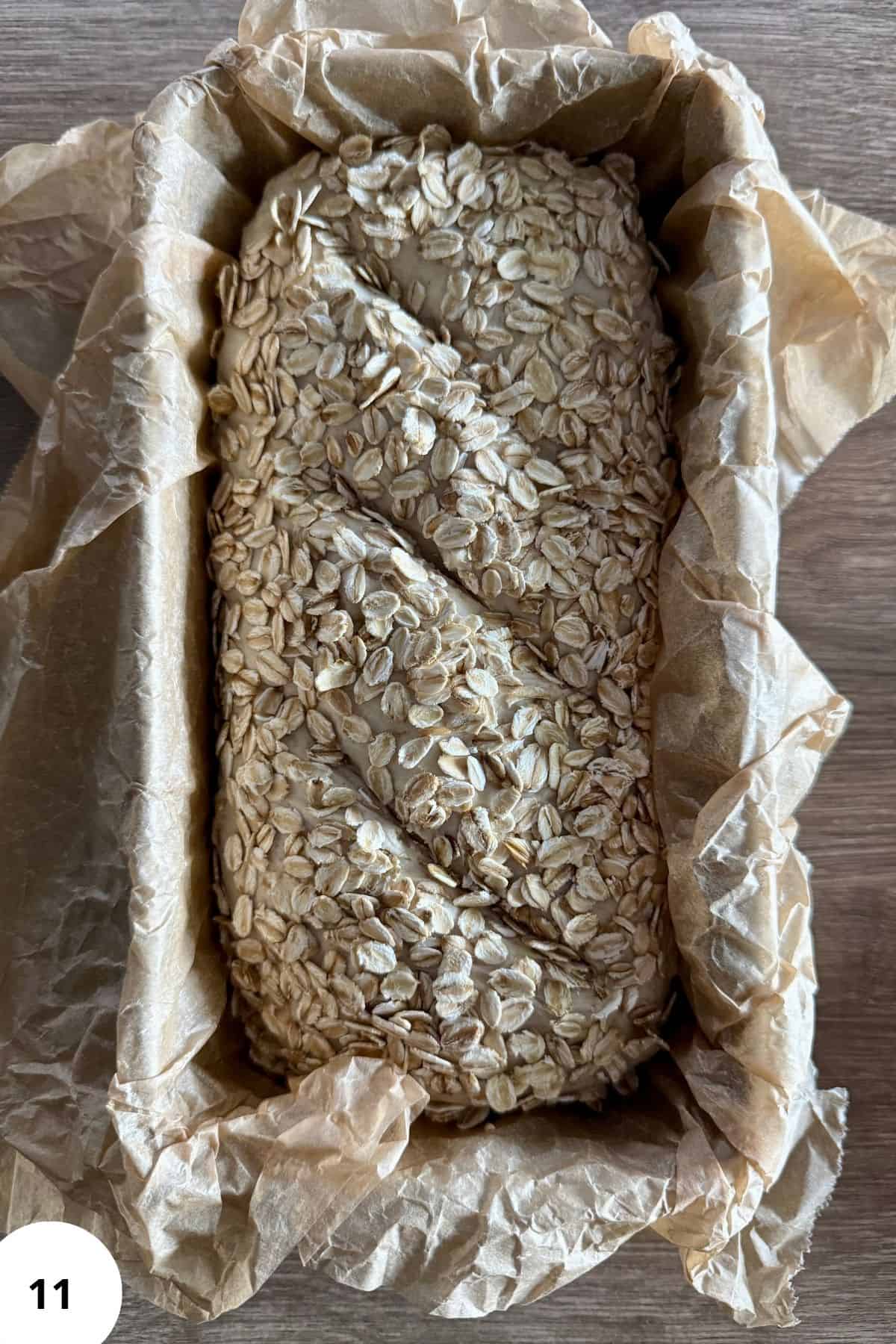
Step 10: Just before baking, score the loaf, you can score any way you like, but I prefer three diagonal scores on this bread (Image 10).
Bake at 400°F (204°C): For a standard bake, bake 40-45 minutes until the crust is nicely golden (Image 12) and the center reads 200-205°F (93-96°C); if browning fast, reduce to 375°F (190°C) for the last 10 minutes. Covered-then-uncovered option (using two pan method!): place an inverted 9×5 loaf pan over the dough for the first 35 minutes at 400°F (204°C) to trap steam, then remove the cover and bake 20-25 minutes more, until golden and 200-205°F (93-96°C) internal; if needed, finish at 375°F (190°C).
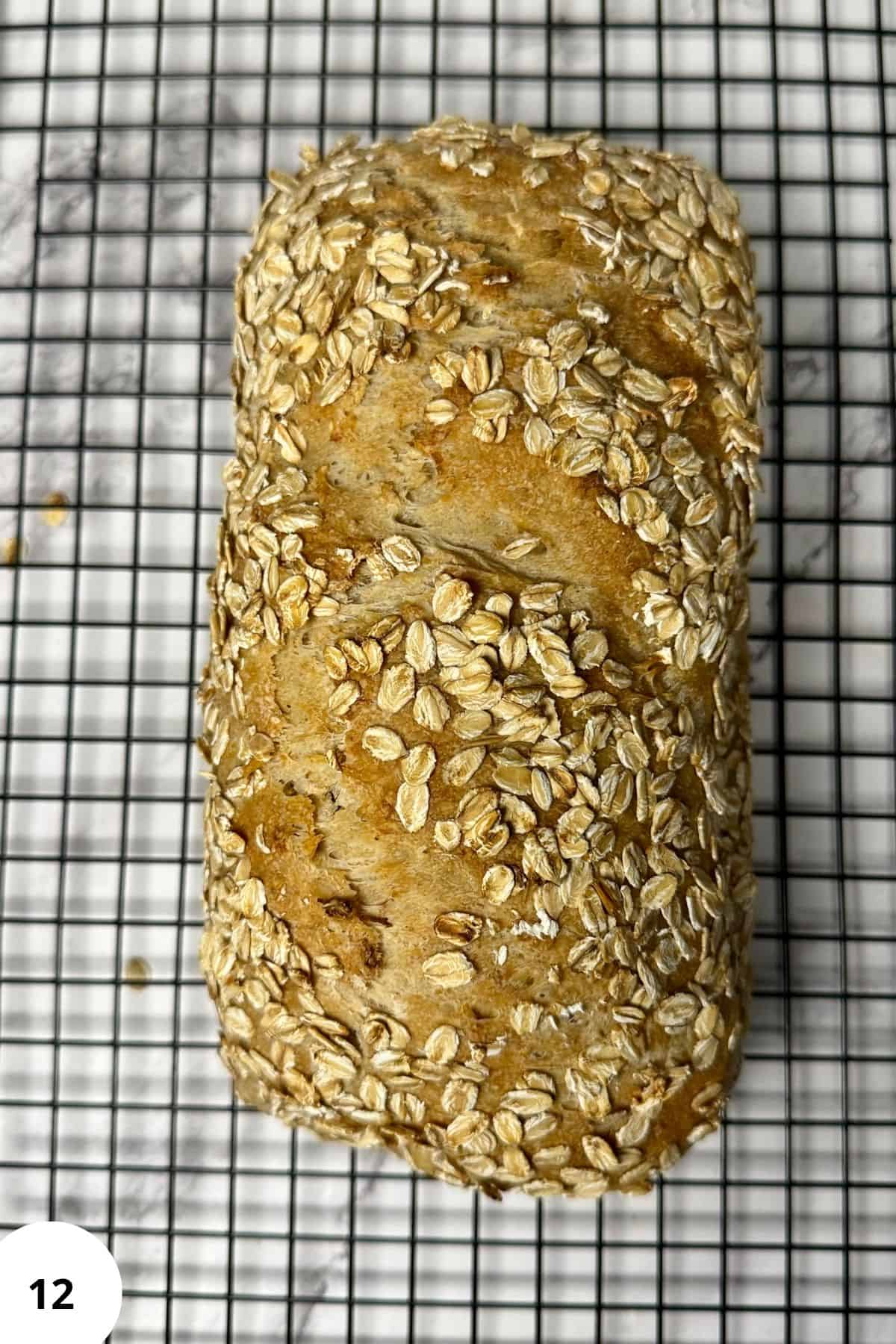
Step 12: Remove from pan and cool at least 1 hour before slicing (Image 12).
Hint: If you don't have a spray bottle for misting, just dip your fingers in water and lightly tap the dough before rolling in oats, it works perfectly.
Baking Schedule
Here's a simple timeline to help you plan your bake:
| Step | Duration | Notes |
|---|---|---|
| Mix + Rest | 1 hour | Includes oat cooking and first rest |
| Bulk Fermentation | 5-9 hours | Depends on room temperature |
| Shaping + Proofing | 2-3 hours | Or cold-proof overnight |
| Baking | 40-45 minutes | Golden brown perfection |
| Cooling | 1 hour | Let it fully cool before slicing |
💭Crucial Success Tips
- Don't rush the bulk fermentation, it's what gives your bread that soft, airy texture.
- If your kitchen is warm, keep an eye on the dough. It may rise faster than expected.
- Allow the loaf to cool completely before slicing, it's tempting, but it makes a big difference in texture.
Recipe FAQs
Yes! You can mix by hand. It just takes a bit more effort to bring the dough together, but it works just fine.
Yes, it's possible, though flavor deepens with a longer ferment. Try my Speedy Same Day Sourdough Bread Recipe if you're short on time.
Absolutely. Once completely cooled, slice it and freeze in an airtight bag. It stays fresh for up to 2 months.
How To Store Honey Oat Sourdough Sandwich Loaf
Store at room temperature in a bread bag or airtight container for up to 3 days. For longer storage, slice and freeze, it toasts beautifully straight from the freezer.
Other Delicious Recipes
- Fresh Milled Buckwheat Sourdough Rolls

- Einkorn Sourdough Bread for Beginners (50% Fresh Milled)
- The Easiest Fresh Milled Einkorn Sourdough Bread (Loaf Pan Method)
- Fresh Milled Sourdough English Muffins (Same Day or Overnight)



If you tried this Honey Oat Sourdough Sandwich Loaf or any other recipe on my blog please leave a 🌟 star rating and let me know how it went in the 📝 comments below! Happy Baking!
Honey Oat Sourdough Sandwich Loaf
Ingredients
- 30 g rolled oats
- 95 g milk
- 290 g all-purpose flour
- 60 g whole wheat flour 350 g total flour
- 190 g water
- 80 g active sourdough starter
- 15 g olive oil
- 25 g honey or 20 g granulated sugar
- 8 g salt
Instructions
- Add oats and milk to a small saucepan. Bring to a gentle simmer over medium-low. Let it simmer 1-2 minutes, cover, turn off heat, and set aside to cool slightly.
- In the bowl of a stand mixer, add all ingredients, flours, water, starter, oil, honey (or sugar), salt, and the cooked oat mixture.
- Mix on medium speed ~5 minutes until a cohesive dough forms. The goal here is not gluten development, flour isn't fully hydrated yet.
- Move the dough to the bowl where you'll bulk ferment and do stretch-and-folds. Cover and rest 30 minutes.
- Perform 2-3 sets of stretch-and-folds every 30 minutes after the 30-minute rest in step (4).
- Let the dough bulk ferment based on dough temp and visible signs. In warm conditions it may take ~5 hours; in cooler conditions closer to ~9 hours. Dough should be airy, soft to the touch, and risen in volume.
- Turn the dough onto the counter, placing the former top side down so it's less sticky. I usually skip flour, but if it feels tacky, dust the surface lightly.
- Gently stretch the dough into a rectangle, then roll it into a log.
- Mist the surface with water, roll the log in rolled oats, and set it seam-side down in a parchment-lined 9×5-inch pan. Cover with a damp tea towel, plastic bag, or a shower cap.
- Let the shaped loaf proof at room temperature for about 2-3 hours until puffy and well-risen, or cover and refrigerate to cold proof; if cold-proofed, finish the second rise at room temperature before baking. *if you're in a hurry, skip the second rise altogether, and you'll still get a result that's 95% perfect!
- Just before baking, score the loaf, you can score any way you like, but I prefer three diagonal scores on this bread.
- Bake at 400°F (204°C): For a standard bake, bake 40-45 minutes until the crust is nicely golden and the center reads 200-205°F (93-96°C); if browning fast, reduce to 375°F (190°C) for the last 10 minutes. Covered-then-uncovered option (using two pan method!): place an inverted 9×5 loaf pan over the dough for the first 35 minutes at 400°F (204°C) to trap steam, then remove the cover and bake 20-25 minutes more, until golden and 200-205°F (93-96°C) internal; if needed, finish at 375°F (190°C).
- Remove from pan and cool at least 1 hour before slicing.
Notes
- If the oats feel a bit warm, you can use slightly colder water to balance the temperature.
- You don't have to be too particular about the timing of stretch-and-folds, I suggest two to three sets in the first two to three hours of bulk fermentation, so the dough then has the option to expand in peace.
- If you don't have a spray bottle to mist water on, lightly wet your fingers and tap the dough so the surface becomes a bit damp, then roll on the rolled oats, that works too.
Substitutions
- You can use melted butter instead of olive oil if you want, but I prefer olive oil here because oils give bread a softer structure, whereas butter gives it a bit richer structure.
- You can decide how much honey or sugar to use. You can use less than the recipe says, for example 10 g honey or 10 g sugar. You can even use no sweeteners, but in that case, prolong the bulk fermentation by about an hour.